
Affordable Car Cover for Chevrolet Colorado: A Budget Buyer's Guide (Without Cutting Corners)
Why "Affordable" Doesn't Have to Mean Disposable
Let's set expectations first. An affordable car cover for Chevrolet Colorado owners doesn't have to mean a flimsy tarp that rips at the seams by spring. It means hitting a real quality floor, then shopping within that floor instead of below it. Most buyers skip straight to price-sorting and end up disappointed twice: once at checkout, once six months later when the cover shreds.
Colorado owners deal with more parking variety than most truck owners realize. Driveway one week, street parking the next, a dusty job site after that. A cheap, tarp-grade cover that's fine for a garage queen falls apart fast outside. That's not saving money. That's paying twice.
This guide walks through the minimum specs worth insisting on, where the real price differences come from, and where you can actually cut corners without regret. Think of it as a shopping filter, not a sales pitch. If you park outside often, a truck cover built for that reality is worth the extra ten or twenty dollars over a bargain-bin option.
What "Affordable" Should Still Include

Here's the floor. Don't go below it, even on a tight budget.
UV-resistant fabric, not just water-resistant. These are different things, and a lot of cheap listings blur them together. UV resistance stops the sun from breaking down the fabric fibers over time. Water resistance just keeps rain off. You need both, but if a listing only mentions one, assume it's the cheaper one.
Breathable material matters more than people think. A non-breathable cover traps moisture underneath, and that moisture sits against your paint. Over a few months, that's worse than no cover at all. Pair breathability with a soft inner liner, which keeps the fabric from rubbing micro-scratches (swirl marks) into your clear coat every time wind moves the cover.
On waterproofing: fully waterproof costs a bit more than water-resistant, but if your Colorado lives outside, it pays for itself. Water-resistant sheds light rain and dew. Waterproof handles a real downpour without soaking through to the paint. Check out the difference in waterproof car cover options before you decide which one your climate actually calls for.
Then there's wind security. A cover needs an elastic hem, or a strap and grommet system, to stay put in weather. A cover that blows off during a storm, and ends up tangled in your side mirror or wrapped around a fence, isn't saving you anything. You just paid for a lawn ornament.
Last, look for a real warranty. Lifetime warranty coverage isn't just a nice bonus on budget products, it's a quality signal. Companies don't put a lifetime guarantee on fabric they know will fall apart in a year. It's worth reading through what a lifetime warranty on car covers actually promises before you buy anything, premium or budget.
Fit Considerations for Your Colorado's Cab and Bed
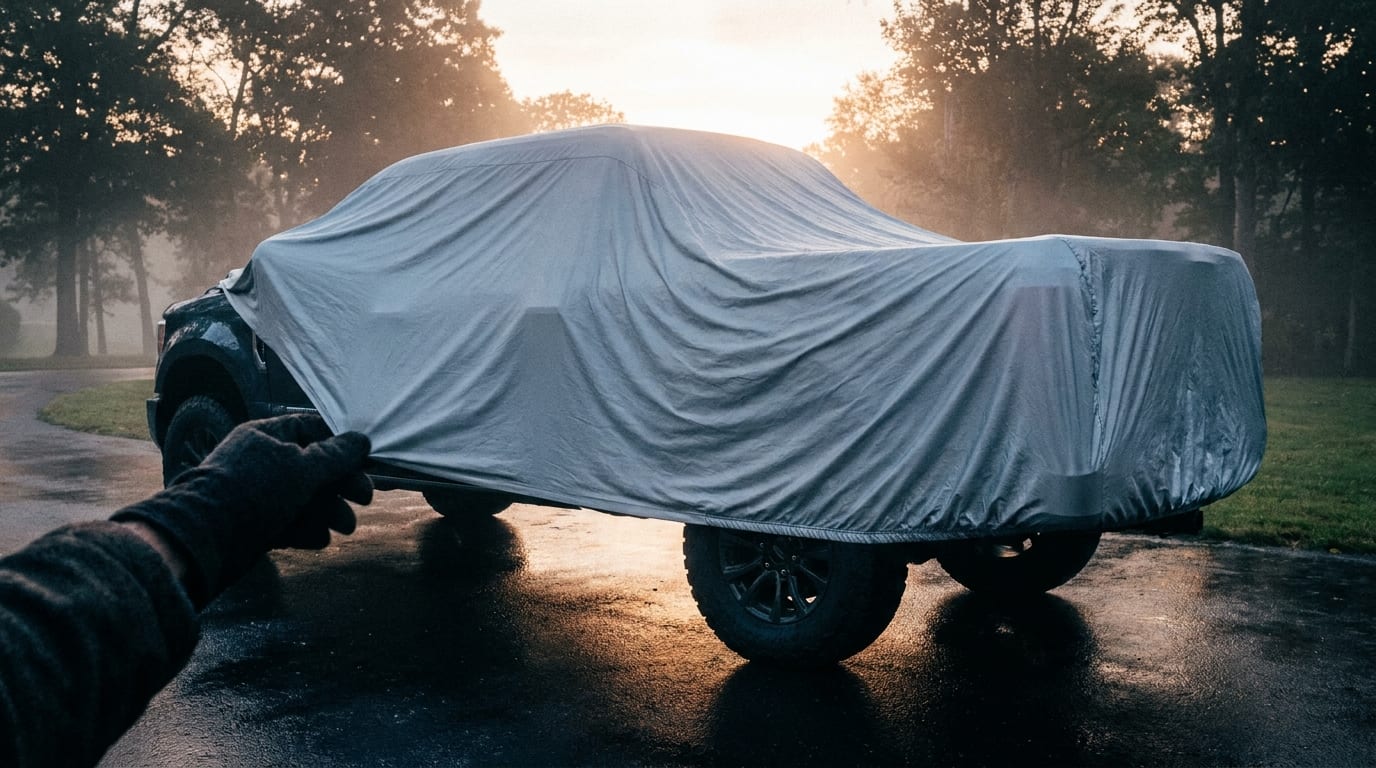
Here's where a lot of budget buyers lose money without realizing it. The Colorado comes in extended cab and crew cab configurations, with short bed and long bed options depending on year and trim. A "universal truck size" cover ignores all of that. It's built to loosely fit a range of trucks, which in practice means it fits none of them well.
Loose fit causes flapping. Flapping causes wear at the stress points: corners, mirror cutouts, strap anchors. A universal cover that's slightly too big for your Colorado will wear out faster than a properly sized one, even if the fabric itself is identical. That's the quiet cost of "universal" that doesn't show up on the price tag.
If you're not sure which bed length your Colorado has, the pickup truck bed size guide walks through how to check before you order anything. Once you know your configuration, match it against actual cover dimensions using a sizing guide for your vehicle rather than guessing from the product title. A few minutes here saves you a return shipment later.
Semi-custom fit costs a little more than a generic universal cover, but it tracks your Colorado's actual shape instead of a vague "mid-size truck" silhouette. For a daily-outdoor vehicle, that's usually the better trade. You can browse what's built specifically for the brand on the Chevrolet truck cover page to see what fits your cab and bed combination.
Where the Price Difference Actually Comes From
So why does one all-weather cover run $60 and another runs $150? It's not marketing. A few real factors drive it.
| Factor | Entry-level cover | Mid-tier cover |
|---|---|---|
| Fabric layers | Single layer | Multi-layer, often 3+ |
| Fabric denier (thickness) | Lower, thinner weave | Higher, more durable weave |
| Stitching | Basic straight seams | Reinforced or double-stitched seams |
| Included accessories | Minimal or none | Straps, storage bag, sometimes a lock cable loop |
Stitching quality is the one shoppers skip past most often, and it's the first thing to fail. A seam that pulls apart after a season of wind isn't a design flaw, it's a cost-cutting choice made somewhere upstream.
Custom-fit covers cost more upfront than universal ones, but they distribute wear more evenly across the fabric instead of concentrating stress at loose corners. Over two or three years, that often means you're not replacing the cover as often, which changes the real math on "affordable." It's worth reading through the case for custom-fit car covers if you're deciding whether the upcharge makes sense for your situation.
One place you can legitimately save: if your Colorado spends most of its life in a garage, you don't need the same heavy-duty fabric built for UV and storm exposure. Indoor-only covers can be lighter and cheaper, because they're not fighting the sun or rain at all. Just be honest with yourself about how often it's actually indoors.
Where It's Fine to Save, and Where Not To
Not every dollar saved is a mistake. Some corners are genuinely fine to cut.
Fine to save on: color choice (black isn't functionally better than gray), bundled accessory kits you won't use, and premium branded storage bags. None of that affects how well the cover protects your truck.
Not fine to save on: seam stitching quality, the hardware on your straps and grommets, and the stated waterproof rating if your Colorado parks outside. These are the parts that fail first, and failure here means the cover stops doing its job long before it looks worn out.
Watch for a few red flags in ultra-cheap listings. No stated fabric weight or denier is one. No warranty at all is another; it usually means the seller doesn't expect the product to last. And "universal fit" with no size chart or measurements is a guess dressed up as a product.
Because return policies and shipping costs matter when you're trying a budget cover for the first time, it's worth checking a retailer's free shipping terms and return policy before you commit. Low risk is part of what makes a budget purchase actually smart instead of just cheap.
A mid-range all-weather cover with a real warranty will beat a bargain-bin cover every time, even if the bargain cover is $30 less at checkout. One needs replacing by next season. The other doesn't.
Installation and Care Tips to Make a Budget Cover Last

Even a well-made cover wears out fast if it's installed wrong. A few habits make a real difference.
Secure straps under the vehicle, not just looped loosely around the tires. Loose straps let wind get underneath the cover, and that's what causes flapping and eventual tearing. Watch for snag points too: mirrors, antennas, tow hooks. These are where fabric catches and rips first, especially on a cover that's already a size or two too loose.
Cleaning matters more than most owners think. Dirt and grit act like sandpaper against the fabric every time the cover shifts in the wind. A simple rinse and mild soap wash, done regularly, preserves the waterproof coating and keeps fibers from breaking down early. The full guide to cleaning a car cover covers the specifics, including what not to use (skip the harsh detergents).
When the cover's not in use, store it dry and loosely folded, not jammed into a tight ball while still damp. Trapped moisture breeds mildew, and mildew eats fabric. If you're setting one up for the first time, the installation walkthrough covers the basics in a few minutes, and it's worth the read even if you've used covers before. Most tearing complaints trace back to install mistakes, not the cover itself.
Finding the Right Affordable Cover for Your Colorado
The decision path is simpler than it looks. Confirm your cab and bed configuration first. Set your non-negotiables: UV resistance, an appropriate waterproof rating for your climate, and a real warranty. Then shop within your budget, knowing exactly what you're comparing.
An affordable car cover for your Chevrolet Colorado isn't about finding the lowest number on the page. It's about finding the lowest total cost over the life of the cover, which usually means spending a little more than the cheapest option and a lot less than the premium one. If you're still narrowing things down, it's worth browsing a few options and seeing what fits your specific setup before deciding. And if you want more buying guides like this one before your next vehicle purchase, it's worth sticking around and reading a few more.
