
Affordable Car Cover for Tesla Cybertruck: A Budget Buyer's Guide (Without Cutting Corners)
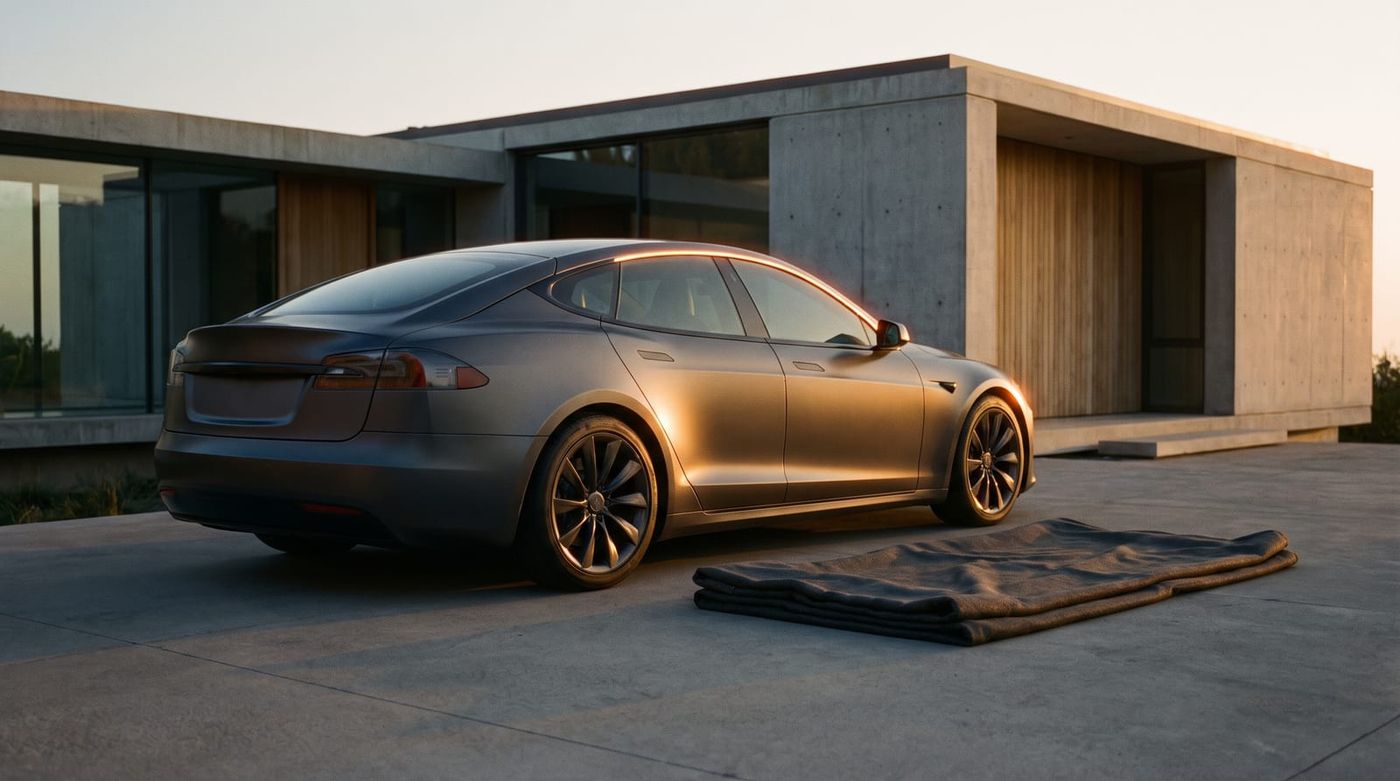
Stainless steel panels, glass roof, a six-figure resale value for some trims. The Cybertruck looks like it shouldn't need a cover. But if you're hunting for an affordable car cover for Tesla Cybertruck ownership that actually protects the truck instead of just sitting on top of it, there's more to think about than you'd expect. This guide walks through what "affordable" should mean here, what to look for at each price point, and where cutting the wrong corner costs you more later.
Does a Stainless Steel Cybertruck Even Need a Cover?
The assumption makes sense on paper. Stainless steel doesn't rust like painted sheet metal, so why bother covering it? Because rust isn't the only thing that damages a finish.
Bare steel shows hard water spots and mineral etching worse than most people expect, especially after it sits uncovered through a few sprinkler cycles or rainstorms. Bird droppings and tree sap stain it too, and getting that residue off without a cover means more scrubbing, which means more risk of fine swirl marks from dust and grit getting dragged across the panels. Then there's UV exposure. The sun doesn't just fade paint, it degrades cabin plastics, stresses the glass, and shortens the life of any wrap or paint protection film an owner's paid to install.
Add in the Cybertruck's price tag and its status as a collector-interest vehicle, and the stakes go up. A $500 wrap job or a resale value that depends on the exterior looking showroom-fresh is a real reason to care about an affordable car cover for Tesla Cybertruck owners, not just a nice-to-have. This guide isn't about finding the cheapest tarp on the internet. It's about finding genuinely good value.
What 'Affordable' Should Actually Mean for a $60K+ Truck
Affordable shouldn't mean lowest sticker price. It should mean best protection per dollar, for the truck you actually own.
Here's where ultra-cheap universal covers fall apart. The Cybertruck's angular, flat-paneled body doesn't play nice with a generic stretch-fit cover designed for rounded sedans or standard pickup beds. A loose cover flaps in the wind. Flapping sounds harmless until you realize that fabric is rubbing against steel every time the wind kicks up, for hours, for days. That's not protection, that's slow-motion sanding.
Cheap covers also tend to skip the soft inner lining entirely. Without it, the cover's interior surface can be almost as abrasive as the debris it's supposed to block. On a painted truck that's bad enough. On exposed stainless steel, it's worse, because scratches and swirl marks show up more visibly against that mirror-like finish.
So set a minimum quality bar before you shop: water resistance, a soft non-scratch lining, UV stabilization, and a snug, truck-specific fit. Anything cheaper than that isn't a bargain, it's a liability with a lower price tag.
Budget Tiers: What You Get at Each Price Point
Not all budget covers are created equal, and it helps to know what you're actually buying at each level.
| Tier | What you get | Best for |
|---|---|---|
| Entry (universal/semi-custom) | Basic UV and light rain resistance, looser fit, minimal lining | Short-term storage, mild climates |
| Mid (semi-custom truck-specific) | Better shape accuracy for flat panels and angular lines, multi-layer water-resistant fabric, fleece-style lining | Regular outdoor parking, moderate weather |
| Higher-value (custom-fit on sale) | True-to-vehicle fit, reinforced stitching, mirror pockets, included straps | Long-term outdoor storage, owners prioritizing finish protection |
Entry-tier covers aren't useless. If you're storing the truck short-term or live somewhere mild, a basic cover beats no cover. But if the Cybertruck lives outside full-time, the mid tier is where things start making sense: better shape accuracy around those flat panels, a lining that won't fight the steel finish, and fabric built to actually shed water instead of just slow it down.
The sleeper option is checking custom-fit car covers during clearance or bundle pricing. A true custom fit often isn't much more expensive than a semi-custom cover once it's on sale, and the fit difference matters more than people think. Loose fabric on a vehicle this angular means more friction points where wind can work fabric against steel over time. Worth comparing before you default to the cheaper semi-custom option just because it's labeled "budget."
Features You Shouldn't Skip Even on a Budget
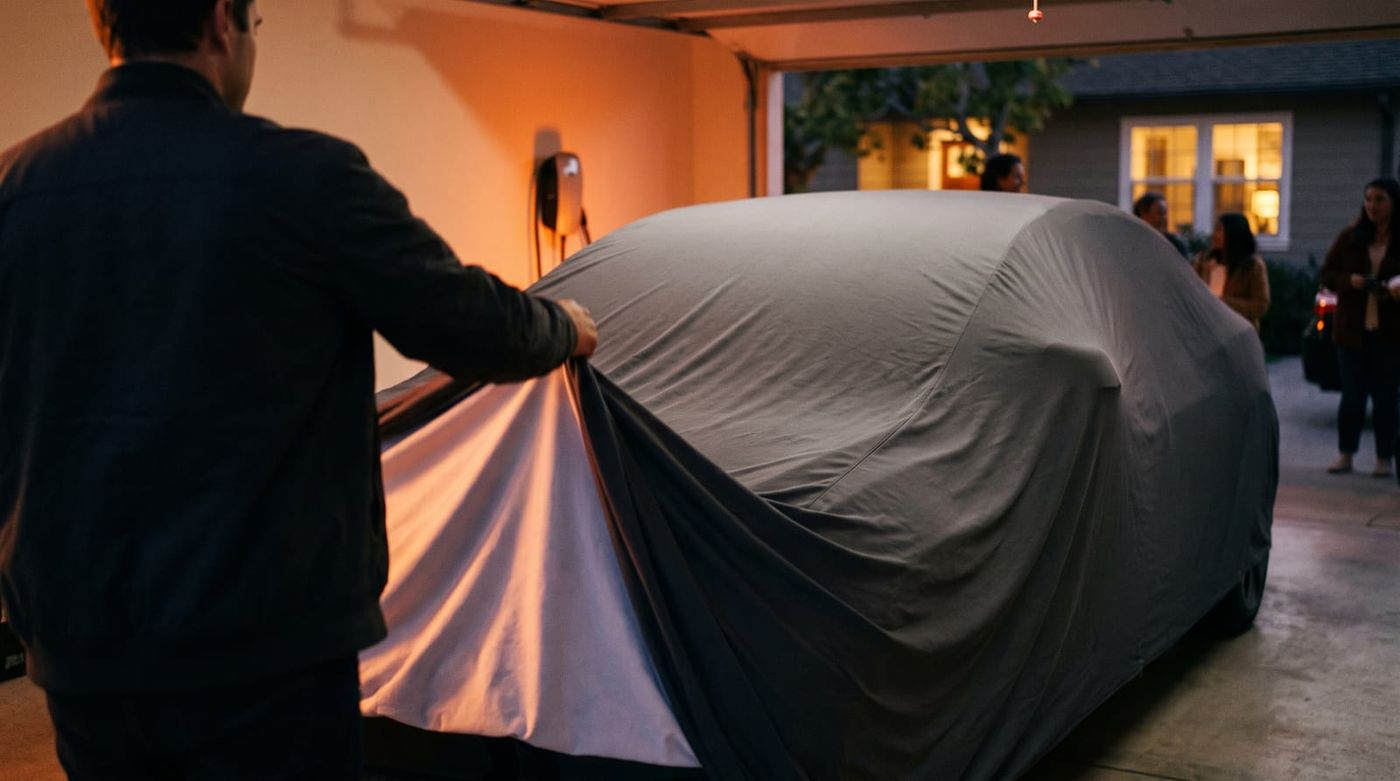
A few things matter regardless of how little you're trying to spend.
The inner lining has to be soft and non-abrasive. This is the single feature most responsible for whether a budget cover protects the steel or slowly scuffs it.
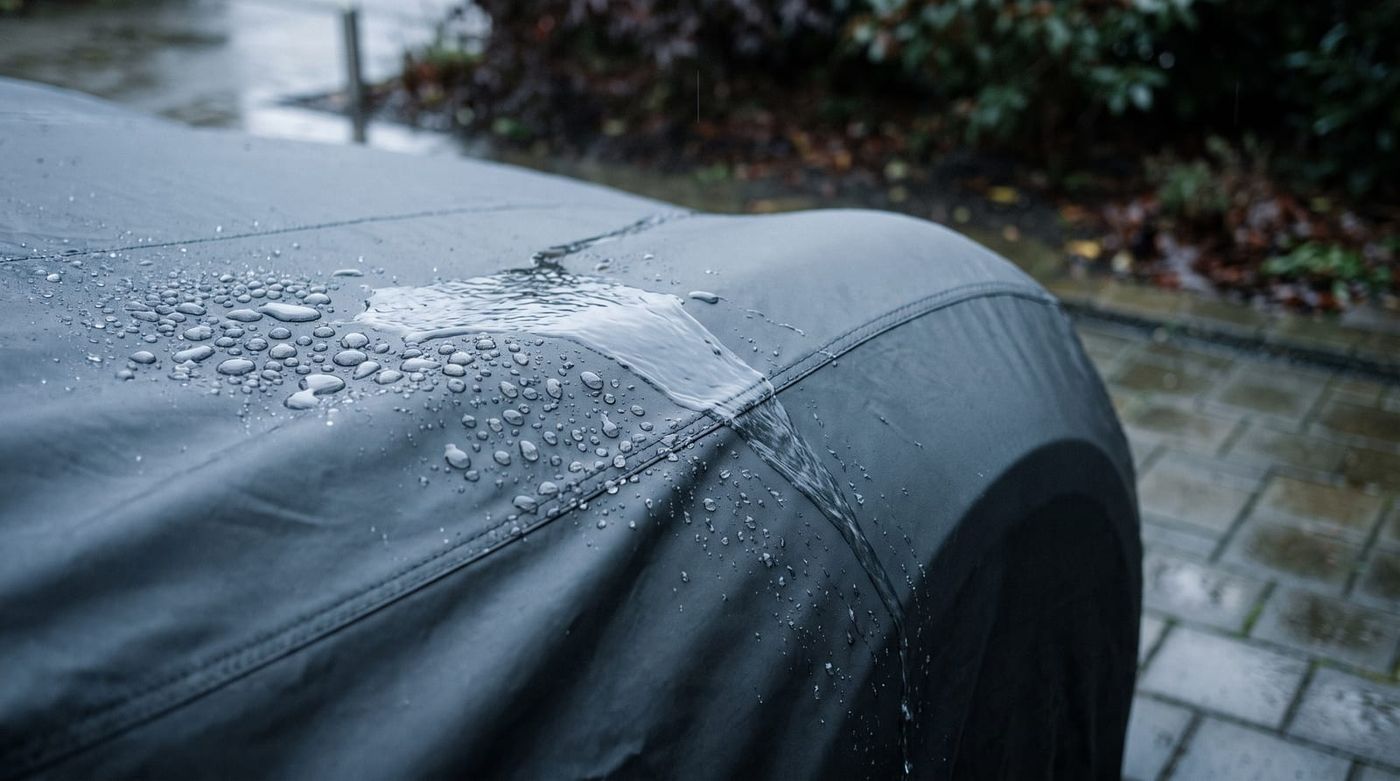
Water resistance matters too, and not just "resists rain" marketing language. Look for sealed seams and genuinely waterproof car covers construction, since pooling water on the Cybertruck's flat hood and bed surfaces is a real risk with cheaper, poorly seamed fabric.
UV-stabilized material keeps the fabric from going brittle and flaking apart after a season or two outdoors. Mirror pockets and a built-in strap or grommet system matter more than they sound like they should. Without them, you're buying extra accessories just to keep the cover from blowing off in the first stiff wind, and that extra cost erases whatever you saved going cheap in the first place.
Finally, check for some kind of warranty or return window. A defect or bad fit shouldn't become money you just have to eat.
Getting the Fit Right (Why Generic Truck Covers Often Fail Here)
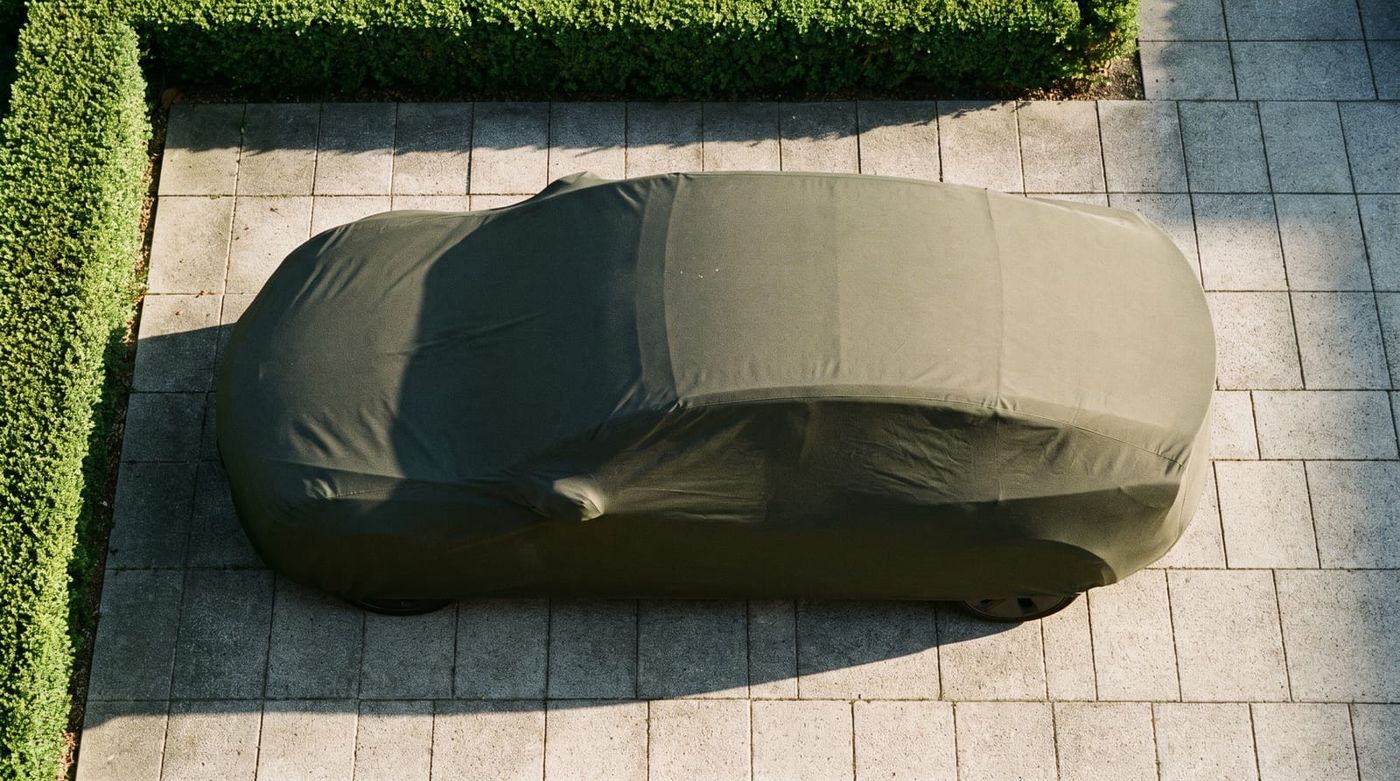
Generic "full-size truck" covers are built around a bell curve of pickup shapes: rounded hoods, sloped windshields, standard bed rails. The Cybertruck breaks that curve entirely. Its flat planes and sharp angles mean a cover built for an F-150 or Silverado will bunch, gap, or sit loose in exactly the spots where wind can catch it.
Before buying anything, check three things: bed length and configuration, total vehicle length, and mirror placement. These vary enough between trims and model years that guessing is a bad idea. Use a vehicle-specific size and fit lookup or a cover finder tool before you buy. It takes two minutes and saves you a return shipment.
Fit errors run in both directions. Too loose, and you get wind abrasion against the steel. Too tight, and you're stressing seams and zippers every time you stretch the cover on and off. Neither one is "close enough." For a vehicle this unusually shaped, checking the Tesla-specific truck cover options directly, rather than a generic category listing, is the safer move.
Where the Savings Add Up: Shipping, Returns, and Warranty
The sticker price on a cover isn't the whole price. Shipping costs can turn a $60 cover into an $85 one by the time it lands on your doorstep, so factor that into any comparison instead of judging covers by list price alone. Checking for free shipping before you buy is a quick way to make sure your "budget" pick stays that way.
Return policy matters just as much, maybe more. Fit issues happen even with good sizing tools, and a clear return policy means a wrong purchase doesn't turn into a sunk cost sitting in your garage.
Warranty coverage for material defects is worth checking too, even on entry-level products. A cover backed by something like a lifetime warranty tells you the maker expects the product to hold up, which says more about real long-term value than the price tag does on its own. These policies, not just the upfront number, are what separate genuinely affordable from just cheap.
Final Take: Budget Smart, Not Just Cheap
The minimum bar doesn't move just because you're on a budget: soft lining, real water resistance, UV protection, and a fit built for this specific truck's odd geometry. Skip any one of those and you're not saving money, you're deferring a cost.
Spending a little more for a properly fitted, properly lined cover protects a truck that's expensive to repaint, hard to buff out, and worth more down the road if the finish stays clean. For a vehicle this unusual, the right cover isn't an accessory, it's part of owning it responsibly.
If you're still comparing, take a look at top-rated car covers or browse current truck cover options to see what fits both your Cybertruck and your budget. Worth a few minutes before you buy.
