
Best Outdoor Car Cover for a Toyota Corolla: Waterproofing & UV Protection Guide

The Corolla is one of the most common cars in American driveways, which also means it's one of the most common cars sitting outside, uncovered, taking whatever the sky throws at it. If yours lives on a street, in an apartment lot, or under an open carport, the two things doing the most damage are water and sun, not gravel or dust. An outdoor car cover for a Toyota Corolla only earns its price if it actually blocks both. This guide walks through what "waterproof" and "UV-blocking" really mean on a spec sheet, what fits a Corolla's specific body shape, and how to avoid paying for marketing language that doesn't hold up in a real rainstorm.
Why Your Corolla Needs a Waterproofing + UV-Rated Outdoor Cover
Most Corolla owners aren't storing a weekend car. They're driving it to work, parking it wherever they can find a spot, and expecting it to still look decent in five years. That's a different job than protecting a garaged classic.
Two threats matter most here. Standing water and humidity work into door seals, trunk gaskets, and the little gap around the sunroof, and over time that moisture causes corrosion you can't see until it's already a problem. Meanwhile, UV exposure through the windshield bakes the dash, fades the seats, and slowly oxidizes the paint on the roof and hood, the panels that get the most direct sun.
This article is here to help you make a buying decision, not to give you a general car-care refresher. We're focused specifically on which cover materials and features deliver real waterproofing and UV protection, and which ones just say the right words on the product page.
What 'Waterproof' Actually Means for a Car Cover
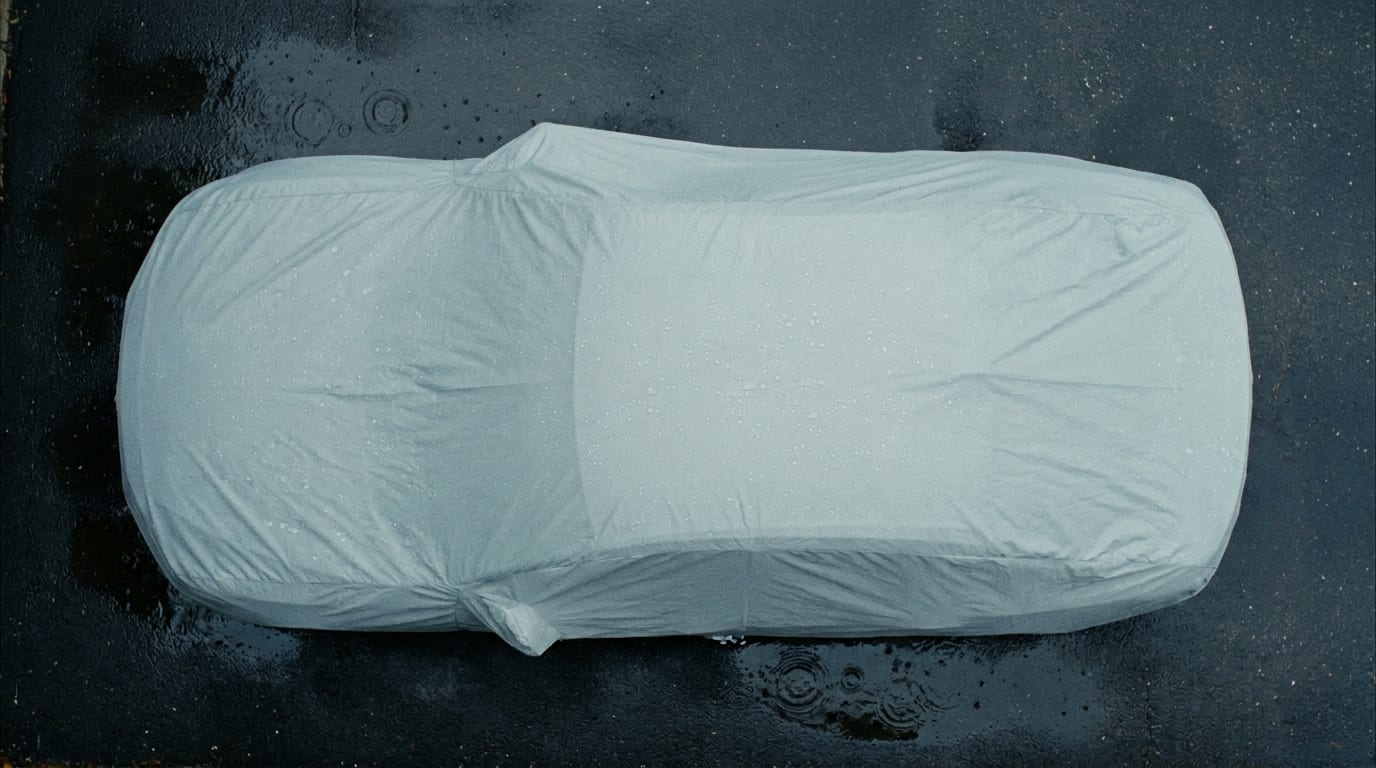
Here's where a lot of buyers get burned. "Waterproof" and "water-resistant" get used almost interchangeably in cover listings, but they're not the same product.
A true waterproof cover uses a sealed or laminated multi-layer fabric, something built so water beads and rolls off no matter how long it sits. Water-resistant covers are usually a single layer of treated polyester. That treatment works fine in light drizzle, but during a sustained downpour, water eventually soaks through. If you're parking outside daily, that difference shows up the first time a storm rolls through overnight.
Oddly enough, breathability still matters even on a fully sealed cover. A cover that blocks 100% of water in but also blocks all air movement can trap moisture underneath, and that trapped humidity turns into condensation and mildew on the paint, especially if the Corolla sits covered for several days in a row. Good waterproof covers manage this with layered fabric that keeps rain out while still letting vapor escape from the inside.
One thing people overlook entirely: the fabric itself usually isn't where the water gets in. It's the seams, the grommets, and the vent placement. A cover with unsealed stitching or a poorly placed grommet will leak there first, regardless of how good the fabric is rated. When you're comparing options, look at the seam construction, not just the material name. For a deeper breakdown of how wind, rain, and sun interact on a cover left outside, the guide to using a car cover outdoors covers the mechanics in more detail than we can here.
UV Protection: Stopping Sun Damage on Your Corolla's Paint and Interior
UV protection works by either reflecting radiation off an outer coating or using a UV-treated fabric that keeps it from penetrating to the paint underneath. Cheaper covers absorb UV instead of blocking it, which means the cover itself degrades faster and the sun exposure just gets delayed a little, not stopped.
Corollas have a few specific pain points worth knowing. Dark paint colors, black especially, show oxidation and fading fastest because they absorb more heat. Plastic trim pieces, mirror caps, door handles, that little strip along the bumper, get brittle and crack after enough seasons in direct sun. And the dash and seats fade even with no cover at all, just from sun coming through the windshield, so a cover that only shields the exterior paint is solving half the problem.
Not all "UV protection" claims mean the same thing. Basic UV-resistant fabric slows fading somewhat but wears down within a couple of seasons. Multi-layer UV-blocking construction holds up longer and actually protects the clear coat, not just the color underneath it. When you're comparing an outdoor car cover for Toyota Corolla options, that distinction on the product page is worth reading closely before you buy, not after.
It's easy to think of a cover as an accessory. For a compact sedan like the Corolla, where resale and trade-in value depend heavily on how clean the paint and interior look, a decent cover is closer to an investment that pays for itself at trade-in time.
Matching Cover Material to Your Climate and Corolla Generation
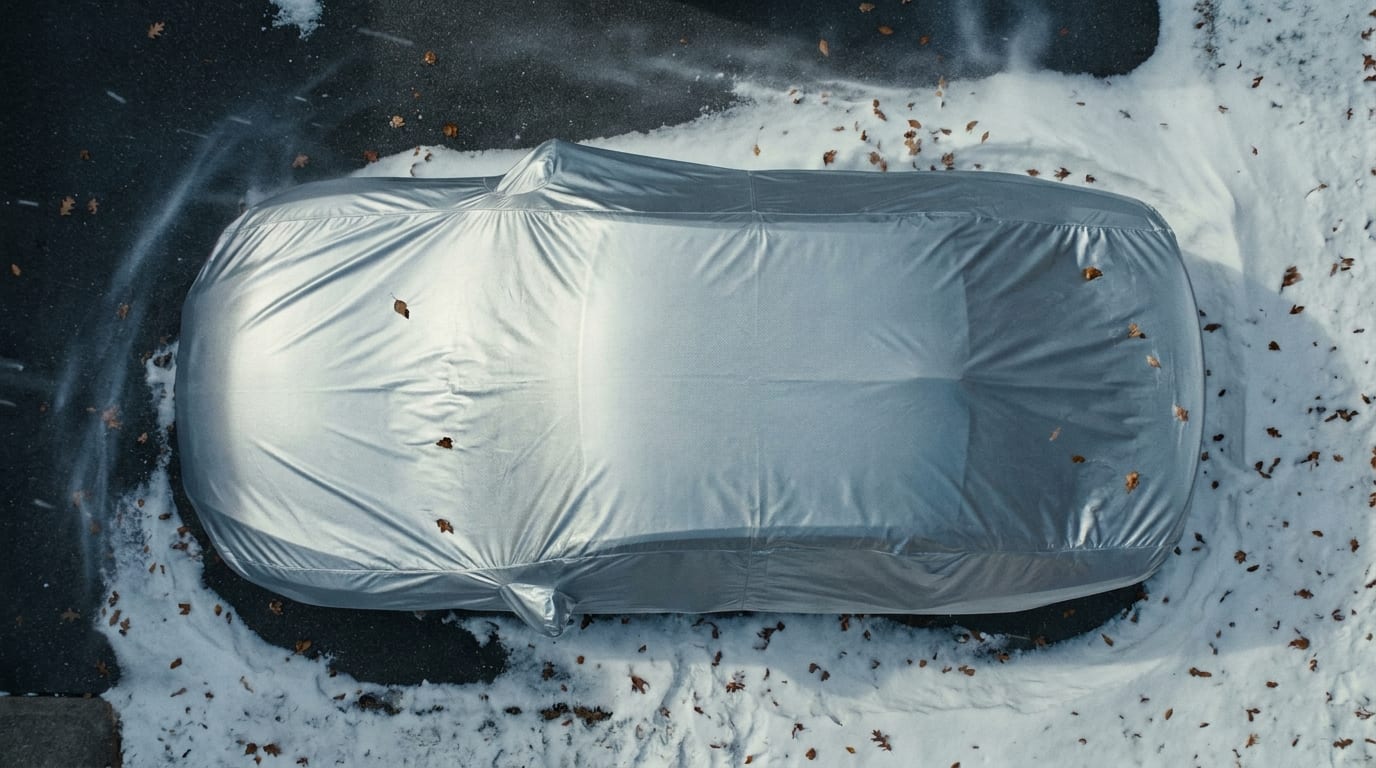
Not every Corolla owner needs the heaviest-duty cover on the shelf. If you're in a mild, mixed climate, a lighter waterproof/breathable fabric will handle occasional rain and moderate sun just fine. But coastal humidity, desert-level UV intensity, or a freeze-thaw winter climate all call for a heavier, layered all-weather cover. The extra cost buys you a fabric that doesn't break down as fast under constant stress.
| Climate type | Recommended cover weight | Why |
|---|---|---|
| Mild, mixed (moderate rain, moderate sun) | Light waterproof/breathable | Handles typical exposure without overpaying for extra layers |
| Coastal, high humidity | Heavier multi-layer | Resists salt air and constant moisture better |
| Desert, high UV intensity | UV-blocking multi-layer | Cheaper fabric breaks down fast under intense sun |
| Freeze-thaw regions | Heavy-duty all-weather | Handles ice, snow load, and temperature swings |
Fit matters just as much as material, and this is where Corolla owners sometimes get tripped up. The Corolla's body shape has changed across generations, from the E140 and E170 to the E180 and current E210 sedan, plus the earlier hatchback variants. A cover cut for one generation won't seal the same way on another, even though both cars share the same nameplate. A cover that's even slightly off in length or width leaves gaps at the hem, and that's exactly where wind-driven rain gets in.
Rather than guessing with a universal-fit cover, check the Toyota brand page or the Corolla-specific cover options to find something built for your exact generation. And if you're not sure which size or fit matches your trim, the sizing guide walks through how to match your Corolla's exact dimensions to the right cover.
Fit, Installation, and Keeping the Cover Sealed in Wind and Rain

A snug fit does more for waterproofing than the fabric itself. That's worth repeating because it's counterintuitive. An elastic hem or strap system that pulls the cover tight against the body closes off the gaps where wind-driven rain sneaks in. A loose cover, even one made from great material, lets water blow up underneath the edges during a real storm.
Installation basics matter more than people think. Secure the cover front to back, use the included straps or grommets to anchor it underneath the vehicle, and check that it's snug at the mirrors and wheel wells. A cover that's left loose doesn't just let water in, it flaps in the wind and slowly abrades the clear coat, which defeats the whole purpose of covering the car in the first place.
If you're parking somewhere exposed, an open lot, a windy corner, anywhere without a windbreak, gust straps are worth adding. They keep the cover from shifting or lifting off entirely during a storm, which happens more often than people expect with an unsecured cover.
For Corolla owners using the car as a daily commuter, not a weekend garage queen, the on/off routine matters too. A cover that takes ten minutes to wrestle on and off every day won't get used consistently, and a cover that isn't used doesn't protect anything. Look for a design that folds and stores easily if you're taking it on and off daily rather than leaving it on for extended storage.
Warranty, Durability, and What to Expect Long-Term
A lifetime warranty on materials and workmanship typically covers manufacturing defects, stitching failures, and fabric that fails prematurely, not normal wear-and-tear from years of sun and weather. Knowing that distinction upfront saves you from assuming a warranty will replace a cover just because it's faded after five seasons of daily use. Read the warranty terms or the lifetime warranty details before buying so you know exactly what's protected.
Realistically, even a good waterproof cover loses some water repellency over years of sun exposure. That's normal fabric aging, not a defect. Periodic cleaning and reproofing extends the waterproof lifespan significantly, so this isn't a "buy once and forget it" purchase if you want it performing at its best for a decade.
If you're not sure about fit before buying, check the return policy so you're not stuck with a cover that doesn't seal properly on your specific Corolla generation.
And when it comes to keeping that waterproofing intact, how you clean the cover matters. Harsh detergents strip the water-repellent treatment faster than normal use does. The cover cleaning guide covers the right way to wash it without degrading the very protection you paid for.
Choosing and Buying the Right Outdoor Cover for Your Corolla
Before you buy, run through a short checklist. Confirm the cover is fitted to your Corolla's specific generation and trim, not a generic universal size. Confirm it's built from a genuine multi-layer waterproof and UV-blocking fabric, not just a treated single layer. Confirm it has strap or grommet security features to keep it sealed in wind. And confirm the warranty terms actually match what you expect from a long-term purchase.
Browse the Corolla-specific cover lineup or the broader Toyota cover selection to compare options side by side. Free shipping and a straightforward return window make it easier to try a cover without much risk if the fit isn't quite right the first time.
The Corolla's been a daily driver for American households for decades now, through several redesigns and generations, which is exactly why getting the outdoor protection right actually matters here. A car that's meant to last that long deserves a cover that can keep up with it. If you want more buying guidance like this before your next purchase, it's worth browsing similar car care guides while you're at it.
