
Best Outdoor Car Cover for Your Chevrolet Malibu: Waterproofing & UV Protection Guide

Leave a Malibu sitting in a driveway for a season and you'll see exactly what sun and rain do to a car with nowhere else to park. Dew collects overnight, the sun bakes the hood by noon, and by the time winter rolls around, the clear coat looks tired even if the car's only a few years old. Finding the right outdoor car cover for Chevrolet Malibu owners isn't about grabbing whatever's cheapest at the auto parts store. It's about matching real protection to two specific threats: moisture and UV exposure. Get either one wrong and you're looking at paint damage, a cracked dash, or a cover that's garbage by next summer.
Why Your Outdoor-Parked Malibu Needs More Than a Basic Cover
Two things wreck an outdoor-parked car faster than anything else: trapped moisture and relentless sun. Rain and dew are obvious problems, but the sneakier one is humidity that gets sealed in under a cheap, non-breathing cover and just sits there, doing slow damage to paint and trim. UV exposure works differently but just as destructively, fading clear coat, drying out dash plastics, and making trim brittle over time.
The Malibu's body style actually makes this worse than you'd think. As a lower-profile sedan, it's got more flat, horizontal surface (that long hood, that big stretch of roof) sitting directly under the sun than a truck or SUV with more vertical panels to deflect the angle. Park it in an uncovered driveway and it's basically a solar panel for UV rays.
So the real question this guide answers: which waterproof, UV-rated outdoor cover actually holds up on a Malibu, versus one that traps moisture underneath or shreds after a few months of wind and sun? We'll get into material science, fit by generation, tier pricing, and installation, so you can walk away ready to buy instead of still guessing.
What 'Waterproof' Actually Means on a Car Cover Label
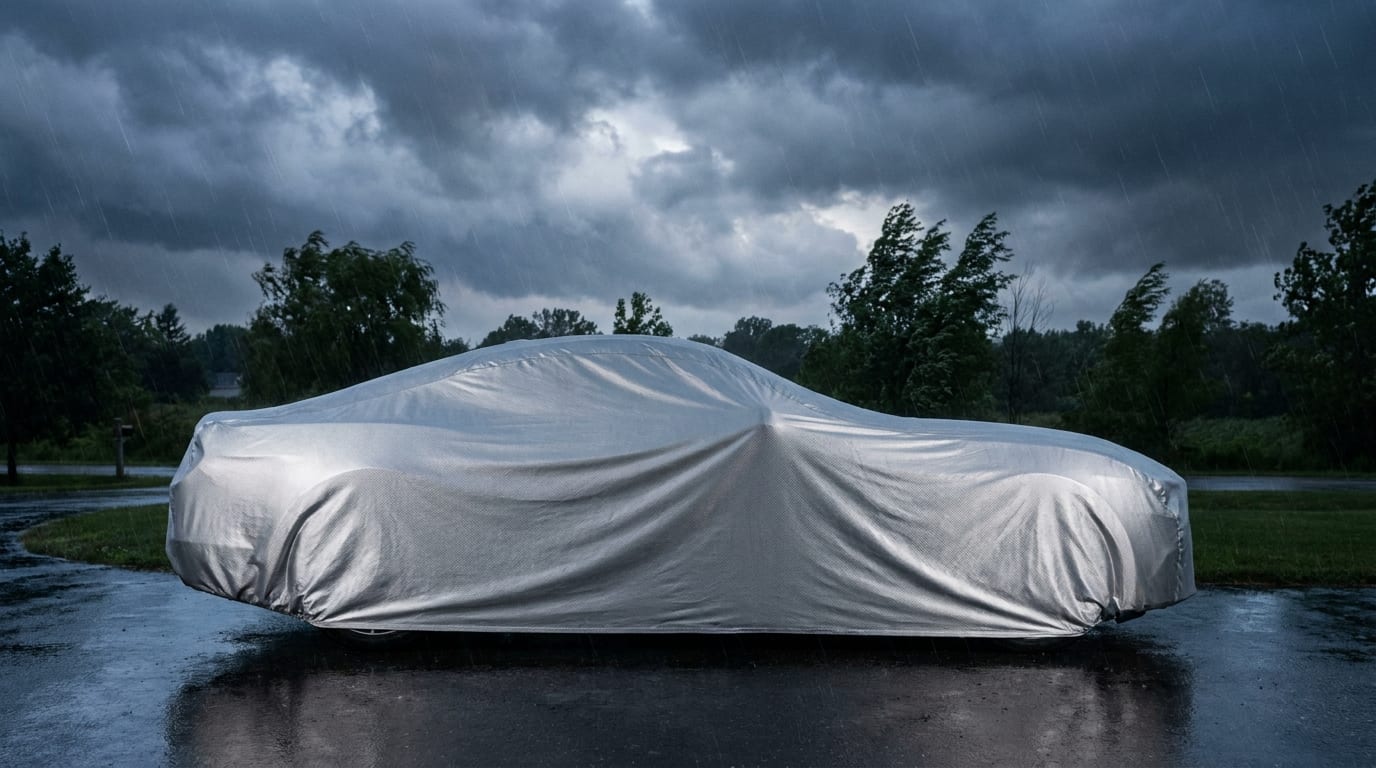
Here's where a lot of buyers get tripped up. "Water-resistant" and "waterproof" get used almost interchangeably in marketing copy, but they're not the same thing. Water-resistant fabric repels light rain and dew while still letting air pass through. Truly waterproof fabric is a different animal: multi-layer, laminated material engineered to block driving rain and keep water from pooling on the surface.
Here's the part nobody tells you though: a "waterproof" cover that doesn't breathe can actually do more damage than a water-resistant one. If it seals in condensation against the paint with nowhere for the moisture to escape, you've basically built a greenhouse for your clear coat. What you want is a cover that's waterproof and breathable, using a microporous layer that blocks liquid water from getting in while still letting vapor escape.
Fabric quality only gets you halfway there, though. Seams and stitching are where cheap covers actually fail. Taped or double-stitched seams close up the weak points that untreated seams leave wide open. Skip that detail and rain finds its way in exactly where the panels meet, no matter how good the main fabric is.
The real-world cost of getting this wrong is uglier than it sounds. A Malibu that sits under a pooled, leaking cover for a few rainy days can develop water spotting on the paint or even a mildew smell that creeps into the cabin. If you're shopping waterproof car covers for a car that lives outside full time, this is the spec that matters most, more than color, more than price. For a deeper look at how these fabrics are actually built, it's worth reading through the details on waterproof fabric construction before you buy.
UV Protection: Stopping Sun Damage to Your Malibu's Paint and Interior
UV rays don't just fade paint, they break down the clear coat molecule by molecule. Over time that shows up as oxidation, chalky patches, and a finish that won't hold wax or ceramic coating the way it used to. Once the clear coat's compromised, no amount of detailing fixes it. You're looking at paint correction or a respray.
Interior damage is just as real, and sedans take it hard because of how much windshield glass sits over the dash. Leave a Malibu uncovered in direct sun for a season or two and you'll start seeing a cracked dashboard, a faded steering wheel, and a headliner that's a shade lighter than it used to be. None of that happens overnight, but it adds up fast in hot climates.
When you're comparing covers, look for outer layers that are UV-stabilized, meaning the fabric itself resists breakdown from sun exposure, not just a coating sprayed on top. Reflective or light-colored outer shells also help manage heat buildup. Dark covers left baking in direct sun can actually run hotter on the surface than the paint underneath would get exposed, which defeats part of the purpose.
All of this ties directly to resale. A Malibu with intact paint and a dash that hasn't cracked is worth noticeably more at trade-in than an identical car with sun damage. An outdoor car cover built for real UV protection is cheap insurance against that value loss.
Matching Cover Material to Your Climate and Parking Situation
Not every Malibu owner needs the same cover, because not every driveway sees the same weather. If you're in a heavy-rain or humid region, prioritize a fully waterproof, breathable multi-layer fabric. If you're somewhere dry and sun-heavy, like the desert Southwest, a UV-stabilized outer shell with heat-reflective properties matters more than rain protection. Most owners fall somewhere in between and need a layered all-weather cover that handles both jobs reasonably well.
Coastal owners have their own problem: salt air. It accelerates corrosion around wheel wells, trim, and anywhere moisture tends to collect. Look for a cover with reinforced water resistance in those specific zones, not just a generically waterproof main panel.
Northern owners dealing with snow and frost need to think about the underside of the cover too. A waterproof shell that isn't lined can freeze stiff overnight, and ice buildup against unlined fabric can actually scratch the paint as it shifts. Layered covers built with a softer inner lining avoid that problem.
The simplest rule: buy for the worst weather your Malibu regularly sits through, not the average day. If it only rains hard twice a year where you live but the sun is brutal every single day, buy for the sun.
Getting the Right Fit for Your Chevrolet Malibu
Malibu body style, mirror placement, and antenna position have all shifted across generations, so a generic "mid-size sedan" universal cover often leaves gaps right at the bumpers and mirrors. Those gaps are exactly where wind gets under the fabric and where UV rays sneak in on exposed panel edges.
Semi-custom covers use a Malibu-specific pattern with better seam alignment than a true universal fit. Custom-fit covers go a step further, built to the exact factory dimensions for your generation, with no excess fabric flapping around in wind and wearing thin over time. If you've ever seen a car cover with baggy fabric snapping around at highway-adjacent speeds in a windy driveway, that's a sizing problem, not a product defect.
A loose cover isn't just an aesthetic issue, either. Wind lift on an oversized cover lets rain blow in underneath, and any gap at all is an unprotected entry point for UV rays. Correct sizing is a functional requirement for waterproofing and UV protection to actually work, not a nice-to-have.
Before buying, verify sizing using your VIN or model year rather than eyeballing dimensions off a spec sheet. It's worth browsing custom-fit car covers built specifically for the Malibu's generation, and running your fitment through a car cover sizing guide before checkout. Chevy owners can also check the Chevrolet vehicle cover lineup to see what's built for the model specifically.
Comparing Outdoor Cover Tiers for the Malibu: Which Protection Level to Buy
Cover pricing tracks pretty closely with how much protection you're actually getting. Here's how the three tiers typically break down for outdoor Malibu use:
| Tier | Waterproofing | UV Protection | Price |
|---|---|---|---|
| Entry-level | Resists light rain and dew, not built for prolonged downpours | Basic UV-resistant coating, fine for moderate climates | Lowest upfront cost, shortest lifespan under harsh sun |
| Mid-tier all-weather | Fully waterproof multi-layer fabric with taped seams | UV-stabilized outer shell rated for daily direct sun | Moderate cost, better long-term value for daily outdoor parking |
| Premium | Heaviest waterproof layering, reinforced seams, wheel-well coverage | Highest UV-blocking rating, heat-reflective properties | Highest upfront cost, backed by the strongest warranty |
If your Malibu only sits outside occasionally, in a mild climate, entry-level is a reasonable starting point. But if it's parked outdoors daily, in real sun or real rain, mid-tier or premium is the smarter buy. Replacing a cover every season costs more over time than buying the right one once.
Whatever tier you land on, check the specific warranty terms before you commit. Coverage length varies a lot between price points, and a longer warranty is usually a decent proxy for how confident the manufacturer is in the materials. It's worth reviewing what's covered under a lifetime car cover warranty before deciding which tier actually makes sense for your budget.
Installing, Cleaning, and Maintaining Your Cover for Maximum Protection
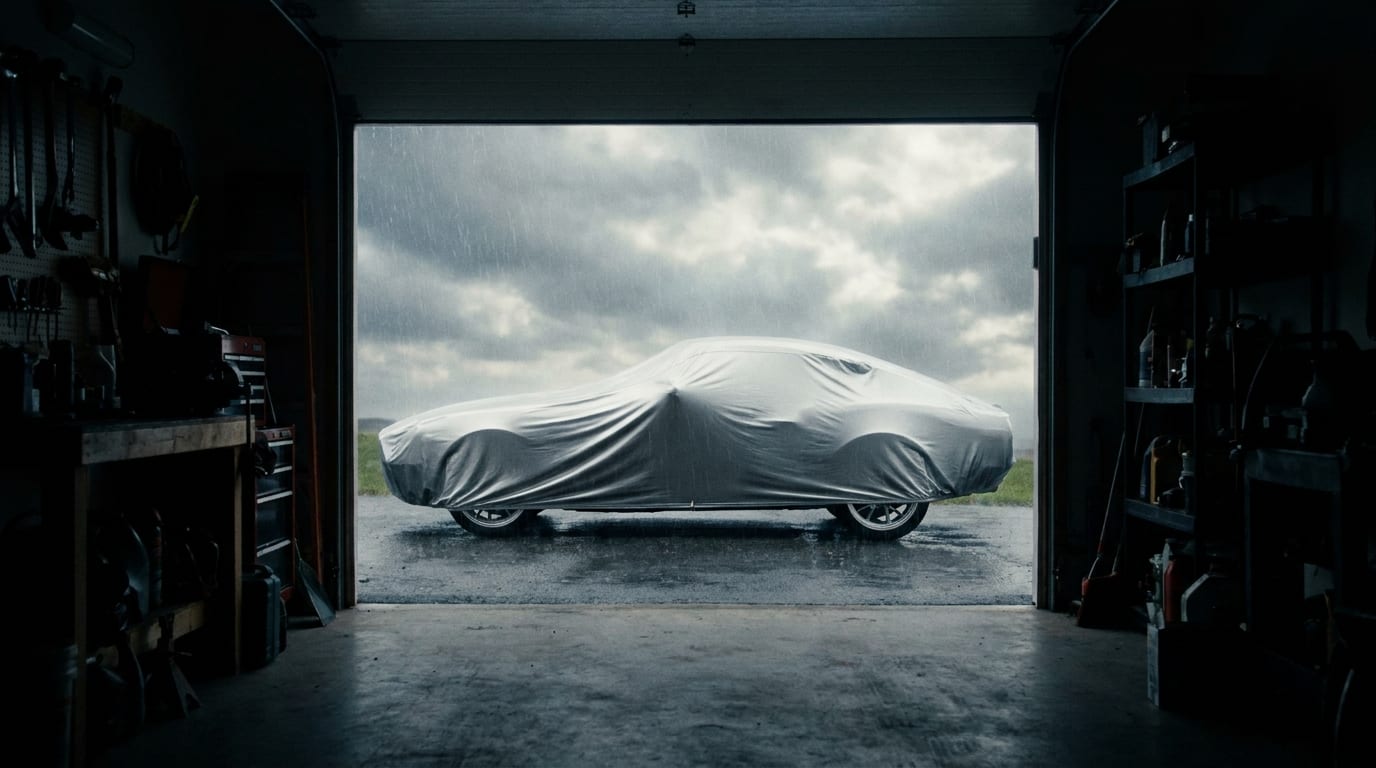
A great cover installed poorly won't perform like a great cover. Work front to back: settle the fabric over the hood and windshield first, then work it back over the roof and trunk, securing straps and grommets as you go. A loosely installed cover shifts overnight, and once it shifts, panels end up exposed exactly when you needed them covered.
If your driveway is open and windy, gust straps are worth adding. They keep the cover sealed tight against the Malibu's body instead of flapping, and that flapping motion is what abrades the UV coating over time, long before the fabric would otherwise wear out. Details on setup are in this guide to installing gust straps for wind protection.
Cleaning matters more than people assume. Rinse off dirt and debris before it works its way into the fabric weave. Grit sitting against the material for weeks wears down both the waterproof coating and the UV treatment faster than the weather itself does. And always let the cover dry fully before folding it up for storage. Packing away a damp cover is how mildew gets started, and mildew degrades the waterproof layer from the inside out. A full car cover cleaning guide walks through the specifics if you want a step-by-step process.
Choose the Right Outdoor Cover for Your Malibu Today
The decision comes down to three things: match your waterproofing level to how much rain you actually get, match UV rating to how much sun your Malibu sits in, and buy Malibu-specific sizing instead of a generic universal fit. Skip any of those and you're setting yourself up for one of the two most common outdoor cover failures, trapped moisture damage or sun-faded paint.
An outdoor car cover for Chevrolet Malibu owners isn't a one-size-fits-all purchase, and it shouldn't be treated like one. Take the time to match the cover to your actual climate and parking situation, confirm the fit before you check out, and you'll get years out of it instead of one rough summer.
If you're still narrowing down options, it's worth browsing the full range of outdoor car covers and subscribing for more guides like this one as you get your Malibu ready for whatever the season throws at it. A cover backed by real warranty protection takes a lot of the risk out of the decision, so you can buy once and stop thinking about it.
