
Car Cover Size Chart for Hyundai Elantra: Find Your Exact Fit
If you're trying to cover a Hyundai Elantra and the fit looks off, loose at the bumper, flapping at the mirrors, the issue probably isn't the cover brand. It's the size class. This car cover size chart for Hyundai Elantra breaks down exactly where the Elantra lands by generation, how to confirm it with your own tape measure, and when to go custom instead of universal.
Hyundai Elantra Size Class: Midsize Sedan
Here's the short answer: the Hyundai Elantra is a Midsize Sedan, not a Compact. Depending on the generation, it runs roughly 180 to 186 inches long, which puts it solidly past the compact-sedan cutoff most cover makers use.
This matters more than it sounds like it should. Picking the wrong size class is the single most common reason an off-the-shelf cover fits loose, pools water, or leaves six inches of bumper hanging out in the rain. A compact-sized cover on an Elantra will look like it fits from the side, then come up short at the nose and tail every time.
It also isn't static across model years. The 6th generation (2017-2020) and 7th generation (2021-present) shifted both length and roofline slightly. Not dramatically, we're talking an inch or two in most dimensions, but enough to nudge a borderline fit one way or the other, especially if your Elantra sits near the edge of a size bracket. Same size class, slightly different shape.
The table below is the fastest way to match your specific year and trim to the right size. Use it as your starting point, then confirm with a quick measurement if your car has anything that changes its footprint (spoiler, roof rails, bigger wheels).
Hyundai Elantra Size Class by Year and Trim
| Model Year | Length (in) | Width (in) | Height (in) | Recommended Cover Size Class |
|---|---|---|---|---|
| 2011-2016 (5th gen) | ~179.5 | ~69.9 | ~56.5 | Midsize Sedan |
| 2017-2020 (6th gen) | ~179.7 | ~70.9 | ~56.5 | Midsize Sedan |
| 2021-present (7th gen) | ~184.1 | ~71.9 | ~56.1 | Midsize Sedan |
| Elantra N / Elantra GT (hatchback) | ~171-179 | ~70.9-71.9 | ~56.9-57.3 | Midsize Hatchback (different cut) |
A couple of things worth flagging before you buy. First, the hatchback variants (Elantra GT, and the N performance hatch in some markets) are not interchangeable with the sedan despite sharing a lot of the platform. A sedan cover won't close over a hatchback's rear end correctly, the roofline and rear glass angle are different, so treat that as its own shape, not just a shorter sedan.
Second, Limited and N Line trims often add a rear lip or wing spoiler, plus larger wheels that push the body width out slightly. That doesn't move the car into a different size class, but it does mean you want a cover design built to clear a spoiler rather than stretch over it. Worth checking before checkout, not after the cover's already on the car and bunching at the trunk.
When any of this is uncertain, measure your own car. That's next.
How to Measure Your Elantra to Confirm Fit
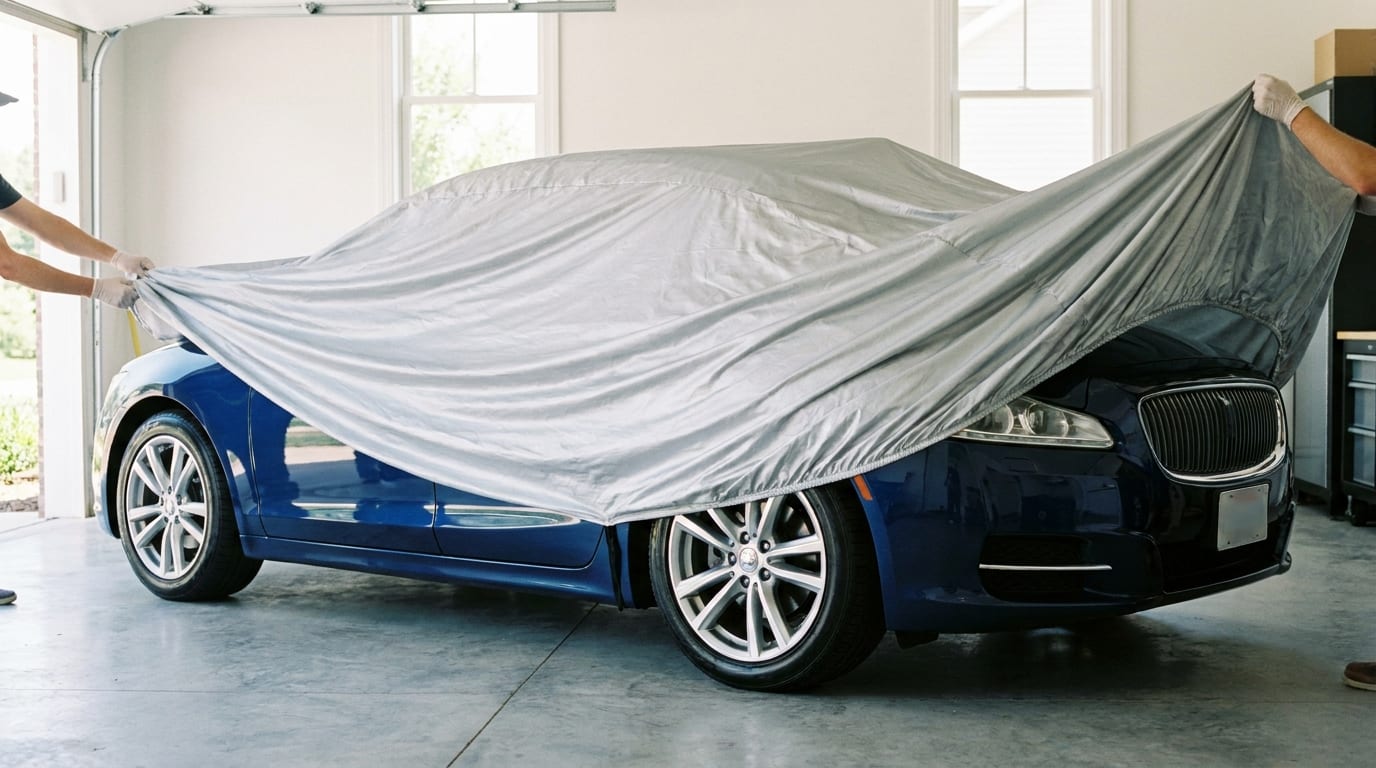
Three measurements settle most fit questions: bumper-to-bumper length, widest point, and roofline height. That's it. You don't need a tailor's precision, but you do need to measure the right spots.
For length, run a tape measure along the ground from the leading edge of the front bumper to the trailing edge of the rear bumper. Don't include the mirrors in any measurement, they're not part of what a cover's length and width specs account for, and including them will throw off your comparison to the chart. For width, measure at the widest point of the body itself, typically at the hips of the rear fenders or front fenders, whichever is wider. For height, measure from the ground to the highest point of the roofline, not including any roof rack or antenna.
Trim details move these numbers more than people expect. A sunroof doesn't usually change exterior height, but a roof rail or spoiler can add an inch or two to the relevant dimension, and that's exactly the kind of margin that matters when your car sits near a size-class boundary. An Elantra that measures 183 inches is comfortably midsize. One that's right at 186 with a spoiler added is worth double-checking against the size and fit guide for your vehicle before you commit.
This step matters even more on an older or used Elantra, where you might not have the original window sticker or know the exact trim level it rolled off the lot with. A five-minute measurement beats guessing from a VIN decode. Cross-check what you measure against the chart above, and if the numbers land between two classes, size up rather than down. A slightly loose cover is a minor annoyance; one that won't close is a return.
Universal Size-Class Covers vs. Custom-Fit Elantra Covers
Once you know your size class, there's a second decision: universal or custom-fit.
A universal, size-class cover is built to fit a range of cars within a given length and width bracket. That makes it more affordable and more forgiving if you're not 100% sure of your exact trim. The tradeoff is fit precision. Since it's designed to stretch over several different body shapes, there's inherently more slack in the fabric, which means more wind flap on the highway stretch of your driveway, and more opportunity for rainwater to pool in the gaps instead of running off.
A custom-fit car cover is patterned to the Elantra's actual body lines, mirror placement, and roofline for that specific generation. It hugs the car instead of draping over it. For a vehicle that lives outside full-time, that tighter fit is the difference between a cover that holds up through a windy season and one that's flogging itself against the paint every time a storm rolls through.
Here's my honest take: if your Elantra sits outdoors daily, rain, sun, wind, the whole mix, spend the extra money on custom-fit. If you're covering it for occasional short-term storage, or it lives in a garage most of the time anyway, a correctly-sized universal cover does the job fine. Ready to browse what's actually available for your car? The Hyundai cover lineup lists both options by model.
Matching the Cover Size to Your Storage Conditions

Getting the size class right solves half the problem. The other half is matching the material to where the car actually sits.
If your Elantra is parked outside full-time, exposed to sun, rain, and whatever the weather throws at it, size alone won't cut it. You need a waterproof, UV-resistant cover in the correct size class. Skimp on either one and you'll end up with a cover that fits perfectly but lets water through the seams, or one that's waterproof but gapping at the bumper and letting water in anyway.
Garage or carport storage is a different equation. An indoor car cover in a lighter, breathable fabric is usually all you need, since you're protecting against dust and minor scuffs, not driving rain. Lighter material is also just easier to pull on and off daily if that's your routine.
One thing that's easy to overlook: even a cover that's sized exactly right still needs straps or tie-downs to stay put in wind. Size and fit keep the fabric from bunching or exposing the bumper, but they don't anchor the cover to the car on their own. If your Elantra is in a spot that catches wind regularly, check that whatever outdoor car cover you're looking at comes with a strap system built in, not bolted on as an afterthought.
Getting It Right the First Time
The path here is pretty linear. Confirm the Elantra sits in the Midsize Sedan size class, check your exact year and trim against the table, measure your own car if anything's in question, then decide between custom-fit and universal based on where and how often it's parked outside.
Skip any of those steps and you're guessing, and guessing is how people end up with a cover that looks right in the box and wrong on the car. If you want to go deeper on any piece of this, the cover sizing and fit guide walks through the same measuring process for any vehicle, and the full car cover catalog lets you filter by make and model once you know what you're looking for.
None of this is about pushing you toward a purchase today. It's just the research step worth doing properly, size first, features second, so whatever you end up buying actually fits the car sitting in your driveway.
