
Car Cover Size Chart for Jeep Cherokee: Find Your Exact Fit
The Jeep Cherokee sits in the midsize SUV size class, which is exactly where most cover manufacturers file it. That matters more than it sounds like it should, because the wrong class means a cover that bunches at the bumpers or won't reach the mirrors at all. This car cover size chart for Jeep Cherokee breaks down the real dimensions by generation, so you're not stuck guessing from a one-size-fits-all SUV label.
Jeep Cherokee Size Class: Midsize SUV
Jeep has used the Cherokee name across several very different vehicles, but across all of them, it lands in the midsize SUV bracket. That puts it a notch below the Grand Cherokee, and a notch above compact crossovers like the old Jeep Compass or a Honda CR-V. Cover makers build their sizing around these classes for a reason: a compact SUV cover will leave gaps at the Cherokee's bumpers, while a full-size SUV cover will flap loose around the mirrors and wheel wells.
Here's the catch, though. "Midsize SUV" covers a wide range once you factor in nearly 40 years of Cherokee production. An XJ from 1990 and a KL from 2020 are both called Cherokee, and both get filed under midsize SUV covers, but they're not the same shape or length. That's why a generation-specific chart beats a generic SUV cover listing every time.
And size class is only the starting point. Roof rails, rear-mounted spares, and antenna placement all affect how a cover actually sits on the vehicle, and we'll get into each of those further down.
Jeep Cherokee Size Chart by Generation
Jeep has built five distinct Cherokee generations, and their dimensions shift more than you'd expect from a nameplate that's stayed the same. Below is a general reference for each era. Treat these as a starting range rather than gospel, since trim and body style nudge the numbers around.
| Generation/Code | Model Years | Length (in) | Width (in) | Height (in) | Recommended Cover Size Class |
|---|---|---|---|---|---|
| SJ | 1974-1983 | ~186 | ~75 | ~66 | Full-size SUV |
| XJ | 1984-2001 | ~165-168 | ~67 | ~64 | Compact-to-midsize SUV |
| KJ (Liberty-era) | 2002-2007 | ~174 | ~70 | ~70 | Midsize SUV |
| KK (Liberty-era) | 2008-2012 | ~176 | ~72 | ~70 | Midsize SUV |
| KL | 2014-2023 | ~182 | ~73 | ~66 | Midsize SUV |
A couple of things worth flagging here. The XJ's two-door and four-door body styles don't share a length spec, and the two-door runs noticeably shorter. If you're covering an early Cherokee, know which body style you've got before you order. On the KL side, Trailhawk and Latitude trims carry slightly different bumper designs and roof equipment, which can shift the length by an inch or two in either direction. None of that breaks the chart, but it's exactly the kind of detail that pushes a borderline fit into "too tight" or "too loose" territory.
How to Measure Your Cherokee to Confirm Fit
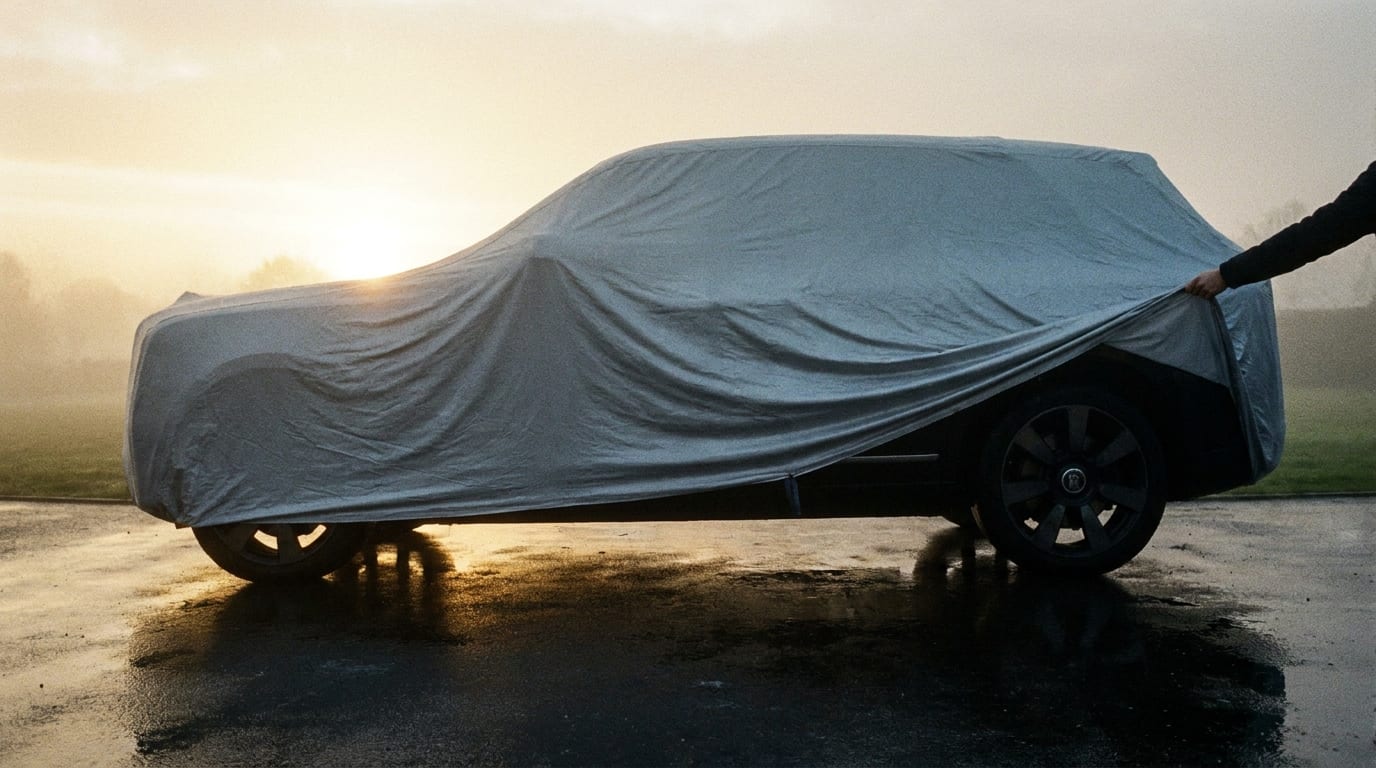
A chart gets you close. Measuring your actual Cherokee gets you right.
Start with length: bumper to bumper, front to back, with the vehicle parked on level ground. Then width, measured at the widest point, which on most Cherokees is mirror to mirror, though boxier older XJ models sometimes measure widest at the fenders instead. Finally, height, from the ground straight up to the highest point of the roof.
That last one trips people up. If your Cherokee has roof rails or a factory roof rack, measure over them, not around them. A universal-fit cover needs that extra inch or two built into the fit, or it'll stretch tight across the top and leave stress points where the rails meet the fabric.
Once you've got your three numbers, check them against the generation ranges in the chart above rather than trusting the model year by itself. This matters most near the edges of a size class. A 2001 XJ sitting at the tail end of compact-to-midsize and a 2002 KJ at the start of midsize aren't that far apart in real dimensions, so the measurement beats the badge every time.
If you'd rather not haul out a tape measure, CarCovers' coverfinder tool matches your exact year, make, and model to a listing built for it, no manual math required.
What Throws Off a 'Standard' Size Chart Fit
Factory spec sheets measure the vehicle as it rolled off the line. Most Cherokees on the road today don't look like that anymore, and that's where a "standard" size chart stops being enough.
Roof racks and cargo boxes are the biggest offenders. They add height the manufacturer's spec sheet never accounted for, and a cover sized to the base roof height will sit awkwardly, if it closes at all.
Older XJ trims often carry a rear-mounted spare tire, which changes the whole rear profile. A cover without a spare-tire allowance back there either won't close around it or will stretch thin trying.
Then there's the smaller stuff that still matters: oversized mirrors, shark-fin or whip antennas, tow hitches. None of these show up in a size chart, but all of them can snag a snug universal cover during install, especially around the mirror pockets.
And if you're running a lifted XJ (common enough that it's basically its own subculture), the stock height numbers won't apply to you at all. You'll likely need to size up or look for a cover rated for taller ground clearance, rather than trusting the base chart.
Custom-Fit vs. Universal Covers for the Cherokee
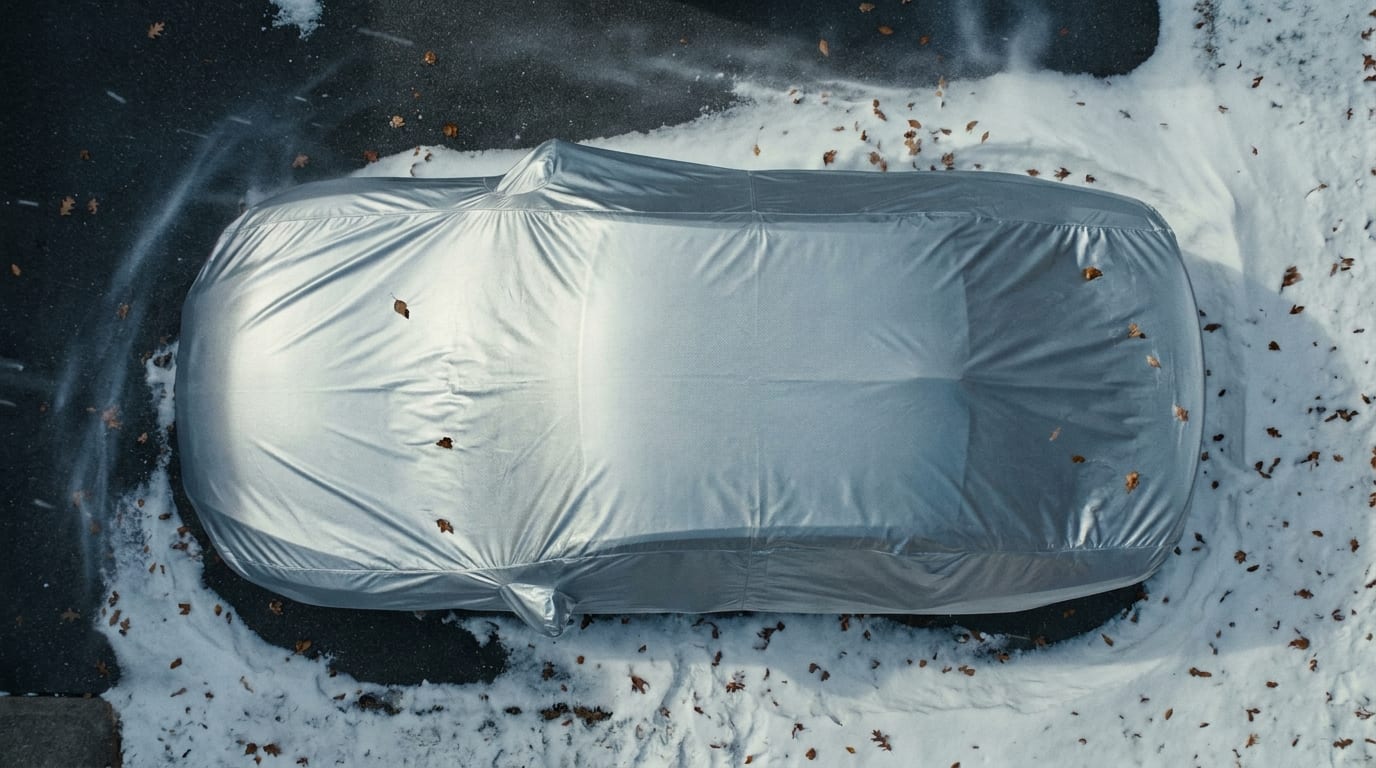
Once you know your size class and your real-world measurements, there's still a decision left: universal (sometimes called semi-custom) or custom-fit.
Universal covers work off the size chart and a handful of measurements, which makes them cheaper and more flexible across model years. Custom-fit covers are patterned to one specific year and trim, which means tighter contouring around the mirrors, bumpers, and roofline, with less excess fabric to flap in the wind.
For a Cherokee that lives in the garage most of the time, universal is usually fine. For one parked outside for months at a stretch, the tighter fit of a custom-fit car cover earns its keep, since loose fabric is what wears through first in sustained wind. Either way, you're still starting from the same place: knowing your correct size class. The chart above isn't optional groundwork, it's the foundation both options are built on.
Choosing Between Indoor, Outdoor, and Waterproof Builds
Size gets the cover to fit. Material determines whether it actually protects anything.
Indoor covers are built for dust and light scuffs, nothing more, and they're the right call for a Cherokee that lives in a garage. Outdoor covers step up to handle UV exposure and general weather for a vehicle parked in the driveway. For a Cherokee that sits outside through actual rain seasons, you want a waterproof-rated cover specifically, since "outdoor" and "waterproof" aren't automatically the same thing.
A correctly sized cover in the wrong material still fails. It just fails differently, letting moisture or sun damage through instead of letting the wind rip it off. We go deeper on material selection elsewhere, so this is just the short version: get the size right first, then match the build to where the Cherokee actually parks.
Get the Right Cover for Your Cherokee
Midsize SUV is where every Cherokee cover search starts, but the generation-specific numbers are what actually get you to a good fit, and roof racks, lifts, or a rear spare can shift things further still.
If you've got five minutes, measure your Cherokee the way we outlined above and check it against the chart. If you'd rather skip that step entirely, look your exact year and trim up directly instead of guessing from the size class alone.
Check out CarCovers' Jeep SUV listings for Cherokee-specific options, and once you've got a cover picked out, our installation guide walks through getting it on right the first time.
