
Car Cover Size Chart for Tesla Model S: Find Your Exact Fit
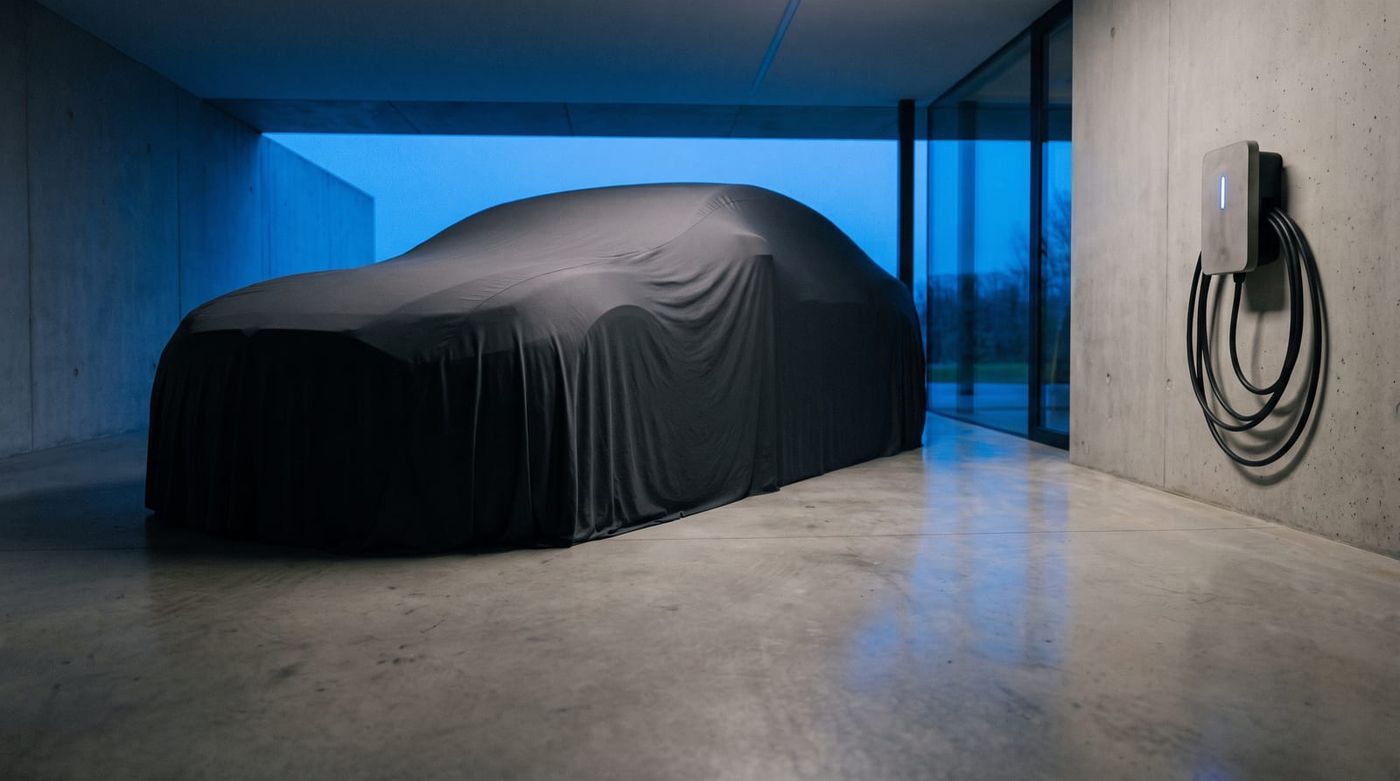
The Tesla Model S is a big car. Bigger than it looks sitting low on those 19 or 21 inch wheels, anyway. If you're pulling up a car cover size chart for Tesla Model S fitment and trying to figure out which box to check, the short answer is this: it's a large sedan, full stop. Here's what that means for sizing, what the dimensions actually are by year, and how to avoid ending up with a cover that bunches at the hatch or gaps at the mirrors.
Tesla Model S Size Class: Large Sedan
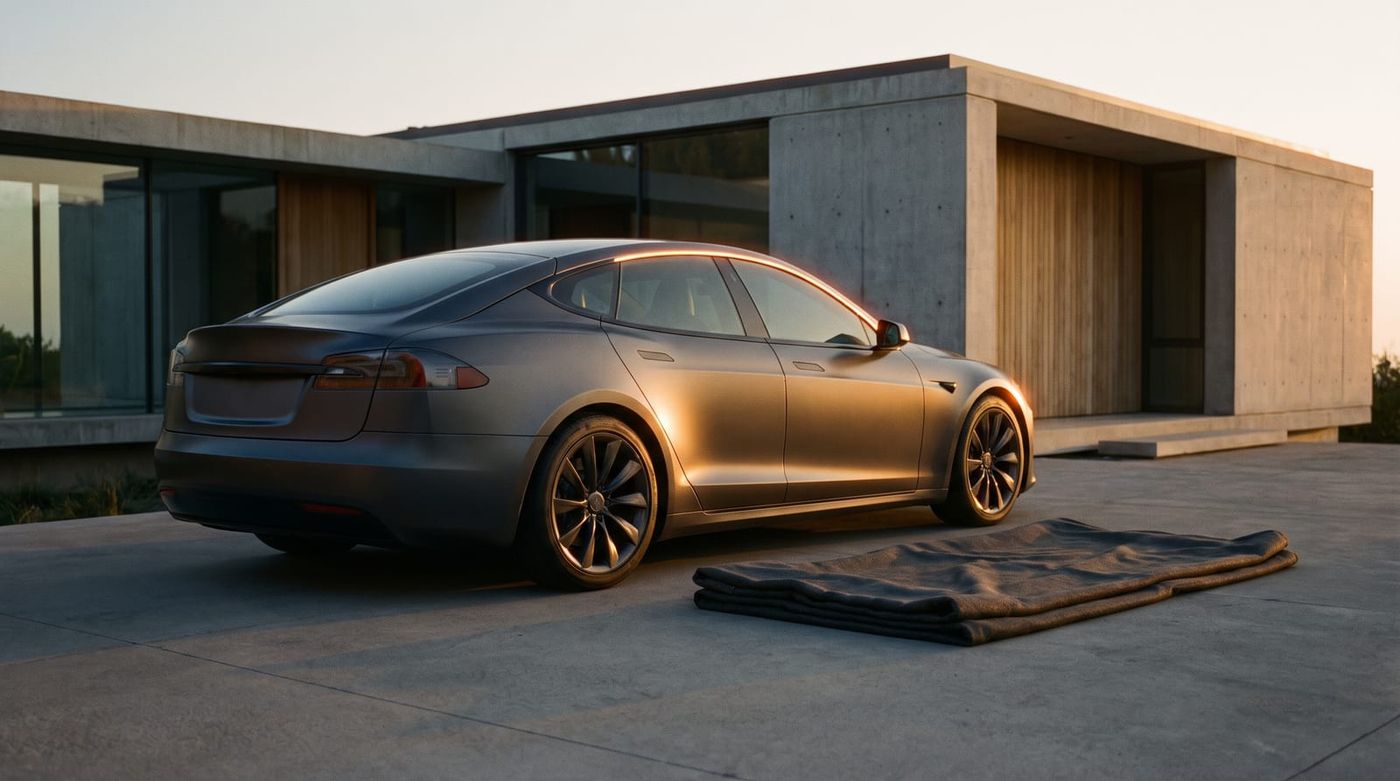
Every Model S built since 2012 lands in the Large Sedan (sometimes labeled Full-Size Sedan) class that most cover manufacturers use. That's the same bucket as a BMW 7 Series or a Mercedes S-Class, cars with a similar footprint and a similar problem: generic sedan covers are usually cut for something smaller.
The number that matters is length. The Model S runs 196 to 198 inches overall depending on model year, which puts it well past the Midsize Sedan range (roughly 180-190 inches) and short of Full-Size SUV territory. So on a basic car cover size chart for Tesla Model S shoppers, it slots near the top of the sedan classes rather than the middle.
Here's the catch, though. The Model S has a low roofline at just 56.9 inches and a wide track, and that combination means a cover sized correctly for "Large Sedan" length can still gap at the mirrors or sit loose around the nose if it wasn't cut with this car's proportions in mind. A semi-custom cover labeled "fits 191 to 210 inches" will physically fit the car, no question. It just might not fit it well. For a tighter result that accounts for the liftback shape, mirror placement, and front fascia, a Tesla-specific cover or a custom-fit option is the better call.
Tesla Model S Dimensions by Model Year
The Model S hasn't changed size dramatically since launch, but there have been small shifts worth knowing before you buy. Here's how the dimensions break down:
| Model Year Range | Length (in) | Width w/o mirrors (in) | Height (in) | Wheelbase (in) | Body Style |
|---|---|---|---|---|---|
| 2012-2016 | 196.0 | 77.3 | 56.9 | 116.5 | Liftback sedan |
| 2017-2020 | 196.0 | 77.3 | 56.9 | 116.5 | Liftback sedan (facelift, minor trim/spoiler changes) |
| 2021-present (incl. Plaid) | 197.7 | 77.3 | 56.3 | 116.5 | Liftback sedan, revised front fascia |
A footnote worth remembering: mirror-folded width and overall height can shift slightly depending on whether you've got the 19 inch or 21 inch wheel package, and aftermarket spoilers will change the rear profile a bit too. None of that moves the car into a different size class, but it's part of why "close enough" sizing sometimes isn't.
How to Confirm Your Cover Will Fit
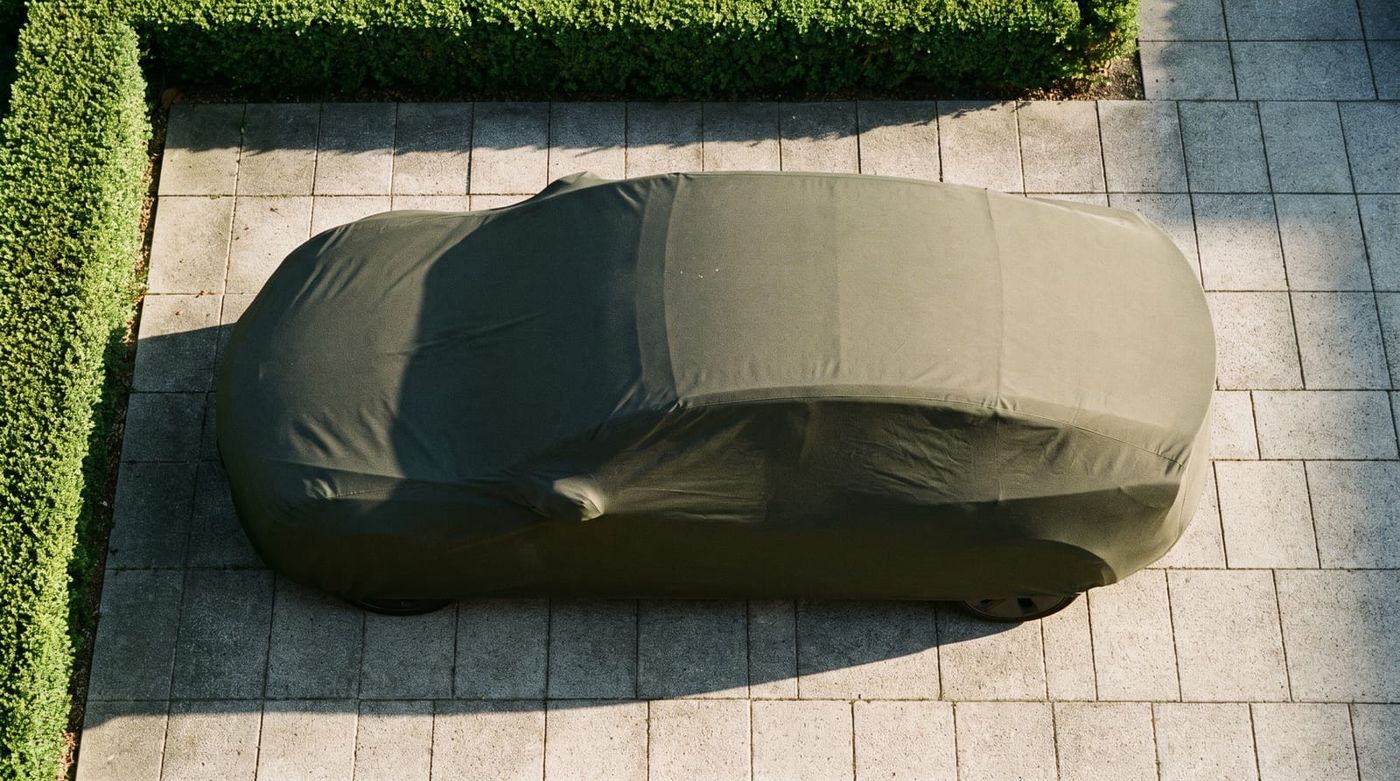
Don't take a listing's word for it. Measure your own car first.
Start with bumper-to-bumper length with the car parked on level ground. Then measure the widest point, mirrors extended, since that's where a lot of covers come up short. Finally, measure ground-to-roof height on your stock wheel setup, because a lowered or raised ride height changes the math slightly.
Once you've got your numbers, check them against the sizing guidance for your specific vehicle and make sure your Model S's 196 to 198 inch length sits comfortably inside the cover's stated range, not right at the edge. A cover rated for "up to 200 inches" technically works, but you're leaving no margin for stretch, shrinkage in cold weather, or a slightly longer trim variant.
Two Model S-specific details to check for: mirror pockets, and a charge port opening. The flush door handles and low-mounted mirrors on this car change how a cover drapes compared to a typical sedan, so pockets that actually hold the mirror shape make a real difference in wind. And because the charge port sits in a different spot than a gas filler door, a cover without a port cutout means pulling the whole thing off every time you plug in at home. That gets old fast if you're charging daily.
Semi-Custom vs. Model-Specific Fit
Semi-custom covers are built to a size class, like "Large Sedan," using average dimensions across several similar cars. Model-specific covers are patterned to one actual vehicle. The tradeoff is pretty simple: semi-custom is cheaper and fits fine for short stretches or indoor storage, but it's a compromise fit by design.
For a Model S that lives outside, the compromise shows up over time. A loose semi-custom cover flaps in wind, and that flapping wears fabric at contact points, the mirrors, the spoiler, the edges of the liftback. A custom-fit car cover cut to the Model S's actual shape eliminates most of that slack, which means less abrasion and a cover that still looks decent after a season of daily use.
Honestly, the most common fit complaint isn't about semi-custom versus custom at all. It's people ordering the wrong size class entirely, usually a "Midsize Sedan" cover because the Model S doesn't look as long as it measures parked next to something like a Camry. It is longer. Don't trust your eyeballs in a parking lot, trust the tape measure.
What to Look for Beyond Size
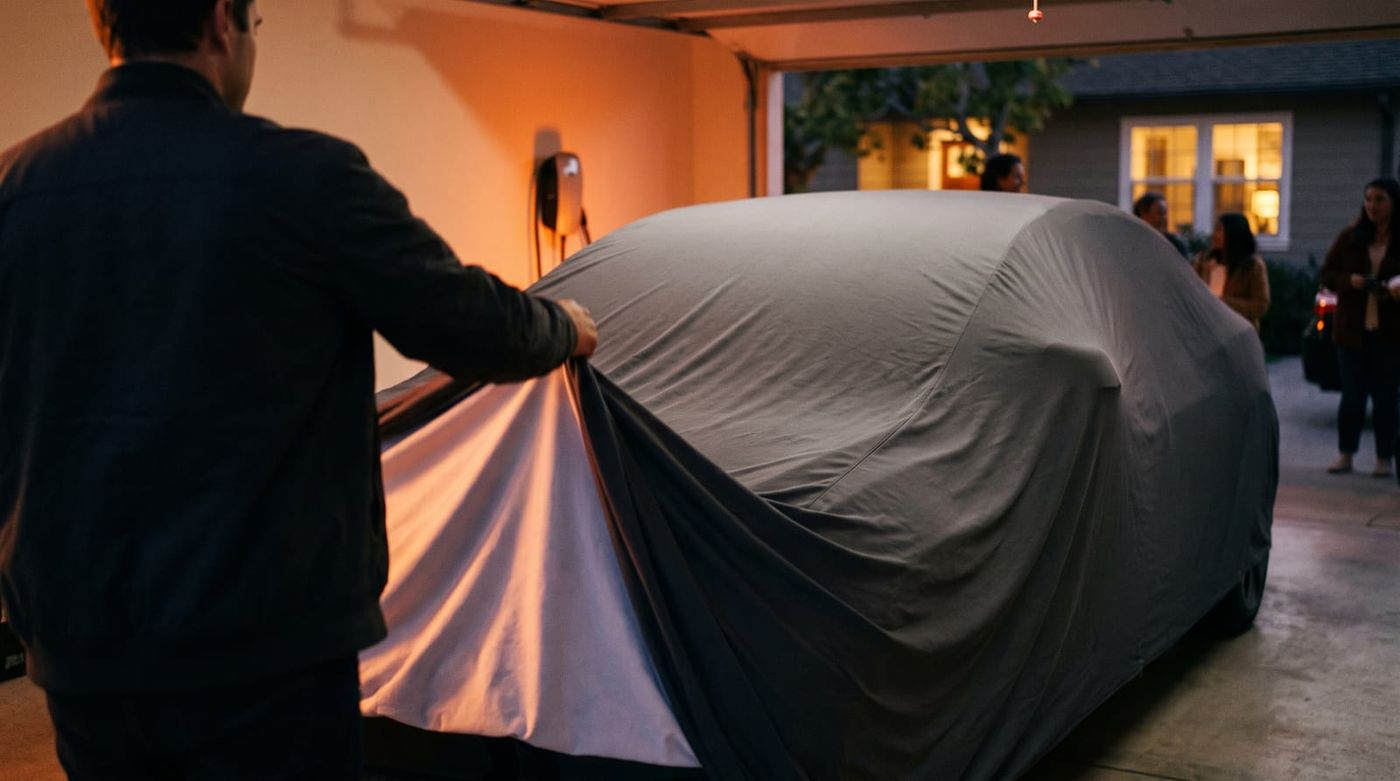
Size gets you in the right ballpark, but material matters just as much if your Model S spends real time outdoors. UV resistance matters more than usual here since the glass roof variant has no painted metal up top to absorb and shrug off sun exposure the way a traditional roof does. And daily charging in a driveway means daily exposure to whatever's falling from the sky, so a waterproof car cover is worth the upgrade over a basic indoor dust cover if the car isn't garaged.
Speaking of which: know which use case you're buying for. A garage-kept Model S can get by with a lighter indoor cover built mainly to stop dust and scratches. A daily-driven, outdoor-parked one needs something reinforced enough to handle UV, rain, and temperature swings without degrading in a year. The guide to outdoor car covers breaks down what that reinforcement actually looks like in practice.
One more detail that's easy to miss: the shark-fin antenna housing on the Model S roof. It's a small raised point that becomes a common spot for cover rubbing and eventual tears if the cover wasn't cut to accommodate it. An antenna patch solves this cleanly instead of just hoping the fabric stretches without wearing through.
Final Answer and Next Step
To recap: the Tesla Model S is a Large Sedan, running 196 to 198 inches long depending on year, and it fits best under a cover with mirror pockets and a charge port opening rather than a generic sedan shell.
A size chart gets you close. It won't tell you whether a specific cover actually hugs this car's roofline or leaves three inches of slack at the mirrors. If you'd rather not guess, a model-specific fit finder does that work for you. And if you're curious about EV ownership topics beyond cover shopping, like how the Model S holds up over time, it's worth a browse through the rest of the site while you're here.
