
Custom-Fit vs. Universal Car Cover for BMW 3 Series: Which One Actually Protects Your Car?

A BMW 3 Series isn't a car you leave under a cheap tarp. Most owners are still making payments on it, or watching lease mileage, or just protective of paint that shows every swirl mark under decent light. That's what makes the cover decision worth actual thought instead of grabbing whatever's cheapest at checkout. The two real options are custom-fit and universal, and this article is here to pick a winner for the 3 Series specifically, not just define the terms. A custom fit car cover for BMW 3 Series owners solves problems that a generic cover simply wasn't built to solve, and the reason comes down to the car's shape.
Here's the complication: "3 Series" isn't one shape. The E90/E92, the F30/F31, and the current G20/G21 all have different lengths, different mirror housings, different rear ends. A cover pattern that works for one generation can be genuinely wrong for another. That's exactly where universal covers start to fall apart, and where the fit conversation actually gets interesting.
Why the Cover Decision Matters More on a BMW 3 Series
Think about what's actually hanging low on this car: a front splitter that sits closer to the pavement than most sedans in its class, tight character lines down the doors, factory clear coat that BMW owners tend to obsess over. None of that forgives a sloppy cover fit. A tarp-style universal cover that's too big will drag on that splitter every time wind pushes it around. One that's too small won't even close over the trunk.
And because the 3 Series has been redesigned multiple times, "3 Series size" isn't a fixed number. An E90 sedan measures differently than a G20, mirror placement has shifted, and the trunk and spoiler shapes aren't interchangeable. If you're shopping for a cover and comparing options for your BMW cover lineup, that generation gap is the first thing to sort out, not an afterthought.
What 'Custom-Fit' Actually Means for the BMW 3 Series
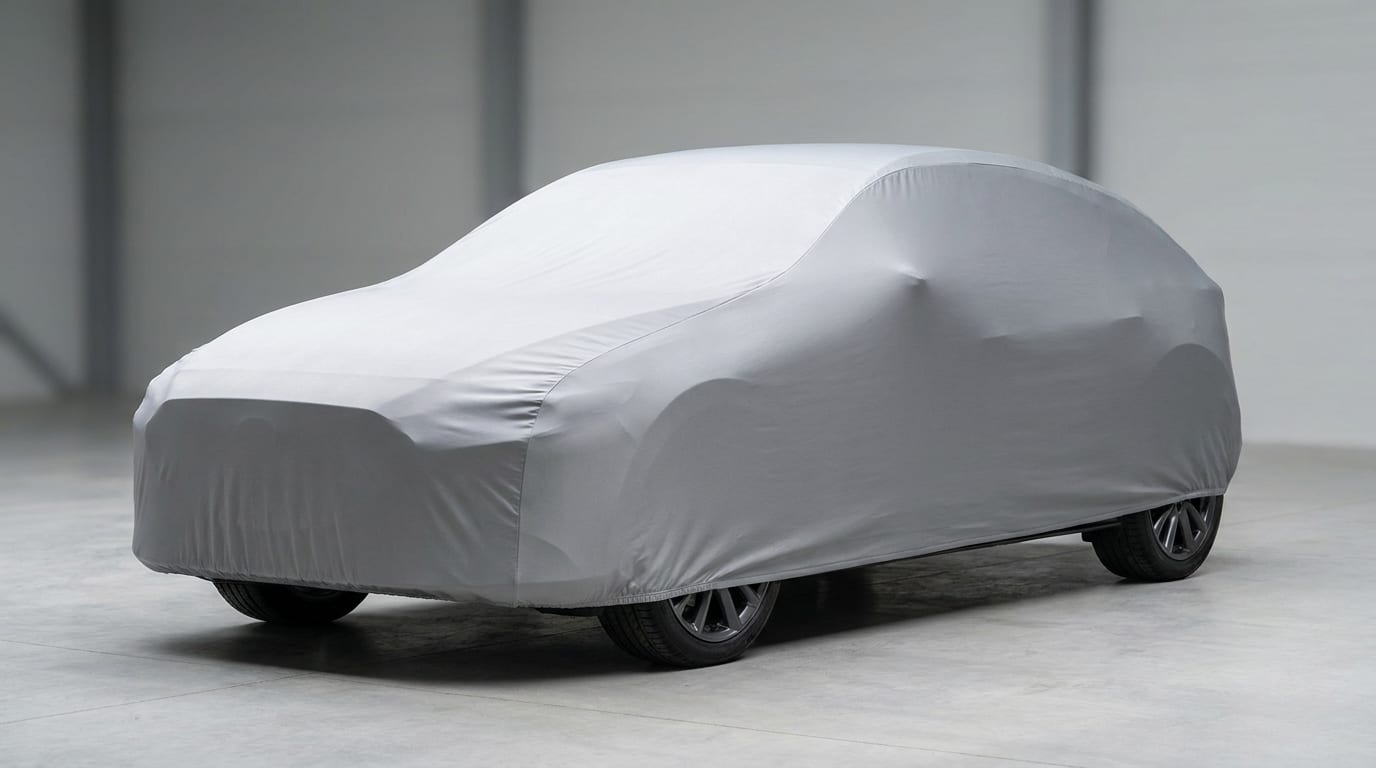
Custom-fit doesn't mean "sized for sedans between 15 and 16 feet." It means the pattern is drawn from the actual body of a specific 3 Series generation and body style, sedan or Touring wagon, not a rough average of what sedans generally look like.
On this model, the details that matter are pretty specific. Mirror pockets need to match BMW's mirror housing shape, not just leave a floppy sock over the general mirror area. The hemline has to trace that low front air dam without dragging on pavement or, worse, leaving a gap that lets wind underneath. Antenna and shark-fin cutouts need to land where BMW actually put the antenna, which has moved around across generations.
This is also why model-mapped panels matter more than people expect. M Sport and non-M rear ends aren't shaped the same way, so a cover cut for one can bunch up at the spoiler on the other, or leave slack at the rocker panels that catches wind. A custom fit car cover built around the actual 3 Series body avoids both problems by design, not by luck.
What a Universal Cover Gets Wrong on This Model
Universal covers are sized by broad brackets, think "compact sedan" or "midsize sedan, 14 to 16 feet." The 3 Series often lands awkwardly inside those brackets. You end up with several inches of loose fabric pooling at the trunk, or a hood area that's tighter than it should be because the bracket was built around a slightly shorter car.
That slack isn't just cosmetic. Loose fabric flapping in wind, over weeks and months, creates fine scratches in the clear coat from repeated micro-abrasion. It's slow damage, the kind you don't notice until you're polishing out swirl marks that shouldn't be there. A cover cut for a car two inches longer or shorter than yours is a cover that moves when it shouldn't.
Universal covers also tend to skip the details BMW-specific patterns include: no mirror pockets shaped to BMW's housings, no antenna cutout in the right spot. So owners end up tucking and tying fabric by hand every time, which defeats a lot of the convenience a cover is supposed to offer in the first place. If you're not sure what dimensions actually apply to your car, a sizing guide built around your exact vehicle is a better starting point than a generic length chart.
Custom-Fit vs. Universal for the BMW 3 Series: Side-by-Side
Fit accuracy
- Custom-fit: Follows the 3 Series' body lines, mirror shape, and hemline closely
- Universal: Relies on generic length brackets, often leaving slack or coming up short at the trunk or hood
Wind performance
- Custom-fit: Contoured fit resists lift and flapping, even in open driveways or spots near highway wind
- Universal: Excess fabric catches wind and can flap directly against paint over time
Weather sealing
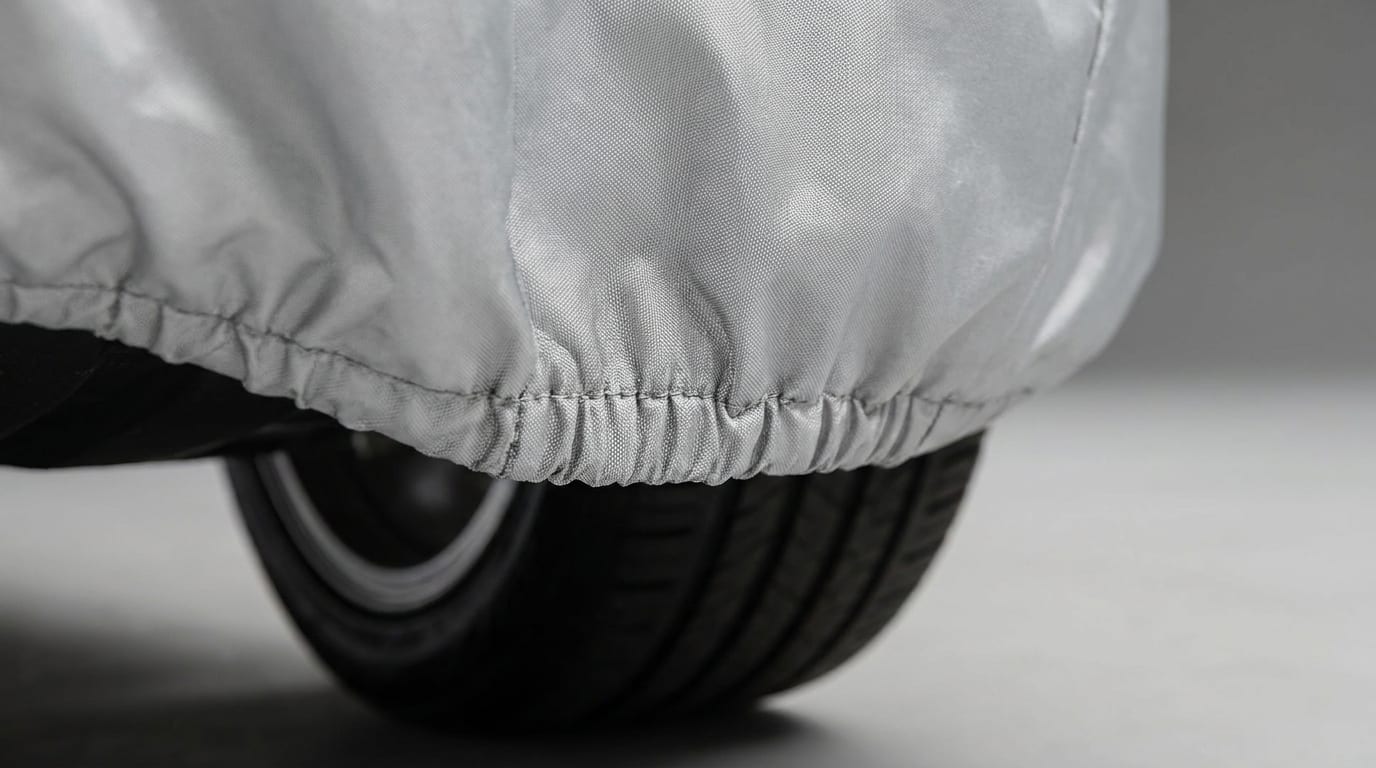
- Custom-fit: Hem sits close to the rocker panels, limiting how much rain and dust gets underneath
- Universal: Looser hem leaves gaps for water and debris to work their way in
Installation time
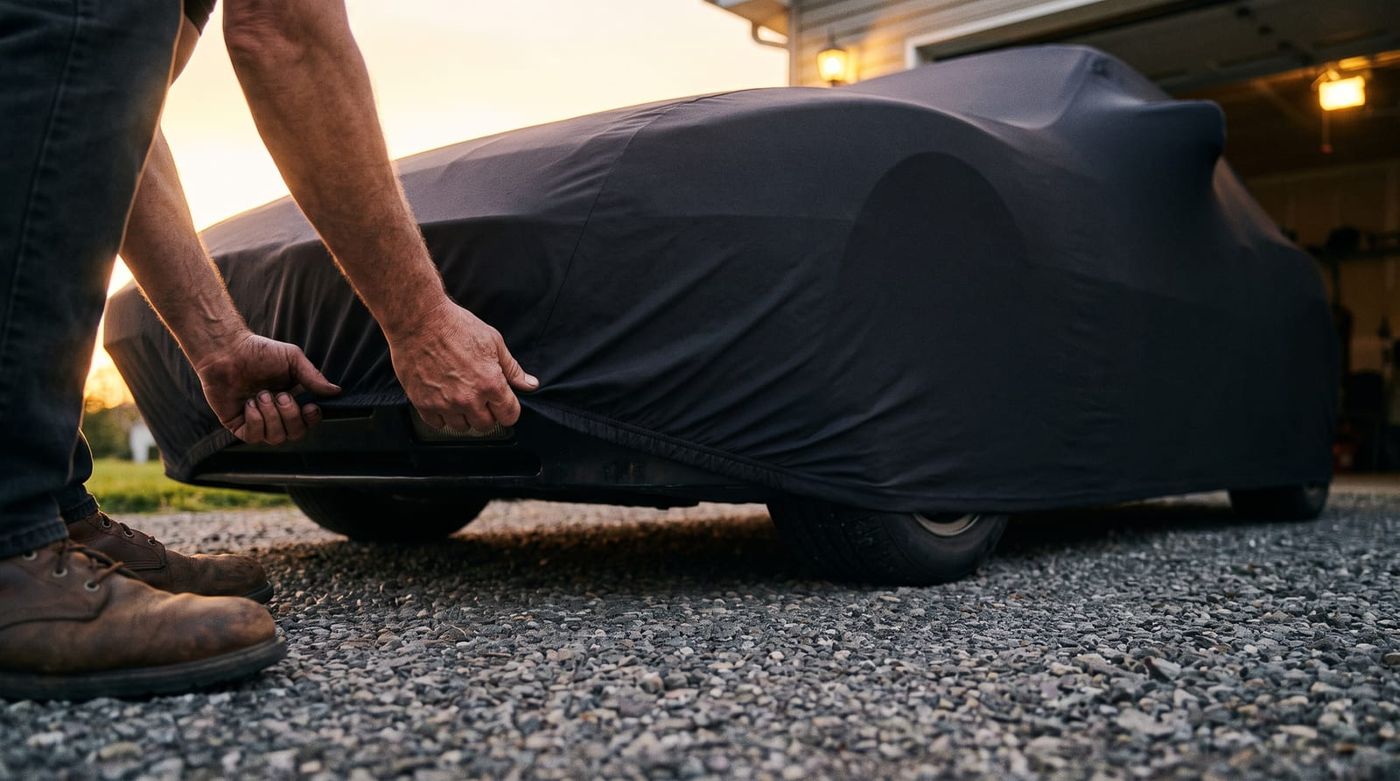
- Custom-fit: Pre-positioned mirror pockets and marked front/rear make it quick to put on the same way every time
- Universal: Requires more trial-and-error positioning each use, since nothing is marked for your specific car
Price
- Custom-fit: Higher upfront cost
- Universal: Cheaper upfront, but that gap has to be weighed against the fit and protection issues above, not treated as automatic value
Longevity under regular use
- Custom-fit: Properly tensioned fit means less chafing at contact points over time
- Universal: Loose material shifts and rubs during wind exposure, wearing both the cover and the paint underneath it
If you're parking outdoors regularly, the wind and weather sealing rows matter more than the price row. Worth checking waterproof car cover options and outdoor car cover options side by side if that's your situation, since indoor and outdoor use change what "good fit" needs to accomplish.
Does Your 3 Series Generation or Trim Change the Answer?
Yes, and this is where a lot of buyers get tripped up. An E90/E92 cover pattern isn't going to match an F30/F31, and neither will fit a current G20/G21 correctly. Bumper shape, overall length, and trunk profile shift enough between generations that "close enough" usually isn't.
Body style matters too. A sedan, a Touring wagon, and a coupe all have different rooflines and different rear cargo shapes. A cover patterned for the sedan's trunk profile won't sit right over a wagon's hatch.
Trim adds another layer. M Sport and M340i models often carry larger front splitters and more aggressive rear diffusers than the standard trim. A universal cover has no way to account for that, since it wasn't built with any particular bumper in mind. If hail is a real concern in your area on top of all this, it's worth looking at hail-specific cover options built with the added padding that kind of protection requires, rather than assuming any snug-fitting cover doubles as impact protection.
When a Universal Cover Might Still Be a Reasonable Choice
There's a narrow case for universal covers, and it's worth being honest about it instead of pretending custom-fit is always the answer. If the car sits in a garage most of the time and just needs occasional dust protection, wind exposure and precision fit aren't doing much work. A universal cover can handle that fine.
It's also a reasonable stopgap if you're not sure yet whether you're keeping the car long-term. No point buying a model-specific cover for a lease you might turn in next year. An indoor car cover built for low-wind, low-exposure use covers that scenario without the investment.
But for daily outdoor parking, hail-prone regions, or long-term storage, everything from the side-by-side above comes back into play. The fit gaps stop being a minor inconvenience and start being a real risk to paint and the underbody.
How to Choose and Buy the Right Cover for Your BMW 3 Series
Start by confirming three things: generation, body style, and trim. That's the actual information that determines correct sizing, not the general "3 Series" name on the badge. Guessing here is how people end up with a cover that almost fits.
From there, use a proper cover finder tool or a fit guide built for your exact vehicle instead of eyeballing a generic size chart. It takes the guesswork out of matching your specific configuration.
Once fit is settled, think about where the car actually lives. Daily outdoor parking, occasional rain, direct sun, or hail exposure all call for different material choices, and it's worth comparing a few before you commit. A side-by-side comparison of top-rated covers is a decent way to see how those choices stack up against each other.
If you're ready to stop guessing and get a cover built for your actual 3 Series, shop the custom-fit options and check the warranty coverage before you buy, it's a fair signal of how much confidence the manufacturer has in their own fit. And if you're the type who likes having this stuff sorted before the weather turns, it's worth subscribing or poking around a few more guides while you're here. Getting the cover right once beats buying twice.
