
How to Measure a Honda Pilot for a Car Cover (Step-by-Step Guide)
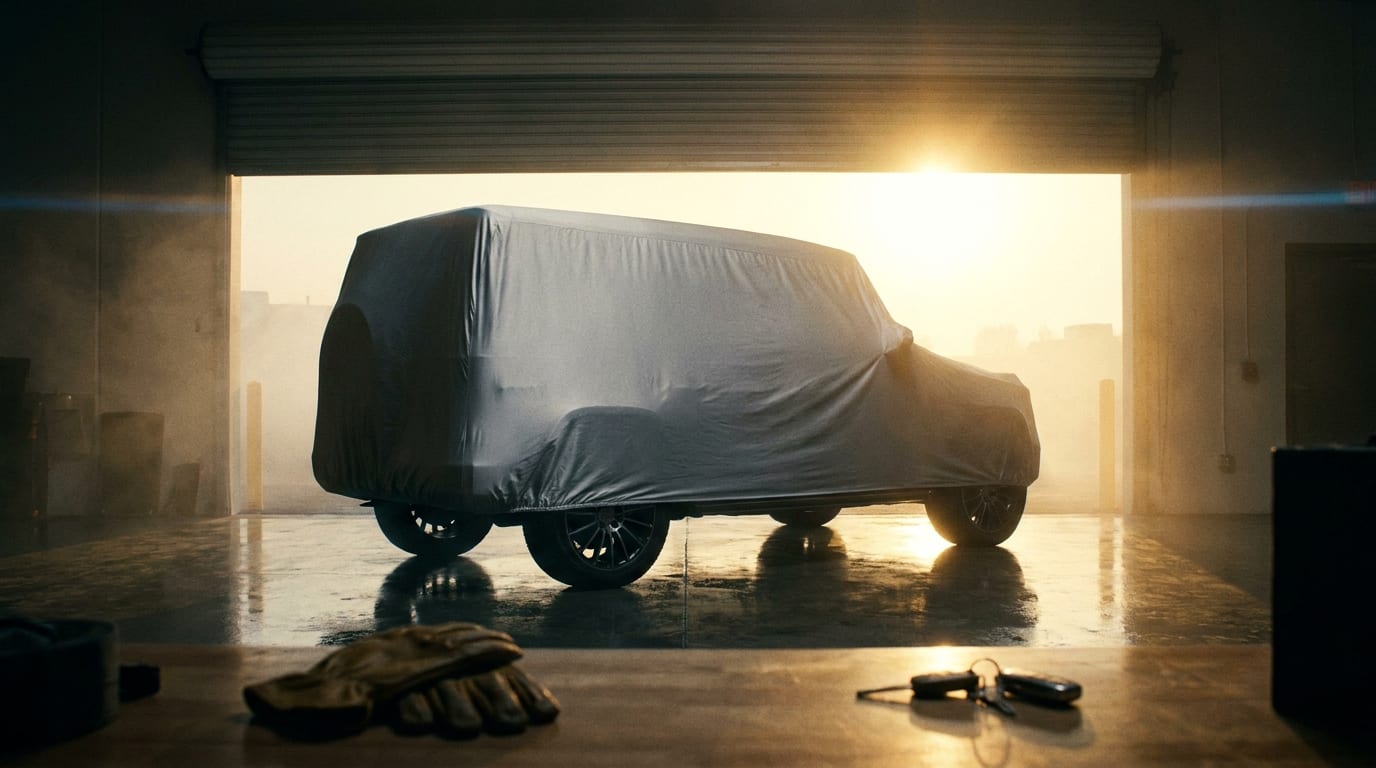
Honda Pilots come in four distinct body styles depending on when they rolled off the line, and that matters more than most owners realize when it's time to buy a cover. Knowing how to measure a Honda Pilot for a car cover the right way is the difference between a cover that hugs the body and one that flaps around in a parking lot or lets rain seep in through gaps. This guide walks through the exact process: what tools to grab, the three measurements that matter, and how to avoid the mistakes that lead to a cover that just doesn't fit right.
Why Accurate Measurements Matter for Your Honda Pilot

The Pilot has gone through four generations since 2003, and each one changed size in ways that aren't always obvious from the outside. The 2003-2008 model is noticeably shorter and boxier than the 2016-2022 version. The 2023+ redesign added length and squared off the rear end again. So when you're figuring out how to measure a Honda Pilot for a car cover, the model year matters just as much as the fact that it's a Pilot at all.
Get it wrong and you'll feel it. A cover that's too loose catches wind, flaps against the paint, and lets dust and moisture sneak in around the edges. One that's too tight strains at the seams, won't cinch closed properly, and wears out faster than it should. Neither outcome protects the vehicle the way it's supposed to.
It also helps to understand what you're sizing for. A universal-fit cover is sized off a measurement range, think "fits SUVs 189 to 197 inches long." A custom-fit car cover is built to the exact specs of your Pilot's year and trim, down to where the antenna sits. Both start with the same basic measurements, which is what this guide covers: the tools you need, the three key numbers, how to read a sizing chart, and the mistakes that throw people off.
Tools You'll Need Before You Start
You don't need much. A soft fabric measuring tape, at least 20 feet long, is the one non-negotiable. Skip the rigid metal tape from your toolbox. It won't bend around the curve of a bumper or wheel well, and you'll end up with a shorter reading than reality.
Grab a helper too, if you can. Holding the end of the tape steady at the front bumper while you walk it back to the rear is a two-person job once the vehicle stretches past 16 feet, which the Pilot does in every generation.
Have your phone or a notepad ready so you can jot down each number the moment you take it, in both inches and feet. It's easy to forget a measurement thirty seconds after you've taken it, especially if you're doing this solo.
Last thing: park the Pilot on level ground, fold in the side mirrors, and pull off any roof rack attachments or cargo boxes before you start. If you're keeping a rack installed permanently, note its dimensions separately rather than folding them into your body measurements.
Step 1: Measure Overall Length
Start the tape at the very front tip of the front bumper. Run it along the side of the vehicle, keeping it roughly parallel to the ground, all the way back to the rearmost point of the rear bumper.
Don't drape the tape over the hood or roofline. You want a straight line along the body, not a measurement that follows every contour, or you'll inflate the number.
Record it to the nearest half inch. This matters more than it sounds like it should, because Pilot generations range from about 190 inches on the early models to nearly 199 inches on the current one. A few inches off can push you into the wrong size bracket entirely.
If your Pilot has a tow hitch, running boards, or anything else that sits asymmetrically, measure both sides. It's a quick check that confirms you're working with a consistent number before you commit to a cover size.
Step 2: Measure Width and Height
For width, measure at the widest point of the vehicle, which is almost always across the side mirrors when they're extended. Take a second measurement of just the body width, mirrors folded in, so you have both numbers on hand. Some sizing charts ask for one or the other.
For height, stand the tape vertically at the windshield pillar and run it from the ground straight up to the highest point of the roofline. This is one of the easier measurements to get wrong because slight ground slope throws it off, so check it on both the driver and passenger sides if you can.
If you're running an aftermarket roof rack or crossbars, measure those separately. They can add one to three inches of clearance you'll need, and that usually means looking for a cover with reinforced grommets or rack-compatible design rather than assuming a standard cover will stretch over them.
Step 3: Match Your Measurements to a Cover Size Chart
Once you've got length, width, and height written down, compare them against a typical SUV cover sizing chart. Most charts break sizes into small, medium, large, and XL ranges based on overall length, sometimes cross-referenced against width.
The Honda Pilot almost always lands in the mid-to-large SUV category. But trim-specific add-ons, roof rails, tow packages, running boards, can push a measurement right up against the next size threshold. If your number falls close to a boundary between two sizes, size up. A slightly looser cover with a cinch strap is far easier to live with than one that won't fully close over the mirrors or rear bumper.
[Diagram placement: a side-profile SUV silhouette with labeled arrows showing where to measure length, width, and height, matching the steps above.]
This is also the point where it's worth double-checking your numbers against a sizing guide built for your vehicle type before you commit to a purchase. It only takes a couple of minutes and it catches most of the sizing mistakes before they turn into a return.
Common Measuring Mistakes to Avoid
The most common one: measuring width with the mirrors still extended instead of folded in. That alone can throw your width reading off by several inches, and if you're comparing against a chart that assumes folded mirrors, you'll end up sizing for a wider vehicle than you actually have.
Forgetting roof racks, spoilers, or tow hitches is another. These don't just add a little bulk, they change how much clearance the cover actually needs, and a cover that fits the body perfectly can still refuse to close over a hitch-mounted accessory.
Using a rigid tape measure instead of a soft one causes shorter-than-actual readings, since it can't follow the curve of the bumpers or wheel arches. And don't assume every Pilot model year is the same size. A 2010 Pilot and a 2024 Pilot share a name and not much else dimensionally, so pull up the specs for your specific generation rather than guessing off memory.
Custom-Fit vs. Universal Covers for the Honda Pilot
A universal or semi-custom cover sized off the measurements above is usually enough if you're storing the Pilot indoors, or you live somewhere with mild weather and you're mainly guarding against dust and scratches. It's the more affordable route, and for that use case it does the job.
Daily outdoor exposure is a different story. If your Pilot sits outside through hail, sun, or long stretches of storage, a custom-fit cover built to the exact year and trim is worth the extra cost. It accounts for things a universal cover can't, like factory roof rail placement and antenna position, so it sits tighter and doesn't shift around in wind.
Worth thinking about which category you fall into before you shop. Check out the difference between outdoor car covers built for UV and moisture exposure versus indoor car covers designed more for dust and light scuffs, since the two are built with different priorities in mind. And if you're comparing this to another Honda SUV in the family, the Honda CR-V goes through similar generational sizing shifts, so the same measuring approach applies there too.
Next Steps: Getting the Right Cover for Your Pilot
Before you go shopping, you should have three numbers written down: overall length, width (with and without mirrors), and height, plus a separate note on anything that adds bulk, like a roof rack or tow hitch. That's really all it takes to know how to measure a Honda Pilot for a car cover correctly.
From here, browse the Honda SUV cover lineup or the broader SUV cover category to see what's built for your generation, and use a cover finder tool or fit lookup to match your numbers against real product listings rather than guessing off a size label. If you're on the fence about a measurement, it's worth double-checking it against the chart before you order rather than after.
Take the numbers you just measured, run them through the sizing tools, and shop with actual data instead of a guess. And if you found this useful, stick around, there's more in the buying guides section on getting the most out of whatever cover you land on.
