
How to Measure a Tesla Model S for a Car Cover: Step-by-Step Guide
A Tesla Model S looks simple to measure until you're standing in the driveway with a tape measure and no idea where the bumper actually ends. Get it wrong and you'll end up with a cover that flaps around at highway-adjacent wind speeds or one so tight it can't stretch over the mirrors. Knowing how to measure a Tesla Model S for a car cover properly means the difference between a cover that protects your paint for years and one that scratches it every time the wind kicks up.
Why Accurate Tesla Model S Measurements Matter
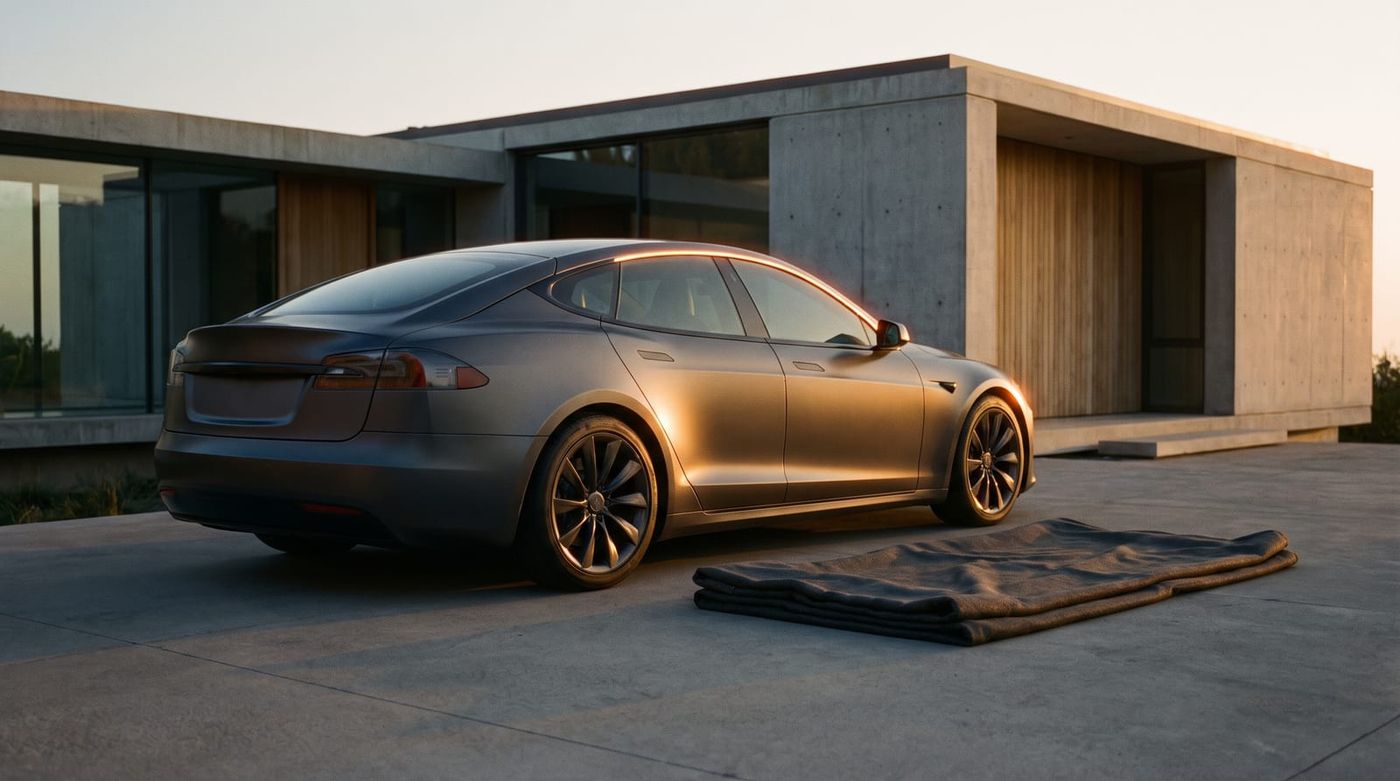
A cover that's too loose is almost worse than no cover at all. It flaps in the wind, rubs against the clear coat, and works grit into the paint like sandpaper. A cover that's too tight is its own problem: seams stretch, stitching pulls apart, and it won't even close over the mirrors or the panoramic glass roof.
Here's what makes the Model S trickier than most sedans: the body has changed. Cars built from 2012 through 2020 have a different front fascia, trunk profile, and overall length than the 2021+ refresh, which brought a redesigned nose and a taller trunk lid. Factory spec sheets don't always account for trim differences, aftermarket wheels, or small running changes Tesla made mid-cycle. So relying on a generic number from a brochure can leave you with a cover that's close, but not close enough.
This guide walks through exactly where to put the tape, what to write down, and how to turn those numbers into a cover that actually fits.
Tools You'll Need Before You Start
You don't need much, but the right tools matter more than people expect.
- A fabric or flexible tape measure, at least 20 feet long. A rigid metal tape won't bend around the curves of a fender or bumper, and you'll end up guessing.
- A second person to hold the far end steady. Trying to measure length or mirror-to-mirror span solo almost always gives you a skewed number.
- Painter's tape or chalk to mark your start and end points. This lets you double-check a measurement without having to remember exactly where you started.
- A notepad or your phone, to log everything in inches. Nearly every car cover size chart, including custom-fit order forms, uses inches, not feet or centimeters.
Once you've got these, you're ready for the four measurements that actually matter.
Step 1: Measure Overall Length (Bumper to Bumper)
Start at the very front tip of the front bumper. Run the tape in a straight line to the rear tip of the trunk or rear bumper. Keep the tape at bumper height the whole way, not down at ground level. Ground-level measurements run long on a car like the Model S because the bumpers slope, and a tape following that slope adds inches you don't actually need.
If you've got the 2021 refresh or newer, measure past the reshaped front fascia, it sits slightly different than the pre-2021 nose. If you're working with a 2012-2020 model, watch for the charge port door on the driver-side flank. It's not part of the length line, so don't let the tape drift toward it.
Write this number down first. It's the primary spec used on almost every car cover size chart, and it's usually the number that determines which size bracket your Model S falls into.
Step 2: Measure Width and Mirror-to-Mirror Span
Width isn't one number, it's two, and mixing them up is one of the most common mistakes people make.
First, measure body width at the widest point, which on the Model S is usually across the rear fenders. Don't include the mirrors in this number. Second, measure separately from mirror tip to mirror tip with both mirrors extended in their normal driving position. This second number is what tells you whether you need a cover with a built-in mirror pocket.
If you plan to always store the car with mirrors folded in, fold them and take that measurement too. Log both. When you're comparing against a cover's mirror-pocket design later, having both numbers on hand saves you from guessing which one applies.
Step 3: Measure Height at the Roofline
Run the tape straight up from the ground to the highest point of the roof. On the Model S, that peak sits just behind the panoramic glass roofline, not at the windshield header like you'd expect on some sedans.
Check for a shark-fin antenna while you're up there. It sits a bit above the roof surface, and a cover pulled tight can snag on it or wear a thin spot over time.
Low, sloped cars like the Model S need a little extra attention here. The windshield rake and the fastback rear glass mean a cover has to bend in ways a boxier sedan's cover doesn't. If your height measurement is off by even half an inch, you'll feel it in stressed seams the first time you pull the cover taut.
Step 4: Check Model-Specific Features That Affect Fit
Length, width, and height get you most of the way there, but the Model S has a few details worth double-checking before you order.
- Charge port location: it's on the driver-side rear fender. Make sure whatever cover you choose has a compatible access point, or plan on pulling the cover back for charging sessions.
- Rear spoiler: the Plaid trim's spoiler sits taller and wider than the standard Model S trunk lip. That changes how much clearance you need at the rear.
- Wheel and tire size: bigger wheels or a lowering kit change how a cover drapes near the rockers. If you've swapped wheels since buying, remeasure rather than trusting the factory number.
- Roof accessories: an antenna or roof rack addition usually calls for an antenna patch accessory rather than sizing up the whole cover.
Skipping this step is how people end up with a cover that fits the body fine but bunches up weird at the spoiler or won't zip closed near the charge port.
Common Measuring Mistakes to Avoid
A few habits sink people every time.
Measuring from a spec sheet instead of the actual car is the biggest one. Spec sheets don't know about your dealer-installed spoiler or your aftermarket wheels. Forgetting to remeasure after switching vehicles or upgrading trims is another. Someone who owned a 2019 Model S and just picked up a 2023 might assume the old cover's dimensions still apply. They don't.
Measuring on a slope throws off both height and length. Pull the car onto flat, level ground before you start. And resist the urge to round. "About 196 inches" is fine for browsing a general size chart, but if you're placing a custom-fit car cover order, exact inches matter. A quarter inch here and there adds up across four measurements.
What to Do With Your Measurements
Once you've got your four numbers (length, width, mirror span, and height) plus notes on any model-specific features, you're ready to shop.
For a semi-custom cover, match your measurements against the size chart on the product page, this tells you which bracket your Model S falls into. If you want a tighter fit, especially given how the Model S's body lines, mirror shape, and low roofline differ from a typical sedan, a custom-fit car cover built to your exact numbers will sit better than anything off a general size chart. You can check what's available for the model specifically on the Tesla cover page, and if you're still unsure which category fits your situation, the car cover sizing guide walks through how the size brackets work.
Recheck your measurements once a year, or any time the car gets bodywork done. Keep your notes somewhere you'll actually find them again, a phone note works fine, so reordering later doesn't mean starting from scratch.
If you're still narrowing down what kind of coverage you need, whether that's an outdoor car cover built for sun and rain or a waterproof car cover for someone parking near sprinklers or storms, it's worth browsing a few options now that you've got your numbers in hand. And once the cover arrives, our installation guide walks through getting it on without stressing the seams. Feel free to poke around the blog for more car care guides while you're at it.
