
How to Measure a Volkswagen Tiguan for a Car Cover (Step-by-Step)

Measuring your Tiguan wrong is the single fastest way to end up with a cover that either flaps around like a tarp in a windstorm or refuses to stretch over the mirrors. Get the numbers right the first time and you skip the return-and-reorder cycle entirely. This guide walks through exactly how to measure a Volkswagen Tiguan for a car cover, step by step, with the same checkpoints any decent sizing chart or fit guide will ask for.
Why Getting Your Tiguan's Measurements Right Matters
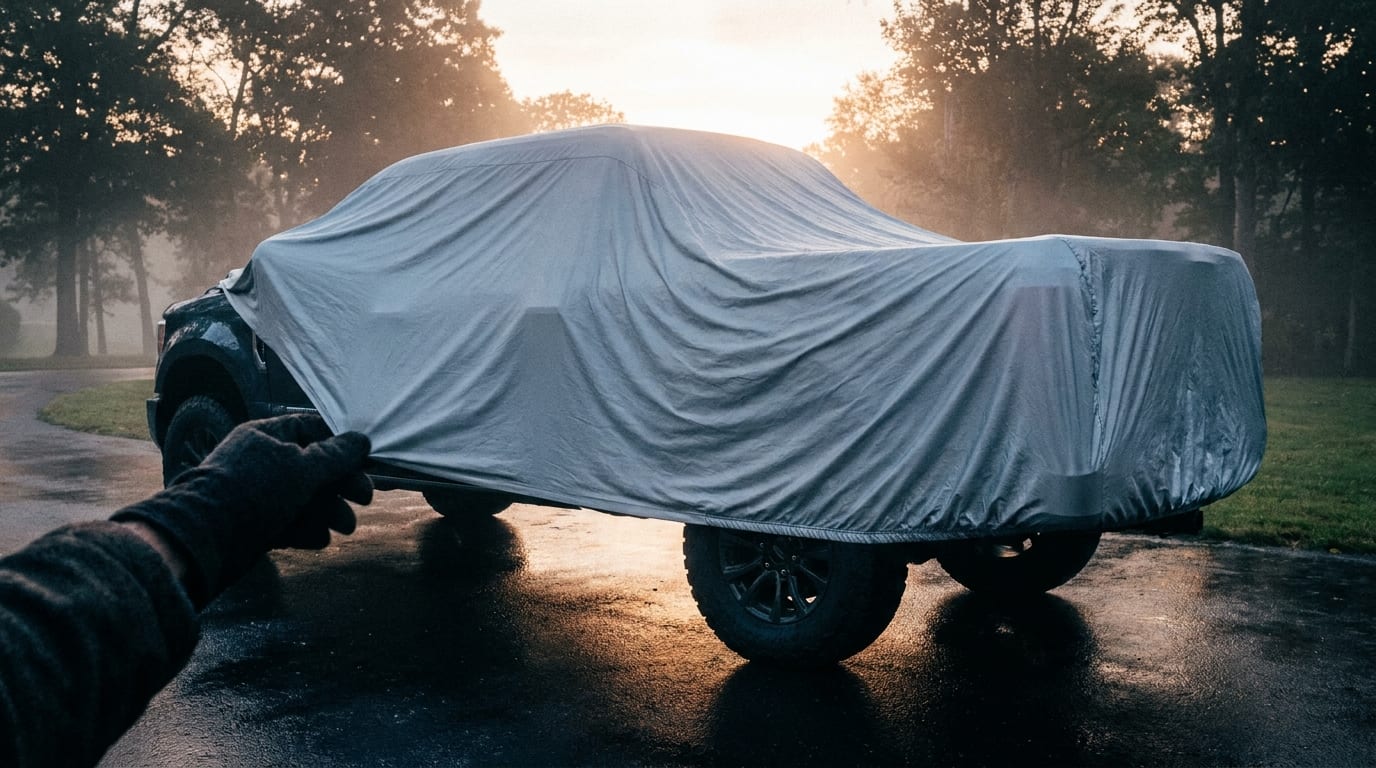
A loose cover isn't just annoying, it's actually risky. Extra fabric flapping in the wind rubs against clear coat and can leave fine scratches over time. Go too tight and you get the opposite problem: seams under strain, hems that won't reach the ground, and a cover that physically can't stretch over the mirrors or a roof rack.
Here's what makes the Tiguan tricky. Volkswagen has built three distinct generations since 2009, each with a different body length and roofline. A cover cut for a 2015 Tiguan won't sit right on a 2020 model, and a 2024-and-newer Tiguan is a different shape again. If you're shopping by year and trim rather than by exact measurements, you're guessing.
That's where the cover type matters. A universal cover relies entirely on your measurements matching its size range. A semi-custom cover narrows things down by body style but still needs accurate length, width, and height to pick the right size bracket. A custom-fit cover is built to your exact model, so precision matters a little less at checkout, but it still helps to know your numbers in case you need to double check fit against the spec sheet. For the first two categories especially, your tape measure is doing most of the work. This guide covers the same length, width, and height checkpoints used to size any SUV-style vehicle, so once you've got the process down you can measure a Tiguan of any generation with confidence.
Tools You'll Need Before You Start Measuring
You don't need anything fancy. Grab a fabric or retractable tape measure, at least 20 feet long. Fabric tape is worth the extra dollar or two because it curves naturally around bumpers and mirrors instead of fighting you the whole way.
Bring a helper if you can. Holding one end steady at the front bumper while you walk the tape to the rear makes the length measurement far more accurate, and honestly, doing it solo is a two-person job pretending to be a one-person job.
No helper? Use painter's tape or chalk to mark your start and end points on the ground first. That way if you drop the tape or lose your place, you're not guessing where you started.
Last thing: log every number the second you take it. Write it on your phone or a notepad right there in the driveway. Trust me, numbers blur together fast once you've measured length, width, and height back to back.
Step 1: Measure Overall Length (Bumper to Bumper)
Park on level ground first. This matters more than people think, a sloped driveway will throw off every reading that follows.
Run the tape from the outermost point of the front bumper to the outermost point of the rear bumper. Keep it straight and taut along the side of the vehicle rather than letting it dip and follow the body's curves. You want a straight-line distance, not a contour trace.
If your Tiguan has a rear-mounted spare or a towing hitch accessory sticking out past the bumper, add that extra length to your total. It matters for cover length even if it feels like a minor add-on.
Record the number in inches, to the nearest half inch. Most size charts break in small increments, so "about 182 inches" isn't precise enough, you want the real number.
Step 2: Measure Overall Width (Mirror to Mirror and Body Width)
Fold both side mirrors in if your Tiguan allows it, then measure the body at its widest point, which is usually across the rear fenders or wheel arches. This is your body-width number.
Now measure again with the mirrors extended, mirror tip to mirror tip. Some covers include built-in mirror pockets that need this wider number, others are designed to tuck mirrors underneath, so having both figures on hand avoids a guessing game later.
Got roof racks or crossbars? Measure across those too if the cover needs to clear them. They add width you won't see just by eyeballing the body.
Width actually matters more than length when it comes to wind performance on a boxy shape like the Tiguan. A cover that's slightly long but properly snug across the width will resist lift far better than one that's the right length but baggy at the sides. Wind gets under loose fabric at the widest points first.
Step 3: Measure Overall Height (Ground to Roofline)

Stand the tape straight up from the ground to the highest point of the actual roof, not the antenna, not a roof rack, just the metal roofline itself.
Then take a second reading at the tallest accessory point, whether that's a roof rack, a cargo box, or a shark-fin antenna. Keep this number separate from your first height measurement. Some cover designs need the accessory height to know how much they can accommodate before the fabric ends up tented or gapping around obstacles.
Height determines drape, meaning how much slack the cover has to work with to clear the doors on its way down to the ground. Too little drape and the cover binds around the mirrors or door handles. Too much and it billows in wind. Getting both height numbers written down gives whoever's sizing the cover, whether that's you comparing against a chart or a manufacturer processing a custom order, what they need to get it right the first time.
Step 4: Note Special Features That Affect Fit
Before you put the tape away, walk around the vehicle and note anything that isn't standard sheet metal. Roof rails, a tow hitch, running boards, a rear spoiler, or mounting hardware for a panoramic sunroof rack all change how a cover needs to fit around your specific Tiguan.
Grille badges, emblems, and antenna placement matter too, especially if you're looking at a cover with pre-cut cutouts for these features. A cutout in the wrong spot is worse than no cutout at all.
Here's a trick that saves headaches later: photograph the vehicle from the front, side, and rear with the tape measure still in place. If a question comes up during ordering, you've got a visual reference instead of trying to remember exactly where you held the tape.
One more thing worth knowing: trim level can shift bumper contours even within the same model year. An S trim and an SEL R-Line Tiguan from the same year don't always share identical bumper depth or spoiler shape, so don't assume trim doesn't matter just because the year does.
Common Measuring Mistakes to Avoid
Measuring on a slope is the most common one. Even a slight incline in a driveway throws off both height and length readings enough to matter.
Letting the tape sag or follow the body's curves is another. For length and width, you want a straight line, not a trace of every dip and swell in the sheet metal.
Forgetting to fold the mirrors in before taking the body-width measurement is a sneaky one. It leaves you thinking your Tiguan is wider than it actually is, and you end up ordering a size larger than necessary.
And don't round too aggressively. Rounding "34.5 inches" down to "34" feels harmless, but for a snug custom-fit cover those half inches add up across multiple measurement points.
What to Do With Your Tiguan Measurements Next
Once you've got length, width, height, and any special feature notes written down, compare them against a size chart if you're buying a universal or semi-custom cover, or submit them directly if you're ordering something made to your Tiguan's exact specs. Either way, cross-check your model year and trim against a dedicated fit guide before finalizing anything, since generation differences are real and easy to overlook.
If you'd rather skip the size-chart math entirely, tools like the cover finder or a general vehicle cover search can match your Tiguan's year and trim to the right option directly.
And once the cover shows up, sizing is only half the job. A cover that's measured perfectly but installed loosely will still flap and shift, so it's worth reading through a proper installation walkthrough to get the strap placement and tension right.
If you found this rundown of how to measure a Volkswagen Tiguan for a car cover useful, it's worth bookmarking or subscribing for more guides like it. Keep protecting that finish.
