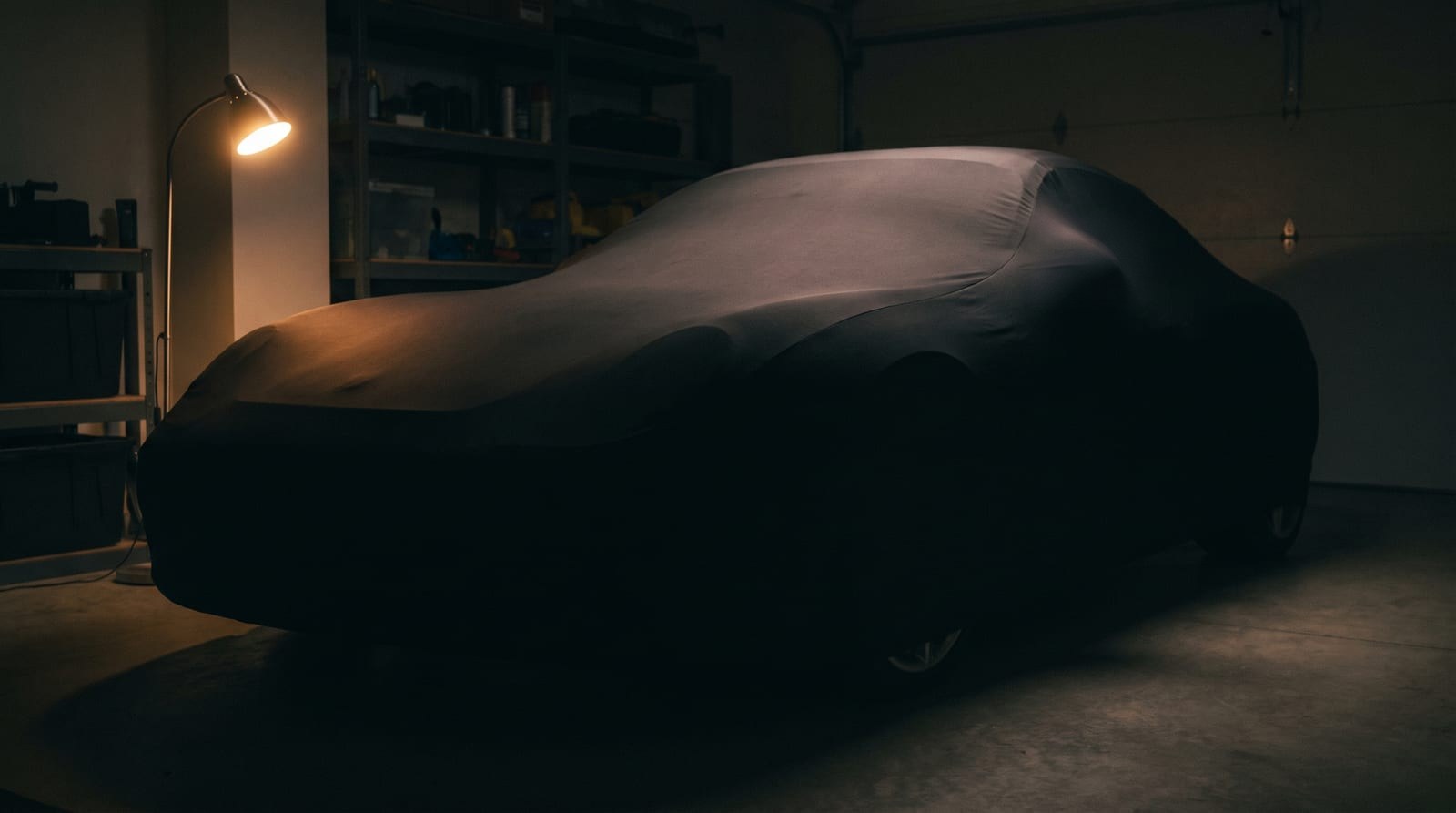
Indoor Car Cover for Kia Soul: Soft Lining & Dust Protection for Garage Storage
A Kia Soul sitting in the garage looks safe. It isn't, not entirely. Dust still finds its way onto paint even in a closed-up space, and the boxy roofline on a Soul collects it fast. That's the gap an indoor car cover for Kia Soul is built to close: not weather protection, just a clean, soft barrier between your paint and everything else floating around in there.
Why a Garage-Kept Kia Soul Still Needs a Cover
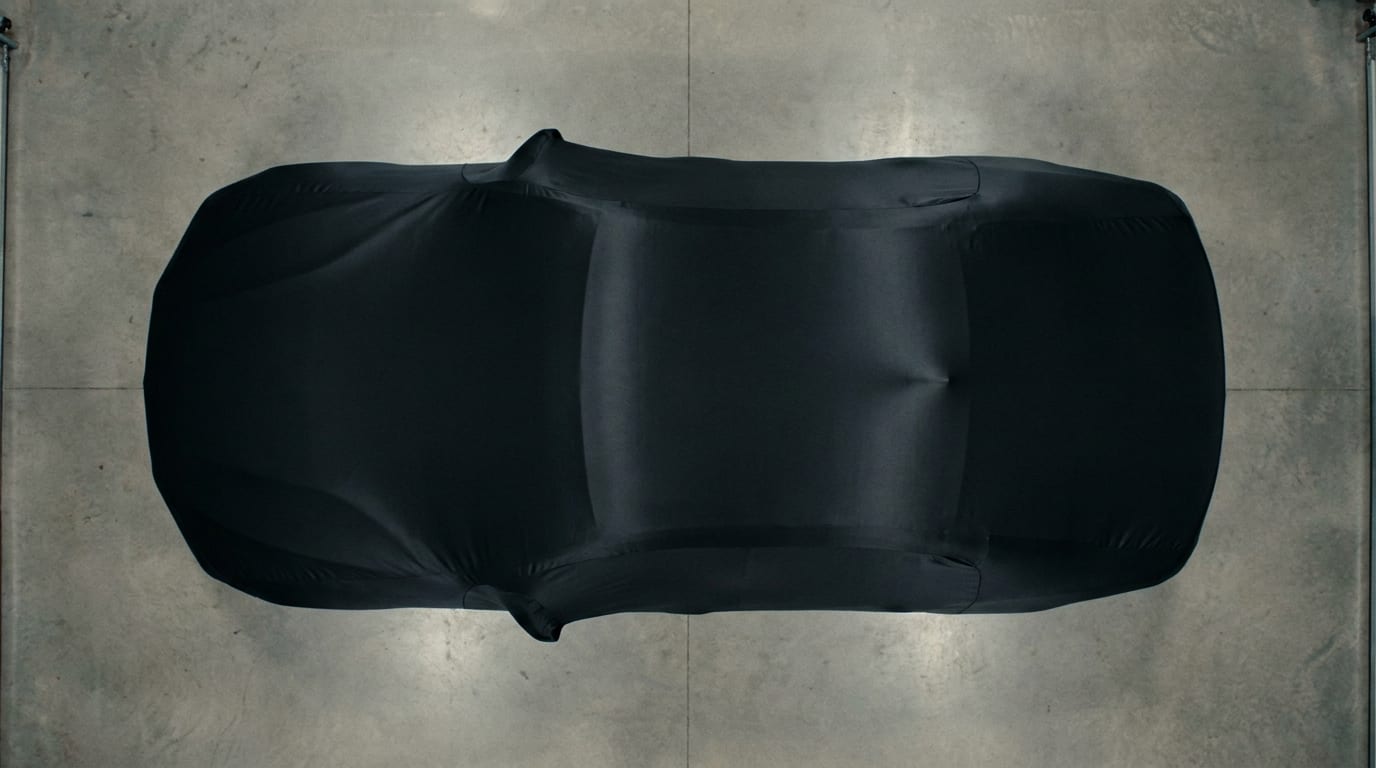
Garages aren't sealed rooms. Drywall dust from a shelf project, pollen that rode in on the breeze when the door was open, fine grit kicked up off the concrete floor, all of it settles somewhere, and a parked car is a big flat landing pad. The Soul's roof and hood in particular are wide, flat surfaces that collect this stuff evenly instead of letting it slide off.
Then there's the human factor. Shared garages mean bike pedals leaning against a fender, a rake handle swinging a little too close, someone squeezing past with a cooler. None of that is dramatic, but it adds up to scuffs and scratches over a few seasons.
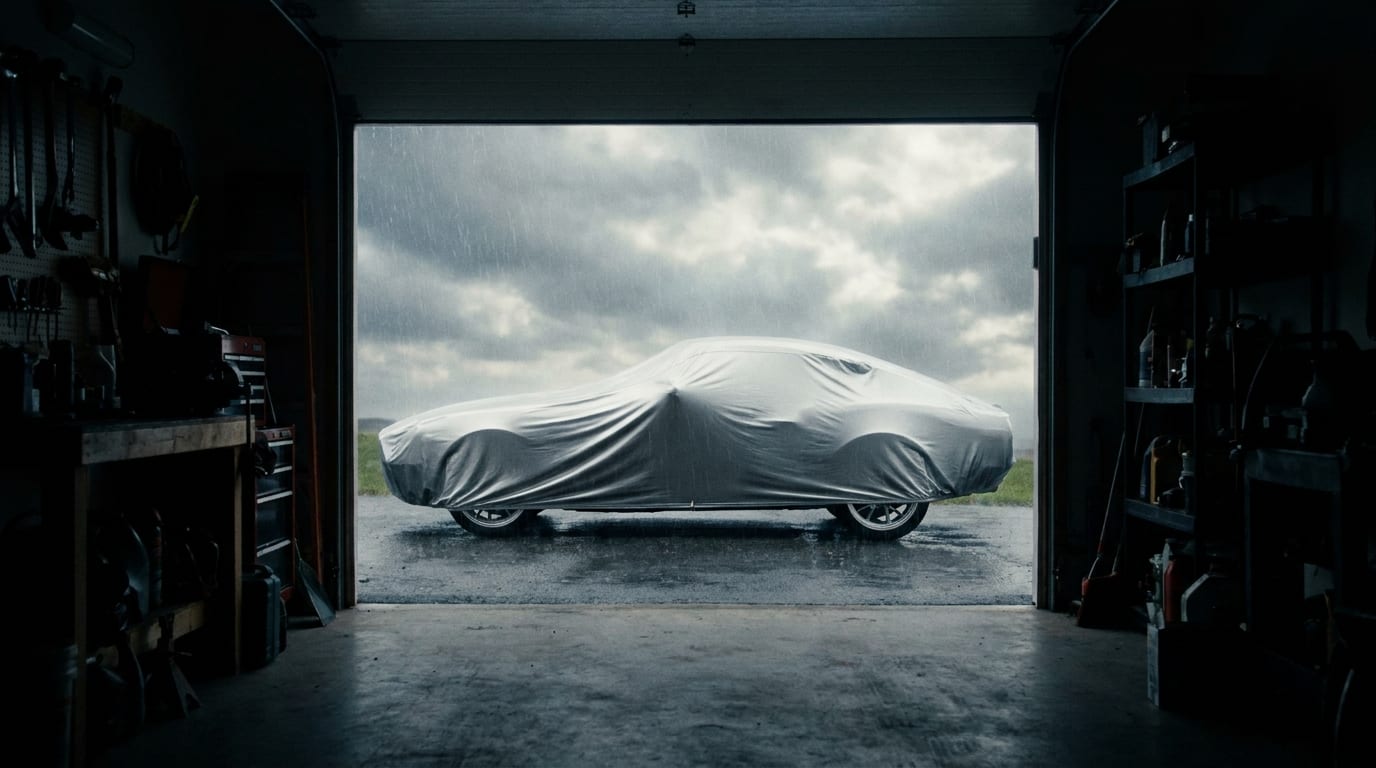
Indoor covers aren't the same product as outdoor ones, and that's on purpose. Outdoor covers are built to shed rain and block UV, which means heavier fabric and waterproof coatings. An indoor cover skips all that and focuses on being soft against the clear coat, since it's never going to see rain or sun exposure anyway. If your Soul lives in a garage, carport, or covered storage unit for weeks or months at a stretch, that's the right category to shop in.
What 'Soft Lining' Actually Means on an Indoor Cover
"Soft lining" usually means a fleece or satin-style interior layer, the part that actually touches your paint. It's a different animal from the coated, stiffer shells you'll find on outdoor covers, which are built to resist water and hold up against sun, not to feel gentle against a finish.
This matters more on a Soul than you'd think. The car's flat panels and boxy roofline give grit nowhere to hide, so any grit trapped between a rough cover and the paint has a long, flat surface to grind against. Swirl marks on a Soul's hood or roof usually trace back to exactly that.
Breathability is the other half of the equation. A soft, woven lining lets trapped heat and moisture work their way out instead of condensing overnight against the clear coat. That's also why you'll see these products marketed as "scratch-free" or "paint-safe" rather than waterproof. They're not trying to be. Check the indoor car covers guide if you want the full rundown on what separates this category from everything else on the shelf.
Dust Protection: What to Look for Before You Buy
Thickness gets all the attention in cover shopping, but it's the wrong metric here. What actually blocks dust is weave density, how tightly the fabric is knitted. A thick cover with a loose weave will still let fine particles through; a thinner one with a tight weave won't.
Fit matters just as much. Elastic hems that cinch snugly around the Soul's wheel wells and bumper lines keep dust from drifting in underneath, which is the most common way it gets past a cover in the first place. A cover that just drapes loosely without a defined hem is basically an open door at floor level.
A few other things worth checking before you order:
- Storage bag or pouch included. It's a small detail, but it tells you the cover's designed for regular use, on and off, without getting dragged across the garage floor between uses.
- Color. Most indoor covers run black or gray satin. That's not about hiding dust, it's really just a practical, neutral finish, since fading resistance isn't a concern once UV is out of the picture entirely.
Getting the Fit Right for Your Kia Soul
The Soul has changed shape more than people realize. The first generation (2010 to 2013) has a different body than the second (2014 to 2019), and the current generation (2020 and on) is different again. A cover sized for one won't sit right on another, even though the nameplate hasn't changed.
Before ordering anything, measure bumper-to-bumper length and check the roofline height against whatever spec sheet the cover lists. It takes two minutes and it's the difference between a cover that fits like it should and one that pools fabric at the wheels.
From there you're choosing between universal fit and custom fit. Universal covers are built to a size range and work fine, but they'll usually have some slack in the fabric somewhere. Custom-fit covers are cut to your exact generation of Soul, so there's no excess material bunching up or dragging on the ground where it can pick up grit and drag it across the paint. If a glove-tight result matters to you, that's the direction to go, and it's worth a look at custom-fit car covers to see the difference. Either way, confirm your pick against the Kia covers page and the sizing guide before you check out. Those two resources will save you a return.
Putting the Cover On and Taking It Off Without Scuffing Paint
A soft lining only protects paint if there's nothing gritty trapped underneath it. So before you cover the car, give it a quick once-over, or at minimum run a hand along the hood and roof to check for loose dust or grit. Skipping this step is the single most common way people defeat the purpose of an indoor car cover for Kia Soul in the first place.
When you drape it, work front to back, not side to side. Dragging a hem across the hood or fenders is exactly the kind of light abrasion a soft lining is supposed to prevent, so lay it down gently and let it settle rather than pulling it taut across the paint. Doing this with a second person makes it faster, but it's doable solo if you go slow.
Check for mirror pockets and an antenna cutout before you buy, too. Those details keep the cover from snagging on install or catching when you pull it off in a hurry. If you want the full walkthrough, step by step, the installation guide covers it in more detail than I can here.
Keeping the Cover Itself Clean and Long-Lasting
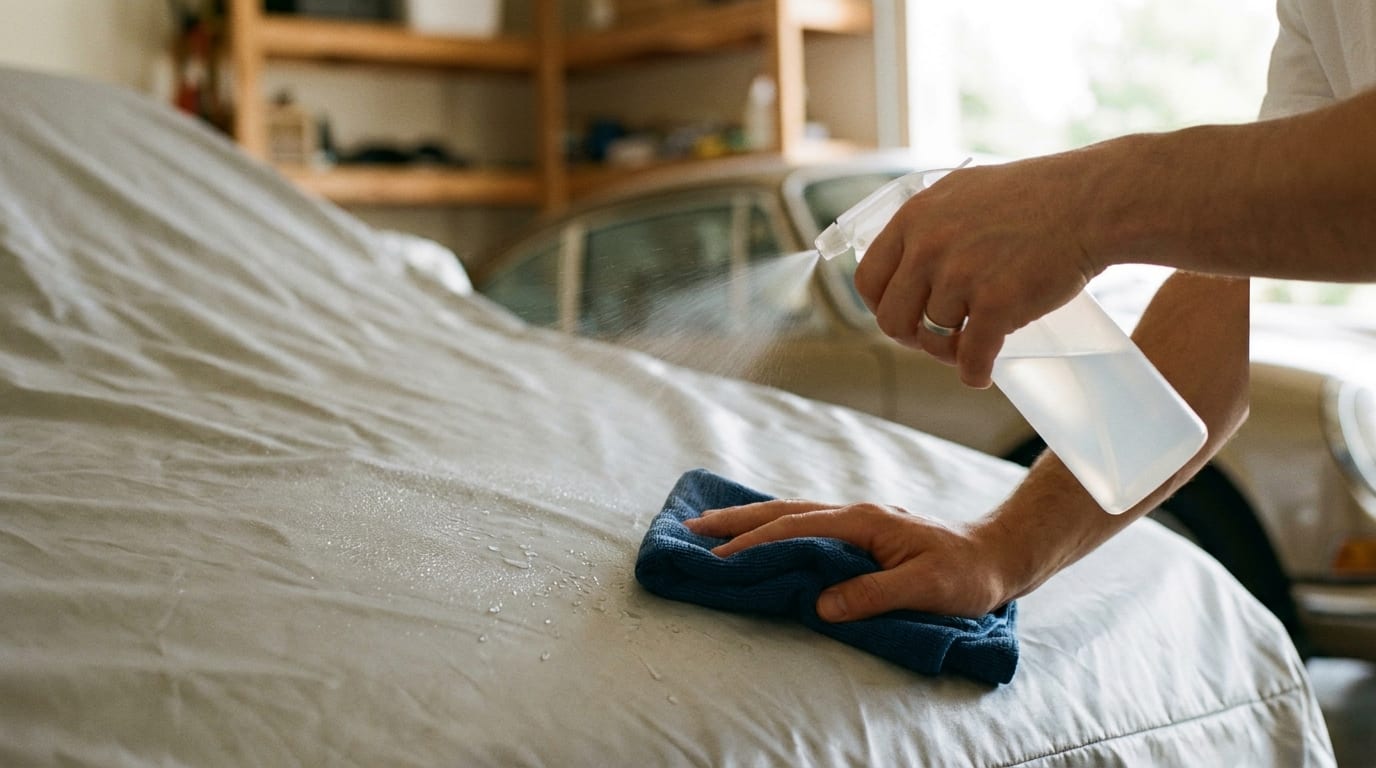
Here's the thing people miss: the cover doesn't make dust disappear, it just catches it before the car does. That means the cover's exterior surface is doing the job you bought it for, and it needs its own upkeep. Shake it out before folding it up, or give it a light vacuum every so often if it's been sitting a while.
For washing, satin and fleece linings generally do fine with a gentle hand-wash or a delicate machine cycle. Skip harsh detergents and skip the high-heat dryer setting; both tend to stiffen the fabric over time, and a stiff lining is a contradiction in terms for this product. A cover that's gone gritty and rough against the paint almost always got there because it wasn't cleaned, not because the fabric failed.
The cleaning walkthrough has specific wash settings and drying instructions if you want to get it exactly right, and there's a more detailed step-by-step cleaning guide as well.
Indoor Cover vs. No Cover vs. Outdoor Cover for a Garage-Kept Soul
Garage owners really only have three options here. No cover is the fastest choice and the least protected one, leaving paint exposed to every bit of dust and every brush of foot traffic. An outdoor-rated cover goes the other direction: heavier shell material, waterproof coating, built to survive rain and sun. None of which you need indoors, and all of which makes the fabric stiffer and less kind to paint than it needs to be. A purpose-built indoor cover sits in the middle: soft lining, breathable fabric, light enough to handle daily.
| Option | Weight/Feel | Protects Against | Best For |
|---|---|---|---|
| No cover | N/A | Nothing | Short-term parking only |
| Outdoor cover | Heavier, stiffer | Rain, UV, wind | Soul parked outside at least part-time |
| Indoor cover | Light, soft lining | Dust, scratches, grit | Soul kept in garage/carport long-term |
The decision rule is simple: if your Soul ever sits outside, even occasionally, for a weekend trip or an overflow parking situation, size up to an outdoor car cover instead. Indoor covers aren't built for that exposure and won't hold up to it the way an all-weather option will. And if you've got outdoor pets wandering the garage, it's worth checking how a cover holds up against animal scratches too, since that's a real-world wear factor people forget about.
Before you order, check the warranty terms and lock in your sizing. Both take five minutes and they're the difference between a cover that actually fits and protects your Soul, and one you're sending back.
If you're still weighing options or want to see what else is worth knowing about keeping a garage-kept car in good shape, it's worth poking around the rest of our car care guides and subscribing for more of this kind of practical, no-fluff advice.