
Outdoor Car Cover for Tesla Model X: Waterproofing & UV Protection Guide
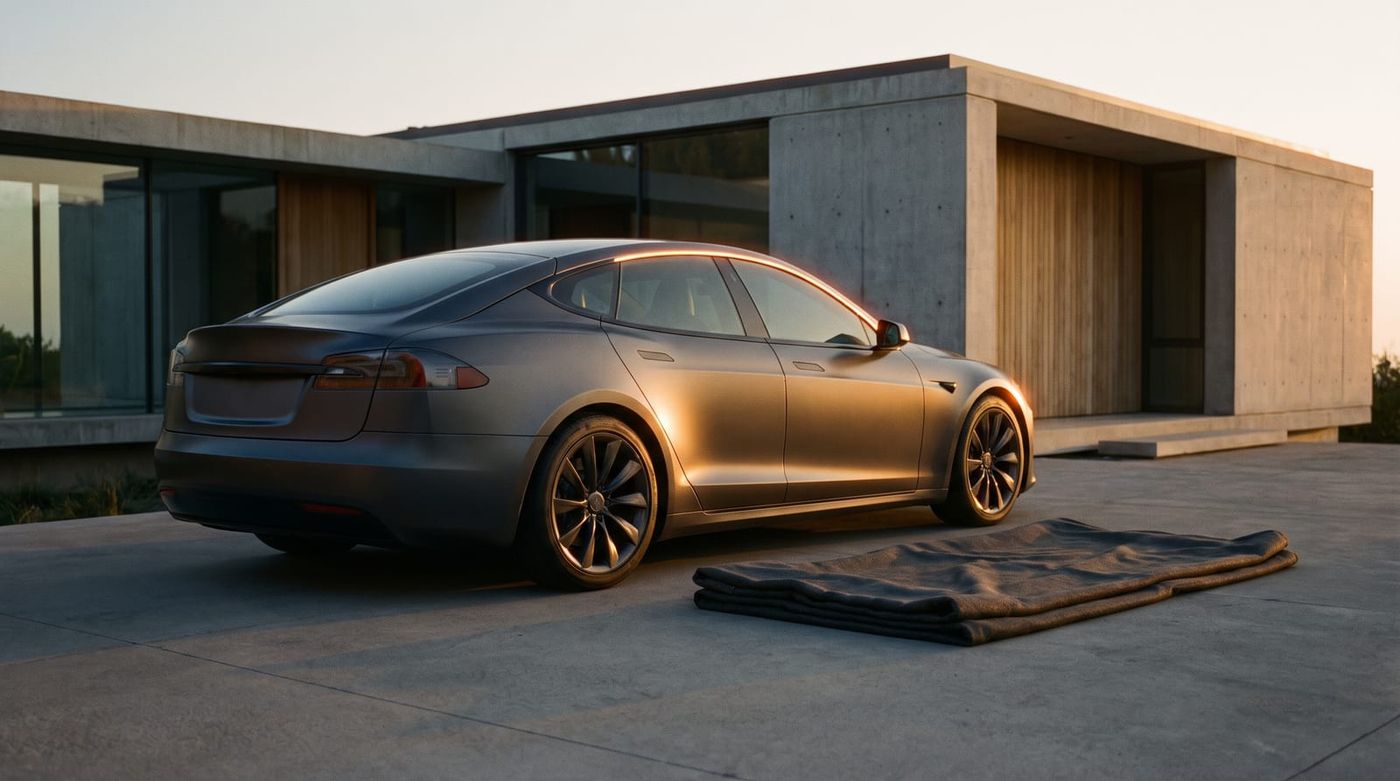
Park a Model X outside for a few months and you'll start noticing things. The clear coat on the hood looks a little flatter than it used to. The dash near the windshield has a faint sheen that wasn't there before. None of this is dramatic, it's just slow, and that's exactly the problem. If you're researching an outdoor car cover for Tesla Model X, you're probably already noticing that slow fade and trying to stop it before it gets worse.
The Model X isn't a typical SUV when it comes to cover fit. The glass roof runs nearly the full length of the vehicle, there's no center pillar break to help a cover stay put, and the falcon-wing doors swing up and out instead of to the side. A generic cover built for a Ford Explorer or a Jeep Grand Cherokee just doesn't account for any of that. Skip proper protection and you're looking at clear-coat oxidation, UV-bleached trim, and a dashboard that cracks years before it should, all from sun and moisture exposure that a decent cover would have stopped.
This guide focuses on the two things that actually matter when you're shopping: waterproofing and UV protection. Everything else (straps, mirror pockets, fabric layers) exists to support those two jobs. If you're an EV owner without a garage, parking on the street or in an uncovered condo spot, this is the decision in front of you right now, and it's worth getting right the first time instead of replacing a cheap cover every winter.
What Makes a Cover Actually Fit a Model X
Fit isn't one thing, it's three. Universal covers are cut to loosely fit a size category. Semi-custom covers add some shape for your vehicle type. Custom-fit covers are patterned to the exact vehicle, panel lines and all. For a Model X, that last category basically isn't optional.
Here's why: the falcon-wing doors need clearance even when they're closed, because the hinge mechanism sits differently than a standard SUV door. A cover without the right contouring around that area will bunch up, strain at the seams, or just not drape correctly over the roofline. Add in the panoramic windshield curve, the roof-mounted sensor housing, the long rear liftgate, and the mirror pockets, and you've got a lot of specific geometry a cheap universal cover was never designed to handle.
Getting the fit wrong goes both ways. Too loose, and wind gets underneath, flapping the fabric against your paint every time a gust comes through, which causes fine scratching over time. Too tight, and the cover sits flush against the surface with nowhere for moisture to escape, trapping condensation right where you don't want it. If you want the full breakdown of fit tiers and how to tell them apart before buying, the custom-fit car cover guide covers that in more depth. CarCovers also has a dedicated Tesla SUV cover page if you want to see what a Model X-specific pattern actually looks like.
Waterproofing: What to Look for Before You Buy
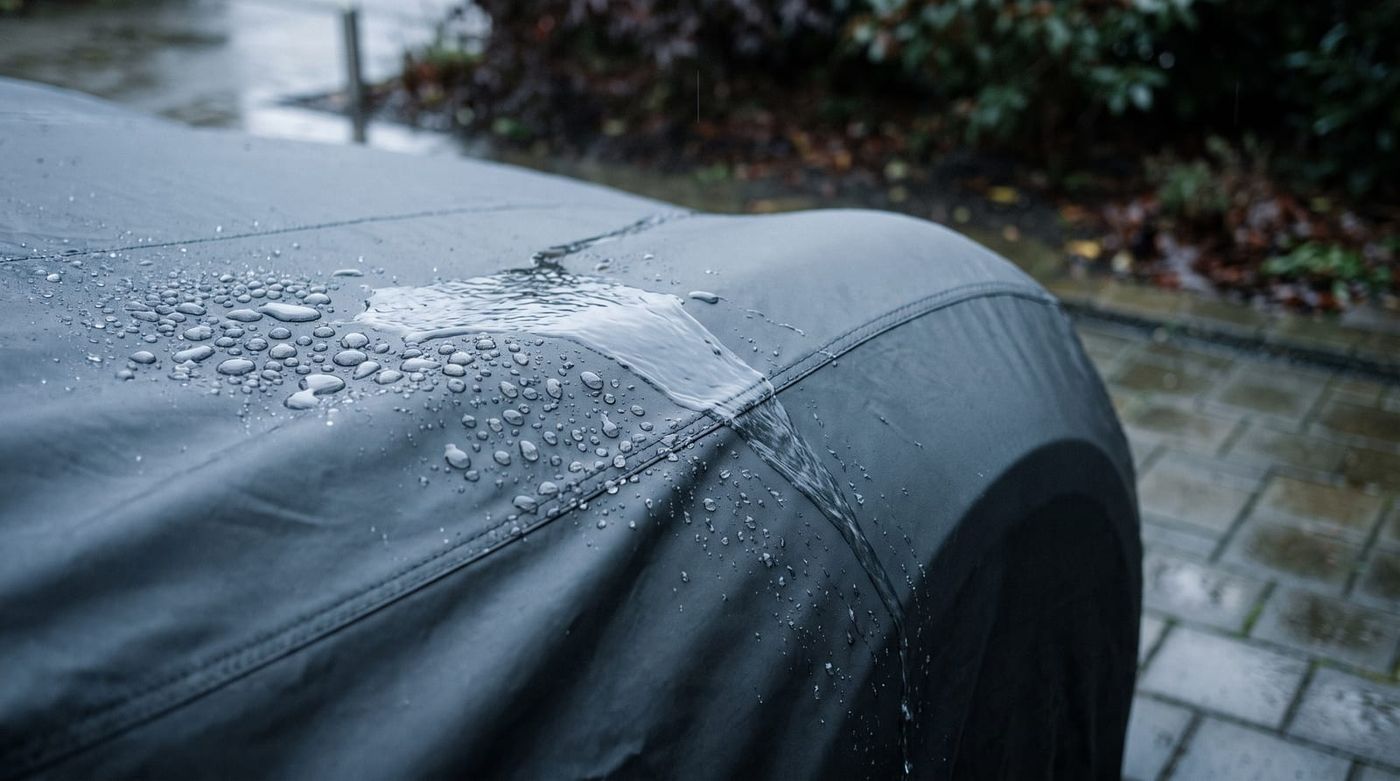
Not all "weatherproof" covers are actually waterproof. There's a real difference between water-resistant fabric, which beads up light rain but eventually soaks through, and fully waterproof construction, which uses coated polyester or ripstop layers to block water outright. Treated cotton blends sit somewhere in between, decent for light drizzle, not built for a real downpour.
The marketing copy rarely tells you where a cover actually fails. It's almost never the fabric itself. It's the seams. Cheap covers stitch panels together without sealing them, so water wicks straight through the needle holes during sustained rain. Better covers seal or tape those seams and add an extra layer on the underside in high-exposure areas like the roof and hood. That's the part worth checking before you buy, not just the headline fabric weight.
You can actually test this yourself once a cover arrives. Pour a small amount of water on the outer shell and watch what happens. It should bead up and roll off, not spread out and darken the fabric. If it soaks in within a few seconds, that's not a waterproof cover regardless of what the label says.
One trade-off people miss: a cover that's too good at blocking water can also trap moisture underneath if it doesn't breathe. You want something that keeps rain out but still lets humidity out, otherwise you're just creating a greenhouse for mold and water spots on your own paint. The waterproof car cover guide goes deeper on fabric breathability if you want the technical side, and the waterproof fabrics article breaks down material types in more detail.
UV Protection: Stopping Sun Damage on Paint and Interior

UV protection isn't about how thick the fabric feels in your hands. It's a chemical treatment applied to or woven into the outer layer, and it's what actually blocks the UV wavelengths that break down clear coat and fade trim. A heavy fabric with no UV treatment will still let that damage happen, just a little slower.
This matters more on a Model X than on most SUVs because of that glass roof. Even with a cover on, if the windshield area or the front edge of the roof isn't fully shielded, heat and UV still build up inside the cabin through any exposed glass. A cover that doesn't fully wrap the front end is doing half the job.
Watch for the warning signs. A clear coat that's turned chalky or dull instead of glossy. Plastic trim that's starting to crack at the edges. Decals or wraps that have faded unevenly. That's the cumulative cost of skipping UV-rated protection, and once it shows up, it's not reversible with a wash and wax.
The good news: you're rarely choosing between waterproofing and UV protection as separate features. Most legitimate outdoor-rated covers bundle both into the same multi-layer fabric, since the same outer shell doing rain duty is usually doing UV duty too. The guide to using a car cover outdoors walks through how these layers work together across different weather conditions.
Comparing Outdoor Cover Options for Your Model X by Climate and Budget
Once you understand waterproofing and UV protection individually, the practical question is which combination fits where you actually park.
| Tier | Waterproofing | UV Protection | Material Layers | Typical Price Range |
|---|---|---|---|---|
| Entry-level | Water-resistant, not fully sealed | Basic UV-treated outer layer | Single-layer | Budget |
| Mid-tier | Fully waterproof, seams sealed | Standard UV-blocking treatment | 3-layer | Moderate |
| Premium | Multi-layer waterproof, taped seams | Heavy-duty UV laminate | 5-layer | Higher, reflects Model X-specific patterning |
Single-layer fabric is fine for mild, infrequent exposure. A 3-layer build adds a soft inner lining so the cover doesn't rub against your clear coat while still blocking water and sun. A 5-layer construction adds extra abrasion resistance and a heavier-duty outer shell, which matters if your Model X sits outside every single day rather than occasionally.
Climate should drive the decision more than price alone. Coastal or humid regions want waterproofing and breathability prioritized first, since the risk is prolonged dampness and mildew, not just rain. Desert and high-UV climates should weight the decision toward a heavier UV-blocking laminate, since sun exposure is the dominant threat there, not rain. Mixed four-season climates are the one case where paying for a multi-layer all-weather build earns its keep, since you're dealing with both problems depending on the month.
On pricing: a genuinely custom-fit Model X cover with sealed seams and real UV laminate is going to cost more than a universal SUV cover off a shelf, and that gap is reasonable given the shaping work and the fabric grade involved. What's not reasonable is paying premium pricing for a cover with no stated waterproof rating or UV treatment listed anywhere, that's just a shaped tarp with a Tesla name attached. Look for a cover backed by a real warranty too, since that's usually a decent signal the manufacturer trusts the fabric to hold up.
Installing and Maintaining Your Outdoor Cover
Draping order matters more on a Model X than people expect. Start at the roof and work the cover down toward the falcon-wing door line before securing the front and rear, rather than pulling it taut from one end first. Pulling too early in the wrong direction puts stress right on the seams near the door hinges, which is exactly where you don't want a tear starting.
If your parking spot gets any real wind, a cover alone isn't enough. Gust straps keep the fabric from flapping and grinding against the paint, and a cable lock adds a layer of security if you're parking somewhere public. The gust strap installation guide walks through placement so the straps don't just shift the flapping problem somewhere else.
Cleaning is simple, and skipping it is what shortens a cover's life more than anything else. Rinse off dirt and debris regularly, wash with a mild soap by hand, and air dry fully before folding it away. Never throw it in a washing machine, the agitation breaks down the waterproof coating and UV treatment faster than normal outdoor wear would. The cover care guide has the full cleaning cadence if you want specifics.
None of this is complicated, it's just maintenance most people skip until the cover starts failing. Done right, it's the difference between a cover that holds its waterproofing and UV resistance for years versus one you're replacing after a single rough season.
Final Take: Choosing the Right Outdoor Cover for Your Tesla Model X
Two things actually matter here. Verified waterproofing, not just a label that says "weatherproof." And UV-rated fabric, not just thick material that happens to block some sun by accident. Everything else, the straps, the fit tiers, the layer count, exists to support those two jobs.
Before you check out, run through this: is the fit confirmed for Model X specifically, including the falcon-wing doors and roof sensor housing? Is the waterproof rating actually listed, not just implied? Is the UV treatment named as a feature, not assumed from fabric weight? And is there a real warranty backing the purchase?
If you're still comparing options, it's worth browsing a few outdoor-rated Tesla covers side by side before deciding, and keeping an eye on CarCovers' articles section for more Tesla ownership and protection guides as you go. A little research now saves a repaint later.
