
The Complete Guide on How to Jump a Car
Source: Oyls / Shutterstock.com
Car batteries play critical roles in the smooth running of vehicles. Without adequate power from a battery, the starter motor can’t switch on the engine. In most cases, the only way to kickstart a battery when you’re on the road is by using jump leads.
Although the process of jump starting a car is relatively straightforward, it requires the right technique and plenty of practice to get right. Missing a step or attaching the wrong components can not only cause damage to the vehicle, but it can also be hazardous. Modern vehicles contain complex electrical systems that shouldn’t be tampered with unnecessarily.
It’s always beneficial to carry emergency jump leads with you on the road. According to Consumer Insights, the AAA reported a 10% rise in jump start service calls in 2020. For official instructions on how to jump start your vehicle’s make and model, you should consult the car owner’s manual. However, some standard procedures must be followed.
Step 1: Park Cars in the Correct Positions
The two cars involved in the jump-starting process must be positioned correctly. Park the car that’s being used to jump start as close as possible to the vehicle with the dead battery. This is to ensure the jump leads can comfortably reach both batteries. But, ensure that no parts of the vehicles are touching each other. Switch off both engines completely, put the cars in “park” or “neutral,” and make sure both parking brakes are engaged.
Help Maintain Your Car with a Quality Car Cover
Step 2: Prepare All Components for the Jump Start
Take the jumper cables from your trunk or storage compartment and ensure they’re untangled. Pop the hood of both vehicles and locate the batteries in each. Take note of the positive and negative terminals on the batteries. The positive terminals are usually larger and are marked with a “+” or “POS” sign. The negative terminals are generally labeled with a “-” or “NEG” sign. Note that the jump leads are red and black. The red leads are positive, and the black ones are negative.
Source: Jari Hindstroem / Shutterstock.com
Step 3: Attach the Jump Leads to the Batteries
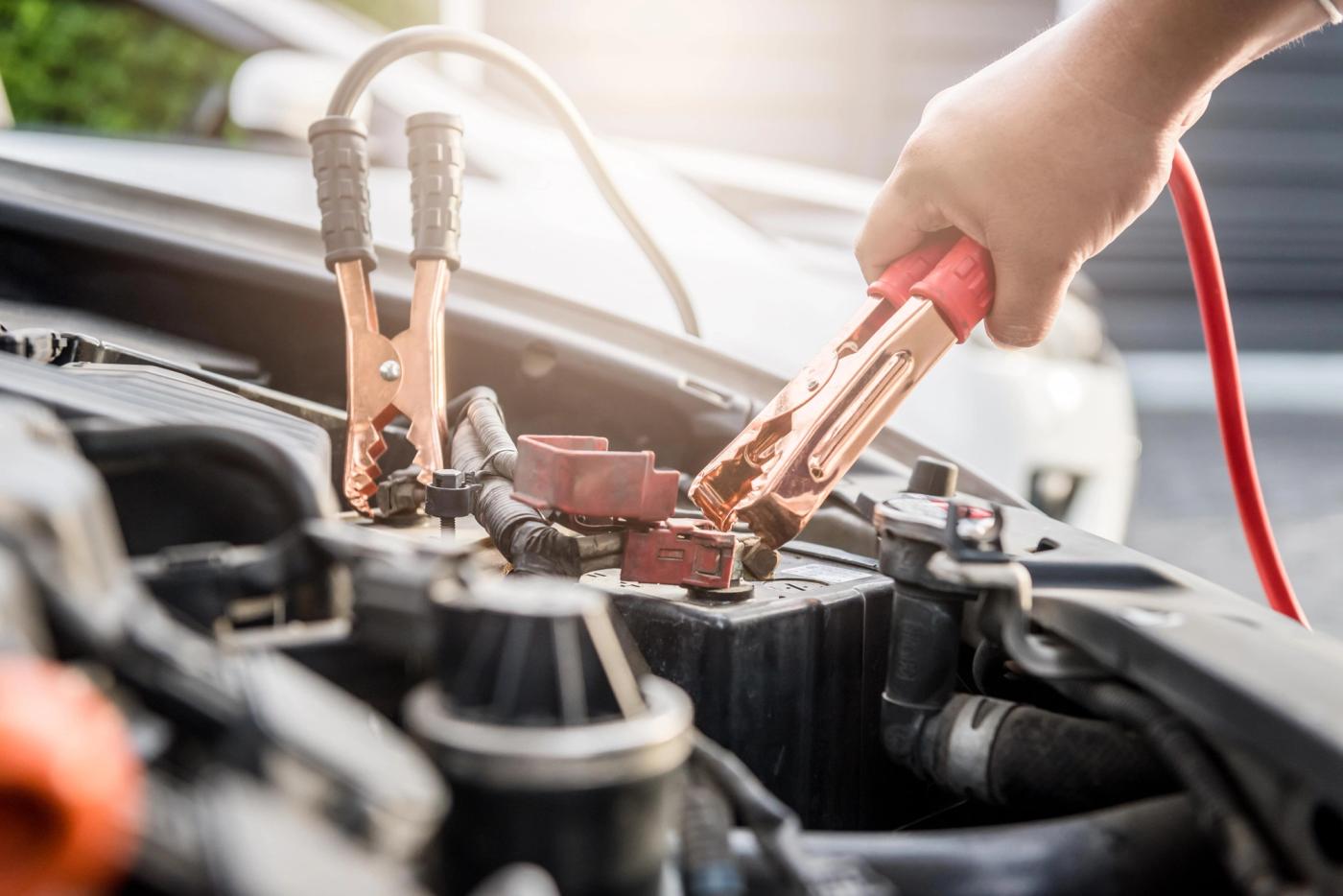
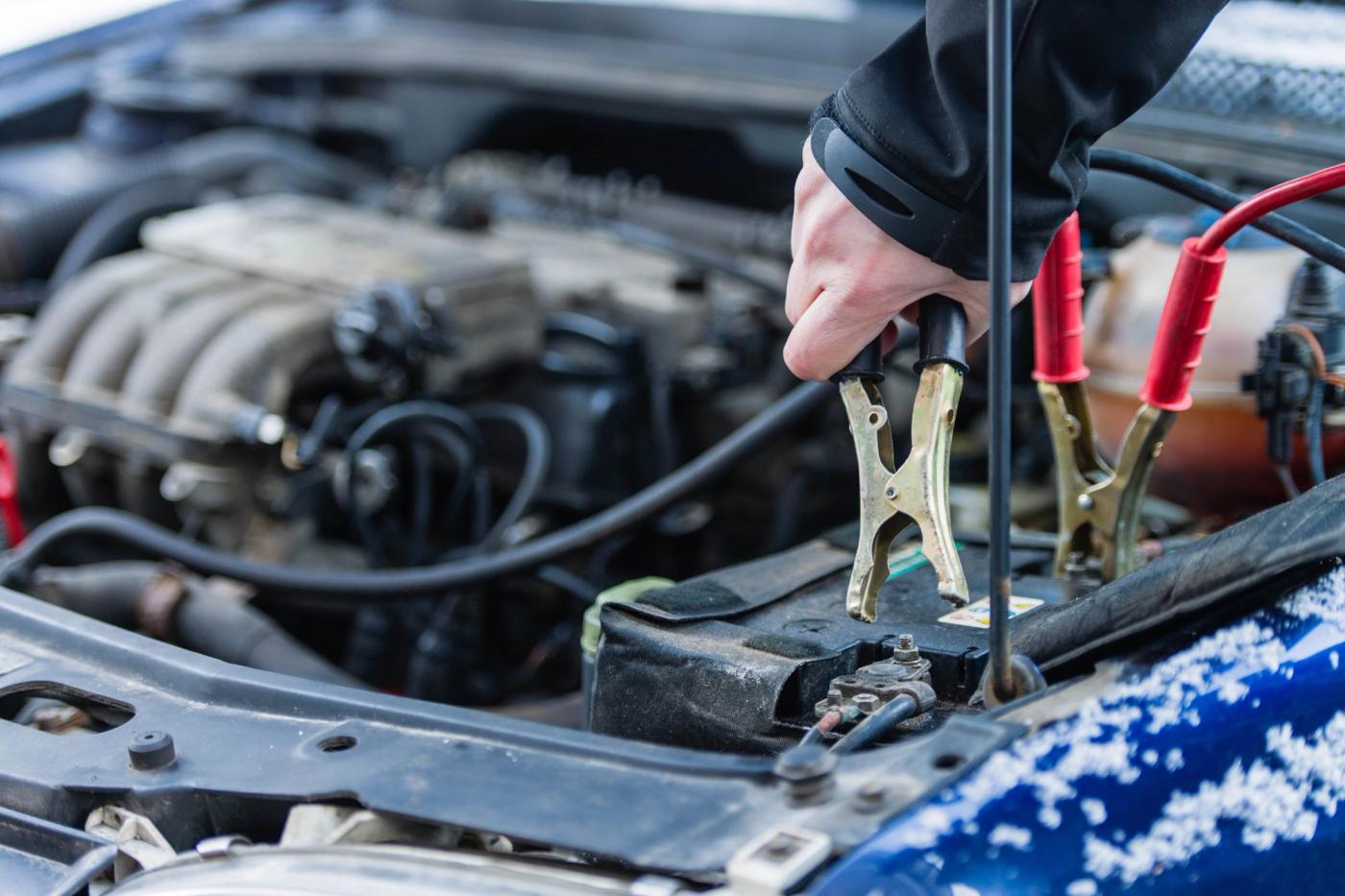
Attach a clamp from the red (positive / +) lead to the positive terminal on the dead battery. Then, place the clamp from the other end of the red lead to the positive terminal on the functional battery.
Next, attach a clamp from the black (negative / -) lead to the negative terminal on the functional battery. Finally, clamp the second clamp from the black lead to a grounding surface on the car with the dead battery. A suitable grounding surface is a clean, unpainted metal surface on or under the vehicle’s hood. Make sure you don’t allow two cable ends to touch each other. Never attach a red cable clamp to the negative battery terminal or a car with a dead battery.
Step 4: Start the Cars
Start the vehicle with the functioning battery first. Allow the engine to run for 2-3 minutes. Then, try to start the car with the dead battery. If it doesn’t start, switch off the engine of the running car and double-check that all cables are attached correctly. If there is dirt or build-up gathered on either of the batteries, clean the surface and try to start the car again.
Once the engine starts, allow it to run for 20 to 30 minutes to give the battery enough time to recharge. You may drive your car as soon as the engine starts. If the battery fails to start after several attempts and adjustments, it may be beyond repair.
Avoid Debris Buildup with a Car Cover
Step 5: Carefully Remove the Cables
The final step is to remove the cables carefully. Remove them in the reverse order that you attached them.
Avoiding Car Battery Issues
Car batteries usually last between five to seven years. However, a lack of car maintenance can cause them to deteriorate even faster. The critical factors in avoiding battery issues are to keep the engine running as much as possible and to protect the battery during cold weather. It’s essential to monitor the health of the battery using a multimeter during regular car maintenance.
Heat and moisture are the primary enemies of a car battery. So, one of the most effective ways to protect a car battery is to use a car cover when the vehicle isn’t in use. A Platinum Shield car cover is a protective layer that can safeguard your vehicle from loose debris, scratches, dust, UV rays, and moisture. These covers are fleece-lined, providing additional protection during cold temperatures.
Protect Your Vehicle Year-Round
A car cover doesn’t just protect the exterior of a vehicle. It prevents moisture and the elements from accessing the engine, causing rust and decay. A quality car cover helps keep your vehicle in good condition for longer, reducing repair costs and maintaining its value.
At CarCovers.com, we stock a wide range of quality car covers. From semi-custom to custom fit car covers, our products are designed to fit the exact dimensions of your vehicle, ensuring a tight fit for maximum protection. Each product comes with an industry-leading warranty. Visit our website today to browse our full selection.
