
Types of Motorcycles
Written by: Gregory Miller
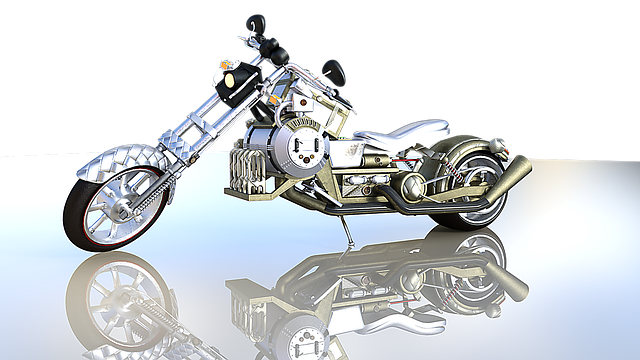
Image Source: Pixabay
Chopper
Choppers are custom by design and first emerged out of California in 1959. Out of all of the custom styles out there, once you lifth off the car covers, the chopper is definitely the most extreme. With its radically modified steering angles and lengthened forks, choppers often have a stretched out appearance. Choppers can either be built by modifying an original motorcycle or from the ground up. The most common characteristic of choppers include their hardtail frames (frames without a rear suspension), extended forks, tall “ape hanger” or shorter “drag” handlebars, oversized wheels, and lengthened or stretched frames. One of the most common and recognizable features of choppers are “sissy bars”, a set of tubesthat connect the rear fender with the frame. Check out motorcycle covers for Ducati.
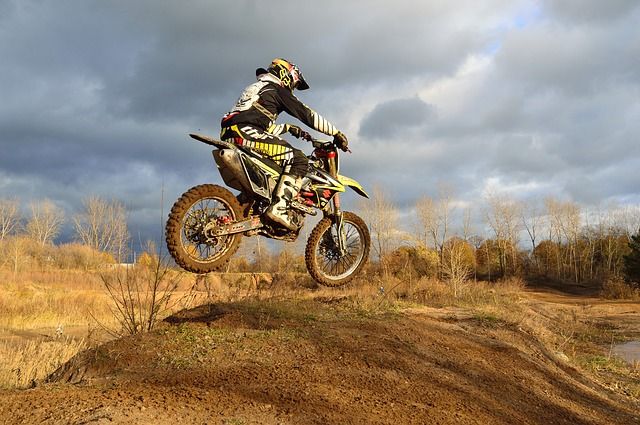
Image Source: Pixabay
Dirt Bike – (Off Road)
Dirt Bikes also known as Off-Road bikes were designed for the adventurer who enjoys taking their bike off the beaten path. For clarification purposes, when one speaks of “off road”, they’re referencing roads that are not paved conventionally. The roads that these types of bikes favor are rough in nature, typically consisting largely of sand and gravel. Compared to their on-road counterparts, off-road vehicles are much simpler to operate and are far lighter due to its inclusion of long suspension travel, high ground clearance, and rugged, lightweight body. The wheels of off-road bikes have knobby tires and are generally clamped to the rim with a rim lock.
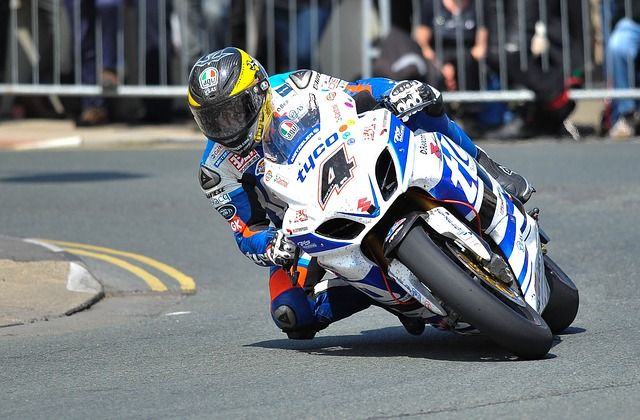
Image Source: Pixabay
Sport bike
Sport bikes were built for one thing and one thing only: speed. This motorcycle has been optimized in every way possible for speed, braking, acceleration, and cornering when making sharp turns. The tradeoff for these features is less rider comfort and poor fuel economy. In general, motorcycles are versatile vehicles that can be used in many different applications, but it was the introduction of the Honda CB750in1969 that set the tone for how the world would view and receive sport bikes. In the 1970s, improvements to the braking and suspension began to match the power of the large inline fours that had begun to sweep the world of sport bikes. It was during the 1980s where sport bikes began to make a name for themselves, to the point that people began to mistake them for racing motorcycles. Ever since the 1990s, sport bikes have continued to evolve and become more diverse.
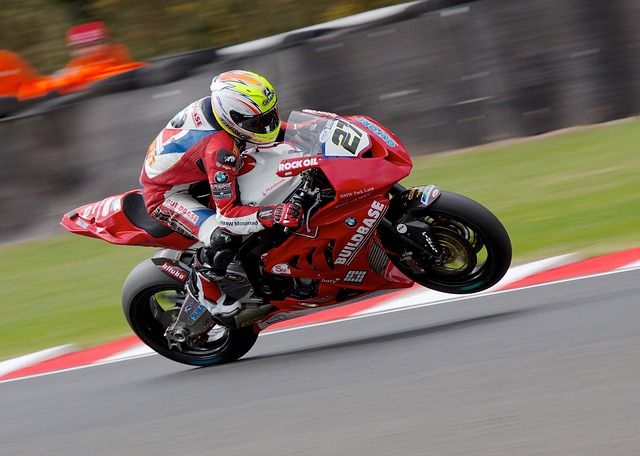
Image Source: Pixabay
Sports Touring Motorcycle
Sport touring motorcycles combine the long-distance capabilities of a touring motorcycle with the performance capabilities of a sport bike. It’s said that the first sport touring motorcycle was the 1977 BMW R100RS.
Unlike the more streamlined sports models, sport touring motorcycles generally offer more wind protection with its larger fairings as a transmission with lower gearing, an adjustable windscreen, side and/or rear pannier storage systems, a larger alternator (for more accessories), a shaft drive as opposed to a chain drive, remotely adjustable headlights, heated handlebar grips, a more upright seating position, and a much larger fuel tank for the added range. Unlike its full touring counterpart, sports-tourer offers more ride height thus giving it more ground clearance for better cornering, lower weight, less storage, a less relaxed seating position, less room for the pillion, but offers better performance overall.
During the design process of the sports-tourer, some manufacturers prefer to use existing parts from other motorcycles, such as the engine, instead of creating a brand new engine from the ground up. You could think of the sport tourer engines as a different version of its sport bike counterpart, where the specific purpose of the engine focuses on mid-range torque as opposed to peak horsepower. Often, this will mean that the cylinder head and exhaust system will be different. There are numerous examples of sport-tourers who share similar engines with sports bikes, such as the Triumph Spring sharing the same engine with the Speed Triple, Daytona, and Tiger Models.
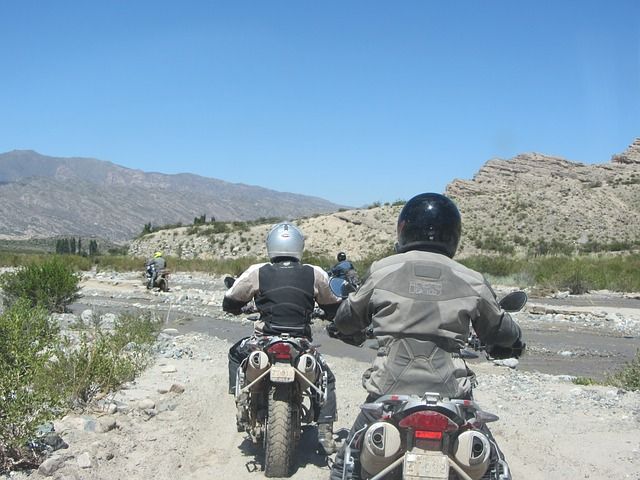
Image Source: Pixabay
Touring motorcycle
As the name implies, touring motorcycles are primarily designed for touring. Practically any motorcycle can be used for such purposes, but manufacturers went to great lengths to ensure that the rider was as comfortable as possible while riding. You can think of touring motorcycles as the exact opposite of sport bikes. Where sport bikes were built for maximum speed, touring motorcycles were built for comfortability. In many cases, touring motorcycles sport large displacement fairings and windshields that protect the rider from the wind and weather, engines that offer a good amount of low-end horsepower, larger gas tanks for driving longer ranges without having to fill up, and, most importantly, a more comfortable upright seating position (when compared to sport bikes).
Touring motorcycles go by a medley of names, especially in the United States. Such names include dresser, full dress tourer, full dresser, bagger, and full bagger. In many cases, these names are referenced in a joking manner. Originally, these names were applied to cruisers that sported a full set of panniers or saddlebags (such as Harley-Davidson Road King). Now, such monickers are reserved for touring motorcycles.
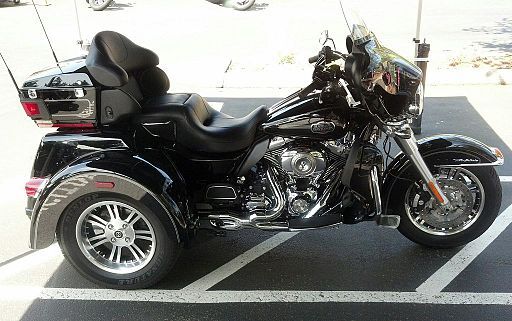
Image Source: Pixabay
Trikes
So-called “Trike” motorcycles have created quite a bit of controversy in the biking community. As the biking purists would say “give it two wheels or get it out”. The thing is, the Trike motorcycle doesn’t have two wheels; it has three. Generally speaking, most trikes are classified as motorcycles. The rise of the trike began when aging bikers had to find alternatives to riding the traditional two-wheeled bikes due to aching muscles, joints, and knees. These individuals began building three-wheeled motorcycles to aid them during the riding process. Soon, shops began jumping on the trend and began offering motorcycle-to-trike conversions for around $15,000 to $18,000. Trikes didn’t truly take off until the motorcycle giant Harley Davidson, debuted its own trike, the Tri Glide.
In today’s market, as more and more manufacturers are beginning to jump in on the trike frenzy, they’ve created a whole new category of bike: the autocycle. Autocycles look a lot more like they belong in science-fiction machines rather than out on the roads. These new three-wheeled machines offer steering wheels for steering and don't require a rider to straddle the vehicle. Some autocycles can be said to drive more like cars than they do like motorcycles. One can only wonder what the future has in store for trike and autocycle motorcycles.
