
Affordable Car Cover for Jeep Gladiator: A Budget Buyer's Guide That Still Protects Your Truck
Why Gladiator Owners Need to Think About Cover Cost Differently
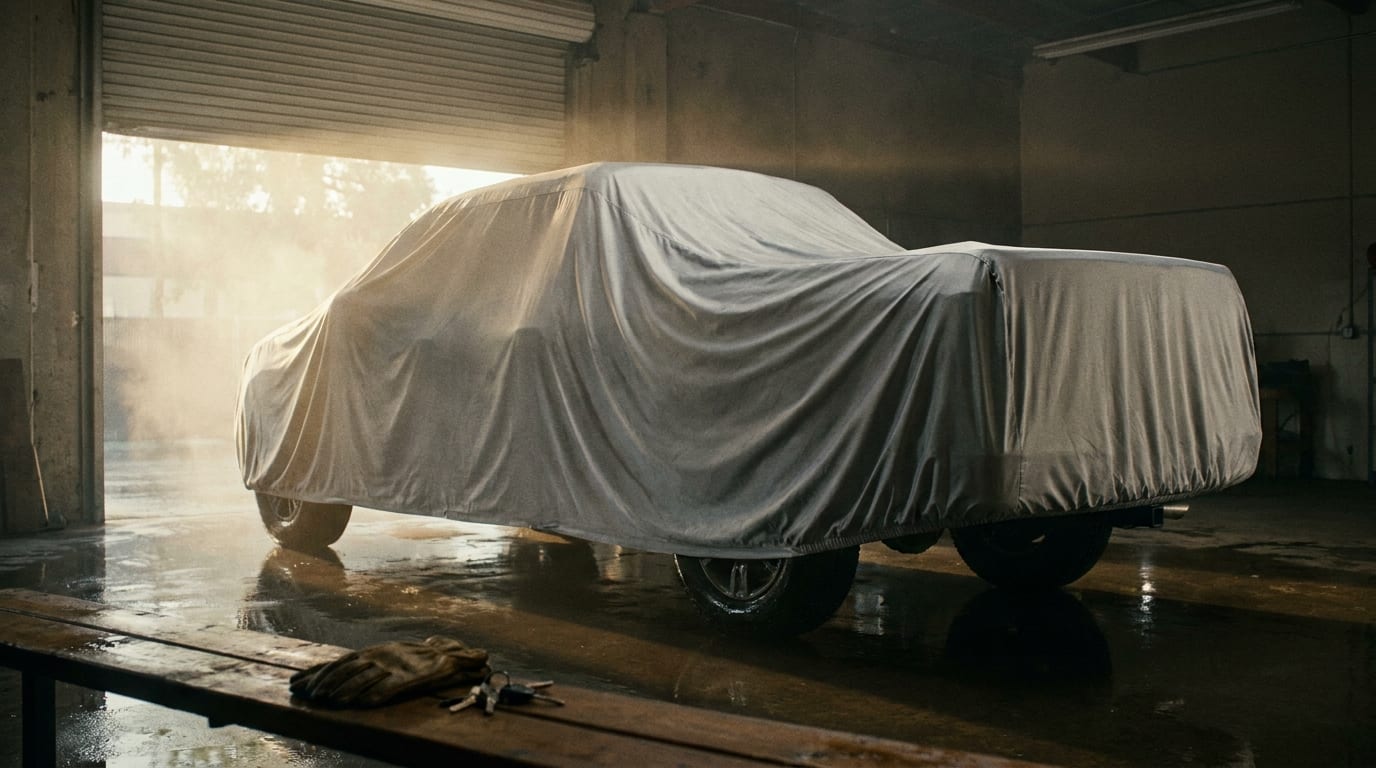
A Gladiator isn't a regular pickup, and it isn't a regular Wrangler either. You've got an open bed, a removable top (soft or hard), and a ride height that puts more of the truck in the weather's path than most trucks on the road. That combination is exactly why a generic, bargain-bin cover tends to fail here first: it rides up over the bed rails, it gags trying to wrap the windshield frame, and it leaves gaps right where sun and rain do the most damage.
Here's the part that makes the math matter: Gladiators hold their resale value well. Faded paint, a cracked dash, or a moldy interior from water sitting under a bad cover wipes out whatever you saved by buying the cheapest cover on the shelf. So when we talk about an affordable car cover for Jeep Gladiator owners in this guide, we don't mean the literal lowest-price SKU you can find. We mean the lowest price that still does the job it's supposed to do.
That's the frame for everything below: what actually drives the price of a Gladiator cover, where the real minimum quality line sits, and where you can cut costs without regret.
What 'Affordable' Actually Costs for a Gladiator Cover
Truck covers generally fall into three price bands. Entry-level universal covers, cut for "full-size truck" as a broad category, run cheap but fit loose. Semi-custom covers, sized to truck categories with closer attention to cab and bed shape, sit in the middle. Full custom-fit covers, built to a specific year and trim, cost the most but fit like they were made for your exact truck, because they were.
For most Gladiator owners, semi-custom is the actual sweet spot. You get meaningfully better fit than a universal cover, for a fraction of what full custom costs. The fit gap between universal and semi-custom is bigger on a Gladiator than on a standard pickup, thanks to that open bed and the mirror placement on the JT generation, so the upgrade from the cheapest tier buys you more than it would on a Silverado or F-150.
One more wrinkle: soft-top and hardtop Gladiators don't have the same profile. A cover cut loose enough to clear a hardtop's roofline can flap around on a soft-top, and vice versa. That affects which price tier is really "affordable" for you, because a universal cover that doesn't account for your top style might need replacing fast regardless of what you paid for it. Also worth checking before you order: bed length varies slightly by trim year on the JT platform, which is covered in more depth in this pickup truck bed size guide. If you're shopping truck covers by price alone, start with the semi-custom tier and work up only if you need to, rather than starting at universal and hoping it holds up.
The Minimum Quality Bar: What Not to Cut Corners On

There's a line where cheap becomes counterproductive, and it's easy to cross without noticing.
Water resistance is the first one. A cover that soaks through isn't neutral, it's worse than no cover at all. It traps moisture against the paint and under the soft-top, which is how you end up with mildew smell in the cab. If a listing doesn't say water-resistant or better, assume it's not.
Fabric weight is your rough proxy for how long the thing survives contact with a Gladiator's bed rails. Thin, single-layer polyester tears at those edges within a season, sometimes less if the truck lives outside full time. You want something with actual body to it, not a glorified bedsheet.
Then there's the hem. An elastic hem or a strap-and-grommet system keeps the cover snug in wind. Skip it and you get flapping, and flapping against paint for months is basically free-of-charge scratching. Seam quality matters here too, arguably more than the headline fabric specs. Stitched seams hold up. Taped seams at a rock-bottom price point are often the first thing to fail, usually right where you'd notice it least until it's too late.
If you want the deeper breakdown on which materials actually hold up outdoors versus which ones are mostly marketing, this material comparison walks through it, and the basics of waterproof car covers are worth a skim before you buy anything at the low end.
Where You Can Actually Save Money
Not every upgrade is worth paying for, and this is where you claw back real savings without touching durability.
Skip the heated, insulated, multi-layer "all-weather" covers if your Gladiator sits in a garage most of the time or you're in a mild climate. Those covers are built for trucks parked outside through brutal winters and blazing summers. Paying for that protection when you don't need it is just money gone.
If the truck is garage-kept, an indoor-use cover, something simple like a satin or fleece layer, costs noticeably less than an outdoor-rated cover and does the job fine for dust and light scuffs. That's a legitimate budget move, not a corner cut, as long as the truck genuinely stays under a roof.
Mirror pockets and antenna patches add to the price. If your trim doesn't have the feature the patch is built for, don't pay for it. Same with color and pattern customization: that's a look, not a layer of protection. Drop it if you're buying on budget.
Don't Just Throw a Tarp on It
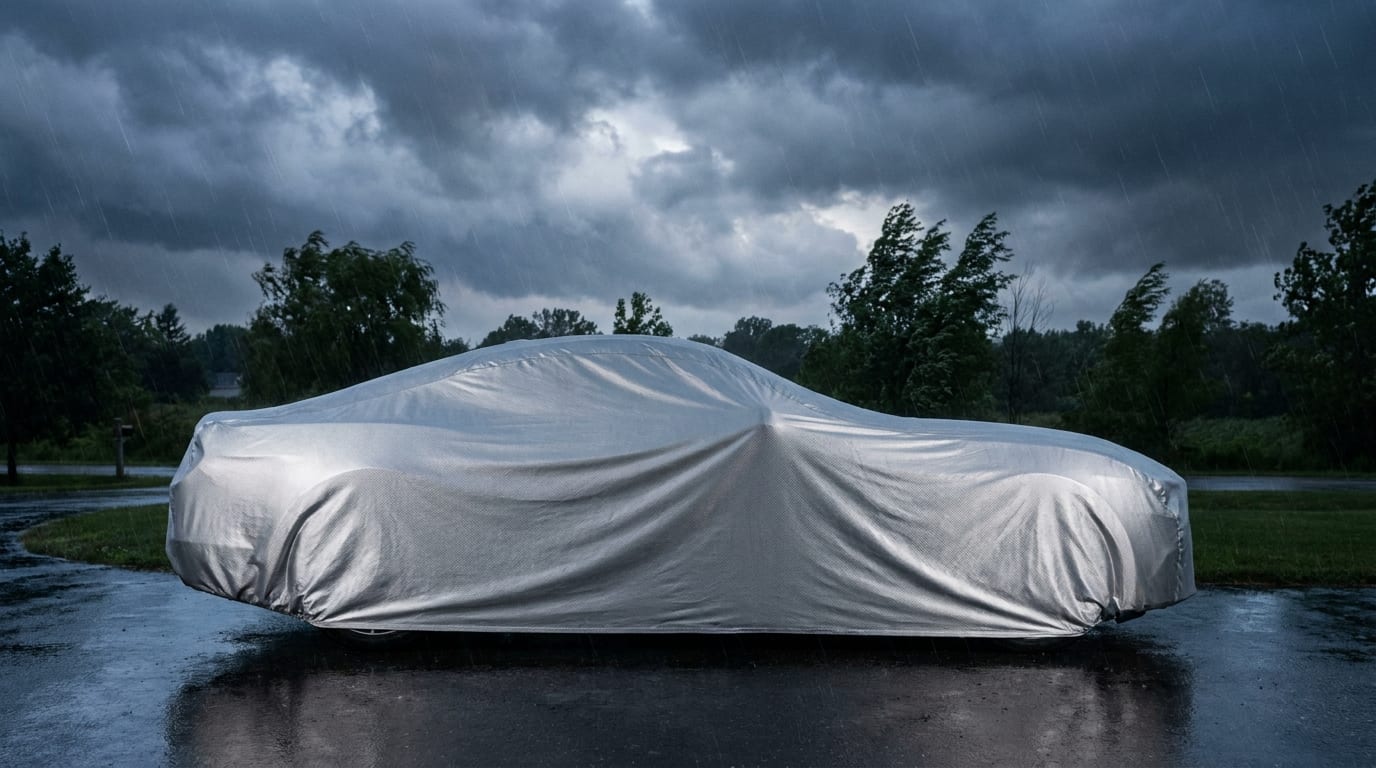
Every budget shopper flirts with this idea at some point: why not just grab a tarp and some bungee cords? Here's why it fails on a Gladiator specifically. Tarps have zero give. They don't flex around a windshield frame or mirrors, so they rub against paint every time the wind moves them, which is often. Water pools on the hood instead of running off, because a tarp has no shaping to direct it anywhere. And bungee cords concentrate pressure at a few points instead of spreading it, which is its own slow-motion paint problem.
Run the numbers and the gap isn't even that big. A decent tarp plus bungees or straps can run you close to what an entry-level fitted truck cover costs. You're not actually saving much, you're just trading real protection for the illusion of a deal. For the full comparison, including where tarps do have a place, this breakdown covers it in detail.
Sizing It Right So You Don't Buy Twice
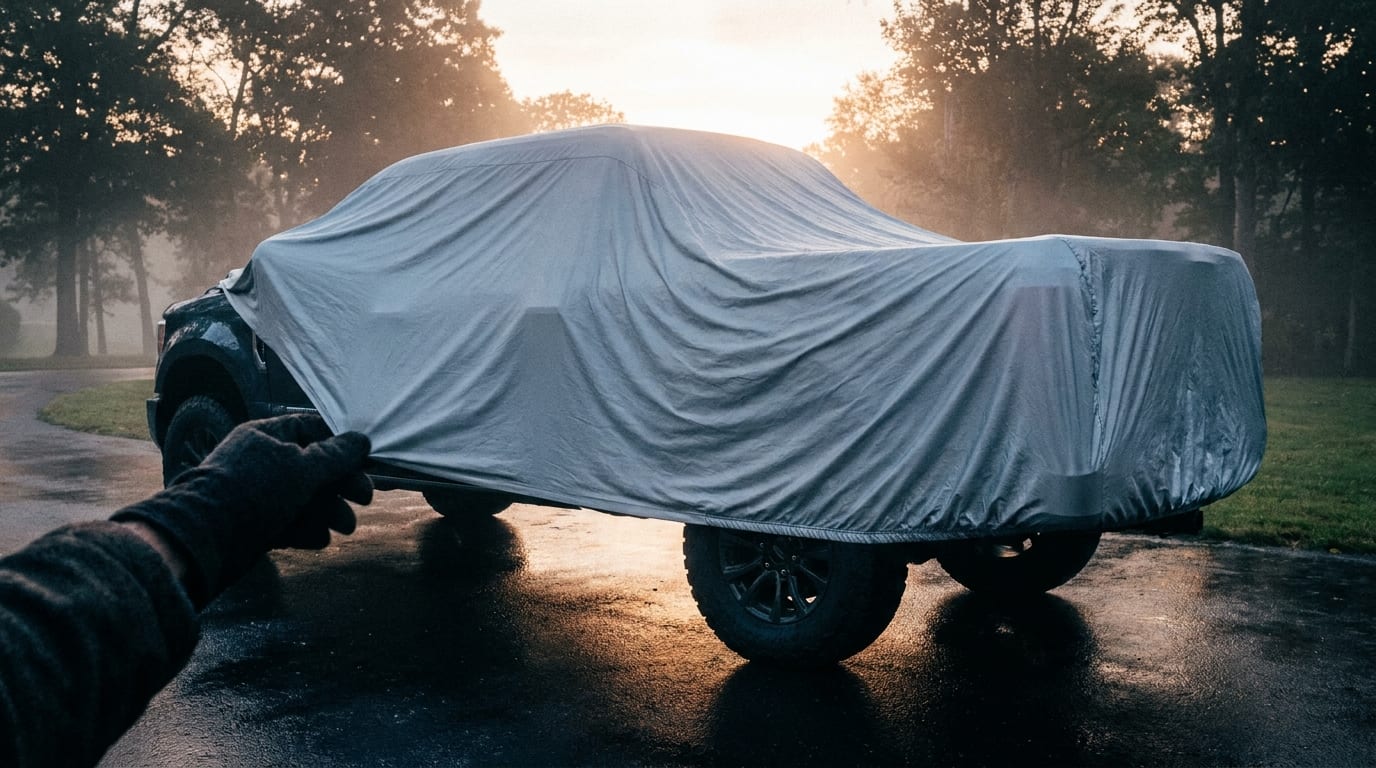
The single most expensive mistake on a budget cover isn't a mediocre fabric. It's getting the size wrong, because that means buying a second cover. Twice the spend, no durability upside.
Gladiator-specific measurements matter more than people expect. Overall length changes with the bed. Cab height changes if you've got a light bar or a bed rack on there. And soft-top versus hardtop changes the whole roofline profile the cover needs to clear. A generic "full-size truck" category on a listing page doesn't account for any of that.
Rather than guessing, check the sizing guide for choosing the right cover fit or run your specifics through the coverfinder tool before you buy. It's a five-minute step that saves you a return and a second shipping charge. Bed length alone varies enough across Gladiator trims that skipping this step is the fastest way to end up disappointed with an otherwise affordable car cover for Jeep Gladiator you picked out in a hurry.
How to Judge a Budget Cover Before You Buy It
Before you check out, run the listing through a short mental checklist. Is the fabric spec actually named, not just "heavy-duty"? Is there a stated water-resistance rating? Is there a warranty, and how long is it? Is the return policy visible and reasonable?
Warranty length tells you more than most spec sheets. A maker backing their stitching and fabric with a longer warranty is telling you they expect it to last, and you can check what a real lifetime warranty on a car cover actually covers before assuming any claim at face value.
Red flags worth walking away from: no fabric weight listed anywhere, no warranty mentioned at all, or reviews describing tearing within the first few weeks of use. Any one of those on its own might be nothing. Two together, skip it.
And check the return policy before you buy, every time, on every budget cover. Fit issues happen even when you measure carefully, and you want an easy way out if the cover you ordered doesn't sit right on your Gladiator.
Bottom Line: Buying an Affordable Cover for Your Gladiator
Strip away the marketing and the real minimum bar is simple: semi-custom fit, water-resistant fabric, and a warranty that shows the maker trusts their own stitching. Everything past that, insulation, mirror pockets, custom colors, is an upgrade you choose, not a requirement you skip at your own risk.
If you're comparing options, it's worth browsing truck covers built for Jeep specifically rather than shopping the generic truck category and hoping for the best. And if you want more buying guides like this one before you decide, it's worth poking around the rest of the site's cover advice while you're at it.
A well-fitted cover in the $60 to $120 range beats a $20 tarp every time, and it beats a $300 cover loaded with features your Gladiator will never use. Affordable doesn't have to mean flimsy. It just means spending on the parts that actually protect the truck, and skipping the parts that don't.
