
Best Outdoor Car Cover for Dodge Challenger: Waterproofing & UV Protection Guide

Park a Challenger outside long enough and you'll start noticing things. The clear coat on the hood dulls first. Water sits along the rocker panels after a storm instead of running off. The wide rear haunches collect grime that a sedan's bodywork never would. If you're shopping for an outdoor car cover for Dodge Challenger ownership, you already know this car wasn't built to sit under a thin sheet in the driveway and just hope for the best.
Why Your Challenger Needs More Than a Basic Cover Outdoors
The Challenger's proportions work against it outdoors. That long, flat hood is basically a solar panel for UV damage, catching direct sun for hours with nowhere for the heat to dissipate. The wide stance and low ground clearance mean water pools near the rocker panels and lower doors instead of draining away like it would on a taller vehicle. And if you've got one of the darker paint codes (Pitch Black, Granite, B5 Blue), you'll see UV fade show up faster than it would on a lighter color. Dark pigments absorb more radiation, plain and simple.
Here's the part that raises the stakes: a lot of Challenger owners aren't just daily-driving a commuter car. Scat Packs, R/Ts, Hellcats, these hold collector value, and that value lives in the paint and trim condition. A cheap cover that lets water sit against the clear coat for a season can undo years of careful ownership.
So there are really only two specs that matter for a cover that lives outside: actual waterproofing (not water resistance) and UV-blocking fabric treatment. Everything else, color, price, brand name, is secondary. This guide walks through what to look for in both, plus fit, so you can actually choose the right outdoor car cover instead of just reading about specs in the abstract.
Waterproofing: What Actually Keeps Rain, Dew, and Snow Out
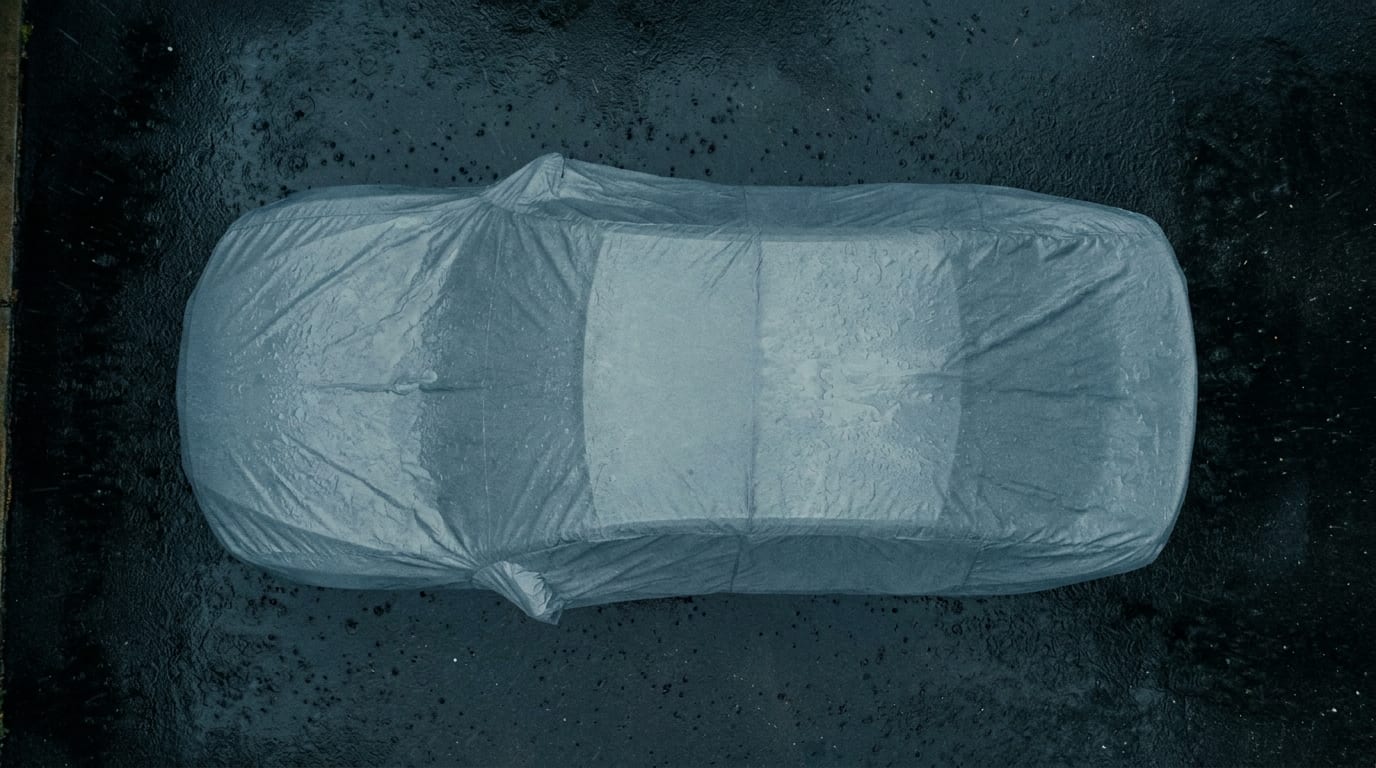
Water-resistant and waterproof get used interchangeably in cover listings, and they shouldn't. A water-resistant coating beads up moisture for a while, sure, but give it enough rain or enough time and it soaks through. True waterproofing comes from multi-layer laminated fabric construction, where an inner layer actually blocks water from passing through rather than just slowing it down. That distinction is covered in more depth in this breakdown of waterproof fabric types, but the short version: if a listing doesn't specify laminate or multi-layer construction, assume it's resistant, not proof.
Seams matter just as much as the fabric itself. Water doesn't usually fail a cover through the main panel, it fails at the stitching. Taped or sealed seams close that gap. A cover with great fabric and untaped seams will still leak right at the stress points, every time it rains hard enough.
Here's the catch that trips people up: a cover can be 100% waterproof and still be the wrong choice if it's not breathable. Trap moisture under a non-breathable shell and you get condensation, which leads to mold and mildew sitting directly against your paint. That's arguably worse than rain exposure. The best waterproof car covers solve for both at once, keeping water out while still letting trapped moisture out.
Last piece: the edges. Elastic hems, cable and grommet tie-downs, and underbody straps keep wind-driven rain from blowing up under the cover's edge, which is how a lot of "waterproof" covers still end up with wet floor mats after a storm.
UV Protection: Stopping Sun Fade, Oxidation, and Cracking
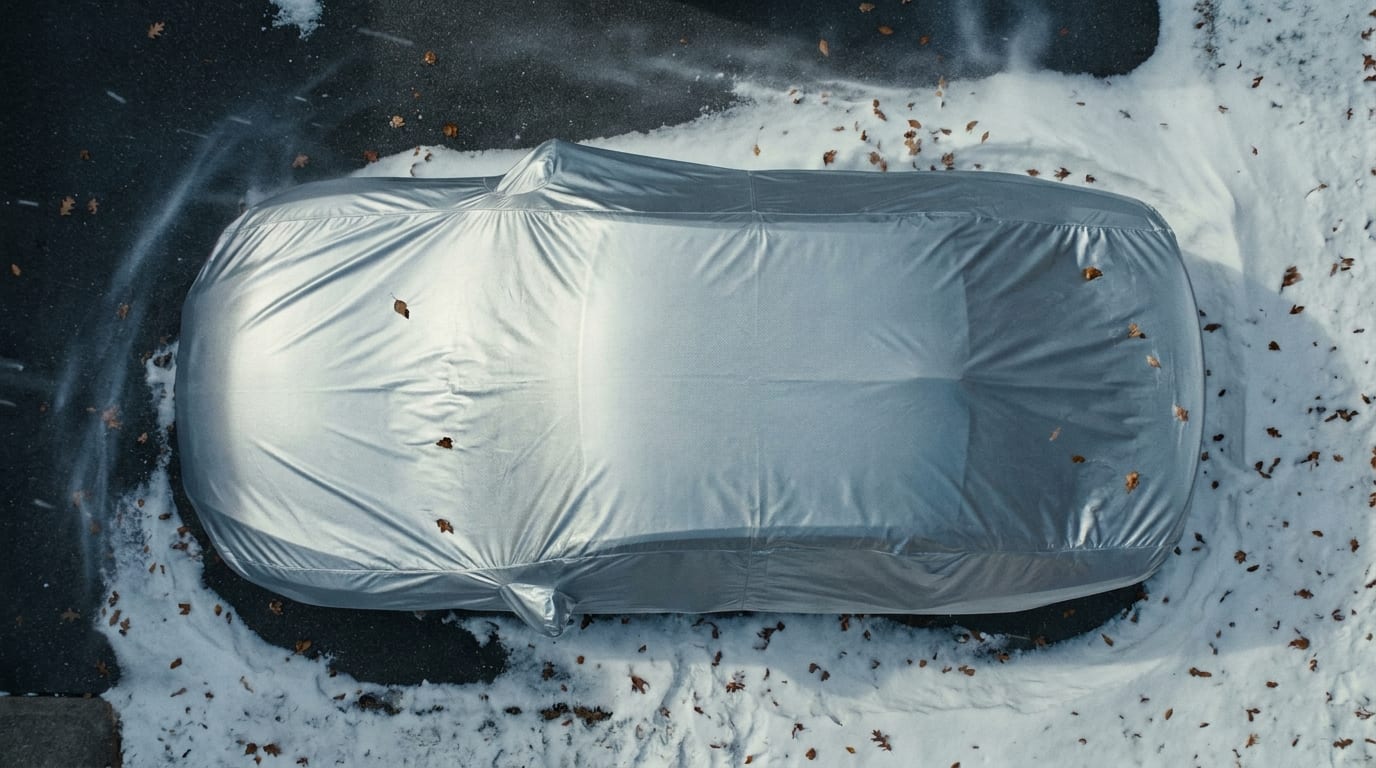
UV rays break down clear coat at a chemical level. It's not just cosmetic fading, it's oxidation that eventually eats into the paint itself, plus cracking on dash and interior trim if the sun gets to the glass. This happens even with a car parked behind a garage window. Outdoors, with no glass filtering anything, it happens faster.
The fix is fabric construction, not just a "UV protectant" sticker on the packaging. Multi-layer fabrics with a UV-resistant outer shell block radiation before it ever reaches the paint. Single-layer fabrics, by contrast, tend to let heat and UV transmit straight through, which defeats the purpose of covering the car in the first place. This is one of the bigger differences between fabric tiers, and it's worth reading through how different car cover materials actually compare before picking one based on price alone.
UV protection isn't only about the paint underneath, either. Sun exposure degrades the cover fabric itself over time, that's why cheap covers go brittle, crack, and lose their waterproofing within a season or two outdoors. A good UV-rated shell protects its own lifespan as much as the car's.
And again, darker Challengers and anything with a matte wrap need to take this more seriously. Matte finishes in particular show sun damage faster than gloss paint, since there's no clear coat layer doing the same protective job.
Getting the Fit Right for a Dodge Challenger

A loose cover is a wet cover, eventually. Universal covers flap in wind, which works moisture in at every gap, and the constant friction from flapping fabric wears through the coating faster than you'd expect. A semi-custom or custom-fit cover sits tight against the body, which is what actually makes the waterproofing and UV layers do their job.
Challenger-specific fit points to watch for: the car's overall length and those wide rear haunches need real clearance, not a generic "mid-size sedan" pattern stretched to fit. Spoiler and wing clearance matters too, especially on R/T and SRT trims where the rear wing sits higher than the base model. Mirror pockets should be built into the pattern, not an afterthought flap.
Measure for your specific model year and trim before buying. A Scat Pack Widebody or Hellcat Redeye Widebody has a noticeably different footprint than a base SXT, and sizing one cover for both is asking for trouble. Check what size car cover actually fits your vehicle and look at a custom-fit cover built to the Challenger's dimensions rather than guessing from a generic size chart. If you want to confirm your specific trim is covered, the Dodge vehicle cover page is the place to check before you buy.
The single most common outdoor cover failure isn't the fabric at all, it's fit. A too-loose cover rubs against paint in the wind and lets moisture pool in the folds where it sits against the body for hours. Get the fit right and you fix most of the waterproofing problem before it starts.
Outdoor vs. Indoor Cover: Making the Right Call for Your Storage Situation
Not every Challenger needs the same cover. Full-time outdoor parking, no garage, no carport, needs the full package: waterproofing, UV block, and wind-rated straps that won't let the cover shift or fly off in a storm. Occasional outdoor exposure, say a covered carport or a cover you only use on road trips, can get away with a lighter hybrid cover that isn't built for constant sun and rain.
Climate changes the priority order too.
| Climate type | Top priority |
|---|---|
| Humid or coastal | Breathability and mildew resistance |
| High-sun or desert | Maximum UV block |
| Snow or freeze | Waterproof rating that handles ice weight |
There's a real tradeoff with heavier-duty fabric: it's bulkier to put on and take off. If you're driving your Challenger daily, wrestling a thick outdoor-rated cover on and off every day gets old fast. That's a fair reason to consider a lighter option if your car actually spends most of its time moving rather than parked.
But if the car lives outside year-round, don't split the difference. Go with the heaviest-duty waterproof and UV-rated option your budget allows. The guide to using a car cover outdoors covers wind, water, and sun exposure together, which is worth a read if you're still deciding how serious to get. And once you know your situation, the cover finder tool will pull up options matched to your exact year and trim instead of making you guess.
Installation and Care to Maximize Waterproofing and UV Lifespan
Installation order actually matters for how well the cover seals. Start with the mirror pockets, work front to back, and cinch the straps last. Do it out of order and you'll end up with slack in places that let wind get underneath, which is exactly how wind-driven rain finds its way in.
Clean the cover periodically, using methods that won't abrade the waterproof coating. Dirt and grit ground into the fabric over time wear down the coating and reduce UV block, even if the cover looks fine from a distance. There's a full guide on how to clean a car cover without damaging the fabric, worth bookmarking since most covers don't come with clear cleaning instructions in the box.
Between uses, shake out debris and let the cover dry fully before folding it up. Folding a damp cover into storage is how mildew gets started, and once it's in the fabric it's hard to fully get rid of.
One more thing: don't ignore a damaged grommet or a frayed strap. It feels minor, but that's usually the first failure point for water getting in. A cover that's otherwise in great shape can still let water through a single bad grommet, so fix it the moment you notice it rather than waiting for the next wash.
Choosing and Buying Your Challenger's Outdoor Cover
Before you buy, run through the checklist: multi-layer waterproof fabric, a UV-rated outer shell, taped seams, elastic hem, and a fit matched to your exact year and trim. Skip any one of these and you're compromising somewhere, even if the price looks good.
Warranty coverage is worth paying attention to specifically for an outdoor cover. UV and water exposure are the two conditions most likely to cause early wear, so a cover that's actually rated to handle them should come with coverage that reflects that confidence.
If you're still narrowing down which Challenger trim and year you're shopping for, use the vehicle cover finder to pull up options sized to your exact car rather than a generic mid-size sedan pattern. And if you're not sure a cover will fit right until it's on the car, that's a reasonable thing to be unsure about, most buyers are.
If this helped you figure out what to actually look for, stick around and explore more car care guides while you're at it. It's worth getting this one right before the next storm rolls through.
