
Best Outdoor Car Cover for Dodge Charger: Waterproofing & UV Protection Guide

A Dodge Charger parked outside every day is fighting a different battle than one that sleeps in a garage. Sun, rain, pollen, bird droppings, it all lands directly on the clear coat with nothing between it and the elements. If you're shopping for an outdoor car cover for Dodge Charger ownership that actually holds up, the two specs that matter most are waterproofing and UV protection. Everything else (color, price, brand name) is secondary to those two. This guide breaks down what those specs actually mean, so you're not just buying "a cover" but buying the right one for a Charger that lives in your driveway.
Why Your Dodge Charger Needs a Dedicated Outdoor Cover
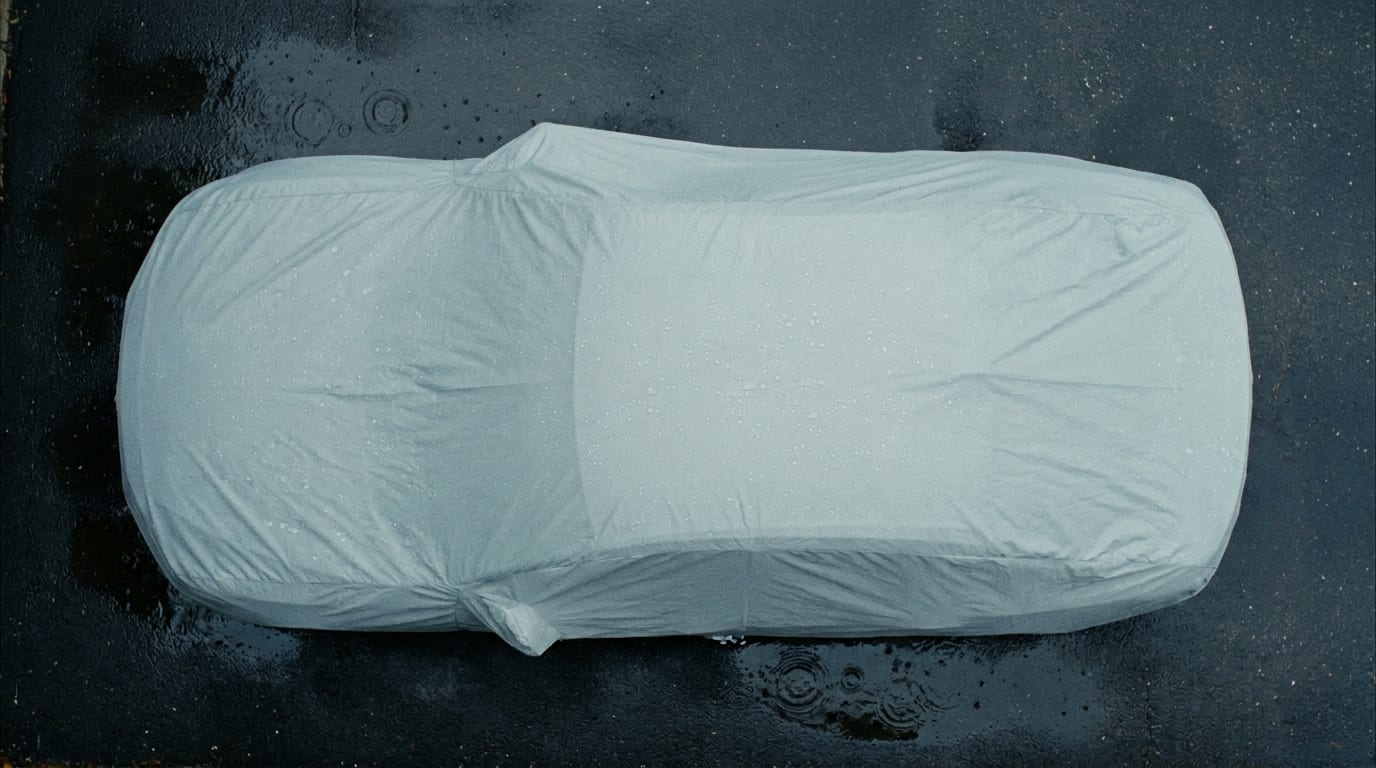
Driveways and carports don't offer much mercy. A Charger sitting outside gets hit with UV rays for hours a day, and that adds up fast, fading clear coat and turning dashboard plastic brittle well before a garaged car shows the same wear. Owners who keep their Chargers outside year-round tend to bring up two things when they talk about why they cover the car: resale value and keeping that factory paint looking right.
Here's where a lot of buyers get tripped up: an indoor dust cover and an outdoor-rated cover are not interchangeable. An indoor cover is built to keep dust and light scratches off a car that's already protected by four walls. An outdoor cover has to do more: it needs genuine water resistance, a UV-blocking topcoat, and hems rated to handle wind without working themselves loose. If you've already decided you need an outdoor cover (good call), the real work now is matching the waterproofing and UV spec to how your Charger actually lives outside. That's what the rest of this guide is for.
Waterproofing: What It Actually Means for a Charger Cover
"Water-resistant" and "waterproof" get used like they're the same thing. They're not. Water-resistant fabric, often a coated polypropylene, will shrug off light mist and short drizzle but can soak through during a real downpour. A fully waterproof cover uses a laminated, multi-layer shell that blocks water from getting through the fabric at all, not just slowing it down.
Seam-sealing matters just as much as the fabric itself. Seams are the weak point on any cover, and on a sedan shape like the Charger, water tends to collect right along the rocker panels and pool there if the underbody hem isn't designed to shed it. A cover with a loose or non-elasticized hem will let water creep up from underneath, which defeats the purpose of a waterproof top layer entirely.
There's a tradeoff to understand too: a fully sealed, non-breathable shell can trap moisture against the paint overnight, which leads to condensation sitting on the clear coat for hours. A good waterproof cover still needs to let that moisture out. Look for breathable waterproof construction, not just a thick plastic tarp.
The Charger's body shape adds its own wrinkles. That long hood and wide rear deck mean the fit zones around the mirrors and antenna need reinforced, waterproofed panels, not just a bigger sheet of the same fabric stretched over everything. If you want the full rundown on what separates these fabric tiers, the guide to which material car cover is best breaks it down by material type. And if you're still comparing waterproof options generally before narrowing down to Charger-specific fit, the waterproof car covers buying guide is worth a look.
UV Protection: Stopping Sun Damage on a Charger's Paint and Interior
Dark paint colors take UV damage harder than light ones. An Octane Red or B5 Blue Charger sitting in direct sun all day will show fading and clear coat dulling faster than a white or silver car would, just because of how dark pigments absorb heat and light. A cover's UV-stabilized fabric, treated with inhibitor coatings, is what stands between that sun and your paint.
Heat buildup is the part people forget about. A cover sitting in full sun doesn't just block light, it also traps heat underneath. That's why reflective or light-colored outer layers matter: they bounce more sunlight away instead of absorbing it, which keeps the dash and vinyl from baking and cracking over a season or two.
Single-layer UV protection works fine for moderate climates. But if your Charger sits outside year-round in a sun-heavy region (Southwest, Southern coastal areas with 300+ sunny days), a multi-layer UV cover is worth paying up for. The extra layer isn't just about UV blocking, it's also added insulation against that trapped heat problem. Think of it this way: the cost difference between tiers is a lot smaller than the cost of a paint correction job or re-dyeing cracked interior vinyl down the road. For a deeper look at how outdoor exposure affects a cover's performance over time, the guide to using a car cover outdoors covers wind, water, and UV together.
Comparing Outdoor Cover Options for Dodge Charger
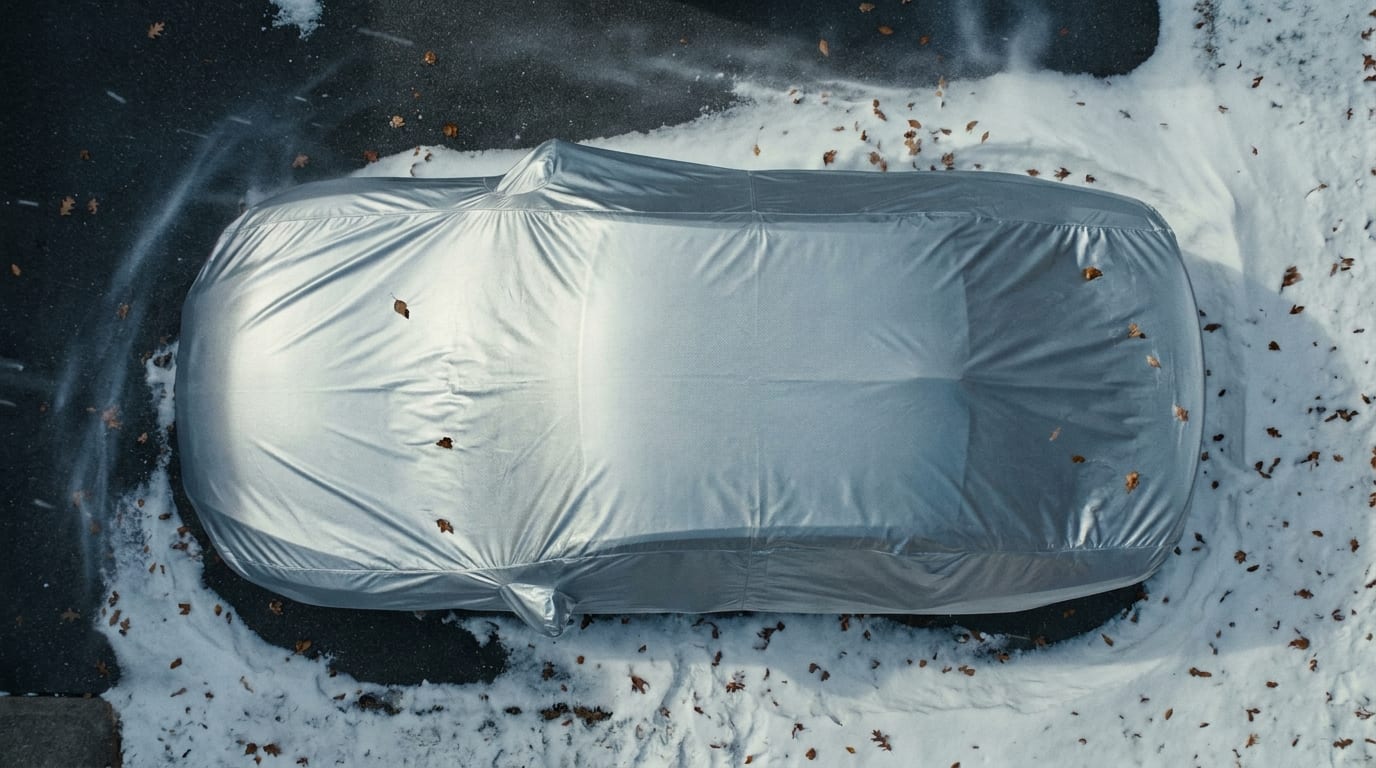
Once you've got the waterproofing and UV basics down, the actual choice usually comes down to tier and fit.
| Factor | Mid-tier outdoor cover | Premium/platinum-tier outdoor cover |
|---|---|---|
| Waterproof rating | Water-resistant to fully waterproof, lighter shell | Fully waterproof, heavier multi-layer shell |
| UV protection | Single-layer UV coating | Multi-layer UV protection with reflective outer |
| Wind strap/grommets | Often included as basic strap | Reinforced grommets plus heavier-duty gust strap |
| Price | Lower upfront cost | Higher upfront cost, longer usable life outdoors |
Fit matters as much as tier. The Charger has gone through real platform changes, and a cover built for a 2006-2010 LX-platform Charger won't sit right on a 2011+ LD-platform car, the body lines and dimensions shifted enough that a semi-custom "fits most sedans" cover will leave gaps at the mirrors or bunch up at the rear deck. True custom-fit covers built to your exact Charger generation close those gaps, which matters a lot once you're relying on the cover to actually keep water out. If you're not sure which size or fit matches your Charger, run it through the car cover size finder before buying.
Worth checking too: what's actually backed by warranty. CarCovers' lifetime warranty on car covers covers material defects, which matters more on outdoor covers since they take more abuse than indoor ones.
As a decision rule: match the tier to your climate, not your budget alone. Coastal and humid climates push harder on waterproofing and mildew resistance. Desert and high-UV climates push harder on the UV coating and heat reflection. A Charger owner in Phoenix and a Charger owner in Tampa should not be buying the same tier cover.
Installation and Accessories That Improve Weather Performance
A waterproof cover that isn't sealed against the car's body in a storm is basically just a sail. That's where a gust strap or wind strap earns its keep: it cinches the cover down against the Charger's body so wind can't get underneath and flap it loose, which is exactly how water sneaks in during a storm even on a genuinely waterproof cover. Installing one properly is a quick job. The guide to installing gust straps and wind straps walks through it step by step.
If the Charger's sitting outside overnight, a cable lock is worth adding too. It's not going to stop a determined thief, but it does deter the opportunistic kind who'd otherwise just grab the cover and go. Installation is straightforward, covered in the cable lock installation guide.
One thing people get wrong constantly: installation order. Start with the mirror pockets, then work rear to front. Doing it out of order is the number one reason covers end up with misaligned seams, and a misaligned seam is a direct path for water to get in, no matter how good the fabric is.
Maintaining Waterproofing and UV Protection Over Time
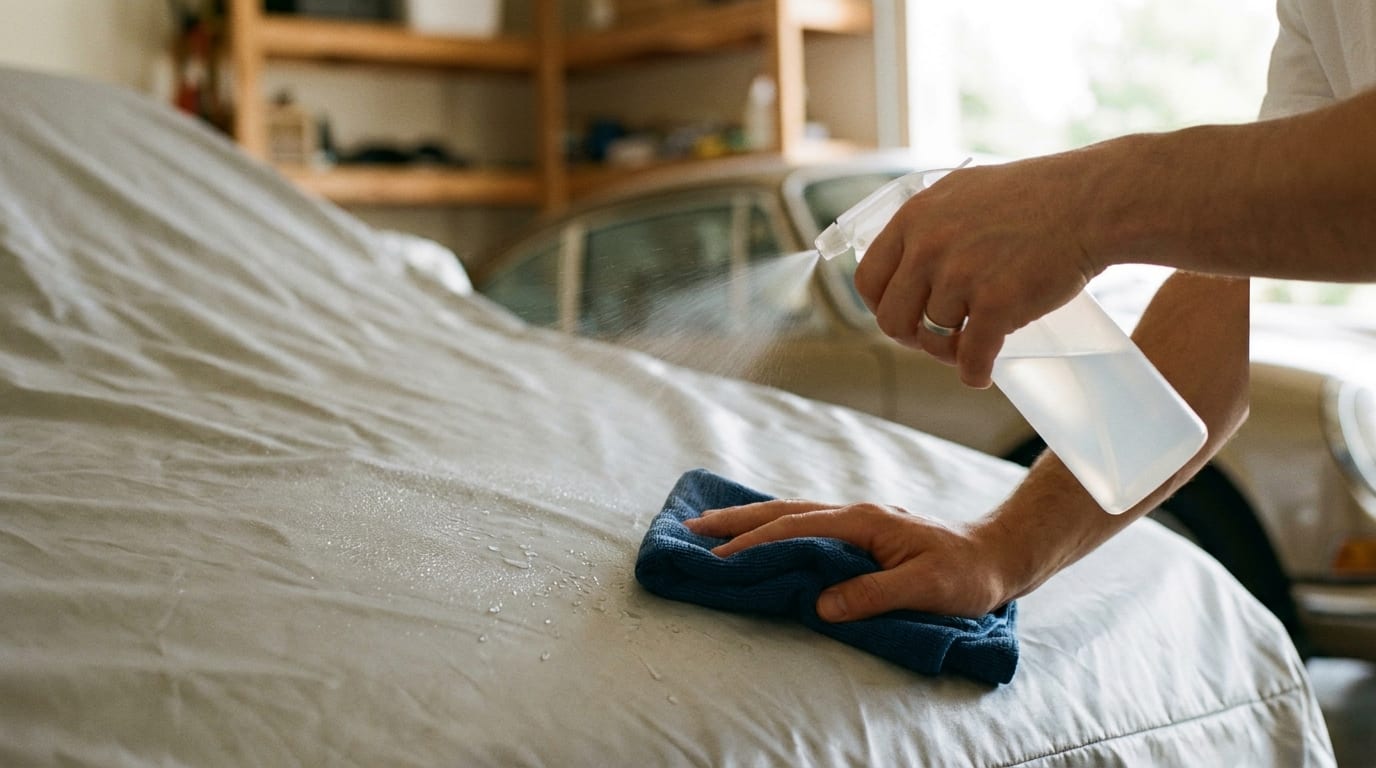
A cover's water-beading ability doesn't last forever if you let dirt and tree sap build up on the surface. That grime breaks down the coating over a season, and once it's gone, water stops beading and starts soaking through instead.
Clean it regularly, but keep it simple: a gentle detergent and a hose is usually enough. Stay away from anything with harsh solvents.
Don't throw it in the washing machine. And skip the high-heat dryer too. Both will break down the UV-inhibitor treatment faster than normal wear would. The guide to cleaning a car cover covers the right method in more detail.
Once a season, check the seams and elastic hems for wear. A stretched-out hem or a fraying seam is a small fix now. Ignored, it's how water and sun exposure start sneaking in anyway, no matter how good the cover was on day one.
Find the Right Outdoor Cover for Your Charger
Two things aren't negotiable if your Charger lives outside: a verified waterproof rating and UV-stabilized fabric. Everything else (color, strap style, price point) is preference. Get those two right first.
Before you buy, run your Charger through a fit finder to confirm you're getting the right size and generation match, since fit is what makes the waterproofing actually work as intended. Shopping with a no-hassle guarantee in place takes some of the risk out of it too, and standard shipping gets most orders moving quickly.
If you've read this far, you already know what your Charger needs. Go find the right cover for your Charger and get it protected before the next storm rolls through, or stick around the blog for more guides on keeping it looking factory-fresh.
