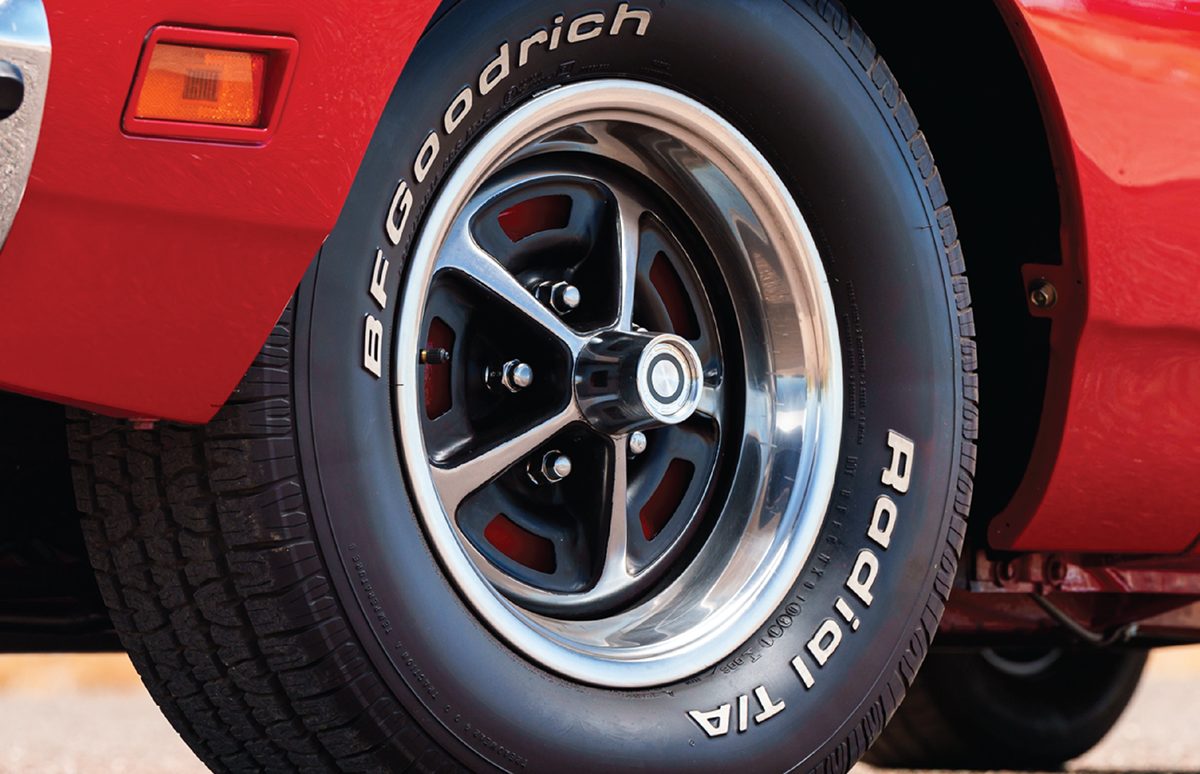
A radial tire looks like any other black rubber ring until you know what is inside it. Its body cords run from bead to bead at a right angle to the direction of travel, and belts wrap the tire under the tread. Michelin filed the patent on that construction in 1946. It spread through Europe and Asia in the 1950s and 1960s, arrived on an American car as standard equipment in 1970, and by the middle of that decade was on most new American cars.
- Michelin filed the patent for its X radial tire on June 4, 1946, built on work by its researcher Marius Mignol that the company dates to the late 1930s and that continued in secret through the German occupation of France.
- It went on sale as the Michelin X in 1949. By Michelin's account, the 1951 Lancia Aurelia B20 was the first car to roll off a production line on Michelin radials.
- A radial's body cords run straight across the tire instead of crossing on the diagonal. Michelin credits the design with better grip and around twice the service life of the cross-ply tire.
- American carmakers held out longer: Consumer Reports backed radials in 1968, the 1970 Lincoln Continental Mark III was the first American car with them as standard, and by the mid-1970s most new American cars rolled on them.
What the bias‑ply tire couldn't do
Before the radial, car tires were built bias-ply, also called cross-ply: layers of cord laid diagonally from bead to bead, each layer crossing the one beneath it. That design carried the automobile through the first half of the twentieth century, but the people who made it could see its limits. It did not cope well with high speed or heat, and as the crossed layers shifted against each other, the sidewalls ran hot. Tire failures kept plenty of vehicles off the road.

A wartime fix, patented in 1946
By Michelin's account, in the late 1930s its researcher Marius Mignol designed a concept tire whose sidewalls were replaced by widely spaced metal cables running radially. Inside Michelin, the odd-looking prototype was known as the fly cage. Tests showed that its tread did not heat up, while the shifting cross-ply layers of a conventional tire made most of their heat in the sidewalls. The research carried on in secret in occupied France through World War II, and on June 4, 1946, Michelin filed the patent for what it called the X tire.
The difference is in the angle. A radial's body cords run straight across the tire, at 90 degrees to the direction of travel, and belts of steel or other cords wrap the tire under the tread. Michelin sums up what that bought: a harder tread with better grip and around twice the service life, sidewalls that carry more load for a more comfortable ride, and less overall deformation, which cuts energy loss and fuel consumption.
What the code on your own tire means
Look at your own tires and you will find a size code molded into the sidewall, something like P215/65R18 95H. The R stands for radial. Here is the rest of it.
- P
- Passenger car tire
- 215
- Section width, 215 millimeters
- 65
- Aspect ratio: sidewall height is 65% of the width
- R
- Radial construction
- 18
- Wheel rim diameter, in inches
- 95
- Load index: up to 1,521 lbs per tire
- H
- Speed rating: up to 130 mph
P marks a passenger car tire. LT marks a light truck tire, and a size with no letter in front is a Euro-metric tire.
Why America waited
Radials spread quickly through Europe and Asia in the 1950s and 1960s. American carmakers were slower, partly because a car's suspension had to be modified to suit a radial. In 1968, Consumer Reports came out in favor of the radial, citing its longer tread life, better steering and lower rolling resistance. For 1970, Lincoln fitted Michelin X radials as standard equipment on the Continental Mark III, a first for an American car, and after 1975 steel-belted radials replaced the older belted bias tires as original equipment on new cars.
The radial kept evolving after that. Silica in the tread compound, the basis of the fuel-saving green tires that arrived in 1992, lowered rolling resistance and improved wet grip. Run-flat tires use reinforced sidewalls to keep carrying the car after a puncture, up to 50 miles at 50 mph according to Bridgestone, instead of leaving the driver stranded. And every new passenger car and light truck built for the US market since September 1, 2007 has had to carry a tire pressure monitoring system that warns the driver when a tire runs low.
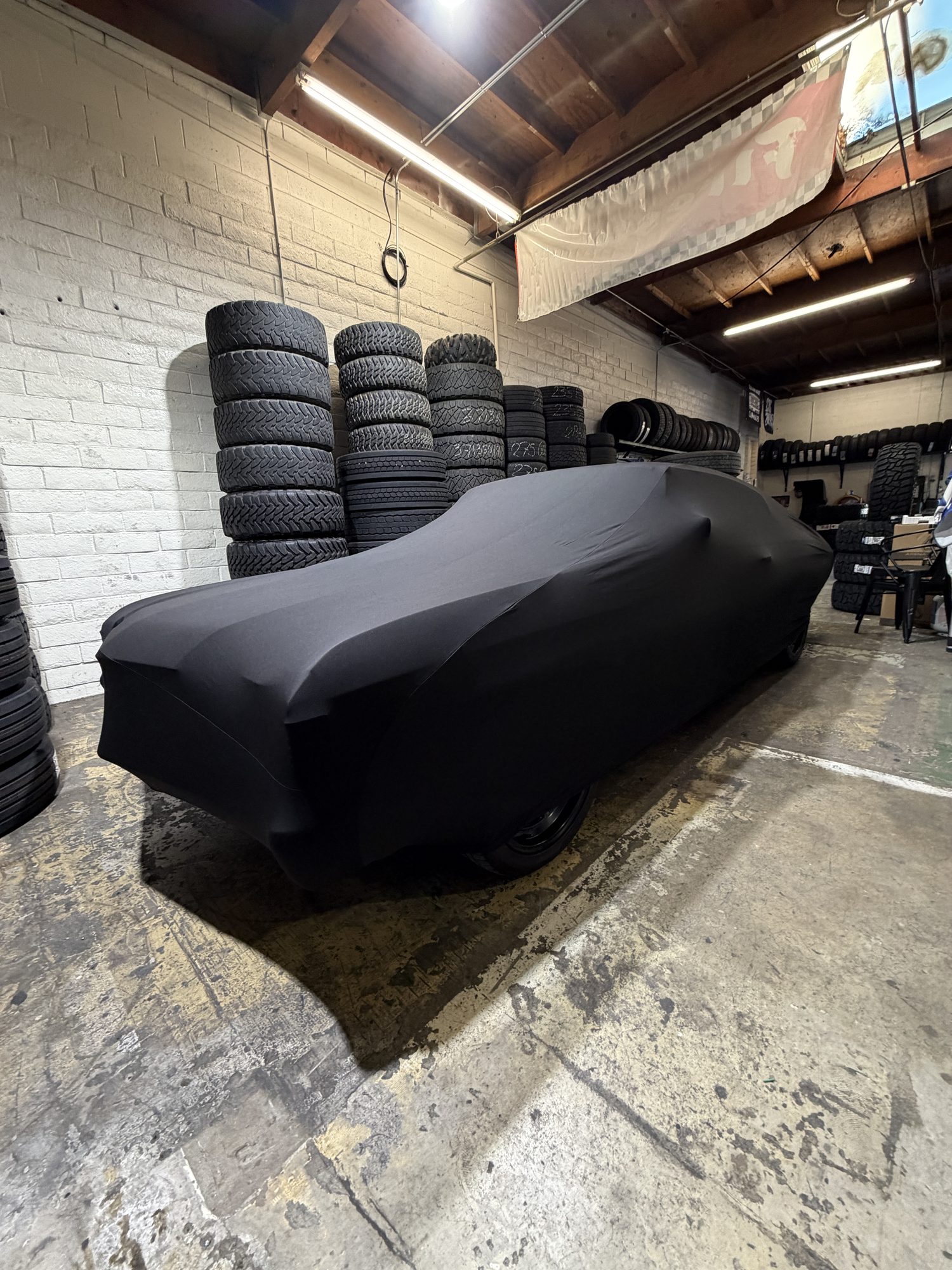
None of that engineering shows once the car is parked. The tires carry the weight; a good cover looks after everything above them.
Keep it coveredKeep whatever you drive covered, matched to your exact car.
Questions owners ask
Who invented the radial tire?
Michelin credits its researcher Marius Mignol, who designed the first radial prototype, nicknamed the fly cage, in the late 1930s. The work continued in secret during World War II, Michelin filed the patent on June 4, 1946, and the tire went on sale as the Michelin X in 1949.
What is the difference between a radial and a bias-ply tire?
A bias-ply tire's body cords run diagonally from bead to bead, each layer crossing the one below it. A radial's cords run straight across, at 90 degrees to the direction of travel, with belts wrapped around the tire under the tread. Michelin credits the radial with better grip, around twice the service life, a more comfortable ride and lower fuel consumption.
When did radial tires become standard in the United States?
Consumer Reports came out in favor of radials in 1968, and the 1970 Lincoln Continental Mark III was the first American car with radials as standard equipment. By the middle of the 1970s, steel-belted radials were the original-equipment tire on most new American cars.
What do the numbers on a tire's sidewall mean?
A code like P215/65R18 95H gives the tire's type (P for passenger car), width in millimeters, aspect ratio, construction (R for radial), rim diameter in inches, load index and speed rating. The last four digits of the DOT code give the week and year the tire was made.
Sources (17)
- In the late 1930s, Michelin researcher Marius Mignol designed a concept tire whose sidewalls were replaced by widely spaced radial metal cables, known in-house as the fly cage; tests showed its tread did not heat up, while cross-ply layers made most of their heat in the sidewalls; research continued secretly in Occupied France during World War II; the patent for the X tire was filed June 4, 1946; the 1951 Lancia Aurelia B20 was the first series-produced car fitted with Michelin radials as original equipment. Also the cross-ply tire's limits (high speed, heat build-up, reliability). mb.cision.com
- Michelin applied for a patent for the MICHELIN X tyre on 4 June 1946; radial benefits: a harder tread with better grip and around twice as long a service life, sidewalls with higher load-bearing capacity for comfort, lower deformation reducing energy loss and fuel consumption; the 1951 Lancia Aurelia B20 was the first car to roll off the production line with Michelin radial tyres. news.michelin.co.uk
- Radial tyre technology was marketed under the name Michelin X in 1949; Lancia was the first car manufacturer to fit the X as original equipment, on the Aurelia. longstonetyres.co.uk
- Earlier radial tire designs were patented in 1914 (G. H. Hamilton and T. Sloper) and 1916 (Arthur W. Savage), but no products were made from them; the first Michelin X radial tire for cars was developed in 1946 by Michelin researcher Marius Mignol. en.wikipedia.org
- Some accounts, citing the Italian trade magazine Pneurama, place the start of Marius Mignol's radial experiments in 1941 rather than the late 1930s given in Michelin's own materials. en.wikipedia.org
- Radials spread quickly in Europe and Asia in the 1950s and 1960s; in 1968 Consumer Reports acknowledged the radial's superiority (longer tread life, better steering, less rolling resistance); car suspensions had to be modified for radials; radial cord plies run at 90 degrees to the direction of travel; belts can be steel, polyester or aramid; radials were standard in North America by 1976. en.wikipedia.org
- Radials made up 64 percent of the US original-equipment tire market in 1976, against 29 percent of the replacement market. nber.org
- In 1973, 11 percent of GM cars and 26 percent of Fords were fitted with radials; two years later the figures were 86 and 90 percent. inventionandtech.com
- The 1970 Lincoln Continental Mark III was fitted with Michelin X radial tires as standard equipment, a first for an American car. en.wikipedia.org
- Belted bias tires such as the Goodyear Polyglas were replaced by steel-belted radials as original-equipment tires after 1975. en.wikipedia.org
- A bias-ply tire's cords run diagonally from bead to bead; a radial's cord plies run at 90 degrees to the direction of travel, wrapped by belts of steel, polyester or aramid. quadratec.com
- Sidewall code P215/65R18 95H: P passenger car tire (LT light truck, no prefix Euro-metric), 215 mm section width, 65 aspect ratio, R radial construction (99% of modern tires), 18-inch rim diameter, load index 95 = 1,521 lbs, speed rating H = up to 130 mph; the date code is four digits, week then year. continentaltire.com
- The date code is the final group of the tire identification number: four numerical symbols, the first two the week and the last two the year of manufacture; the TIN is molded into one sidewall. law.cornell.edu
- FMVSS No. 138 requires a tire pressure monitoring system on passenger cars, multipurpose vehicles, trucks and buses of 10,000 lbs GVWR or less manufactured on or after September 1, 2007, warning when one or more of up to four tires is significantly underinflated. law.cornell.edu
- Silica and silanes enabled fuel-saving green tires in 1992, with lower rolling resistance and improved wet grip. evonik.com
- Run-flat tires support the vehicle on reinforced sidewalls after a puncture and can be driven up to 50 miles at 50 mph. bridgestone.com
- In July 2008, Titan Tire shipped its first 63-inch off-the-road tires to Canada's oil sands for mining; nearly 14 feet tall and about 12,500 lbs each; reported at the time as the world's biggest production tire. newatlas.com