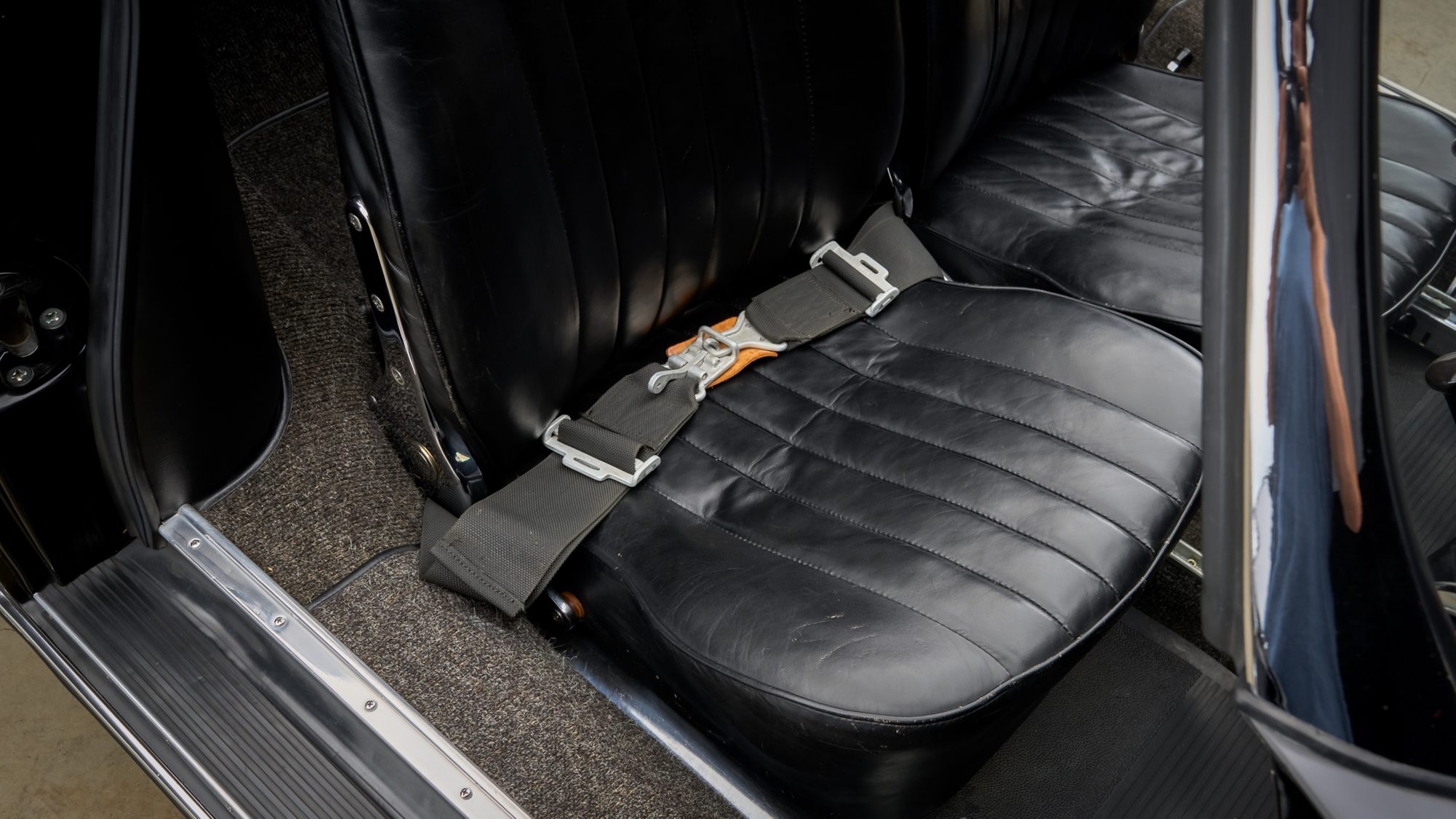
The seat belt does not roar like a V8 or shine like chrome, and it was never meant to. It is simply one of the most effective pieces of engineering ever installed in a car. In the earliest decades of driving, safety took a back seat to speed and style, and where a belt existed at all it was usually a simple lap strap, borrowed from aircraft and race cars. It kept a body from sliding across the seat. It did nothing for the chest, shoulders or head, and plenty of drivers found it more trouble than it was worth.
- A Volvo safety engineer named Nils Bohlin solved the problem in 1959: a diagonal shoulder strap joined to the lap belt at one buckle, so a crash loads the chest, shoulders and pelvis instead of the stomach alone.
- The first car sold with it was a Volvo PV544, delivered to a dealer in Sweden on August 13, 1959. The Volvo Amazon carried it as standard equipment that same year.
- Volvo opened the patent, for free, to every other car maker. That decision helped make Bohlin's design the belt in your car and everyone else's.
- NHTSA puts a number on it: a belted front-seat occupant is about 45% less likely to die in a crash than an unbelted one.
What the lap belt missed
Before 1959, a car with a belt at all usually had a lap belt: a single strap across the hips, the same idea aircraft and race cars had used for decades. It did one job well. In a hard stop or a crash, it kept the body from being thrown across the seat or out of it. What it could not do was hold the upper body. The chest, shoulders and head stayed free to pitch forward into the wheel, the dash or the windshield, with nothing but reflexes in the way.
Two-strap designs already existed that tried to fix this, one belt at the shoulder and a separate one at the lap, but they took two hands and a few extra seconds to fasten correctly, and anything that slows a driver down gets skipped. What the problem needed was not a second belt. It needed one belt that did both jobs and took one hand to put on.
An aircraft engineer solves a car problem
Nils Bohlin had spent about sixteen years at the Swedish aircraft maker Saab, designing ejection seats, before Volvo hired him as its first dedicated safety engineer in 1958. He brought an aviation habit with him: restrain the whole body, not just part of it, and make the restraint something a person will actually use without thinking about it.
His answer, introduced within Volvo in 1959, was the modern three-point belt: a lap strap and a diagonal shoulder strap that meet at a single buckle down near the hip. One hand, one motion, both straps secured at once. The anchor point mattered as much as the idea. Set low, it spreads crash forces across the strongest parts of the body, the pelvis, the ribcage and the shoulder, instead of concentrating them on the stomach.
The first car sold with it, standard equipment from day one, was delivered to a dealer in Kristianstad, Sweden, on August 13, 1959: a Volvo PV544. The Volvo Amazon, sold in some markets as the 122, carried the same belt as standard equipment across the Nordic market that same year.
From patent to law to habit
A good design is not the same as a used one. For years after 1959, belts were optional in most cars and skipped by most drivers. Regulators pushed back with hardware. Warning lights and buzzers became standard on new U.S. cars in the early 1970s, and the 1974 model year went further: a mandatory ignition interlock that would not let the engine start until the belt clicked shut.
It worked, and drivers hated it. Belt use on 1974 cars with the interlock jumped from about 7% to 48% almost overnight, but the complaints reached Congress faster than the safety numbers did. Before the year was out, the Motor Vehicle and School Bus Safety Amendments of 1974 banned the ignition interlock outright, along with any warning buzzer that ran longer than eight seconds. The chime survived. The lockout did not.
Why it still matters, airbags and all
The belt itself kept improving too. Retractors let it spool in and out instead of sitting slack across the body, pretensioners snug the webbing tight the instant a crash begins, and load limiters let it pay out slightly under extreme force so it slows the chest instead of bruising it. By the 2008 model year, every new car and light truck sold in the United States carried pretensioners and load limiters at both front seats, the belt working as a system rather than a single strap.
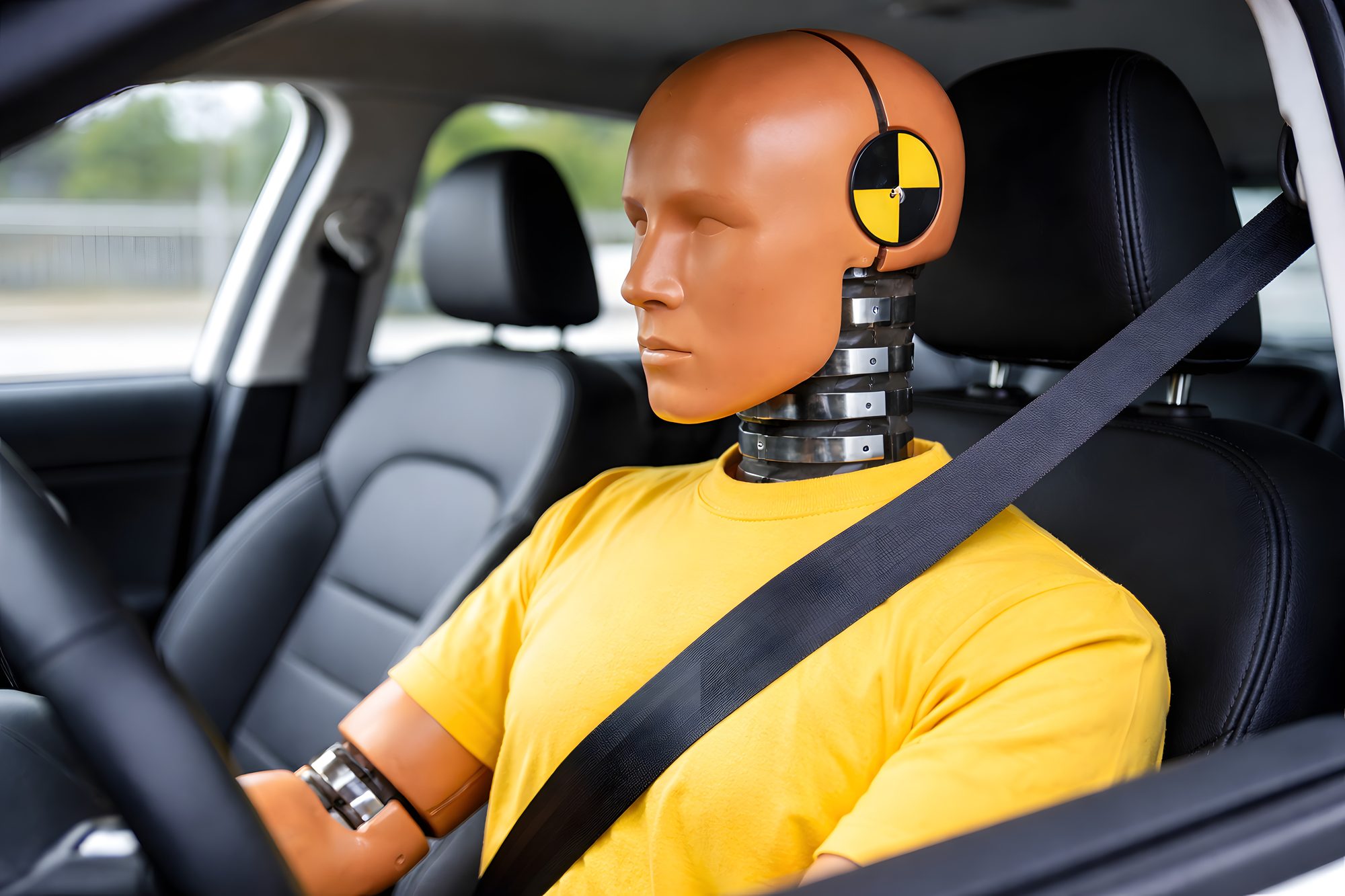
Airbags did not replace the seat belt. They were designed around it. Automakers still label them SRS, a supplemental restraint system, because an airbag alone cannot control how a body moves in a crash the way a properly worn belt does. NHTSA's crash data shows why: a lap-and-shoulder belt paired with a frontal airbag cuts the risk of death in a frontal crash by 61%, against 50% for the belt by itself and 34% for the airbag by itself. Skip the belt, and the airbag is working with less than it was built for.
Keep it coveredKeep whatever you drive covered, matched to your exact car.
Questions owners ask
Did Volvo invent the seat belt?
Volvo engineer Nils Bohlin invented the modern three-point, lap-and-shoulder design in 1959. Simple lap belts already existed in aircraft, race cars and some road cars, and two Americans, Roger Griswold and Hugh DeHaven, had patented a combined lap-and-shoulder belt in 1955. Bohlin's version anchored the belt to the car's body at three fixed points, with the straps meeting low beside the hip, and in 1959 it became the first three-point belt fitted to cars as standard equipment.
Why did Volvo give away the seat belt patent?
Volvo held the U.S. patent, granted in 1962, and made the design available to every other manufacturer for free rather than licensing it. The company has pointed to safety over profit: a belt that only Volvo owners had would save far fewer lives than one every car could use.
What is the difference between a lap belt and a three-point belt?
A lap belt is a single strap across the hips. It stops a body from sliding across the seat but does nothing for the chest, shoulders or head. A three-point belt adds a diagonal shoulder strap joined to the lap strap at one buckle, so a crash loads the ribcage, shoulders and pelvis instead of the stomach alone.
Do I still need a seat belt if my car has airbags?
Yes. Airbags are built as a supplemental restraint system, designed to work with a belt, not instead of one. NHTSA crash data shows a belt and a frontal airbag together cut the risk of death in a frontal crash by 61%, against 50% for the belt alone and 34% for the airbag alone.
Why does my car's seat belt chime keep going?
It is a much gentler descendant of the 1974 ignition interlock that Congress banned the same year it appeared. Studies of today's persistent reminder chimes find they still raise seat belt use by a few more percentage points, most among drivers who would not otherwise buckle up.
Sources (15)
- Nils Bohlin, a Volvo safety engineer, introduced the modern three-point seat belt within the company in 1959. en.wikipedia.org
- Before Volvo, Bohlin spent about sixteen years at the Swedish aircraft maker Saab designing ejection seats, joining Volvo as a safety engineer in 1958. en.wikipedia.org
- The first car sold with the three-point belt was a Volvo PV544, delivered to a dealer in Kristianstad, Sweden, on August 13, 1959. en.wikipedia.org
- The Volvo PV544 and the Volvo Amazon (122) both carried the three-point belt as standard equipment in the Nordic market from 1959. media.volvocars.com
- Bohlin's design was granted U.S. Patent 3,043,625, filed August 1959 and issued July 10, 1962. hagerty.co.uk
- Roger W. Griswold II and Hugh De Haven patented a combined lap-and-shoulder belt, one continuous strap with lap and shoulder courses meeting at a single quick-release fitting, filed 1951 and granted June 14, 1955. patents.google.com
- Bohlin's patent anchors the belt to the vehicle body at a shoulder-level top mounting and floor mountings on each side of the seat, so crash loads do not pass through the seat back. patents.google.com
- Volvo made the patent open, free for every other manufacturer to use, in the interest of safety. volvogroup.com
- Warning buzzers and lights became standard on U.S. cars in the early 1970s; the 1974 model year added a mandatory ignition interlock that would not let the engine start until the belt was buckled, and belt use on those cars jumped from about 7% to 48%. thetruthaboutcars.com
- Congress's Motor Vehicle and School Bus Safety Amendments of 1974 banned the ignition interlock and any warning buzzer running longer than eight seconds, later that same year. thedetroitbureau.com
- Modern, enhanced seat belt reminder systems still raise front-seat belt use by a few percentage points, most among occupants least likely to buckle up on their own. nhtsa.gov
- A belted front-seat occupant of a passenger car is about 45% less likely to die in a crash than an unbelted one, and seat belts cut the risk of serious injury by about 50%. crashstats.nhtsa.dot.gov
- A lap-and-shoulder belt combined with a frontal airbag cuts the risk of death in a frontal crash by 61%, versus 50% for the belt alone and 34% for the airbag alone; airbags are built as a supplemental restraint system designed to work with a belt. nhtsa.gov
- The shoulder belt should cross the chest and collarbone, never the neck; the lap belt should sit low across the hips, never the stomach. nhtsa.gov
- Retractors, pretensioners and load limiters work together in a crash: pretensioners remove slack instantly, load limiters let the belt pay out slightly to reduce peak chest force. By model year 2008, all new U.S. cars and light trucks had pretensioners and load limiters at both front seats. federalregister.gov
Photos courtesy Volvo Cars