On a hot afternoon, a parked car does more than get warm: it becomes a small greenhouse. Researchers at Arizona State University and the UC San Diego School of Medicine compared how parked cars heat up in sun and in shade. They parked six vehicles in full sun and in shade on summer days in the 100s in Tempe, Arizona. Then they measured what the cabin air, the dashboard, the steering wheel and the seats reached after an hour. Their results, published in 2018, explain why a steering wheel can be too hot to grip by the time you've loaded the groceries. They also show why where a car sits matters.
- One hour in full sun on a 100°F+ day pushed the dashboard to an average of 157°F, the steering wheel to 127°F and the seats to 123°F, with cabin air averaging 116°F.
- The same hour in shade was far milder: dashboard 118°F, steering wheel 107°F, seats 105°F, cabin air near 100°F.
- Cracking the windows barely helped. In a 2005 Pediatrics study, windows opened 1.5 inches did not significantly slow the heating or lower the peak temperature.
- Paint color changes the cabin too. A Lawrence Berkeley National Laboratory test found a silver car's cabin air ran about 9 to 11°F cooler than an identical black one.
What an hour in the sun actually does
The ASU and UC San Diego team ran the test outdoors in Tempe on three summer days in the 100s, moving the cars between sun and shade through the day. After one hour in full sun, the average readings were:
Those are averages across the test cars, not a worst case picked to make a point. And the surfaces ran far hotter than the air around them: the dashboard averaged 41°F above the cabin air.
What shade changes, and what doesn't
Parking in full shade for the same hour brought every reading down: dashboard 118°F instead of 157°F, steering wheel 107°F instead of 127°F, seats 105°F instead of 123°F, and cabin air closer to 100°F than 116°F. The biggest drop was at the dashboard, 39°F. The shaded cars in the study sat under a solar canopy, with the whole car out of the sun, not just the windshield.
Most of the rise happens before you've finished shopping
Jan Null's summary of that study's data puts the inside rise at about 19°F in 10 minutes, 29°F in 20, 34°F in 30 and 43°F in 60, on days from 72 to 96°F. Most of the hour's rise is in place by the half-hour mark, and that was on days far milder than an Arizona summer.
Does the car's color matter?
Yes. In a Lawrence Berkeley National Laboratory test in Sacramento, California, a silver Honda Civic and an identical black Civic sat in the sun for an hour, facing south. The silver car's cabin air ran about 9 to 11°F (5 to 6°C) cooler. The reason given in the report: a light-colored shell takes in less of the sunlight that hits it than a dark one.
Why the heat matters beyond the cabin
The same sun is working on the paint. Atlas, a lab that tests how coatings weather, puts it this way: light does the initial damage, and heat speeds up the chemical reactions that follow. That is why a standard outdoor test for car paint (ASTM D4141) mounts the panels on a black metal box in the sun. There they run about as hot as the hood, roof and trunk lid of a car parked in direct sunlight. Why Florida can be harder on paint than Arizona goes deeper.
Phoenix, where 100°F days are ordinary
Phoenix shows how often a car can face test-day heat. In 2024 the city logged 143 days at or above 100°F and 70 days at or above 110°F. That was the most 110°F days since its records began in 1896, in what became its warmest year on record, with an average temperature of 78.6°F. A car that sits outside there through summer sees days like the ASU test days over and over, for months.
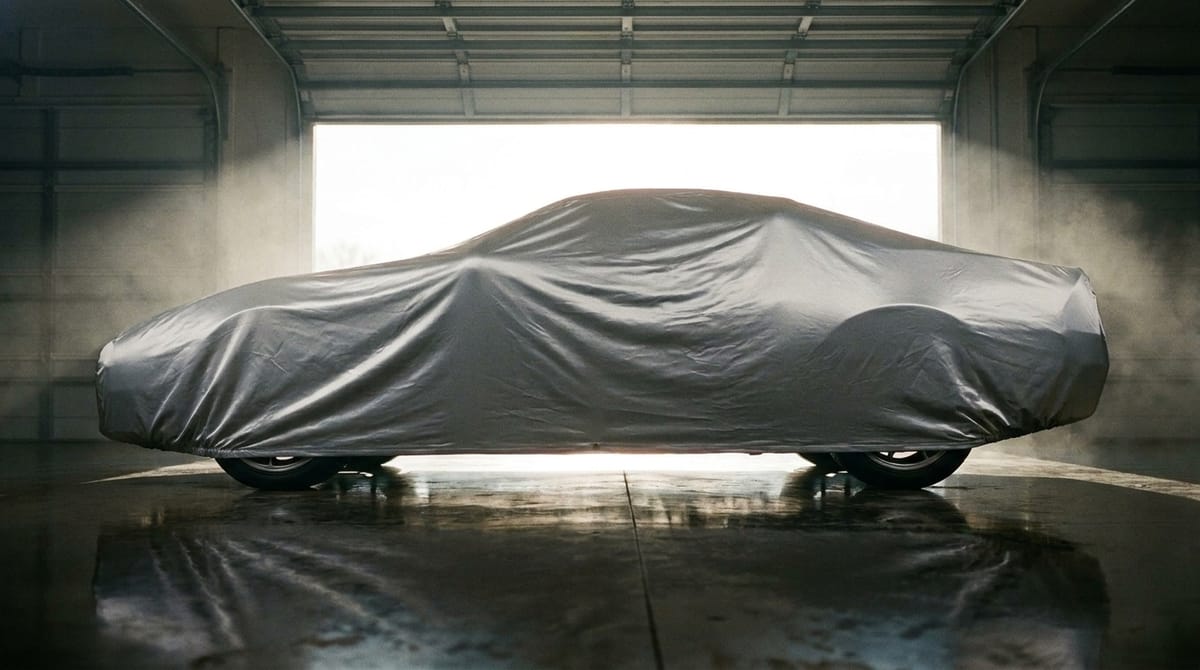
None of this argues against parking outside. It argues for shade: a tree, a carport or a parking structure. Where there is none, a car cover keeps direct sun off the paint. For more on what sun and heat do to a car that lives outside, see our sun and heat page, part of our guide to weather and your car.
Questions owners ask
How hot does a car's dashboard get in the sun?
In an Arizona State University and UC San Diego study, as ASU reported it in 2018, dashboards averaged 157°F after one hour in full sun on 100°F+ days in Tempe, Arizona, against 118°F for the same hour in shade.
Does parking in shade really make a difference?
Yes. In the same study, one hour in full shade left the dashboard at 118°F instead of 157°F, the steering wheel at 107°F instead of 127°F and the seats at 105°F instead of 123°F.
Does cracking the windows cool a parked car down?
Barely. In a 2005 Pediatrics study, opening the windows 1.5 inches did not significantly slow the heating or lower the peak temperature.
How fast does a closed car heat up?
Fast. In a 2005 Pediatrics study on days from 72 to 96°F, the inside temperature climbed about 40°F within the hour, and most of that rise came in the first half hour.
Does a car's color change how hot it gets inside?
Yes. In a Lawrence Berkeley National Laboratory test, a silver Honda Civic's cabin air ran about 9 to 11°F cooler than an identical black Civic after an hour parked in the sun.
Keep the sun off the paint with the AllGuard Platinum Shield.
A silver 300D polyester cover with a polyurethane coating and UV treatment, and a fleece liner against the paint. Matched to your exact car.
Sources (7)
- After one hour in full sun on summer days in the 100s in Tempe, Arizona, average cabin air reached 116°F, dashboards 157°F, steering wheels 127°F and seats 123°F; the same hour in shade averaged closer to 100°F cabin air, 118°F dashboard, 107°F wheel and 105°F seats. Six vehicles were moved between sun and shade through the day. news.asu.edu
- The ASU / UC San Diego study (Vanos, Middel, Poletti and Selover, journal Temperature, published May 2018) measured six enclosed vehicles in Tempe, Arizona, in sun and in full shade under a solar canopy. pmc.ncbi.nlm.nih.gov
- A 2005 Pediatrics study (McLaren, Null and Quinn) tested a dark sedan on 16 clear, sunny days with outside temperatures of 72 to 96°F; on 2 of those days the team also opened the windows 1.5 inches, which did not significantly slow the heating or lower the peak temperature, and most of the rise came within the first 30 minutes. pubmed.ncbi.nlm.nih.gov
- Average temperature rise in a closed car: about 19°F at 10 minutes, 29°F at 20, 34°F at 30 and 43°F at 60; cracking the windows had little (less than 3°F) effect. noheatstroke.org.ggweather.com
- In 2024 Phoenix logged 143 days at or above 100°F and 70 days at or above 110°F, the most 110°F days in records back to 1896; 2024 was its warmest year on record, averaging 78.6°F. weather.gov
- In a Lawrence Berkeley National Laboratory test in Sacramento, a silver Honda Civic's cabin air ran about 5 to 6°C (9 to 11°F) cooler than an identical black Civic after an hour in the sun, which the report puts down to the lighter shell taking in less sunlight than the dark one. phys.org
- Heat does not increase the rate of light-induced damage to coatings but does increase the rate of the secondary chemical reactions that follow, so test panels should reach their expected service temperatures; automotive test panels are mounted on a black metal box (ASTM D4141) whose panel temperatures are comparable to the hoods, roofs and deck lids of cars parked in direct sunlight. atlas-mts.com