You wash the car, leave it to dry in the driveway, and by afternoon there they are: pale rings where the last drops sat. Two different problems get called water spots. The first is a deposit: hard water carries dissolved calcium and magnesium, and when it dries on the paint, those minerals stay behind. Preventing it comes down to how the car is washed, dried and parked. The second is acid etching, damage to the paint itself. On that one, the news about acid rain is better than it used to be.
- Towel it dry. Don't let the car air-dry, and don't count on a drive around the block to do it.
- Wash in the shade, on a cool finish. Heat makes water dry too fast, and that's what leaves spots.
- Keep sprinkler spray off the paint. Check where it throws before the car sits there.
- Acid rain is a separate, smaller problem than it used to be.
A water spot and an etch are different problems
A water spot, in the everyday sense, is a deposit. Hard water carries dissolved minerals, and when it evaporates from the paint, those minerals stay put. It's the same hard-water residue USGS points to in the spots and film on glasses straight out of the dishwasher.
Etching is something else: damage to the clear coat itself rather than something sitting on top of it. Acid is one documented cause. EPA says acidic particles corrode metal and cause paint to deteriorate more quickly, and the acid rain section below covers where it has shown up on cars.
Where the minerals come from
Water picks up its hardness from the ground: as it moves through soil and rock, it dissolves small amounts of naturally occurring minerals, mostly calcium and magnesium. Hardness varies across the United States, but if yours is hard, the hose and the sprinklers put those minerals on the car every time they wet it. That's the part you control: how the car gets washed and dried, and where it sits when the sprinklers run.
Four habits that cut down on water spots
None of these take long, and most are a change in habit rather than an extra chore.
Towel-dry it, every time
Don't let the car air-dry, and don't expect a drive around the block to do the job: Consumer Reports says either one leaves watermarks caused by the minerals in hard water. Use a chamois, natural or synthetic, or soft terry towels (you may need several), and blot the water up instead of dragging the towel across the paint.
Keep sprinkler and hose water off the paint
Check where the sprinklers throw before the car sits there for a week. If your water is hard, every drop that dries on the paint leaves its minerals behind; the U.S. Geological Survey counts anything over 180 milligrams per liter (measured as calcium carbonate) as very hard.
Towel off any overspray the way you would after a rinse, rather than letting it sit and dry on its own.
Wash and dry out of direct sun
Pick the shade, the garage or a cooler hour, and wash and rinse one section at a time so nothing dries before you get back to it. AAA's advice is not to wash a car in direct sunlight or when the finish is hot, because high temperatures cause liquids to dry quickly, leaving spots and mineral deposits on the paint. Consumer Reports gives the same advice for a body that's hot from a drive or from sitting in the sun. On a polished finish, take the nozzle off for the rinse and let the water run over the car from top to bottom. Consumer Reports says the sheeting action leaves less water pooled on the body, so it's easier to dry.
Cover it when it's parked outside
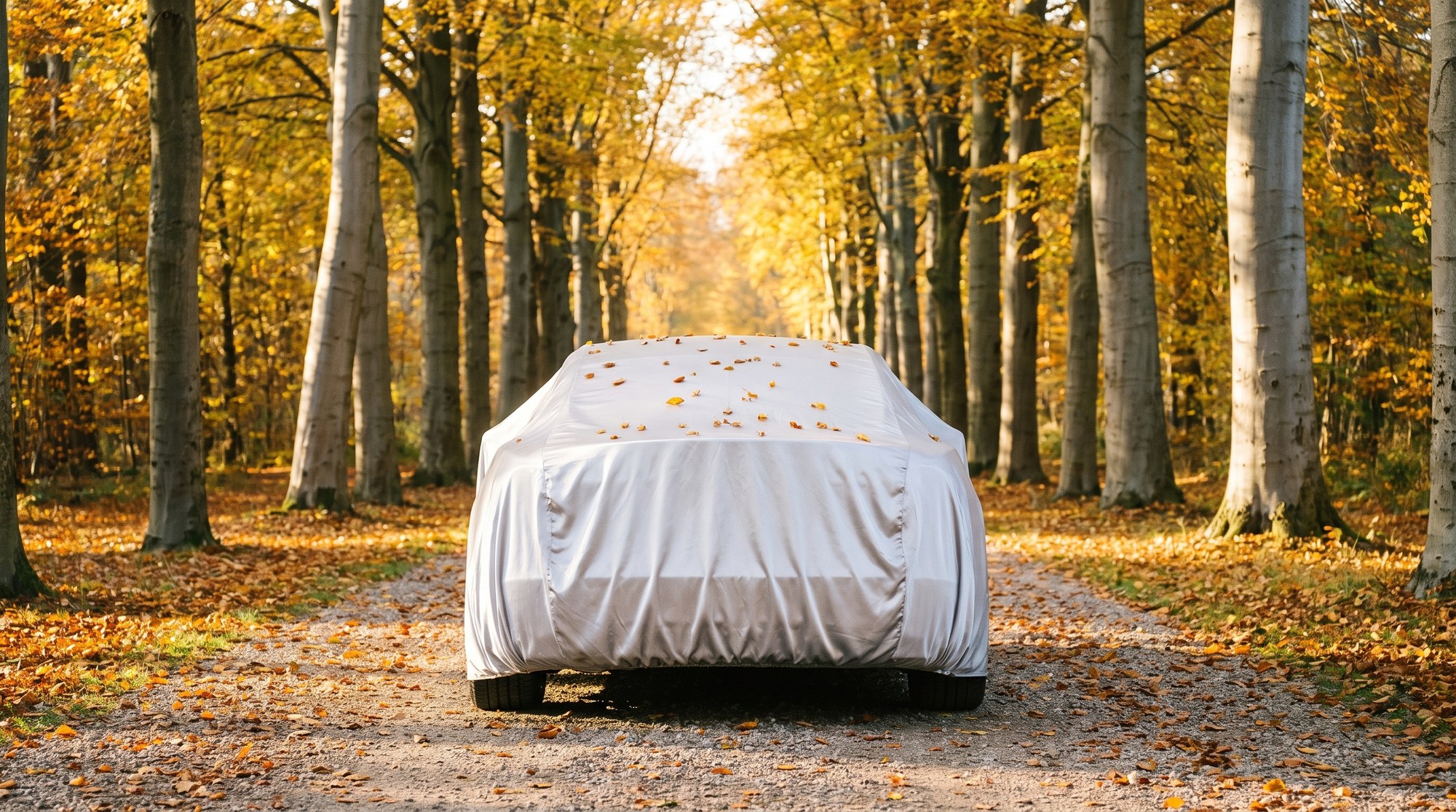
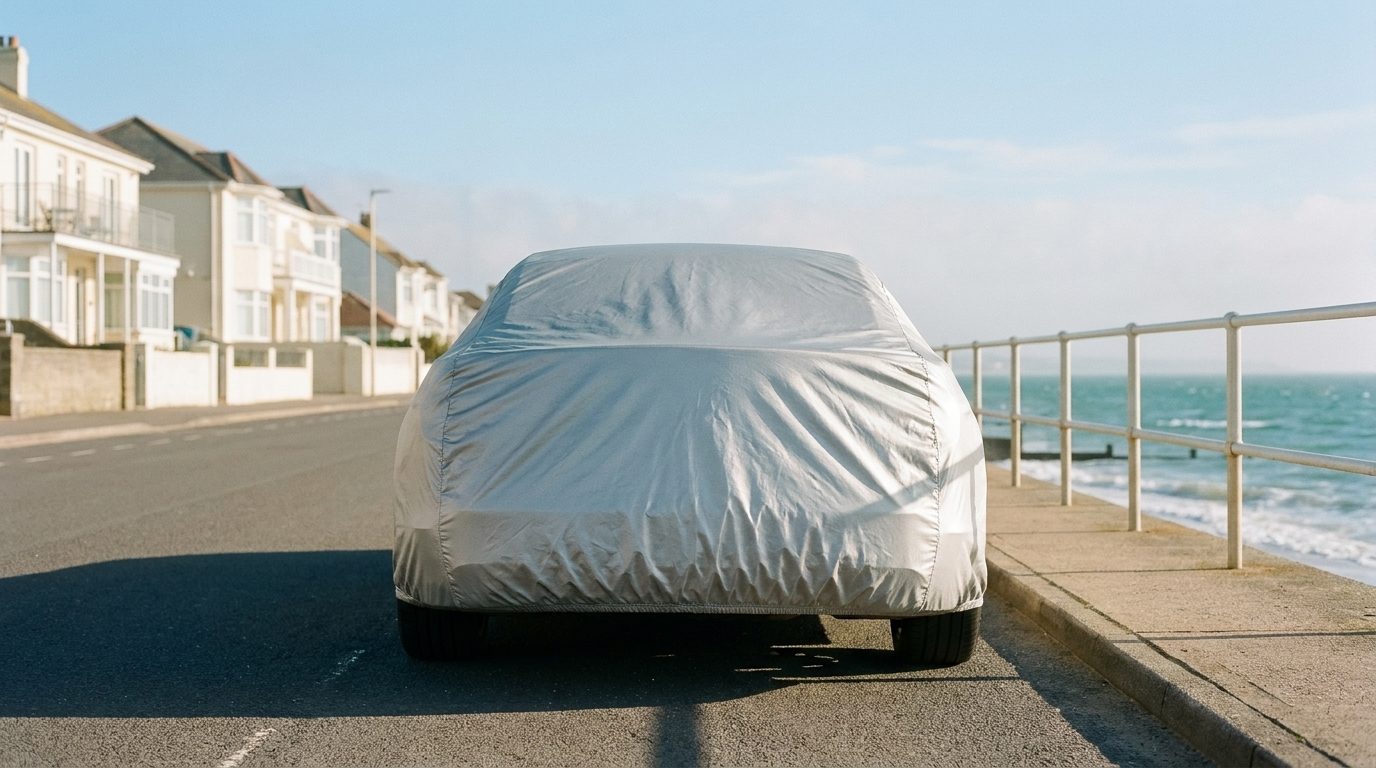
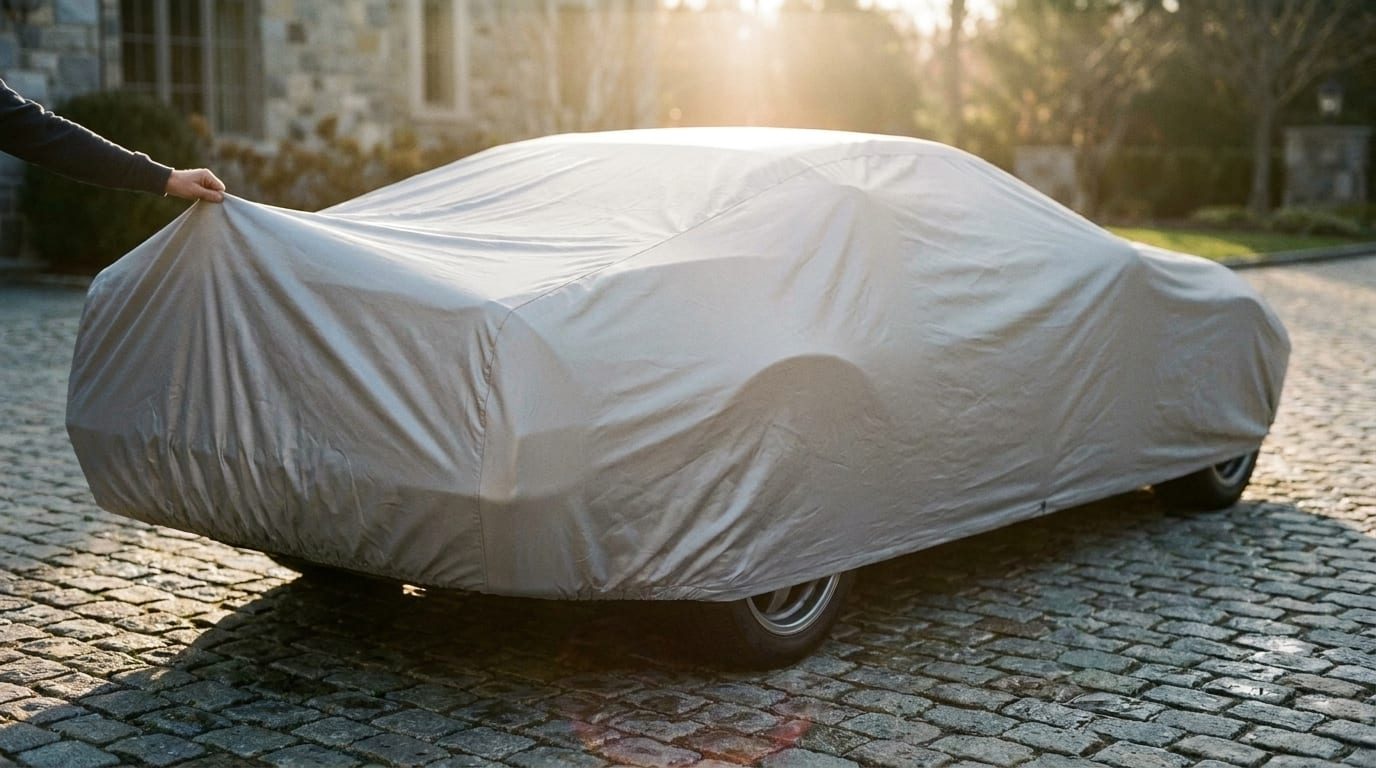
Everything above assumes the car sits in the open. With a cover on, sprinkler overspray hits the cover first, and the cover sheds it. Conservators ask for the same two things even indoors: the National Park Service's guidance for historic vehicles in museum storage is a breathable, water-resistant cover. Outdoors, the AllGuard Platinum Shield is made of breathable fabric. Put it on over a car that's already clean and dry.
Acid rain and etching, then and now
Rain is naturally a little acidic. EPA puts normal rain at a pH of about 5.6 (the lower the number, the more acidic), because carbon dioxide dissolves into it and forms weak carbonic acid. Acid rain usually runs between pH 4.2 and 4.4. For a car, the acidic particles are the problem: EPA says they corrode metal and cause paint and stone to deteriorate more quickly.
The good news is how far acid rain has fallen. EPA reports major decreases in acid rain nationwide, with wet sulfate deposition, a common indicator of it, down by more than 70% between 1989 to 1991 and 2020 to 2022.
Car paint has its own documented case. A 2015 white paper from Atlas Material Testing Technology describes Jacksonville, Florida, one of the largest ports for European and Japanese automakers. It has relatively high sunlight and humidity through the year, and industrial plants nearby. Cars waiting there to be distributed to US dealers were found with acid etch on their exterior paint. Many automakers now require paint systems to be exposed to that environment before approving them for use.
Garage or driveway, the water problem is different
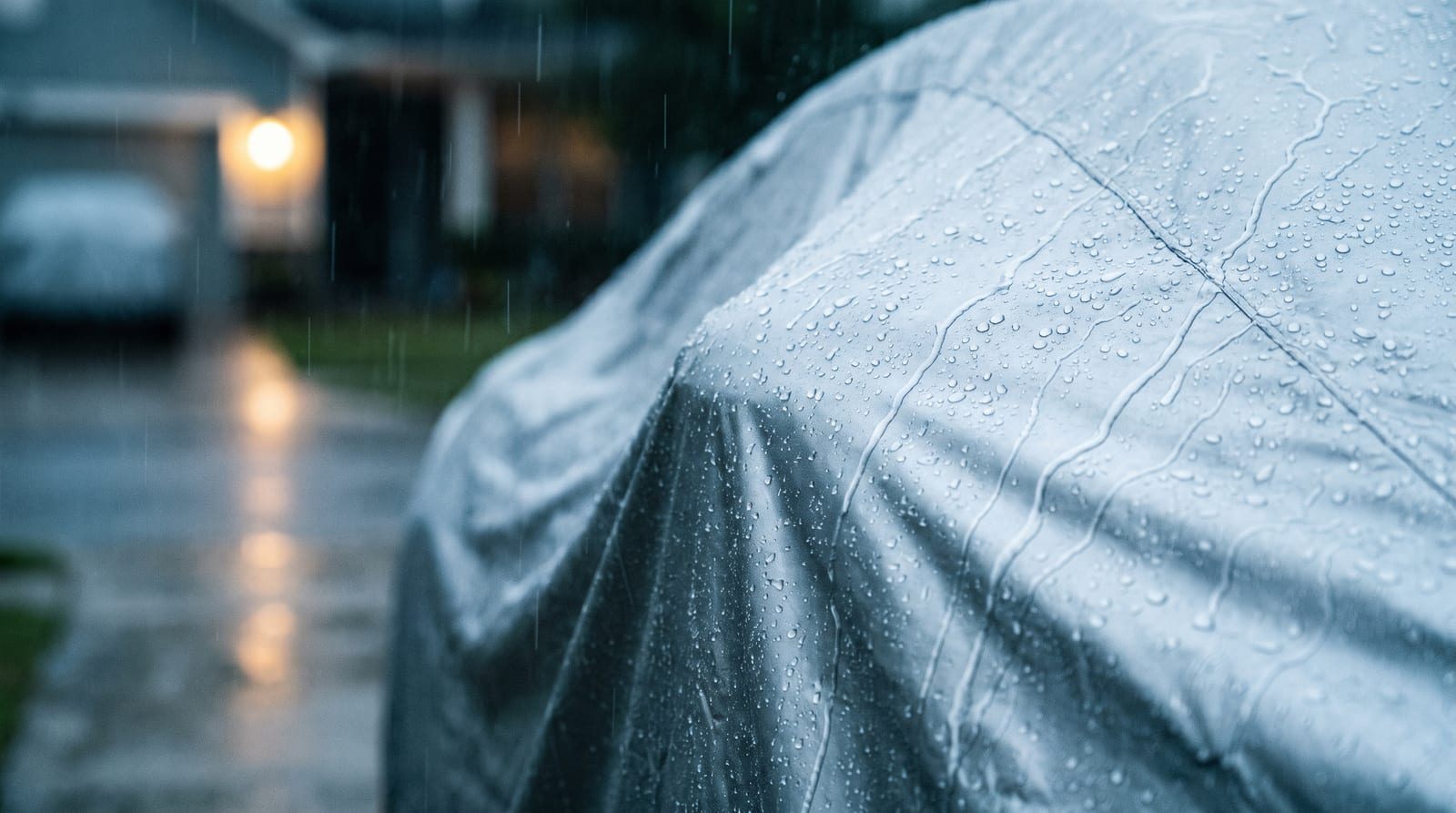
In a garage, sprinklers and rain don't reach the paint. Parked outside, the cover takes the overspray first, and the AllGuard Platinum Shield's breathable fabric lets trapped moisture escape. For the fuller case, see our rain and damp guide.
See how every kind of weather affects a parked car in the weather guide.
Questions owners ask
Are water spots on car paint from hard water or from the rain itself?
Hard water is the documented cause. USGS defines water hardness as dissolved calcium and magnesium, and those minerals are what's left behind when hard water dries on the paint, so your hose, sprinklers and drying technique are what you control. Rain itself is only slightly acidic (EPA puts normal rain at about pH 5.6), and its risk to paint is acid etching, a separate problem from spotting.
Does air-drying a car really cause water spots?
Yes. Consumer Reports says air-drying, or a drive around the block, leaves watermarks from the minerals in hard water. Towel-dry with a chamois or soft terry towels instead, and blot rather than drag.
Is acid rain still a real risk to car paint?
Less than it used to be. EPA says wet sulfate deposition, a common indicator of acid rain, dropped by more than 70% between 1989 to 1991 and 2020 to 2022. Acid etch on car paint is documented in specific places: a 2015 Atlas Material Testing Technology white paper reports that new cars waiting at the port of Jacksonville, Florida were found with acid etch on their paint, and that many automakers now require paint systems to be exposed there before approving them.
Is it bad to wash a car in the sun?
Yes, for water spots. AAA and Consumer Reports both say heat makes water and soap dry too fast, leaving spots and mineral deposits behind. Wash in the shade, on a cool finish, one section at a time.
Weather-resistant, and breathable, to let moisture out.
AllGuard Platinum Shield is silver 300D polyester (D stands for denier, a measure of the yarn's weight). A polyurethane coating helps it shed rain. It adds a UV treatment, a fleece liner, and a breathable fabric so trapped moisture can escape. AllGuard Satin Protect is for the garage. Both are matched to your exact car.
Sources (10)
- Normal rain has a pH of about 5.6 and is slightly acidic because carbon dioxide dissolves into it, forming weak carbonic acid; acid rain usually has a pH between 4.2 and 4.4. epa.gov
- Acidic particles corrode metal and cause paint and stone to deteriorate more quickly. epa.gov
- Emissions reductions have led to major decreases in acid rain nationwide; wet sulfate deposition, a common indicator of acid rain, dropped by more than 70% between 1989 to 1991 and 2020 to 2022. epa.gov
- Jacksonville, Florida, one of the largest ports for European and Japanese auto manufacturers, has relatively high annual radiant energy and humidity, and several nearby industrial plants; cars waiting to be distributed to US dealers there were found with acid etch on their exterior paint, and many automakers now require paint systems to be exposed to that environment before approving them. atlas-mts.com
- Water hardness is the amount of dissolved calcium and magnesium in water, picked up as water moves through soil and rock, and it varies across the United States; USGS classes water over 180 mg/L as calcium carbonate as very hard, and calls the spots or film on dishwasher glasses hard-water residue. usgs.gov
- Don't let a car air-dry or rely on a drive around the block, since either leaves watermarks caused by minerals in hard water; dry with a chamois or soft terry towels and blot rather than drag. Don't wash a car whose body is hot from driving or from sitting in direct sun, because heat speeds the drying of soap and water; wash and rinse one section at a time. consumerreports.org
- Don't wash a car in direct sunlight or when the finish is hot: high temperatures cause liquids to dry quickly, leaving spots and mineral deposits on the paint. Wash and rinse one section of the body at a time. cluballiance.aaa.com
- National Park Service conservation guidance for historic vehicles in storage: cover vehicles in storage with a breathable, water-resistant cover. nps.gov
- By 1980 the average rainfall in the United States was at a pH level of 4.6, about ten times more acidic than normal rain, and trending more acidic. epa.gov
- With a polished finish, use a hose without a nozzle and let the water flow over the car from top to bottom when rinsing; the sheeting action helps clean soap from the body while reducing water pooling, making it easier to dry. consumerreports.org