Want to know how a paint finish holds up outside? Don't just ask what's in it. Ask where it gets tested. For decades the coatings industry has relied on two outdoor benchmarks: South Florida and Arizona. Neither is there by accident. And between the two, the test lab that runs sites in both says Florida's hot, wet air is typically the harder one on coatings. That's true even though Arizona gets hotter.
- South Florida and Arizona are the benchmark test climates. Many companies test their coatings in both, because each extreme can cause a different kind of damage.
- Sunlight starts the damage. Heat speeds up what follows. The first step, light breaking chemical bonds, depends on the light itself, not the temperature. Heat speeds up the reactions that come after.
- Test panels near Miami carry measurable surface moisture about 4,200 hours a year, 48% of the time. That wetness is the extra stress Phoenix's dry heat mostly lacks.
- Phoenix brings its own extreme. 2024 was the city's warmest year on record, with 70 days at 110°F or hotter.
Where paint companies send finishes to suffer
Paint and coatings don't get judged on a few years in someone's driveway. Outdoor-weathering labs run exposure sites around the world, and the benchmark ones sit where the climate is unusually hard on a finish. Atlas, a materials-weathering test lab, runs test sites in both benchmarks: its South Florida Test Service near Miami, and DSET Laboratories, about 30 miles north of Phoenix. The lab treats them as two different kinds of stress: Miami hot and wet, Phoenix hot and dry.
The "black box" test, built to run as hot as a hood in the sun
Automotive paint gets a more specific test than a standard outdoor rack. The panels form the top of what the industry calls a black box: a black-painted, open-bottom metal box about 5 by 6.5 feet and 10 inches deep, set out in full sun. The air trapped inside stands in for the dead space of a car body. Compared with an ordinary open rack, the box keeps the panels hotter later into the day and wet for longer in the morning. For many automotive paints, that means faster wear. The lab describes the panel temperatures as comparable to those on the hoods, roofs and deck lids of cars parked in direct sunlight. The method is specified in ASTM D4141, a standard practice for accelerated outdoor exposure tests of coatings.
Sunlight starts the damage, heat speeds up what follows
It helps to separate the two. Sunlight is what breaks the chemical bonds in a coating, with the ultraviolet end of the spectrum usually doing the most damage. That first step depends on how much light arrives and how much energy it carries, not on the thermometer. Heat comes in after: once light has started the breakdown, higher temperatures speed up the chemical reactions that follow. The lab puts it plainly: heat does not speed up the damage light does, but it does speed up the damaging reactions that come after it. That's why it says test panels should reach the highest temperatures they would see in real use, not just the same sunlight.
The clear coat is doing its own quiet work under that sun. UV absorbers are added to it to protect the color coat underneath. A team led by forensic scientists at the Washington State Patrol crime lab cut thin cross-sections of paint from seven of the agency's own patrol cars, model years 2000 to 2008. In every one, UV absorption was lower near the outer surface than near the color coat. The authors put that pattern down to sunlight acting on the absorbers.
Why Miami's wet heat can be harder than Phoenix's dry heat
Phoenix is the hotter city, and it gets more sunlight over a year. But for coatings, Atlas's finding is that the hot, wet climate of Miami is typically worse than the hot, dry climate of Phoenix, even though Phoenix gets hotter and receives more solar radiation.
Moisture is the reason, and the lab says its effect on coatings is often underestimated. Water is the "universal solvent" and can leach protective additives out of a coating. Rainfall and humidity figures don't tell the whole story: what matters much more is the actual time a surface stays wet, as from overnight dew. At the lab's South Florida site near Miami, coating samples carry measurable surface moisture about 4,200 of the year's 8,760 hours, roughly 48% of the time. Its broader comparison is blunter still: in Miami, samples stay wet about 15 times longer than in Arizona.
Arizona isn't the easy option, though. The lab notes that its dry air and big swings between day and night temperatures are very effective at breaking down car interior materials, and may cause more pigment fade.
What it means for a car parked outside
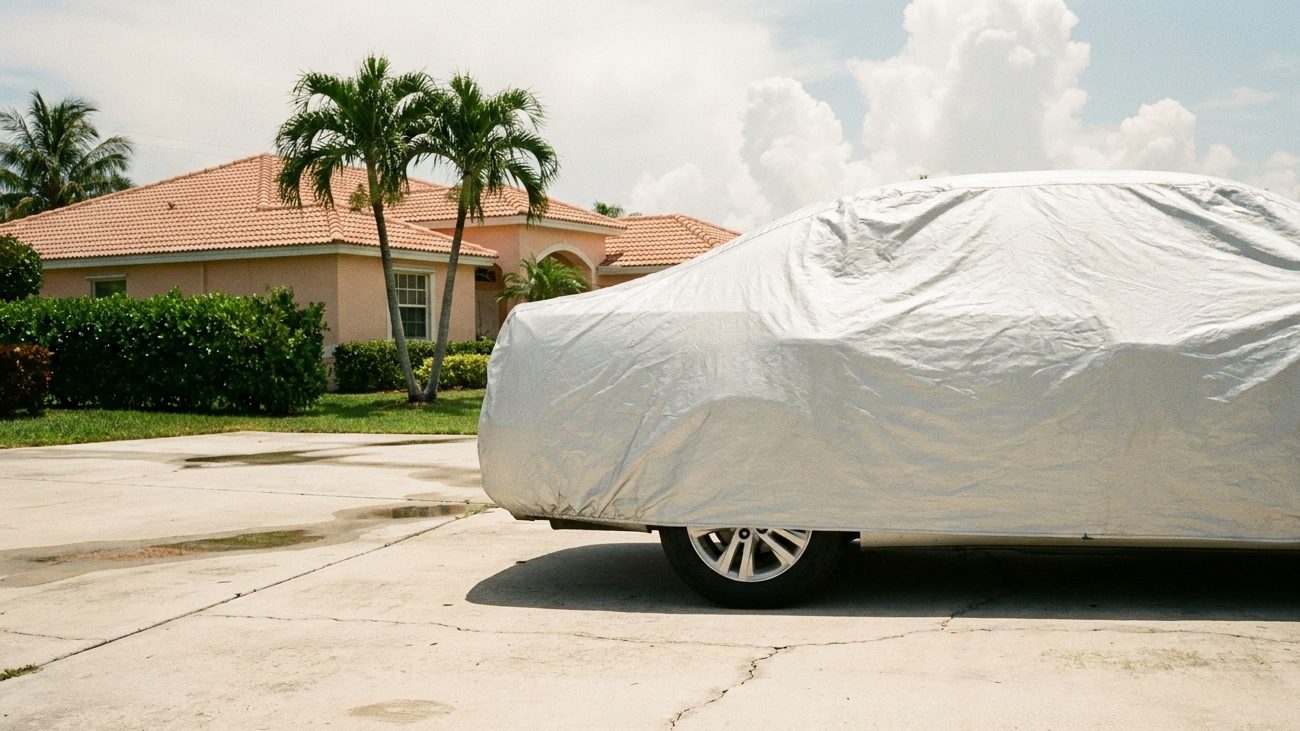
This isn't really about whether you live in Florida or Arizona. It's about which test site your own parking spot resembles. A humid spot where the car is often wet with dew in the morning has more in common with the Miami site. A dry, high-sun spot with little overnight moisture has more in common with Phoenix.
Phoenix adds its own extreme on top of that. According to the National Weather Service, 2024 was the city's warmest year on record, with an average of 78.6°F, 143 days at 100°F or hotter and 70 days at 110°F or hotter. That last figure broke the record set the year before. On days like that, a car parked in the open is the real thing the black box is built to imitate.
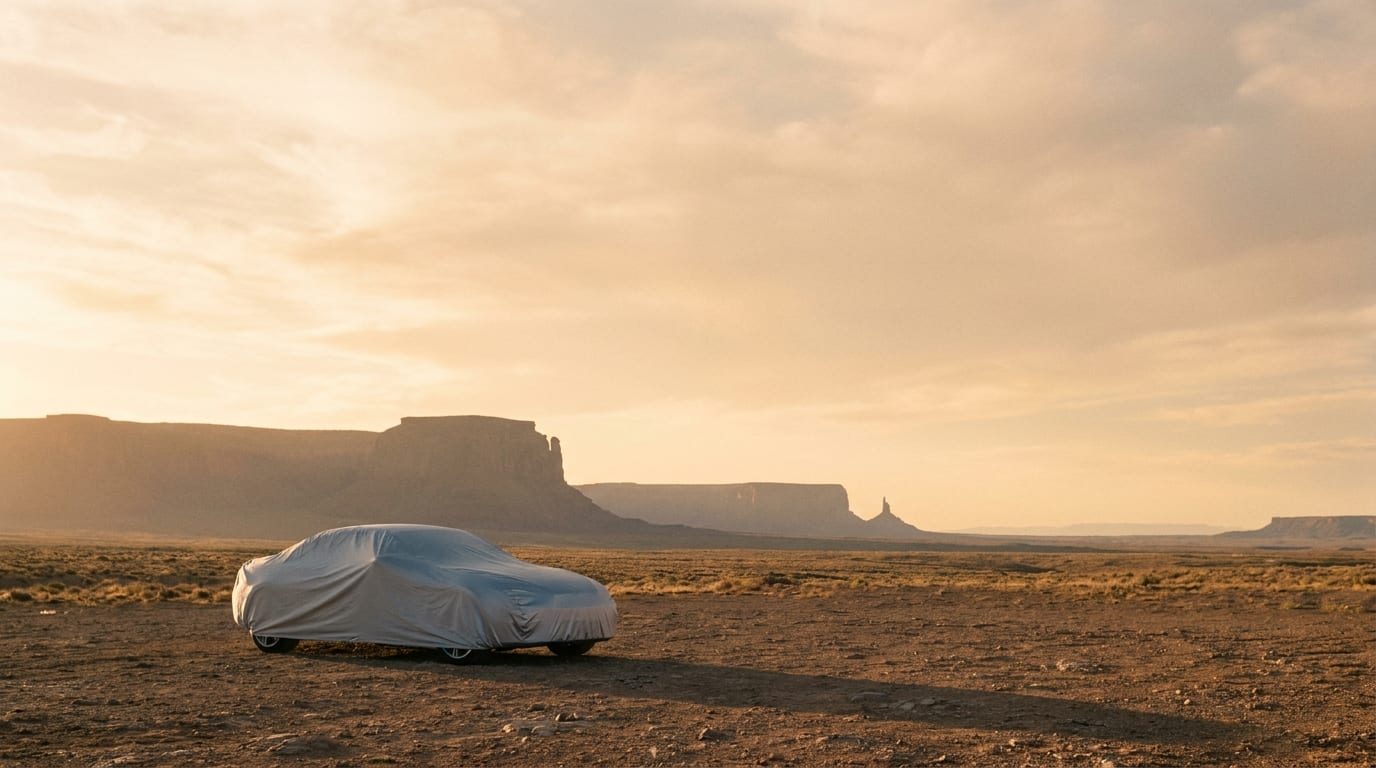
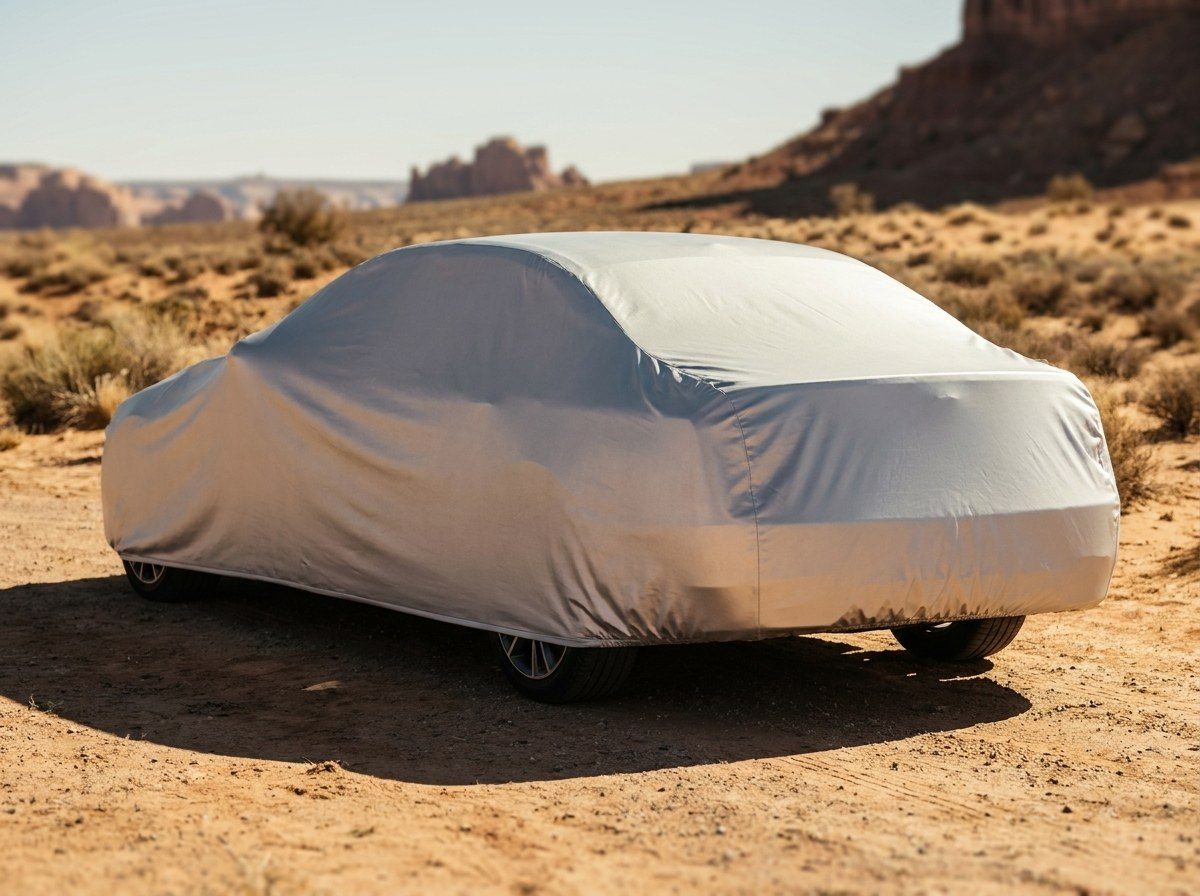
Whatever the zip code, a few habits help. Wash off what sits on the paint, since dirt, bird droppings and salt add their own stress. Wash when the body is cool, not straight after it has been parked in the sun. Give the paint a seasonal coat of wax, which Consumer Reports recommends to help protect it from the elements. And park in shade when you can, or under a cover when you can't. Sunlight is the step that starts the damage. A car cover keeps direct sun off the paint while the car sits, the same basic job a carport does. Our weather guide covers what the rest of the year does to a parked car's finish, from winter salt to fall sap to coastal rain.
Questions owners ask
Is Florida really harder on car paint than Arizona?
For coatings in general, the test lab that runs sites in both says yes. It finds Miami's hot, wet climate typically worse for coatings than Phoenix's hot, dry climate, even though Phoenix is hotter and gets more solar radiation. The extra stress comes from how long the surface stays wet, overnight dew included. Arizona's dry heat has its own downside: the lab says it may cause more pigment fade.
Does heat fade car paint, or is it the sun?
Sunlight starts it. Light, with ultraviolet usually doing the most damage, is what breaks the chemical bonds in a coating, and that step depends on the light, not the temperature. Heat's role comes after: it speeds up the chemical reactions that follow once light has started the breakdown.
What is the "black box" test for car paint?
It's a black-painted, open-bottom metal box set out in full sun, with the test panels forming its top. The air trapped inside stands in for the dead space of a car body, so the panels reach temperatures comparable to the hood, roof or trunk lid of a car parked in direct sunlight. The method is specified in ASTM D4141.
Can a car cover help with sun damage?
A cover keeps direct sun off the paint while the car is parked, the same basic job a carport does. It does nothing once the car is back out in the sun, so regular washing and a seasonal coat of wax still matter.
Sources (8)
- South Florida and Arizona are benchmark outdoor test locations for coatings; it is common for companies to test in both because the two extremes can cause different types of degradation. For coatings, the hot and wet climate of Miami is typically worse than the hot but dry climate of Phoenix, even though Phoenix gets hotter and has higher annual solar radiation. Moisture's effect on coatings is often underestimated; water is the "universal solvent" and can leach protective additives from a coating; the actual time a surface stays wet (as from night-time condensation) is much more important than humidity or rainfall. At Atlas' South Florida Test Service site near Miami, coating samples have measurable surface moisture about 4,200 of 8,760 hours a year (48%); in Miami, samples are wet about 15 times longer than in Arizona. Arizona's dry climate and wide day-night temperature cycling are very effective at degrading interior automotive materials and may cause increased pigment fade. Dirt, bird droppings and marine and road salt are among the other factors that affect coatings. atlas-mts.com
- Light-induced damage is a function of the number and energy of photons; heat does not increase its rate but does increase the rate of the damaging secondary chemical reactions, so test specimens should reach their maximum expected service temperatures. The lower UV wavelengths are usually the most damaging, though some reactions result from visible light. Frequent freeze-thaw cycles combined with higher UV levels at high elevations are believed to cause localized "Denver cracking" of automotive coating systems. atlas-mts.com
- The "black box" exposure is a black-painted, open-bottom metal box about 150 x 200 cm and about 25 cm deep, with the test panels forming its top; the trapped air simulates the dead space of a car body. It produces higher panel temperatures later into the day and longer time of wetness in the morning than a standard open rack, and for many automotive paints greater rates of degradation. Its panel temperatures are comparable to those on the hoods, roofs and deck lids of cars parked in direct sunlight. ASTM D4141 (Standard Practice for Conducting Black Box and Solar Concentrating Exposures of Coatings) specifies the method. atlas-mts.com
- Atlas' South Florida Test Service is in the Miami region, a benchmark for outdoor durability testing for over 75 years; its Arizona desert site, DSET Laboratories, is about 30 miles north of metropolitan Phoenix. atlas-mts.com
- UV light absorbers are added to automotive clear coat to protect the color coat. Clear-coat cross-sections from seven Washington State Patrol Ford Crown Victorias (model years 2000 to 2008) showed a decrease in UV absorption in each sample as the sampling point moved from the color coat toward the outer surface, a trend the authors attribute to sunlight interacting with the UV absorbers. astee.s3.amazonaws.com
- 2024 was the warmest year recorded in Phoenix, with a mean temperature of 78.6°F, 143 days at or above 100°F and 70 days at or above 110°F. weather.gov
- Phoenix's 70 days at or above 110°F in 2024 broke the city's record for the most such days in a year, set the year before. kjzz.org
- Consumer Reports advises a seasonal waxing to help protect a car from the elements, and not washing a car when the body is hot, such as after it has been parked in direct sunlight. consumerreports.org