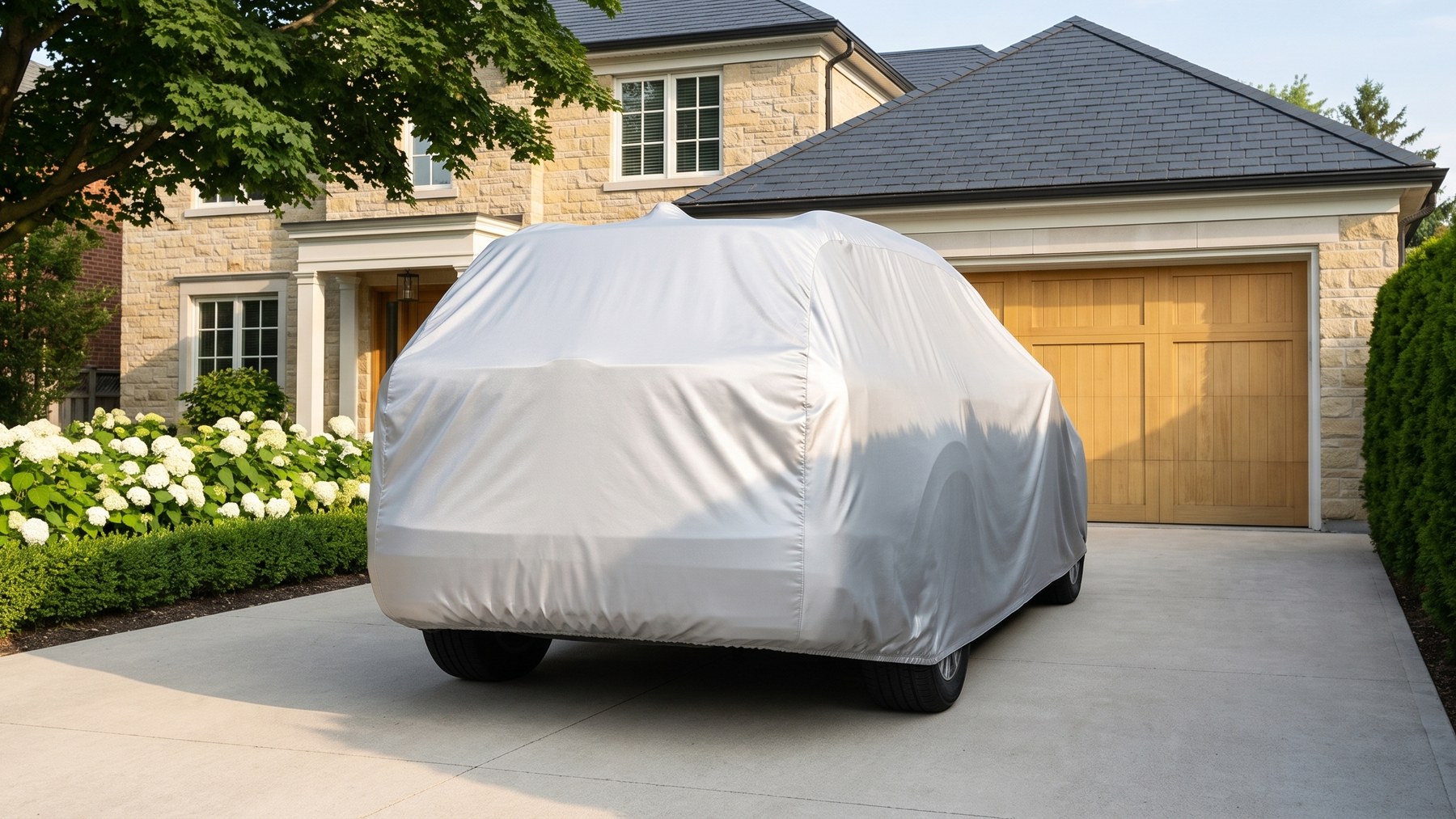
Most of what you can do for a car in a hailstorm happens before the storm arrives. That window opens with a severe thunderstorm watch, or as soon as severe storms are in the forecast. Plan around it, and the car is already somewhere sensible when the warning comes, along with the wind and heavy, wind-driven rain that ride in with the hail.
- A watch is your window; a warning means get inside. A watch usually runs 4 to 8 hours. A warning means a storm producing 1-inch hail or 58 mph wind is already on radar or reported by a spotter. The National Weather Service says to seek safe shelter immediately.
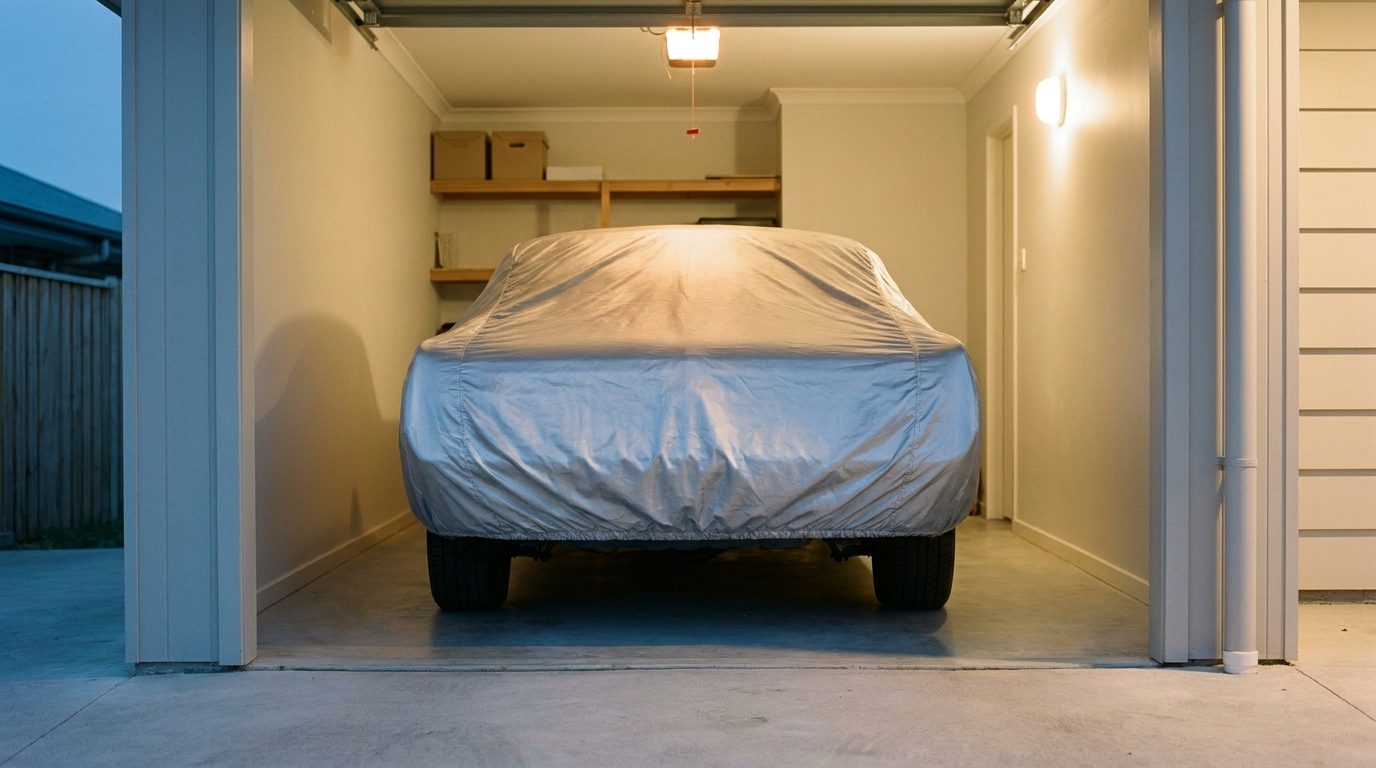
- Under a roof beats anything parked in the open, for the hail and for the wind and rain that come with it. A garage, carport or parking deck is worth a short drive during the watch, not once the warning is out.
- If it has to stay put, get it away from trees, power lines and low spots. Thunderstorm winds can reach 100 mph, and 12 inches of rushing water can carry away most cars.
- No standard car cover stops hail. A weather-resistant cover keeps wind-blown rain, dust and grit off the paint; hail itself calls for a different tool (our sister brand HailProtector makes an inflatable one).
Know when it's time to move the car
Know a watch from a warning
A severe thunderstorm watch means the National Weather Service sees conditions favorable for severe thunderstorms in and close to your area. Watches usually run 4 to 8 hours, which makes the watch the time to move the car, ideally before the storm builds.
A warning is different. It's issued once a severe thunderstorm is indicated on radar, or a spotter reports one producing hail one inch across or larger (about the size of a quarter) and/or wind of 58 mph or more. The National Weather Service's advice at that point is for people in the area to seek safe shelter immediately. If the car is a few steps from your own garage and the storm hasn't reached you, pull it in. Otherwise, leave it and get inside: no car is worth being caught outside in a severe storm. Not every storm gets a watch first. The National Weather Service can issue a warning with no watch in effect. So if severe storms are in the forecast, move the car early rather than waiting for one. NOAA Weather Radio broadcasts watches and warnings from your nearest National Weather Service office 24 hours a day, and weather.gov posts them for your area.
Get it under a roof while the watch is on
A garage, carport or parking deck beats open pavement, both for the hail itself and for the wind and rain that usually arrive with it. If a covered spot is a short drive away, go during the watch, before the storm builds, not after the warning is out. In a parking deck, pick a spot away from the open edges: strong surface winds can drive hail in at an angle or even nearly sideways, and NOAA's storm lab notes that wind-driven hail can break a car's side windows.

On the way, skip low spots and standing water
Hail isn't the only hazard riding in on a severe storm. It takes just 12 inches of rushing water to carry away most cars, and 2 feet to carry away an SUV or truck, and the National Weather Service's rule is that it's never safe to drive into flood water. If the route to shelter crosses an underpass or a street that floods, take the long way or stay where you are.
If it has to stay put, move it away from trees and lines
Straight-line thunderstorm winds count as damaging once they pass 50 to 60 mph, and they can reach 100 mph. Damage from those winds makes up about half of all severe weather reports in the lower 48 states, more than tornado damage does. Pull the car away from mature trees, dead branches, power lines, and anything loose nearby, like patio furniture, that the wind can pick up and throw.
If it has to ride out the storm outside
Be clear-eyed about what a cover can do here. No standard car cover, ours included, stops a hailstone from denting a panel or cracking glass. What a weather-resistant cover like the AllGuard Platinum Shield does is keep wind-driven rain, dust and grit off the paint, with a fleece liner against the finish.
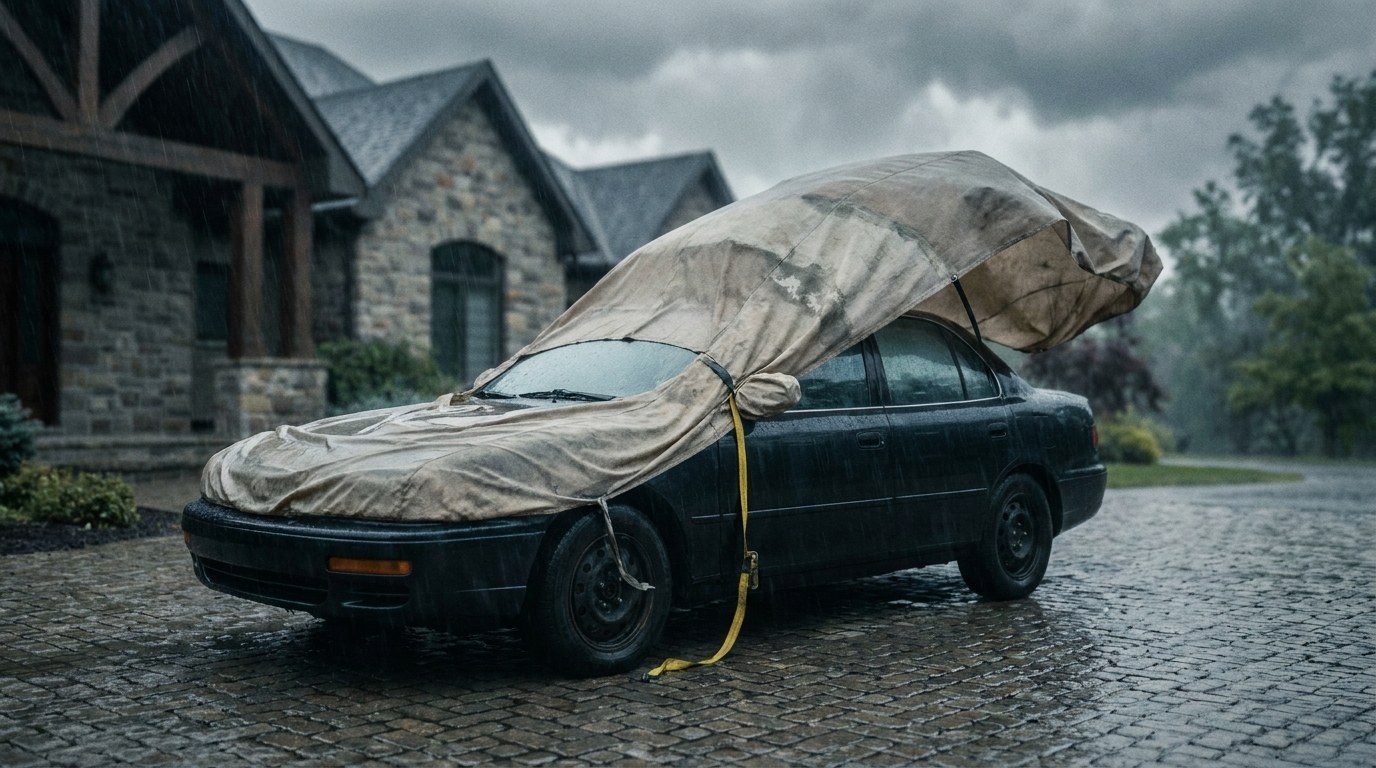
A loose tarp tied down with a few slack straps, like the one pictured in the step above, is what storm wind tears off a car. A fitted cover's elastic front and rear hems hold it snug.
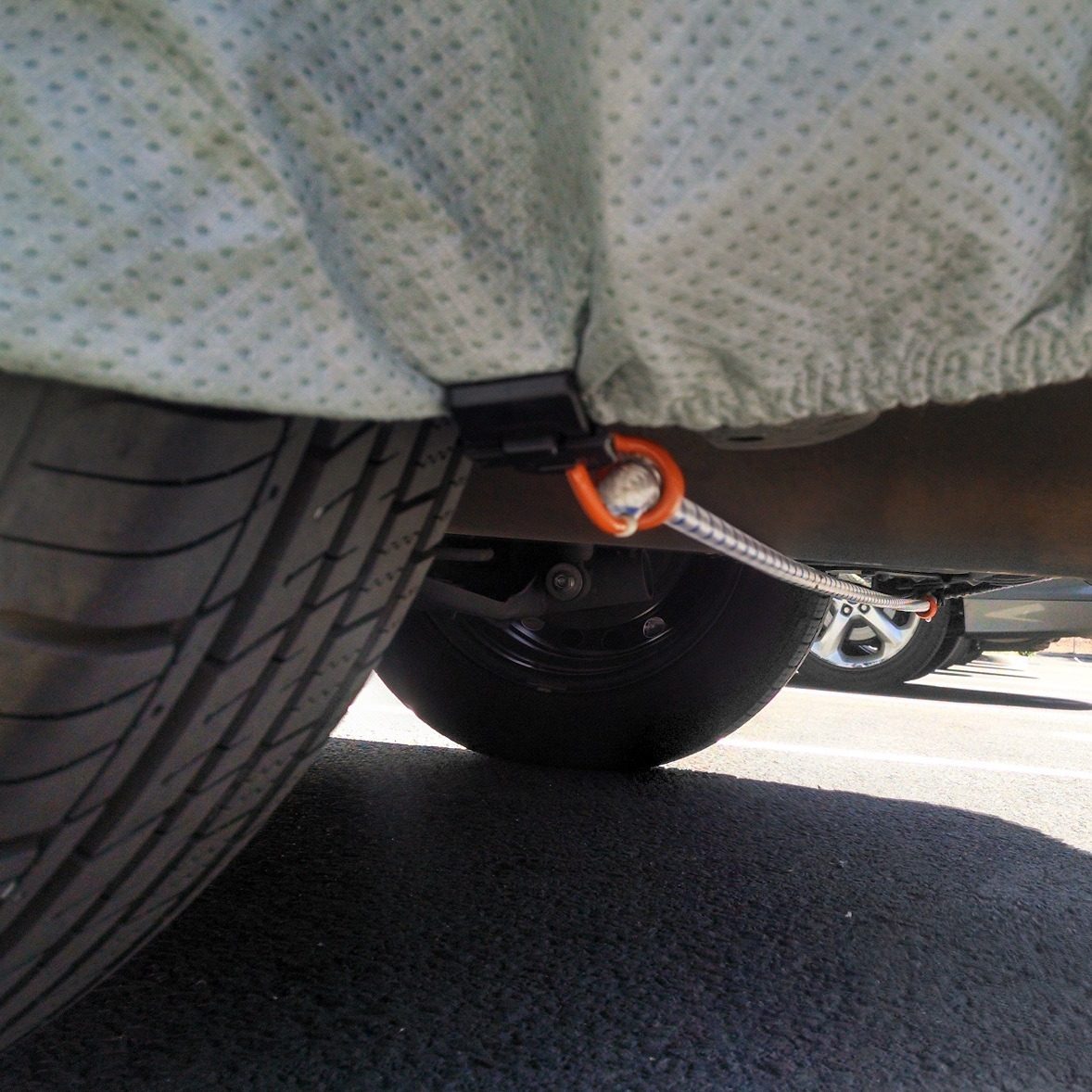
TipWhile the watch is on, before the wind picks up, clip a Gust Strap to the cover's lower edge; its cords run under the car.
After it passes, document before you clean anything
Walk around the car and photograph every dent, crack and ding before you wash it, wipe it down or book a detail. Hail and windstorm damage to a car typically falls under comprehensive coverage, not collision, so check that your policy carries comprehensive before the season, not after the storm.
If the cover took the rain, dust and grit, rinse it off and let it air-dry before you fold it away. A wet or dirty cover folded into its bag is the habit to avoid.
What a cover can, and can't, do
None of this is a knock on a quality cover. It's specific to hail. A weather-resistant cover still earns its place in storm season: it keeps wind-blown rain, dust, grit and leaves off the paint. For choosing a grade for your weather, see the storms & hail page.
Storms are one test of the year. For the rest of it, from desert sun to winter snow, our weather guide has the condition-by-condition case for picking the right cover.
Questions owners ask
What's the difference between a severe thunderstorm watch and a warning?
A watch means the National Weather Service sees conditions favorable for severe thunderstorms in and close to your area, and it usually runs 4 to 8 hours: that's the time to move the car. A warning means a severe thunderstorm, one producing hail one inch or larger and/or wind of 58 mph or more, has been indicated on radar or reported by a spotter. At that point the advice is to get yourself to safe shelter right away.
Will a car cover protect my car from hail?
No. A car cover is not hail protection. The AllGuard Platinum Shield keeps rain, dust and grit off the paint and puts a fleece-lined layer against the finish, but no standard car cover stops hail from denting a panel or cracking glass. For hail specifically, our sister brand HailProtector makes an inflatable system built for it.
How fast does hail actually fall?
Mostly it depends on size, along with the wind and how much the stone has melted. Hail under an inch across falls at roughly 9 to 25 mph. The 1-inch to 1.75-inch stones typical of a severe storm fall around 25 to 40 mph, and only very large hailstones, more than 4 inches across, can top 100 mph. NOAA's storm lab notes that research with 3-D printed casts of real hailstones in a vertical wind tunnel has shown natural hailstones fall more slowly than the solid ice spheres early estimates assumed.
Is hail damage covered by insurance?
Usually, if the policy includes comprehensive coverage. Comprehensive pays for damage caused by something other than a collision, and the events it covers include hail, windstorm and flood. It's separate from collision coverage, so check the policy before the season rather than after a storm.
Should I drive through standing water to get the car under cover?
No. It takes just 12 inches of rushing water to carry away most cars, and 2 feet for an SUV or truck. If the route to shelter crosses a low spot or an underpass that's taking on water, find another way or stay where you are.
For the wind-blown rain and grit, not the hail.
Silver 300D polyester (D stands for denier, a measure of the yarn's weight). A polyurethane coating helps it shed rain. It adds a UV treatment, a fleece liner against the paint, and breathable fabric. Matched to your exact car.
Sources (8)
- A severe thunderstorm warning is issued when a severe thunderstorm is indicated by radar or a spotter reports a thunderstorm producing hail one inch or larger and/or winds of 58 mph or more; people in the affected area should seek safe shelter immediately; warnings can be issued without a severe thunderstorm watch already in effect. forecast.weather.gov
- A severe thunderstorm watch means conditions are favorable for the development of severe thunderstorms in and close to the watch area; watches are usually issued for 4 to 8 hours. forecast.weather.gov
- A thunderstorm is severe when it produces a tornado, winds of at least 58 mph, and/or hail at least 1 inch in diameter. forecast.weather.gov
- One-inch hail is quarter size. Hail fall speed depends primarily on size, plus friction, wind and melting: under 1 inch, 9 to 25 mph; 1 to 1.75 inches, 25 to 40 mph; over 4 inches, can exceed 100 mph. Tests with 3-D printed casts of real hailstones in a vertical wind tunnel show natural hailstones fall more slowly than solid ice spheres. Strong surface winds can drive hail at an angle or nearly sideways, and wind-driven hail can break side windows on cars. nssl.noaa.gov
- Damaging thunderstorm winds are those exceeding 50 to 60 mph; wind speeds can reach up to 100 mph; damage from severe thunderstorm winds accounts for half of all severe reports in the lower 48 states and is more common than damage from tornadoes. nssl.noaa.gov
- It takes 12 inches of rushing water to carry away most cars and 2 feet of rushing water to carry away SUVs and trucks; it is never safe to drive into flood waters. weather.gov
- Comprehensive auto coverage pays for damage caused by something other than a collision, including windstorm, hail and flood. iii.org
- NOAA Weather Radio broadcasts official National Weather Service warnings, watches, forecasts and other hazard information 24 hours a day, 7 days a week, from the nearest National Weather Service office. weather.gov