Whether you are putting a car away for the winter or finally bringing home the project car you waited years for, how you park it matters as much as how you drive it. A stored car is not resting. Fuel ages, the battery drains, tires sit on the same patch of floor, and anything left on the paint keeps working on it. None of that is hard to stop. It just has to happen before the car goes to sleep, not after.
- Put it away clean and completely dry, inside and out. Dirt on the paint and crumbs in the cabin both cost you later.
- Protect what ages while it sits: battery on a maintainer, a full tank with stabilizer, tires set a little high.
- Leave the parking brake off. Chock the wheels instead.
- Cover it with something that breathes, matched to where the car sleeps. A plastic tarp can trap moisture against the paint.
The eight steps
These are the essentials, whether the car spends the season in a heated garage or on a driveway pad. Most of them take minutes. The oil change and the fill-up are easiest on the car's last drive before storage, so plan that trip first.
Deep clean before storing
Sap, mud, bug splatter and bird droppings can damage paint if they are left to sit, and a stored car gives them weeks to do it. Wash the car thoroughly, including the wheels and lower panels, and let it dry completely before it is parked. A coat of wax adds a layer of protection for the months ahead.
Then do the inside. Vacuum, wipe down the surfaces and take out every wrapper, crumb and bottle. Food left in a parked car invites mice and insects.
While you are thinking about pests, close the obvious ways in. AAA suggests sealing the tailpipe and the engine air intake with steel wool, or copper wool, which rodents like even less.
TipLeave a note on the steering wheel listing everything you plugged or disconnected, so nothing is forgotten on the first start.
Look after the battery
A parked car slowly drains its battery, and the goal is to keep it at a full charge until you need it again. You have two good options. Connect a battery maintainer, a charger built for storage that brings the battery to full and then holds it there. Or disconnect the negative cable.
A maintainer is the easier choice for most modern cars. Disconnecting works too, but expect to reset the clock, the radio presets and any seat memory when you reconnect. If you store the car every year, a quick-disconnect terminal makes this a thirty-second job.
TipNot every charger is built for months of storage. Choose a maintainer that switches itself to a holding mode once the battery is full, rather than one that simply keeps charging.
Fill the tank and add fuel stabilizer
Gasoline breaks down as it sits. Consumer Reports notes it can start to go bad in as little as three months. A full tank also leaves less room for air, and less chance of condensation forming inside the tank.
Fill up with fresh fuel, add a fuel stabilizer at the dose on the bottle, then run the engine so treated fuel reaches the lines and injectors. STA-BIL's own directions say five minutes of running. AAA suggests driving five to ten miles to circulate it.
TipStabilizer keeps good fuel from going stale. It cannot reverse fuel that has already gone bad, so add it to a fresh tank.
Save the tires from flat spots
A tire that carries the car's weight on the same patch for months can develop a flat spot. Raise the pressure above your normal setting to stiffen the tire; AAA suggests about 10 psi extra. Never go past the maximum pressure printed on the sidewall, and cold weather lowers pressure, so check them once a month.
For a long stay you can take some of the load off. Tire cradles or squares of foam board under each tire help, and a lift takes the weight off completely. If you use jack stands, place them only at the lift points shown in your owner's manual.
TipSet a reminder to bring every tire back to the pressure on the door placard before the first drive.
Cover it with something that breathes
A plastic tarp or a cheap non-breathable cover can trap moisture, condensation and heat against the body, and under a sealed layer that can lead to paint damage, mildew, rust and corrosion. A good cover keeps dust, debris and bumps off the car while letting damp air escape.
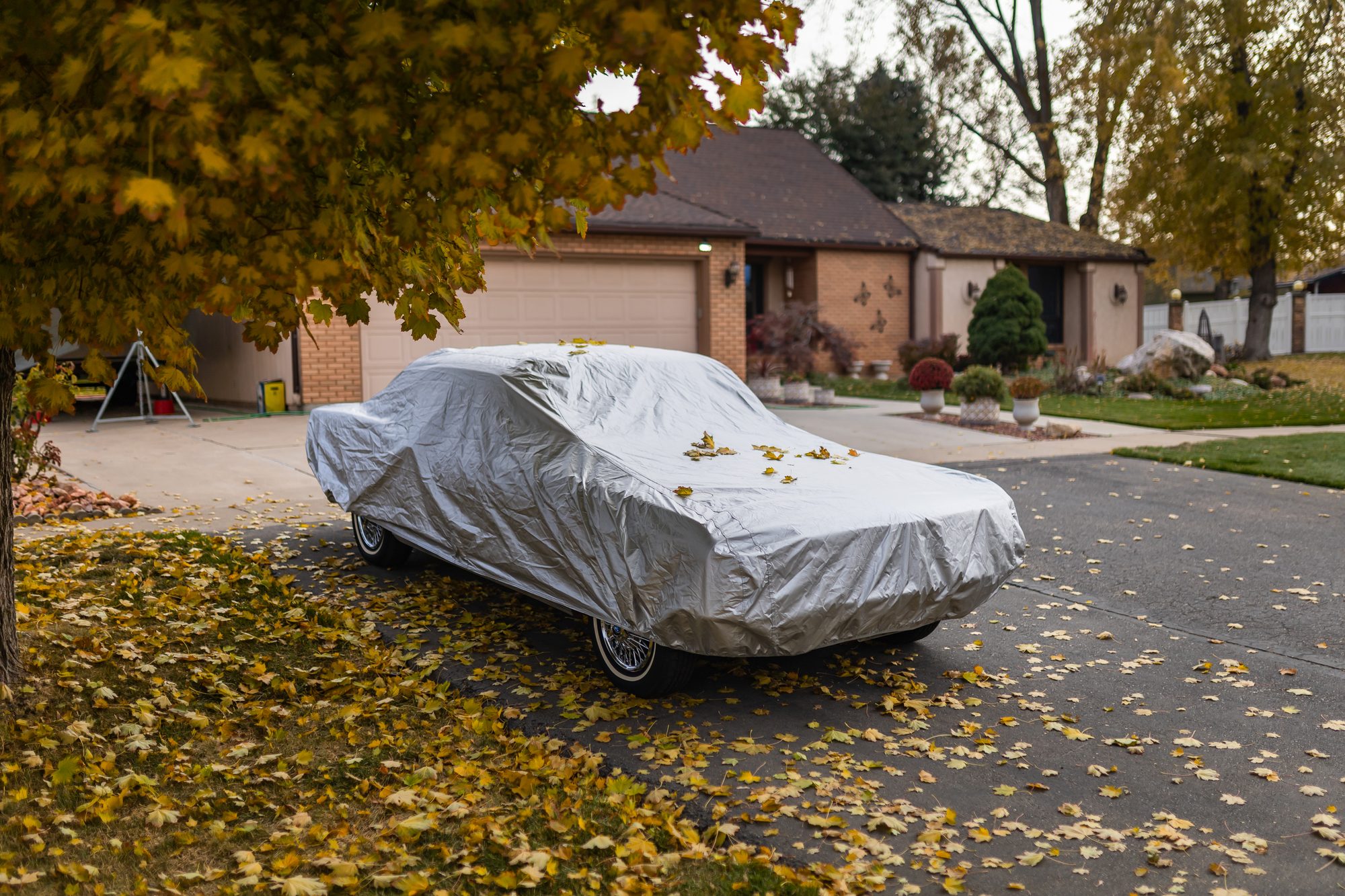
Match the cover to where the car sleeps. Indoors, the job is dust, dings and the scuffs of a busy garage. Outdoors, the cover also has to stand up to sun, rain and wind while it breathes. The cover goes on last, over a car that is clean and dry.
Change the oil before storage
Used oil carries acids and contaminants, and left sitting in an engine for months it can cause corrosion inside. If the car is due for an oil change, or close to it, have the oil and filter changed before it goes away.
For a stay of a few weeks this can wait. For a whole season, it is worth doing first.
Leave the parking brake off
A parking brake held on for months can rust and stick in the applied position. AAA's advice is simple: do not use it for storage.
Instead, put an automatic in Park or a manual in gear, and set wheel chocks against the tires so the car cannot roll out of position.
If it lives outside, get it off the grass
Grass and bare soil hold moisture and give it off all season, right under the floor pans, brake lines and everything else underneath. A concrete pad is the best outdoor surface.
No pad? Lay heavy plastic sheeting under the car to slow moisture rising from the ground, as AAA recommends, and for a sturdier base set plywood over the sheeting. Then cover the car with a water-resistant outdoor cover that breathes, and secure it against the wind.
Choosing the cover for where it sleeps
The single biggest decision in storage is the cover, and it depends on one question: does the car sleep indoors or out? An indoor cover is soft and close-fitting, made to keep dust off and protect the finish from the knocks of a working garage. An outdoor cover is a weather build: it has to shed rain, resist sun and wind, and still breathe.
| AllGuard Satin Protect | AllGuard Platinum Shield | |
|---|---|---|
| Where it belongs | Garage, shop or showroom | Driveway, carport or open lot |
| Outer | Black stretch satin, 85% polyester and 15% spandex | Silver 300D polyester, polyurethane and UV treated, breathable |
| Against the paint | Sheared fleece interior | Fleece liner |
| Rain | Not for outdoor use. Indoors only | Water-resistant |
| Price | $189.99 | $199.99 |
Every cover includes the AllGuard Protection Warranty.
When it is time to wake it up
Storage is only half the job. Before the first drive, undo everything in the reverse order, and take a slow look around the car before you turn the key.
- UnplugPull the steel or copper wool from the tailpipe and the air intake. Your note on the steering wheel is the reminder.
- LookCheck under the hood and around the wheels for nests, chewed wiring and fresh leaks.
- BatteryIf you disconnected the battery, reconnect it and charge it before the first start. Otherwise, unplug the maintainer.
- TiresSet every tire back to the pressure on the door placard.
- BrakesTest the brakes at walking pace before you head out on the road.
- CoverFold the cover clean side in and put it away dry, ready for next season.
Questions owners ask
Should I start the car every week or two while it is stored?
No. AAA's advice is that starting a stored car and letting the engine run does nothing to maintain it, and only contaminates the engine oil. If the car is stored properly, there is no need to start it during the season. Leave it asleep, with the battery on a maintainer.
Can I use an indoor cover on a car parked outside?
No. An indoor cover like AllGuard Satin Protect is made to keep dust and dings off a car in a garage. It is not built for sun, rain or wind. Outside, use a water-resistant outdoor cover that breathes, such as the Platinum Shield.
Do I need to disconnect the battery if I use a maintainer?
No. A maintainer connected to the battery keeps it charged on its own. Disconnecting the negative cable is the alternative when there is no outlet nearby, with the trade-off that the clock, radio presets and seat memory may need resetting.
How long will fuel stay fresh with a stabilizer?
STA-BIL says its storage formula keeps fuel fresh for up to 24 months, and notes that no additive stops gasoline losing volatility over very long storage. For a normal winter, a full tank of fresh fuel with stabilizer is plenty.
Is a plastic tarp good enough for storage?
Not for a car you care about. A plastic tarp does not breathe, so it can hold moisture and heat against the paint, and a tarp shifting in the wind can rub the finish.
Put it away under the right cover.
AllGuard Satin Protect for the garage, Platinum Shield for the driveway. Both are matched to your exact car.
Sources (9)
- Wash, wax and vacuum before storage, and make sure the car is completely dry. mwg.aaa.com
- Seal the tailpipe and engine air intake against rodents; copper wool works better than steel wool. mwg.aaa.com
- Keep the battery charged with a maintenance-type charger, or disconnect it, charge it before the first start, and reset the clock, radio and seat memory afterward. cluballiance.aaa.com
- Gasoline can start to go bad in as little as three months; a full tank leaves less room for air and condensation; stabilizer cannot reverse gas that has gone bad. consumerreports.org
- Run the engine five minutes after adding stabilizer; it keeps fuel fresh up to 24 months; no additive stops gasoline losing volatility over very long storage. goldeagle.com
- Drive five to ten miles to circulate stabilized fuel; add about 10 psi to each tire; have the oil changed if due, to remove acids and contaminants. mwg.aaa.com
- Do not exceed the tire's maximum inflation; foam board squares under the tires. cluballiance.aaa.com
- Do not use the parking brake in storage, since it can rust and stick; use Park or gear with wheel chocks. mwg.aaa.com
- Lay plastic sheeting under the car to limit moisture from the ground; starting a stored car just to run the engine does nothing to maintain it and only contaminates the engine oil. cluballiance.aaa.com