Lexus spent about ten years developing a car it would build only five hundred times. The LFA program began in 2000, and the first production car was completed in December 2010. In between, Lexus settled on a carbon-fiber structure, a 4.8-liter V10 co-developed with Yamaha, and a dedicated line called LFA Works at Toyota's Motomachi plant, where technicians hand-built the cars at no more than twenty a month until the run ended two years later. Even the tachometer is digital, because a conventional needle could not keep up with the engine behind it.
- Lexus began the LFA program in 2000, showed the first LF-A concept at the 2005 Detroit auto show, started production in December 2010 and completed the 500th and final car on December 14, 2012.
- Its 4.8-liter V10, co-developed and built by Yamaha, makes 552 hp at 8,700 rpm and revs to 9,000 rpm. It can spin from idle to redline in about six-tenths of a second, which is why the tachometer is digital.
- Carbon-fiber-reinforced polymer makes up 65% of the body structure. The V10 sits up front and the gearbox at the rear for a 48:52 weight balance, and Lexus quoted 0 to 60 mph in 3.6 seconds and a 202 mph top speed.
- A Nurburgring Package, announced as a 50-car run, added 10 hp, quicker shifts and more aero. In August 2011, one lapped the Nordschleife in 7:14.64.
Ten years, then five hundred cars
The LFA program began in January 2000 as a Toyota research project and grew into a dedicated Lexus supercar under chief engineer Haruhiko Tanahashi. The first prototype was finished in June 2003, and Lexus showed the LF-A concept, then built around an aluminum structure, at the January 2005 Detroit auto show. Two more Detroit concepts followed in 2007 and 2008, and along the way the structure switched from aluminum to carbon fiber to save weight. Lexus also raced prototypes in the Nurburgring 24 Hours in 2008 and 2009 before the first production car was completed in December 2010.
Production was small and deliberately slow. The cars were hand-assembled at LFA Works, a dedicated line at Toyota's Motomachi plant in Toyota City, Japan, at no more than 20 a month, roughly one a day. The 500th and last car was completed on December 14, 2012. Each LFA carries a plaque engraved with its production number, and each V10 was assembled by a single craftsman whose name it carries. Lexus's own history of the car puts the possible configurations at a reported 30 billion.
 Wheel
Wheel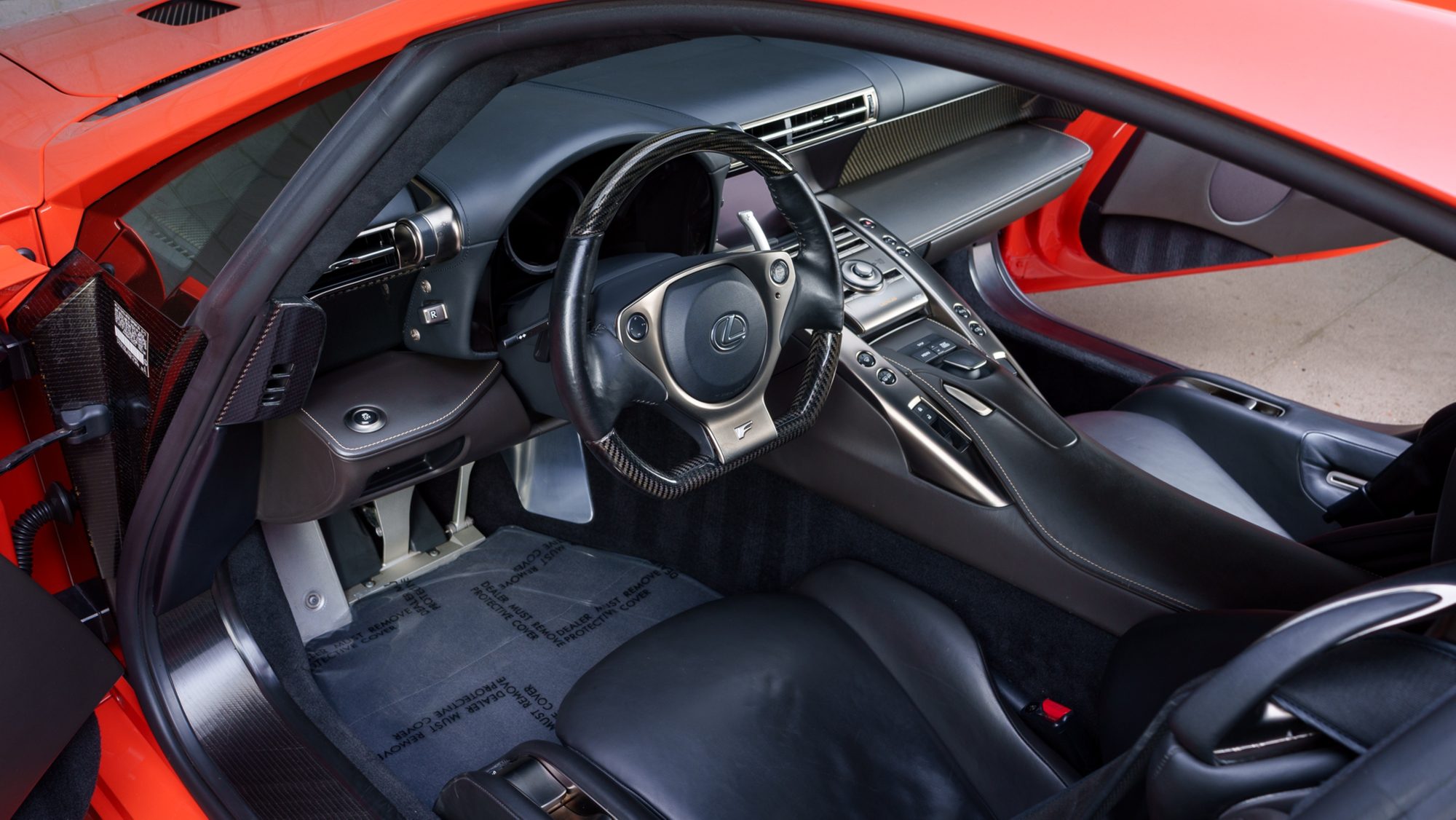 Cockpit
The V10 Yamaha helped build
The engine, coded 1LR-GUE, is a naturally aspirated 4.8-liter V10 that Yamaha Motor co-developed with Toyota and assembled at a pace of one engine a day. It makes 552 hp (560 PS) at 8,700 rpm and 354 lb-ft of torque at 6,800 rpm, and it revs to a 9,000 rpm redline. With no load on it, it can spin from idle to 9,000 rpm in about six-tenths of a second.
The sound got as much attention as the output. Lexus brought in Yamaha Corporation, the musical-instrument maker and a separate company from Yamaha Motor, to help tune it. Its engineers adjusted the thickness and rib layout of the intake surge tank so it would radiate sound, and ducts carry that sound from the engine bay into the cabin. The result is often likened to the roar of an angel, and Evo named the V10 its engine of the year for 2010.
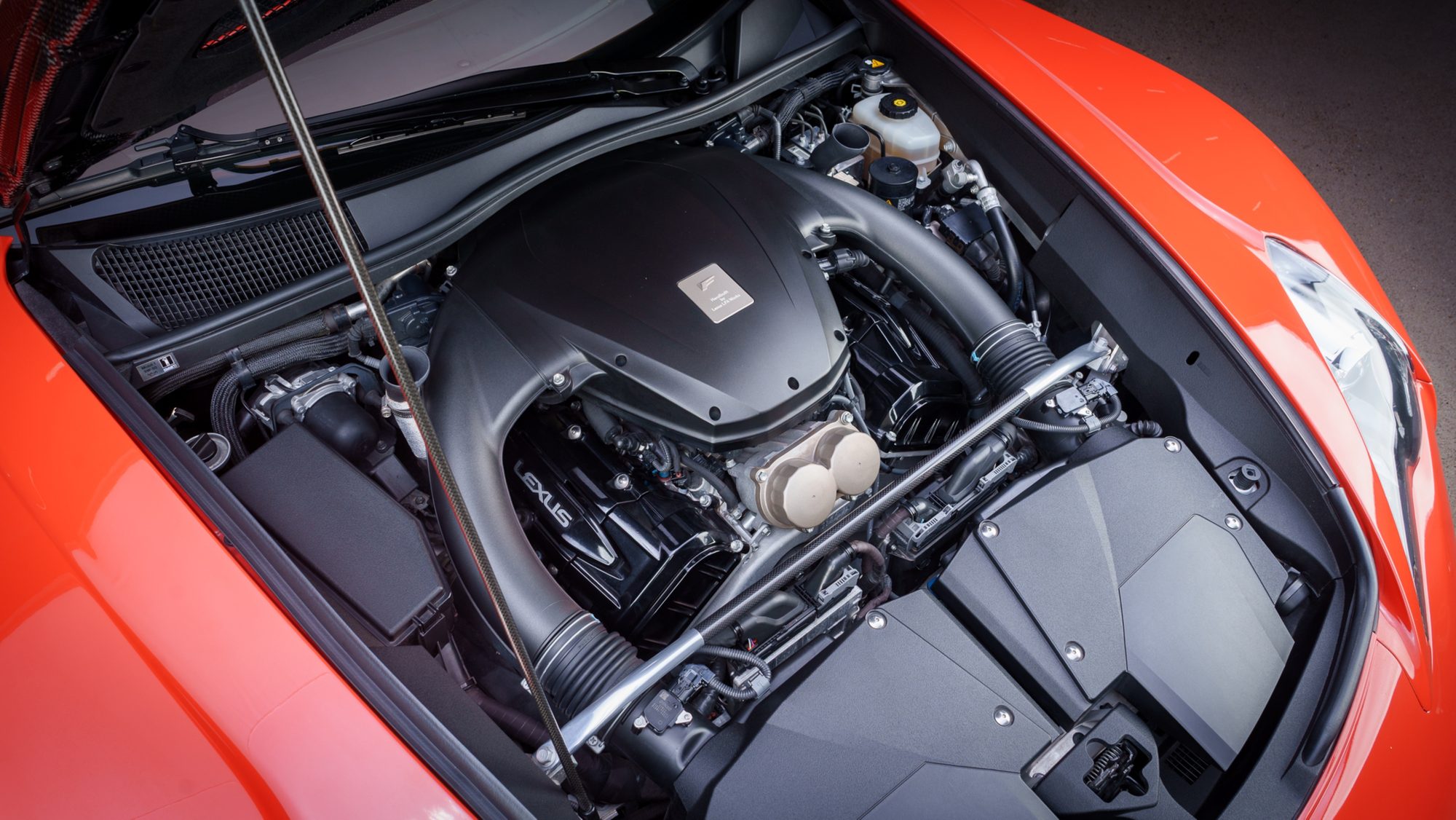
Carbon-fiber-reinforced polymer makes up 65% of the body structure, with aluminum alloy for the rest, and Lexus used carbon for the chassis and much of the bodywork. The V10 is mounted up front, behind the front axle, and the six-speed automated sequential gearbox sits at the rear, linked to the engine by a rigid torque tube. That layout gives the car the 48:52 front-to-rear weight balance Lexus called optimal.
- Engine
- 4.8-liter V10 (1LR-GUE), co-developed with Yamaha
- Output
- 552 hp at 8,700 rpm, 354 lb-ft at 6,800 rpm
- Redline
- 9,000 rpm
- Transmission
- 6-speed automated sequential, rear-mounted
- Price new
- $375,000 (US)
Figures as reported by Lexus at launch. The Nurburgring Package, below, raised output and changed the aero and suspension.
The Nurburgring Package
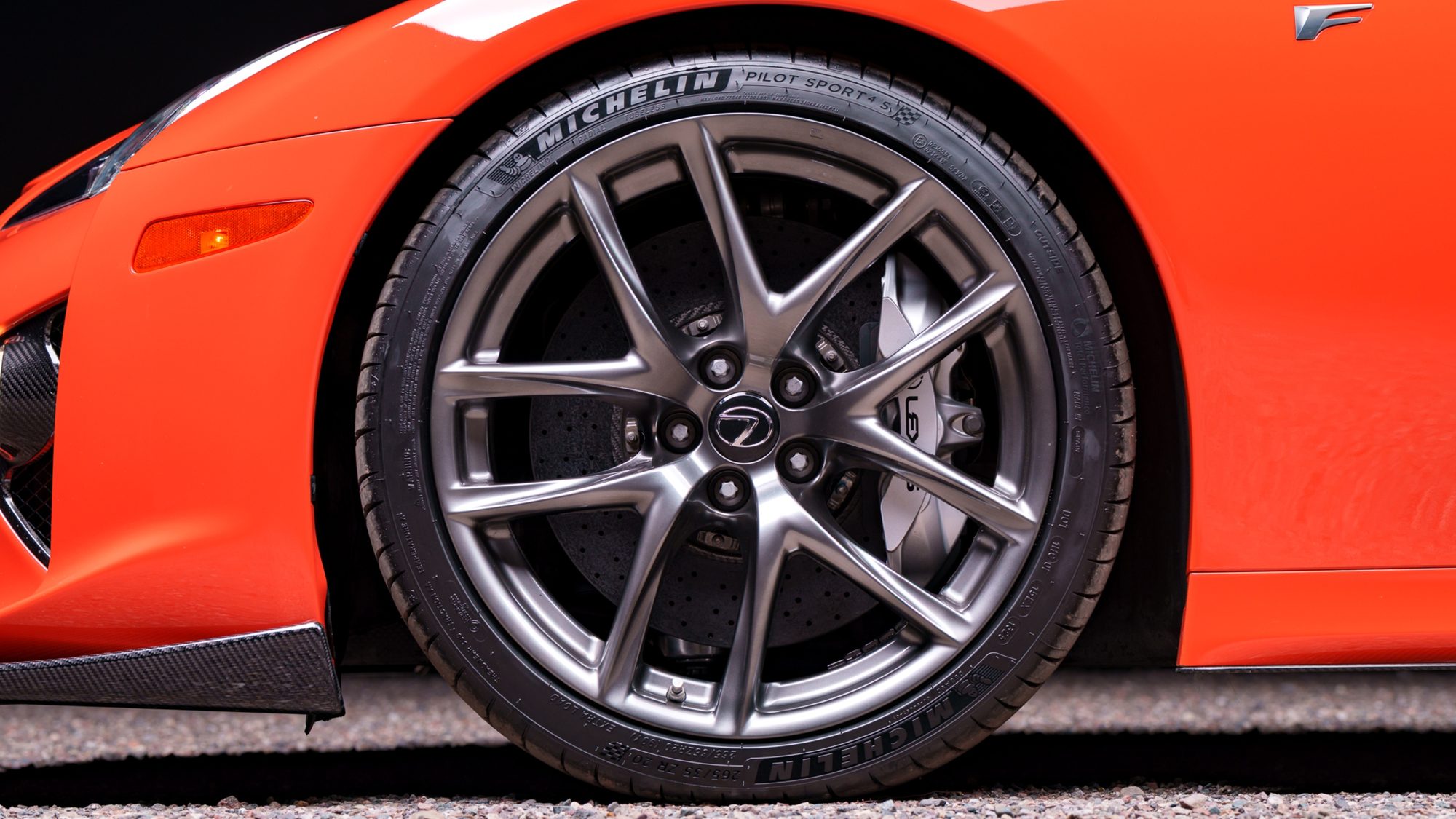
Lexus announced a Nurburgring Package in 2010 as a 50-car run within the 500; auction records put the final count at 64. It added 10 hp, for 562 hp by Lexus's figure, cut shift times by 0.05 seconds to 0.15 seconds, and brought sport-tuned suspension, black mesh-type wheels, a larger front spoiler and a fixed rear wing for more high-speed downforce. In August 2011, LFA test driver Akira Iida drove one around the Nurburgring Nordschleife in 7 minutes 14.64 seconds, among the fastest laps a road-legal production car had recorded there at the time.
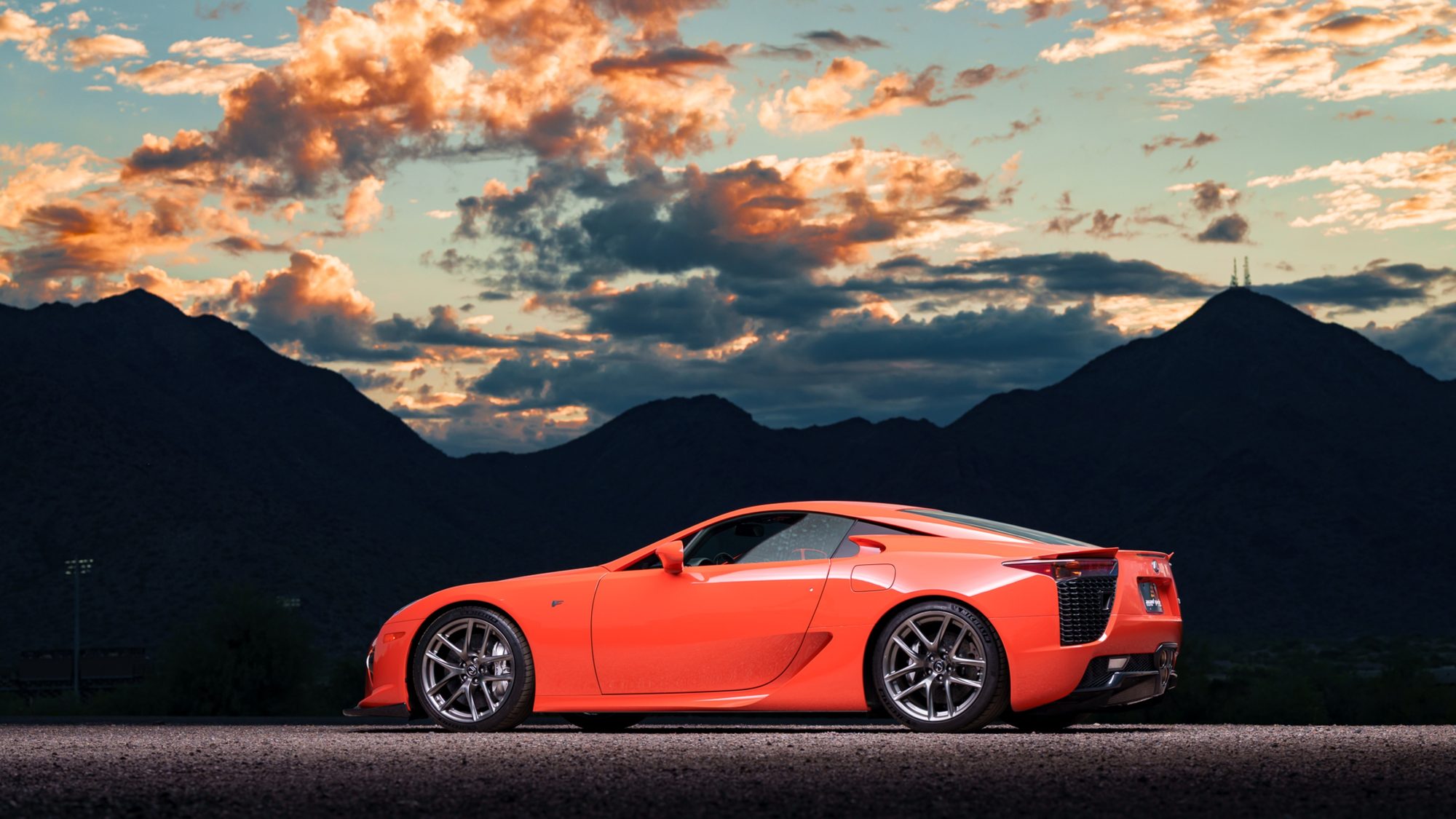
Evo's Chris Harris drove a Nurburgring Package car on the Nordschleife for the magazine that year, and his verdict was short.
The best road car I've ever driven around here.
Chris Harris · Evo, 2011, on the LFA Nurburgring Package at the Nordschleife
The LFA stayed a one-generation car of 500. In December 2025 Lexus showed an all-electric LFA Concept that revives the name without the V10. Whether an original spends its time on a back road or in a garage, a car built in numbers that small deserves something between it and the weather when it is not being driven.
Keep it coveredCovers for the LFA, matched to your exact car
Questions owners ask
Why does the Lexus LFA have a digital tachometer instead of a normal gauge?
Because a needle could not keep up. The LFA's V10 can spin from idle to its 9,000 rpm redline in about 0.6 seconds, faster than a conventional analog rev counter can follow, so the car uses a digital display that shows engine speed as it changes.
How many Lexus LFAs were built?
500, hand-assembled at LFA Works inside Toyota's Motomachi plant in Japan from December 2010 until the last car was completed on December 14, 2012, at no more than 20 a month. Lexus announced the Nurburgring Package as a 50-car run; auction records count 64 built within the 500.
How fast is the Lexus LFA?
Lexus quoted 0 to 60 mph in 3.6 seconds and a 202 mph top speed for the standard car. A Nurburgring Package car, with 10 more horsepower and quicker shifts, lapped the Nurburgring Nordschleife in 7:14.64 in August 2011.
Is Lexus making a new LFA?
Lexus showed an all-electric LFA Concept in December 2025, developed alongside Toyota Gazoo Racing's GR GT and GR GT3. Lexus's announcement called it a concept model and gave no production timing. The original V10 LFA remains a 500-car, one-generation run.
Sources (16)
- The LFA program began in January 2000 as a Toyota R&D project and became a Lexus development under chief engineer Haruhiko Tanahashi; first prototype June 2003; LF-A concept (aluminum construction) at the January 2005 Detroit show; further Detroit concepts in 2007 and 2008 (roadster), with the switch from aluminum to CFRP; prototypes raced in the Nurburgring 24 Hours in 2008 and 2009; first production LFA December 2010; plaques engraved with production numbers; 30 billion configuration possibilities; Nurburgring Package announced March 2010 with 50 units planned; Akira Iida's 7:14.64 lap in August 2011. mag.lexus.co.uk
- The switch from all-alloy to part-carbon construction was made to combat rising weight; the gearbox is mounted at the rear and connected to the engine by a rigid torque tube. evo.co.uk
- The 500th and final LFA was completed on December 14, 2012; production began in December 2010 at a pace of one car per day at LFA Works. global.toyota
- Only 500 LFAs built worldwide, hand-assembled at the Lexus LFA Works in the Motomachi plant, Toyota City, at no more than 20 per month; CFRP used for the chassis and much of the bodywork; front-mid engine linked to a rear ASG transaxle by a rigid torque tube for an optimal 48:52 weight distribution; six-speed Automated Sequential Gearbox; 552 hp, 354 lb-ft, 9,000 rpm redline, 202 mph. pressroom.lexus.com
- MSRP $375,000; 552 hp at 8,700 rpm; 354 lb-ft at 6,800 rpm; 0 to 60 mph in 3.6 seconds; 202 mph top speed; 500 built worldwide. pressroom.lexus.com
- Maximum output 412 kW (560 PS) at 8,700 rpm; maximum torque 480 Nm at 6,800 rpm; 9,000 rpm redline; top speed 325 km/h; production and sales period December 2010 to December 2012. global.toyota
- CFRP accounts for 65 per cent of the body-in-white, aluminum alloy the remaining 35 per cent; the engine was developed in conjunction with Yamaha; each V10 is assembled by a single engineer and bears his signature; the program launched in 2000. media.lexus.co.uk
- Yamaha Motor co-developed and produced the 1LR-GUE 4.8-liter V10, assembling one engine per day, each with an aluminum plate bearing the name of the craftsman who hand-assembled it; the exhaust note, likened to the roar of an angel, was tuned with the cooperation of Yamaha Corporation. global.yamaha-motor.com
- Yamaha's musical side worked on the LFA's sound: the intake surge tank was designed as an amplifier by adjusting its thickness and rib layout, and ducting carries the sound from the engine bay into the cabin. carbuzz.com
- No conventional rev counter could keep up with the unloaded V10's ability to go from idle to 9,000 rpm in 0.6 seconds, hence the digital display. evo.co.uk
- Evo named the LFA's V10 its Engine of the Year for 2010. lexusenthusiast.com
- Nurburgring Package: announced as 50 of the 500 cars; 562 hp, 10 more than the standard LFA; shift time cut by 0.05 seconds to 0.15 seconds; sport-tuned suspension; black mesh-type wheels; larger front spoiler and fixed rear wing for high-speed downforce. pressroom.lexus.com
- 64 Nurburgring Package cars were built; in August 2011 a road-legal example driven by Akira Iida lapped the Nordschleife in 7 minutes 14.64 seconds. rmsothebys.com
- The 7:14 lap was characterized at the time as the fastest by a mainstream manufacturer and the fourth or fifth fastest all-time production-car lap, not the outright fastest. lexusenthusiast.com
- Chris Harris, in Evo, called the LFA Nurburgring Package 'the best road car I've ever driven around here' (the Nordschleife). lexusenthusiast.com
- Lexus revealed the all-electric LFA Concept in December 2025, developed alongside Toyota Gazoo Racing's GR GT and GR GT3, as a concept model with no production timing given. pressroom.lexus.com
Photos: Josh Bryan/stock.adobe.com