For centuries, humanity has utilized various forms of water-resistant fabrics as protection from the elements. Our technology and knowledge of fabrics have come a long way, especially in the last few decades. Today, there are a myriad of fabrics in production that fall under the category of water-resistant. To help you understand the options available and which ones are best suited to your needs, we have compiled this list of the top water-resistant fabrics.
- To rate water resistance, scientists measure, in millimeters (mm), how much water can be held with and above the fabric before seepage occurs.
- Another rating you may see is the breathability of the fabric.
- Now fabrics that are both water-resistant and breathable work together to keep moisture out and to wick away any moisture that gets inside.
What are water‑resistant fabrics?
Many fabrics can be labeled as water-resistant, giving your project a lot of versatility. From natural wool to synthetic materials, it can be hard to keep track of all your options. Simply put, water-resistant fabric is any fabric that can stop water or reduce the amount of water passing through the material. A rating system was developed to evaluate the many fabric options and how capable they are of preventing this passage of water.
To rate water resistance, scientists measure, in millimeters (mm), how much water can be held with and above the fabric before seepage occurs. Below a commonly cited threshold of 1,000 millimeters of water pressure, a fabric is technically not waterproof. High-end fabrics can be much higher than this. Another rating you may see is the breathability of the fabric. This is how much air and moisture exit the fabric. While creating a breathable and resistant material was incredibly tricky, modern technology has begun to produce some very advanced fabrics. Now fabrics that are both water-resistant and breathable work together to keep moisture out and to wick away any moisture that gets inside.
Water resistant is not waterproof
While these terms are used interchangeably, they are not the same thing. Fully sealed means that no water can penetrate it, and anything less is not waterproof. Water-resistant is a term more often used with porous fabrics that still need to remain breathable. These fabrics need to be versatile, so they can never be impervious to water, but they can be highly resistant to the point of being nearly impervious. GoreTex, for example, is highly water-resistant.
Seven water resistant fabrics
The following are water-resistant materials that you are likely to run into and may consider utilizing.
1. Wool
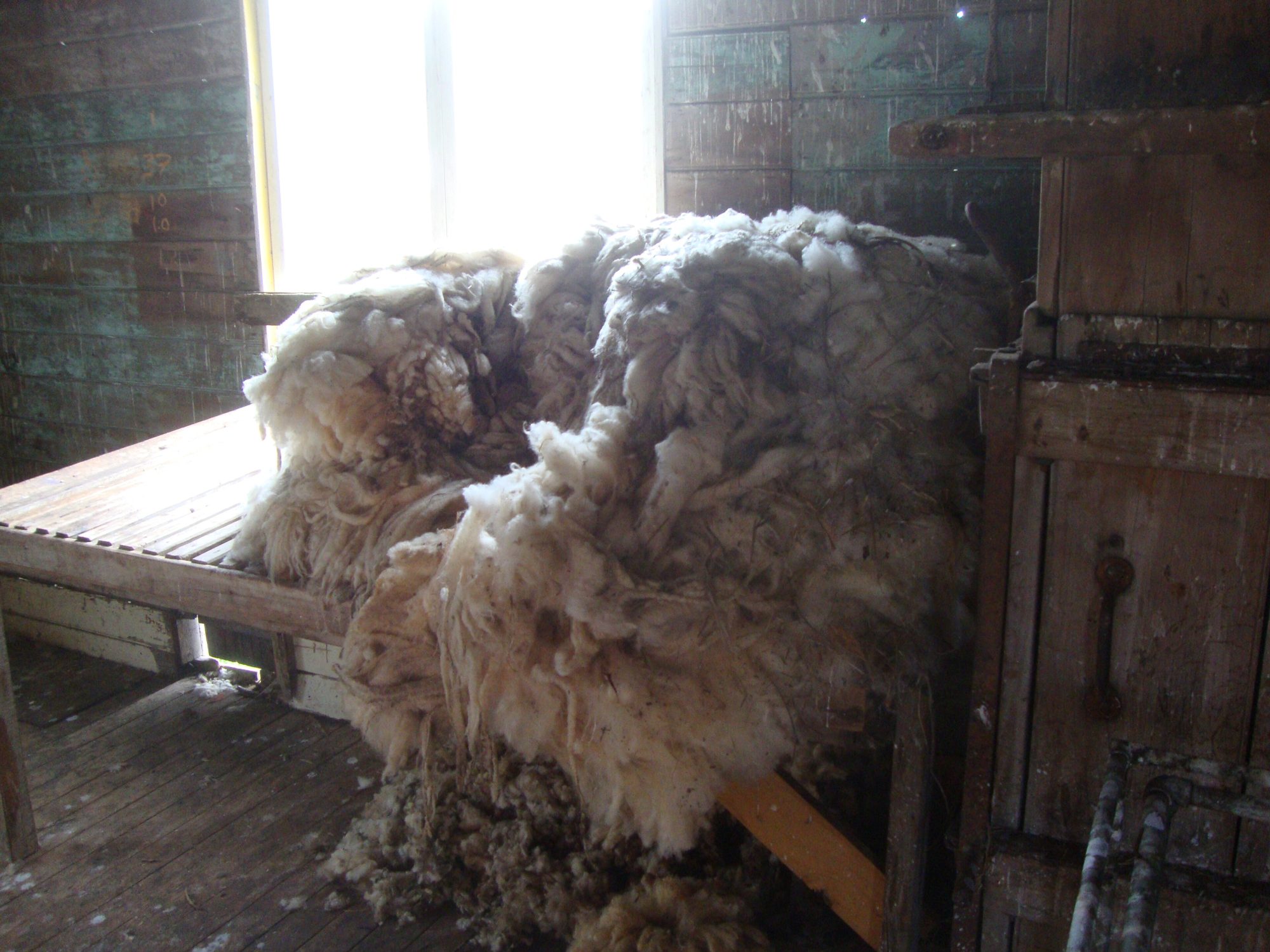
Perhaps one of the oldest fabrics utilized by humans, wool is still widely used for undergarments to napkins. When prepared correctly, wool is also highly water-resistant. The fibers of wool are great at absorbing water and can soak up roughly 30% of their original weight. Natural wool has a thin coating of lanolin oil that helps make the fiber water-resistant.
2. Vinyl
Made from a chemical known as Polyvinyl chloride (PVC), the same used to create music records, vinyl fabrics have been used in many iconic clothing items. A vast assortment of accessories such as rain jackets are made from PVC. Vinyl clothing is very resistant to water but doesn’t hold up well to heat.
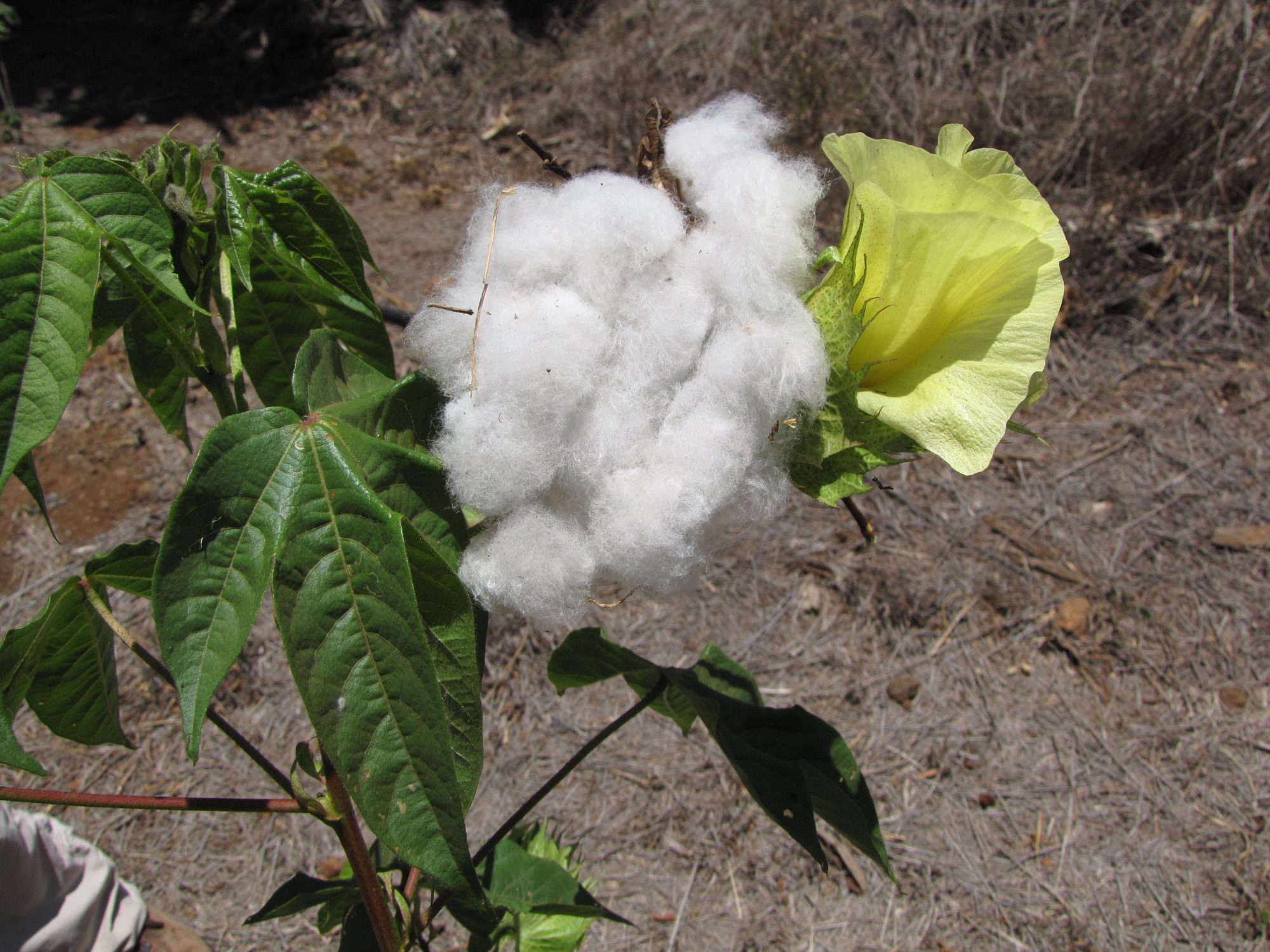
3. Woven fabric from ELS cotton
Extra-long-staple (ELS) cotton is a specially grown crop with extra-long fibers woven to create a very dense cotton textile. The result is an exceptionally water-resistant fabric that expands to form tighter protection when wet. This fabric is often referred to by the founding brand name Ventile. Historically, the plant was referred to as Sea Island cotton, and there was a great deal of difficulty getting it to grow in the United States. In the United States, extra-long-staple Pima cotton is grown chiefly in California (as of 2005).
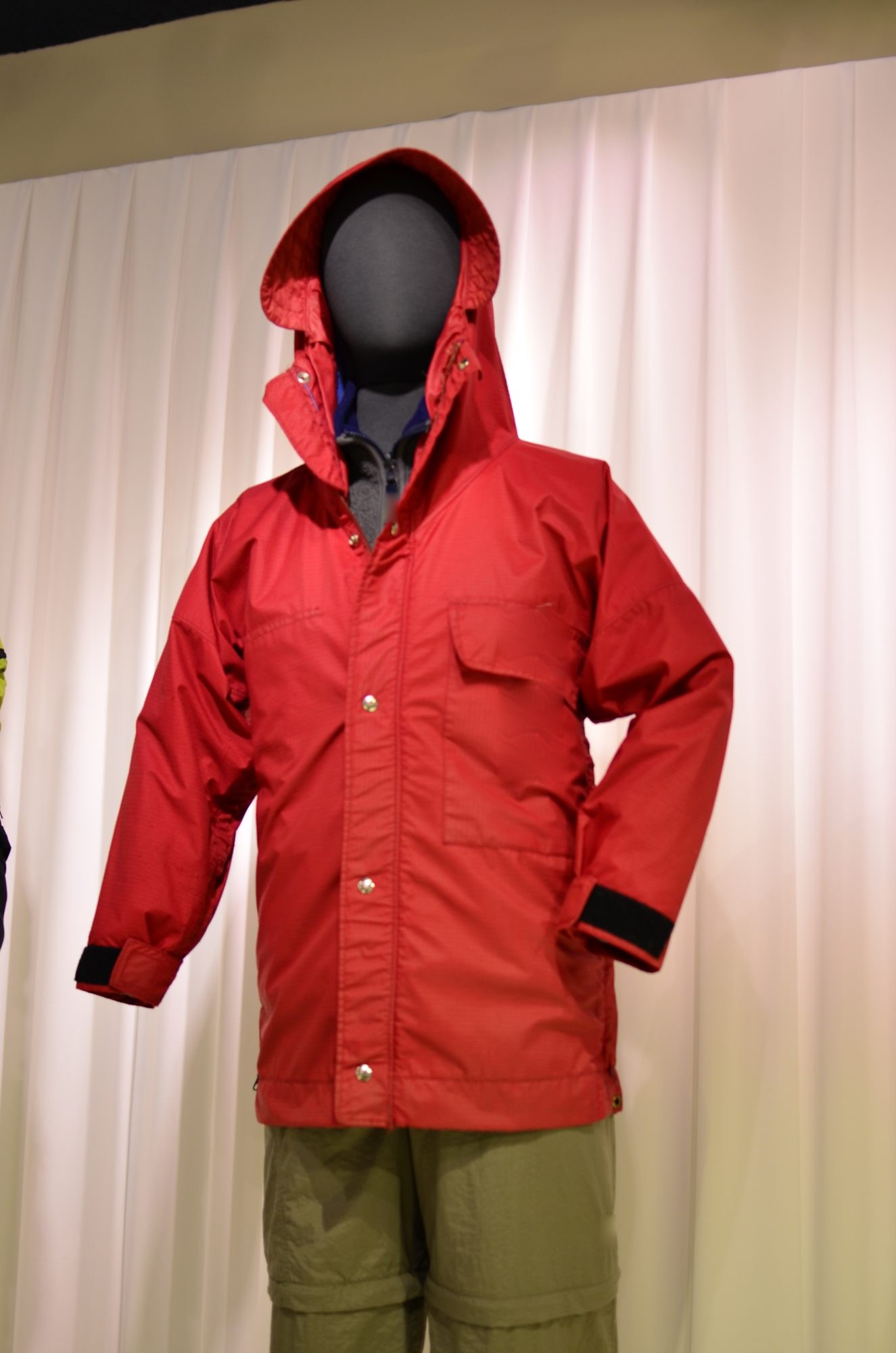
4. Gore‑tex®
Invented in 1969, Gore-tex® is a fabric created from stretched Teflon (also known as polytetrafluoroethylene). This fabric can be made incredibly durable and is used in a wide range of camping equipment and parts of the space program and medical replacements. Gore-tex® is so water-resistant that the U.S. Marine Corps used it for their field rain jackets by the mid-1990s. Many appreciate Gore-tex® not just for the toughness and water resistance but the fact that it also allows for quite a bit of breathability. This helps items, and people both dry off easier underneath and stay cooler while moving.
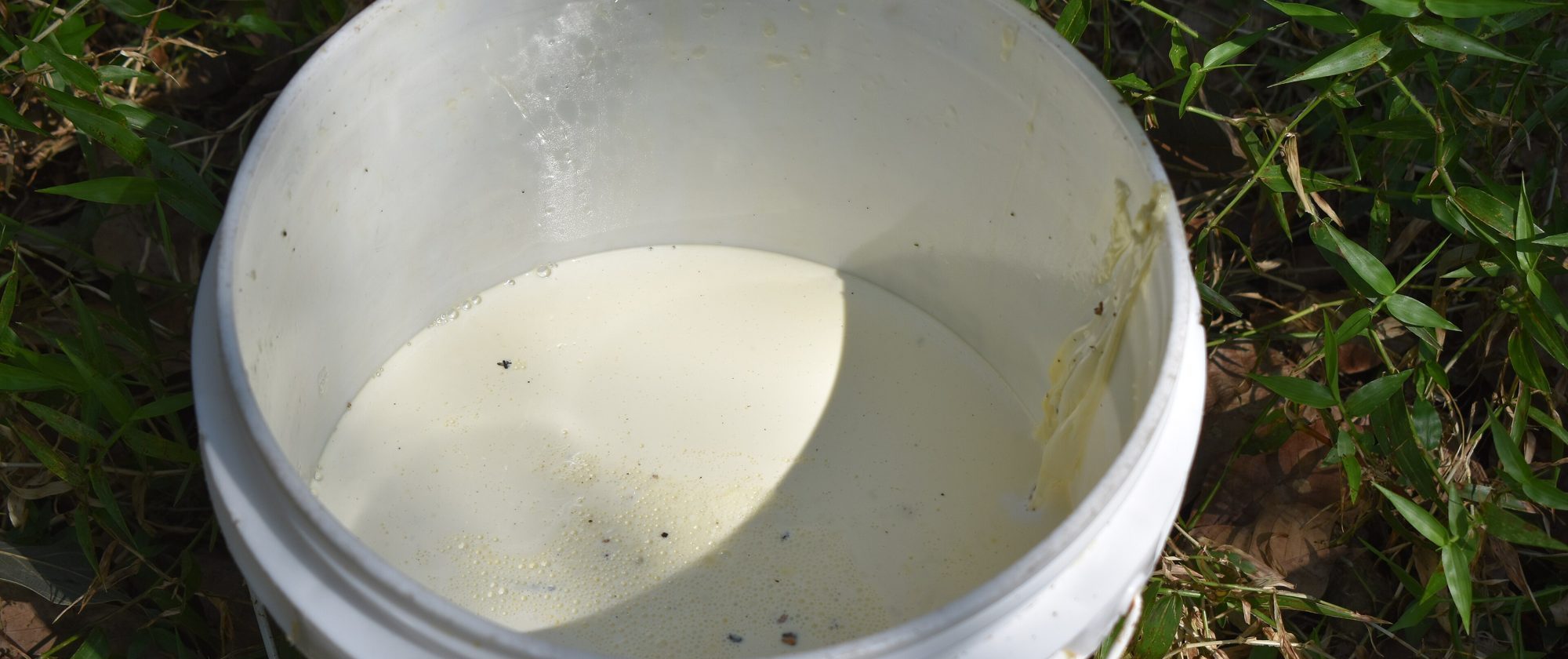
5. Oilcloth
Sometimes called enameled cloth, oilcloth is traditionally made by taking cloth and coating it in boiled linseed oil. This coating can make the fabric stiffer but much more resilient to the elements. For this reason, waxed cotton eventually replaced most oilcloth in clothing.
6. Natural rubber and latex
Latex refers to both synthetic rubber products as well as the natural milky fluid of the rubber tree. Both variations can provide strong water protection but require a skilled hand to make comfortable clothing. Clothing is only a small sample of what latex is used for, from gloves to seat covers; there is no shortage of latex products.
7. Other membraned or coated fabrics
In many cases, a typically non-waterproof fabric will be coated in a polymer like PTFE or PU. The result will be a hybrid material that retains some of the characteristics of the original fabric but with a thin element-proof surface. There are a considerable amount of these creations out there, and many companies have proprietary versions. These fabrics are used in many things ranging from clothing and bags to semi-permanent tents.
At CarCovers.com, our AllGuard Platinum Shield outdoor car cover is treated with polyurethane to ensure it is water-resistant yet breathable. The coating helps repel water, and the breathable design lets trapped moisture escape, which can help limit mold and mildew.
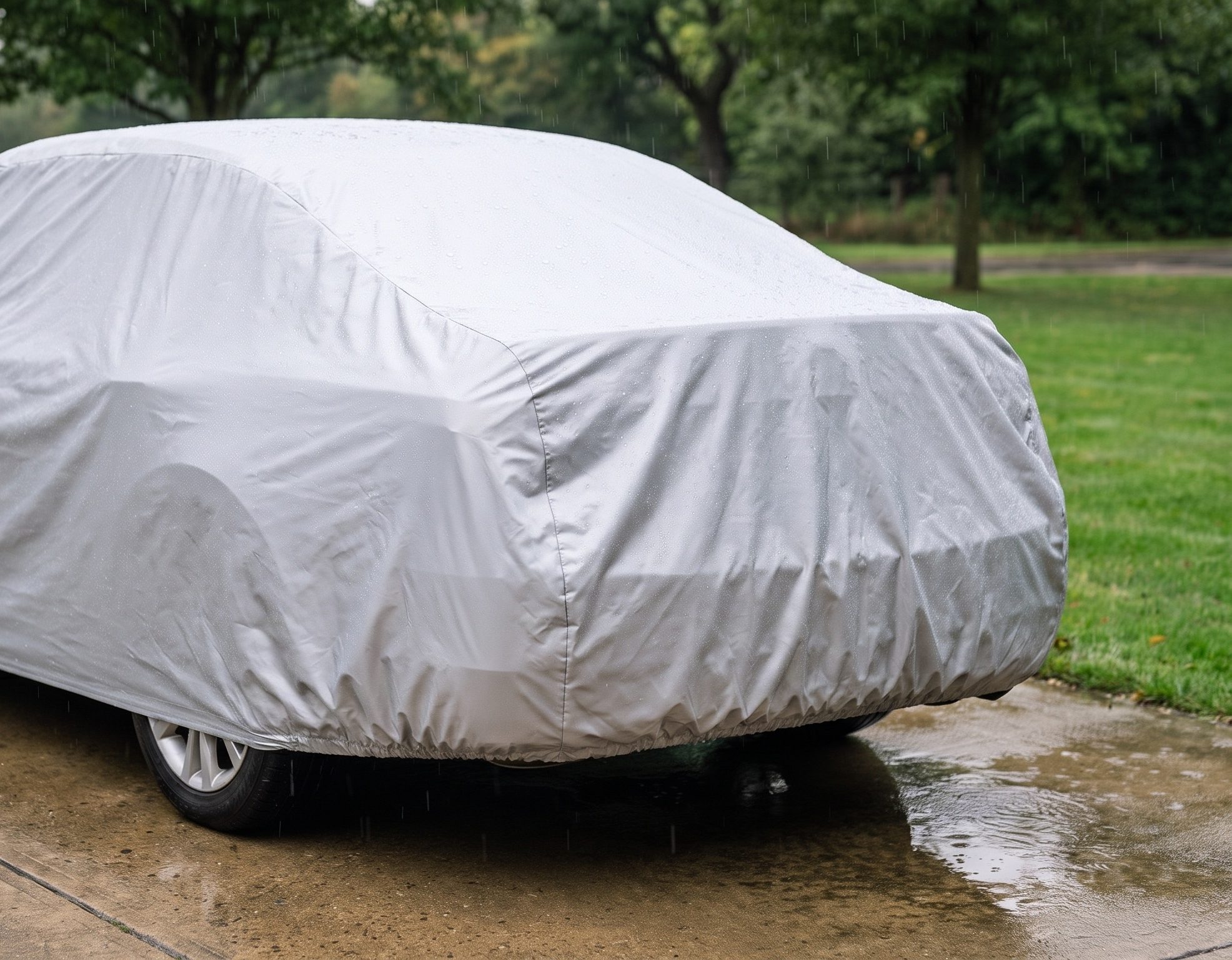
Protect your vehicle from water damage with an all‑weather car cover
Water-resistant fabrics have numerous applications, including vehicle protection. At CarCovers.com, our all-weather car rain covers help protect your car or truck from unsightly watermarks to help keep your vehicle looking its best. Explore our range online and use our convenient search tool to find a cover matched to your car’s make and model.
Sources (14)
- Gore-Tex was invented in 1969 from stretched PTFE; it blocks liquid water and lets vapor through; ePTFE is used in space suits and medical implants. en.wikipedia.org
- The U.S. Marine Corps moved to Gore-Tex wet-weather gear by the mid-1990s. en.wikipedia.org
- Ventile is a close-woven ELS cotton whose fibres swell when wet; below a hydrostatic head of 1,000 mm a fabric is technically not waterproof; Ventile scores 750 to 900 mm. en.wikipedia.org
- Wool can absorb almost one-third of its weight in water; wool fibres take up water. en.wikipedia.org
- Lanolin helps sheep shed water. en.wikipedia.org
- Vinyl records are molded PVC; traditional PVC starts to distort in heat at about 60°C (140°F). en.wikipedia.org
- Sea Island cotton was grown on the Sea Islands and lost to the boll weevil; American Pima ELS cotton is grown chiefly in California (as of 2005). en.wikipedia.org
- Oilcloth is cloth coated in boiled linseed oil; waxed cotton gradually replaced it, especially for clothing; oil-coated cloths were stiff in the cold. en.wikipedia.org
- Natural rubber repels water in most of its useful forms. en.wikipedia.org
- Polyurethane laminate cloth is used as a water barrier and breathes somewhat. en.wikipedia.org
- Moisture control is the key to mold control. epa.gov
- Latex is a milky fluid found in nature, not plant sap; synthetic latices are common as well; latex gloves are a common product. en.wikipedia.org
- Hydrostatic head is the height of a water column a fabric holds back before water seeps through, and no more. en.wikipedia.org
- AllGuard Platinum Shield: polyurethane and UV treatment, breathable, water-resistant. carcovers.com
Photo: Schwede66, Wikimedia Commons, CC BY-SA 3.0; Photo: Forest and Kim Starr, Wikimedia Commons, CC BY 2.0; Photo: Joe Mabel, Wikimedia Commons, CC BY-SA 4.0 (badges retouched out); Photo: Vis M, Wikimedia Commons, CC BY-SA 4.0 (cropped). The wool, cotton and jacket photos are resized and shown cropped to fit the page layout.