Park outside long enough and it happens: a white and dark splatter on the hood that was not there the night before. The usual advice is to get it off fast, but few people explain why the timing matters, or whether the acid is really what does the damage. Ford tests its paint against exactly this mess: its lab sprays synthetic bird droppings onto test panels and ages them in an oven. Lab work elsewhere suggests two things most advice gets wrong: the acid is not the main culprit, and heat makes the damage worse.
- The white part is uric acid, the bird equivalent of urine, as Ford put it in a 2020 release on its paint tests.
- Acid is not the main culprit, and heat makes it worse. Autoglym found acidity made negligible difference to the damage and blames the paint softening in the sun and setting around the dried dropping. A peer-reviewed coatings study points to enzymes in the droppings instead, with damage growing as the temperature rose.
- There is no reliable "X hours" countdown, so we do not give one. The rule is sooner, especially in strong sun.
- Lift it gently with a sponge, lukewarm water and a neutral pH car shampoo, as Ford advises, and wax the paint once or twice a year.
What a dropping is actually made of
Start with what is sitting on the paint. Ford, explaining its own paint tests, says the white part of a dropping is uric acid, the bird equivalent of urine, formed in the urinary tract. The darker part is the droppings proper, made in the digestive system. Birds can pass both at the same time, so quickly that the two do not have time to mix. So yes, there is acid in it. The more useful question is whether the acid is what marks the paint, and on the evidence below, it is not the main culprit.
Why heat seems to matter more than acid
The "bird poop test" is one of several ordeals Ford of Europe puts its paint samples through. Synthetic droppings, formulated to reflect the differing diets and acidity of most of Europe's birdlife, are sprayed onto test panels. The panels are then aged in an oven at 104, 122 and 140°F (40, 50 and 60°C) to replicate customer use in extreme heats, pushing the paint corrosion protection to its limits. Ford's explanation of why spring and summer are particularly hard on paint: there are often more birds about, and paint can soften and expand under intense sunlight. When it cools it contracts, and any grime, droppings included, attaches itself to the surface. Left on the car, that can leave a permanent impression that needs specialist treatment to remove.
Autoglym, the car-care maker, points the same way from its own lab work. Its researchers tested bird-dropping substitutes with various acidity levels and found negligible differences in the damage caused. Texture mattered more: grainier droppings left a duller mark once the paint set around them. What it describes instead is a heat cycle. In direct sun, the clear coat softens and expands while the heat dries and hardens the dropping. As temperatures fall, especially overnight, the clear coat cools, contracts and molds around it. Acid is part of a dropping's chemistry, but on Autoglym's tests it is not the main thing marking your paint. Coatings researchers who tested real droppings and a synthetic equivalent on car clear coat reached the same verdict on acid by a different route: enzymes in the droppings did most of the etching, and the damage grew as the temperature rose to 60°C (140°F).
Why you won't find an hours countdown here
Search around and you will find a precise number of hours quoted for how long a dropping takes to mark paint. We could not trace any of those figures to a published measurement. Coatings labs, Ford's among them, have tested real and synthetic droppings on clear coat. But a test panel is not a hood in the sun, so none of that work gives a countdown for your car. André Thierig, who manages core engineering paint at Ford of Europe, put the practical rule simply: "It's wise to remove it before it gets too baked on." Autoglym's advice is the same: remove droppings as soon as possible. So the rule here is the sooner the better, especially in strong sun. A dropping that sits through a hot day and a cool night has been through exactly the heat-and-cool cycle Ford and Autoglym describe.
Getting it off safely
The cleaning itself is simple. The two things worth getting right are using the right products and not waiting.
Lift it off while it is fresh
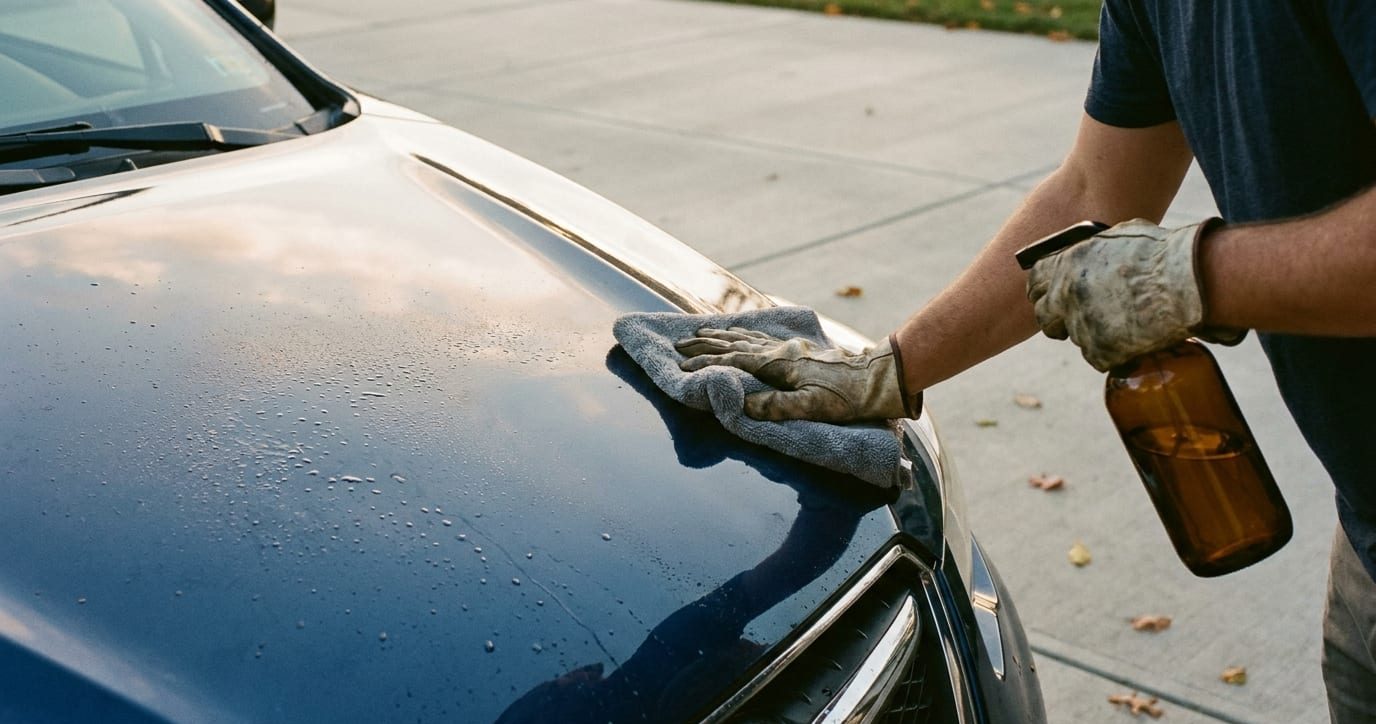
Ford's advice is a sponge and lukewarm water with a neutral pH car shampoo, used gently, as soon as you spot it. If the panel is hot from the sun, move the car into shade or let it cool first: Consumer Reports advises against washing a hot body, because heat dries the soap and water too fast. If the dropping has already dried hard, Autoglym suggests laying a moist cloth over it for ten minutes to soften it, then lifting it off gently rather than scrubbing. Throw the cloth or wipe away and wash your hands afterward, since bird droppings can carry disease.
Skip the household cleaners
Consumer Reports' advice is to keep household cleaners like hand soap, dishwashing detergent and glass cleaner off the paint: they are not formulated for it and may strip the protective wax. Use a dedicated car-wash product, then rinse and dry the spot the way you would the rest of a wash.
If it already left a mark
A dull or distorted spot that a normal wash will not shift is the kind of permanent impression Ford describes, and Ford says it needs specialist treatment to remove. That is a job for a detailer or body shop, not a home remedy. Catching the next one early is what keeps it from getting this far.
Keeping it from happening again
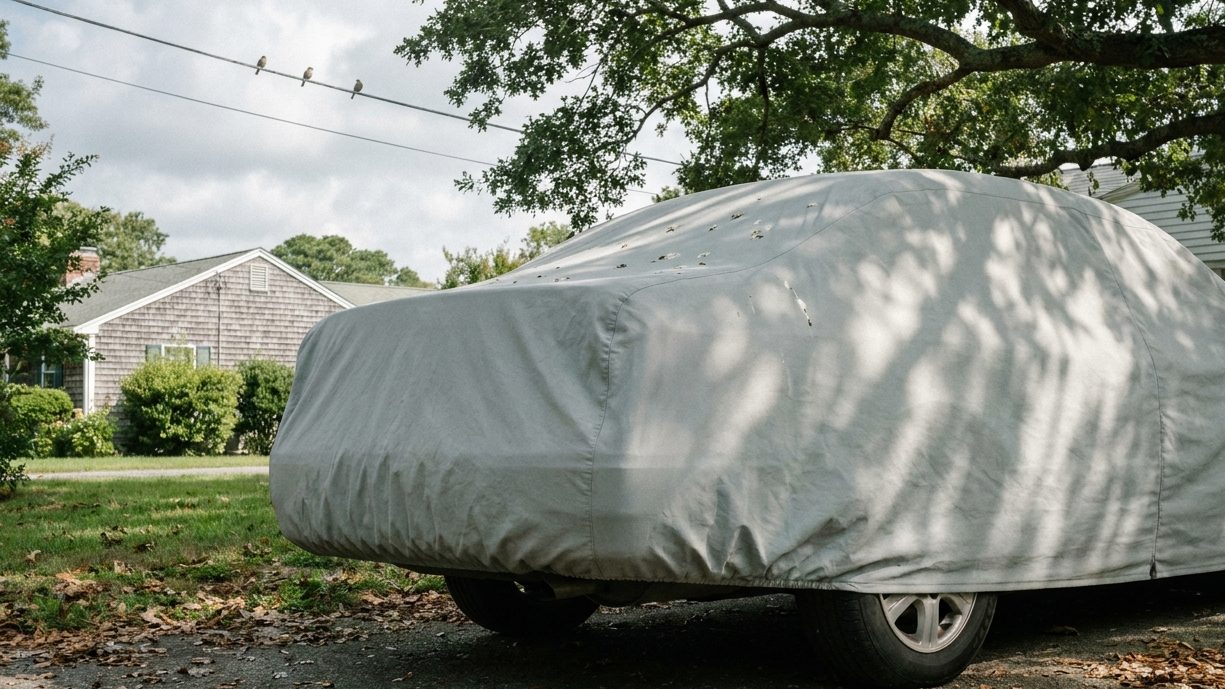
Two habits help. Wax the paint: Ford's advice is that waxing painted surfaces once or twice a year helps new paint finishes better resist harsh attacks and stay shiny longer. And think about where the car actually sits. A spot under a branch or a power line where birds perch tends to collect more droppings than open pavement. Moving it even a few car-lengths can mean fewer mornings like the one that sent you looking for this page.
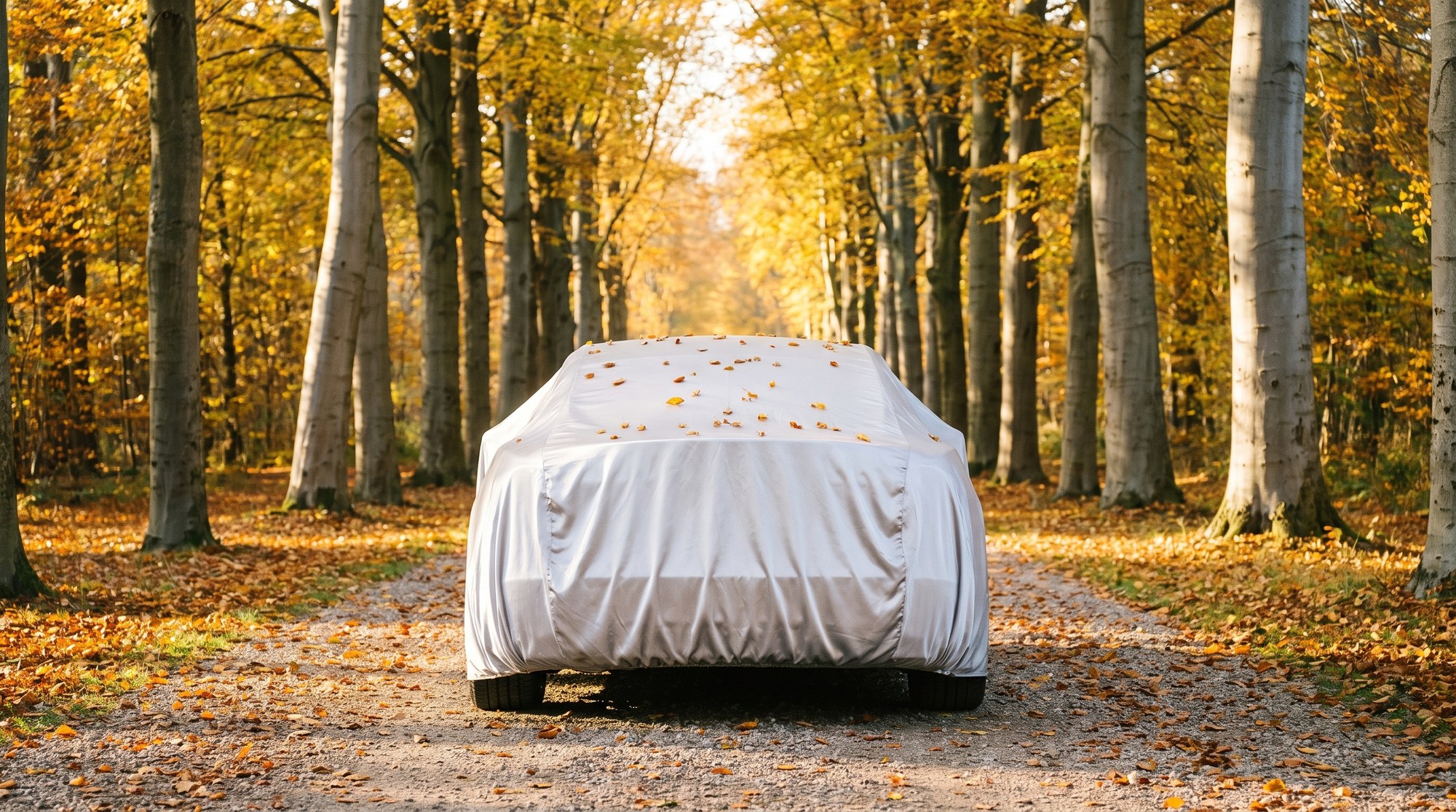
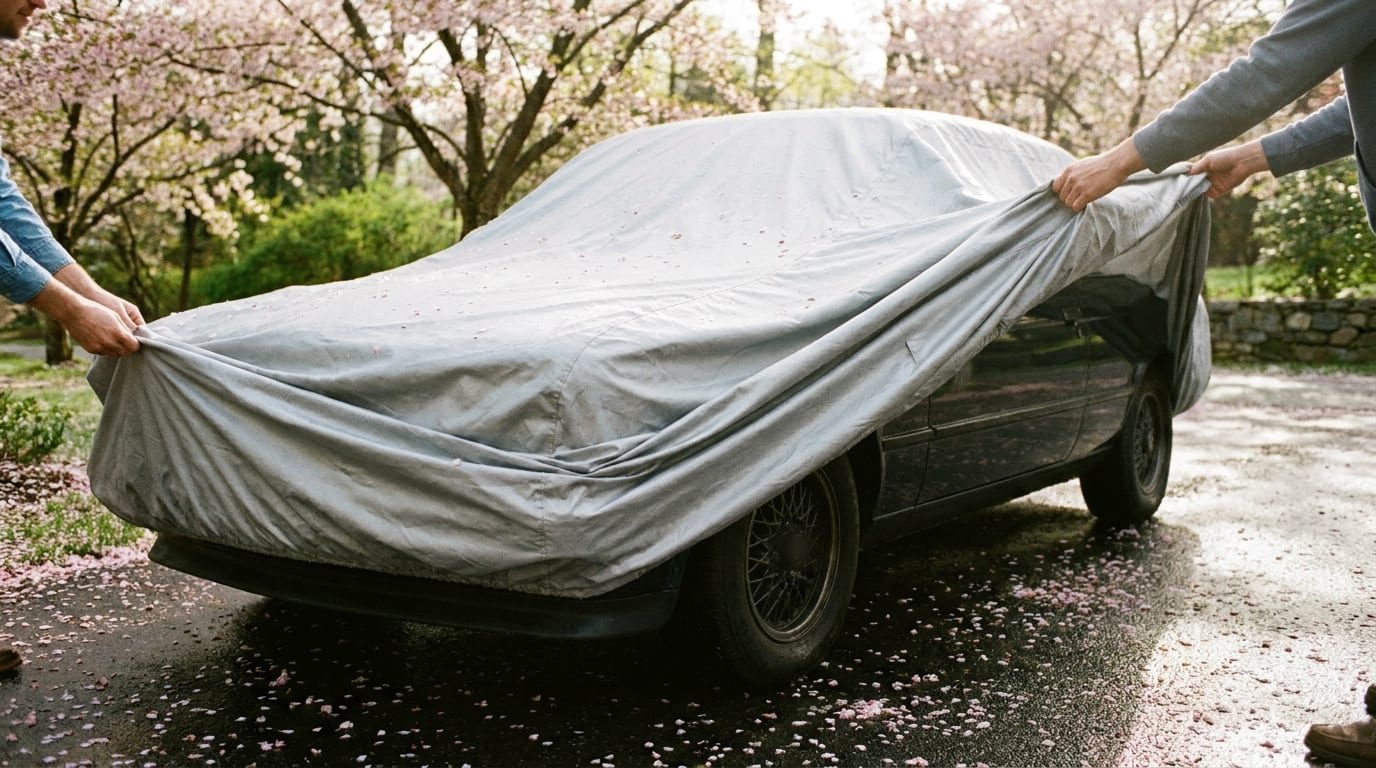
When moving the car is not an option, a cover does the same job. Sap, pollen and droppings land on the cover, not your clear coat, and the cover is what gets cleaned. Our page on covers for cars parked under trees shows which grade fits.
See how every season treats a parked car
Questions owners ask
Does bird poop actually damage car paint?
It can. Ford explains that intense sunlight can soften and expand paint, which then contracts as it cools and grabs onto whatever grime, droppings included, is sitting on it. Left on the car, that can leave a permanent impression that needs specialist treatment to remove.
Is it the acid in bird droppings that causes the mark?
Less than most people assume. Autoglym tested dropping substitutes at various acidity levels and found negligible differences in the damage, and a peer-reviewed coatings study found enzymes in the droppings, not their acid, did most of the etching. Both point the same way on timing: heat makes it worse, so get it off soon.
How long can I leave it before it marks the paint?
We could not find a verified number, so we do not give one. Ford's paint engineering manager puts it as removing it "before it gets too baked on", and Autoglym says to remove droppings as soon as possible. The sooner the better, especially in strong sun.
What is the right way to clean bird droppings off a car?
Ford's advice is a sponge and lukewarm water with a neutral pH car shampoo, used gently, as soon as you see it. If it has dried hard, Autoglym suggests laying a moist cloth over it for ten minutes to soften it first. Skip household cleaners like dish soap or glass cleaner, which Consumer Reports says may strip the wax, and wash your hands afterward.
Will a car cover stop bird droppings from reaching the paint?
It gives them somewhere else to land. With the cover on, droppings, sap and pollen sit on the cover instead of the clear coat, and the cover is what gets cleaned, not the paint underneath.
Give it a cover that takes the hit instead.
A UV-treated microporous film and a fleece liner, built for a car parked outside all season. Droppings, sap and pollen land on the cover, not your clear coat. Matched to your exact car.
Sources (6)
- Ford of Europe's paint testing: the white part of a dropping is uric acid, the bird equivalent of urine; synthetic droppings reflecting different diets and acidity are aged at 40, 50 and 60°C (104, 122 and 140°F) to replicate use in extreme heats, pushing the paint corrosion protection to its limits; panels sprayed with phosphoric acid and detergent, and with synthetic pollen, are aged at 60 and 80°C (140 and 176°F) for 30 minutes; paint softens and expands in intense sun and contracts as it cools, and droppings left on can leave a permanent impression that needs specialist treatment; wash with a sponge, lukewarm water and neutral pH shampoo; wax once or twice a year; André Thierig: "It's wise to remove it before it gets too baked on." web.archive.org
- A live republication of Ford's release: uric acid; synthetic droppings aged at 40, 50 and 60°C; paint softens and expands in sunlight and contracts as it cools; permanent impression needing specialist treatment; sponge, lukewarm water and a neutral pH cleaner; waxing once or twice a year. journal.classiccars.com
- Autoglym's researchers tested bird-dropping substitutes with various acidity levels and found negligible differences in the damage caused; texture mattered more, grainier deposits causing greater light distortion (dullness) once the paint molded around them; the damage comes from the paint lacquer softening and expanding in the sun, then contracting and molding around the dried dropping as it cools; remove droppings as soon as possible; for a dry or stubborn deposit, place a moist cloth over it for ten minutes; wash your hands afterward, as droppings can carry diseases. autoglym.com
- Don't use household cleaning agents like hand soap, dishwashing detergent or glass cleaner on the paint; they aren't formulated for a car's paint and may strip off the protective wax. Use a dedicated car-wash product. Don't wash the car when the body is hot, such as right after driving or after it has sat in direct sun for a while: heat speeds the drying of soap and water, making washing harder and raising the chance of spots or deposits. consumerreports.org
- Natural bird droppings and a synthetic equivalent (pancreatin) were tested on an automotive clearcoat. Acid and metal ions had a weak contribution to the hydrolysis reaction; enzymes in the droppings were mainly responsible for the hydrolytic degradation. link.springer.com
- Measured pH of droppings 6.25 and of pancreatin 6.3, not acidic enough to hydrolyze the coating; degradation intensity increased with temperature up to 60°C, then fell at 80°C (partial enzyme denaturation); enzymatically induced hydrolysis is believed to be the main mechanism. pcimag.com