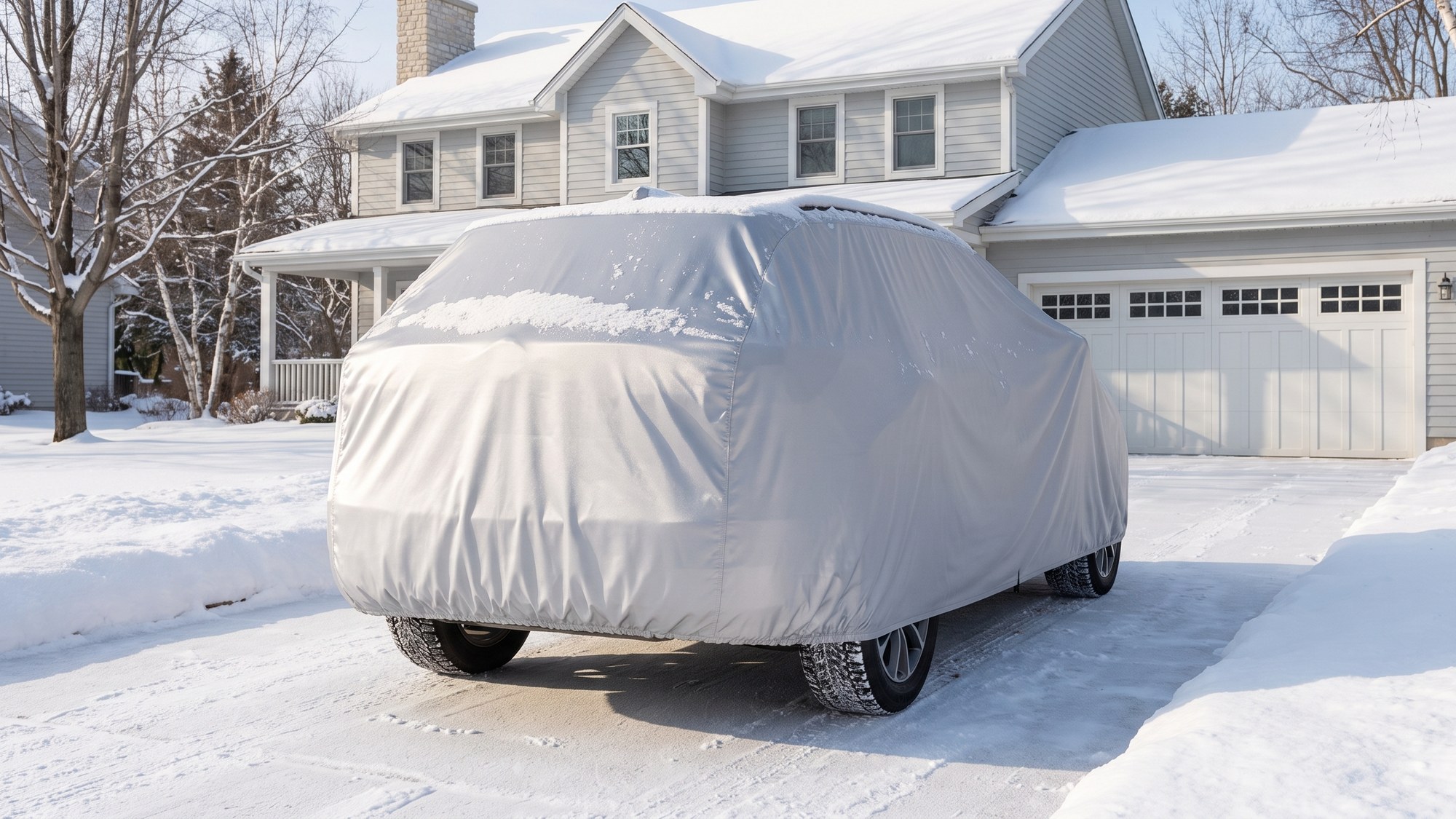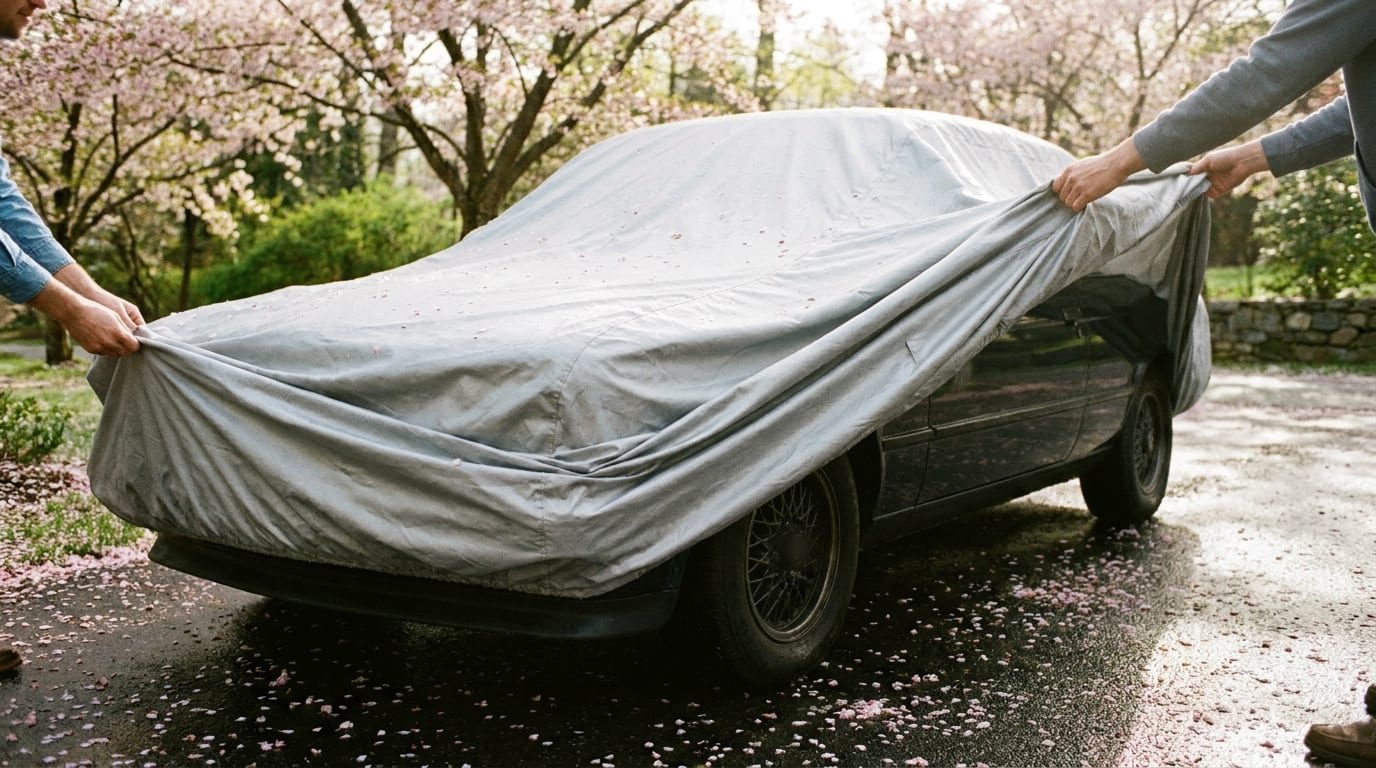
Spring doesn't just bring sunshine. It brings pollen, sap and bird droppings, on top of a winter's worth of road salt underneath the car and brake dust from every drive embedded in the paint. A cover keeps a lot of that off the finish while the car is parked, catching it on the fabric instead of the clear coat. But the car underneath still needs a real reset: a wash that gets past the surface, a decontamination step for what is already bonded on, and fresh protection before the next wave lands.
- Wash the whole car, including the undercarriage. Road salt left under there keeps rusting parts you can't see.
- Pollen, sap and bird droppings are all acidic. Get them off soon, and never wipe pollen off dry: dragged across the paint, it leaves fine scratches.
- Embedded iron doesn't wash out. An iron remover and a clay bar lift what soap leaves behind.
- Wax or seal the clean paint, then park it under a cover matched to your exact car so the next wave lands on the fabric, not the finish.
What's building up right now
None of this is dramatic on its own: a little pollen, one bird, a week of road salt. The problem is how much of it stacks up in a single spring, and how fast some of it turns from dust into damage.
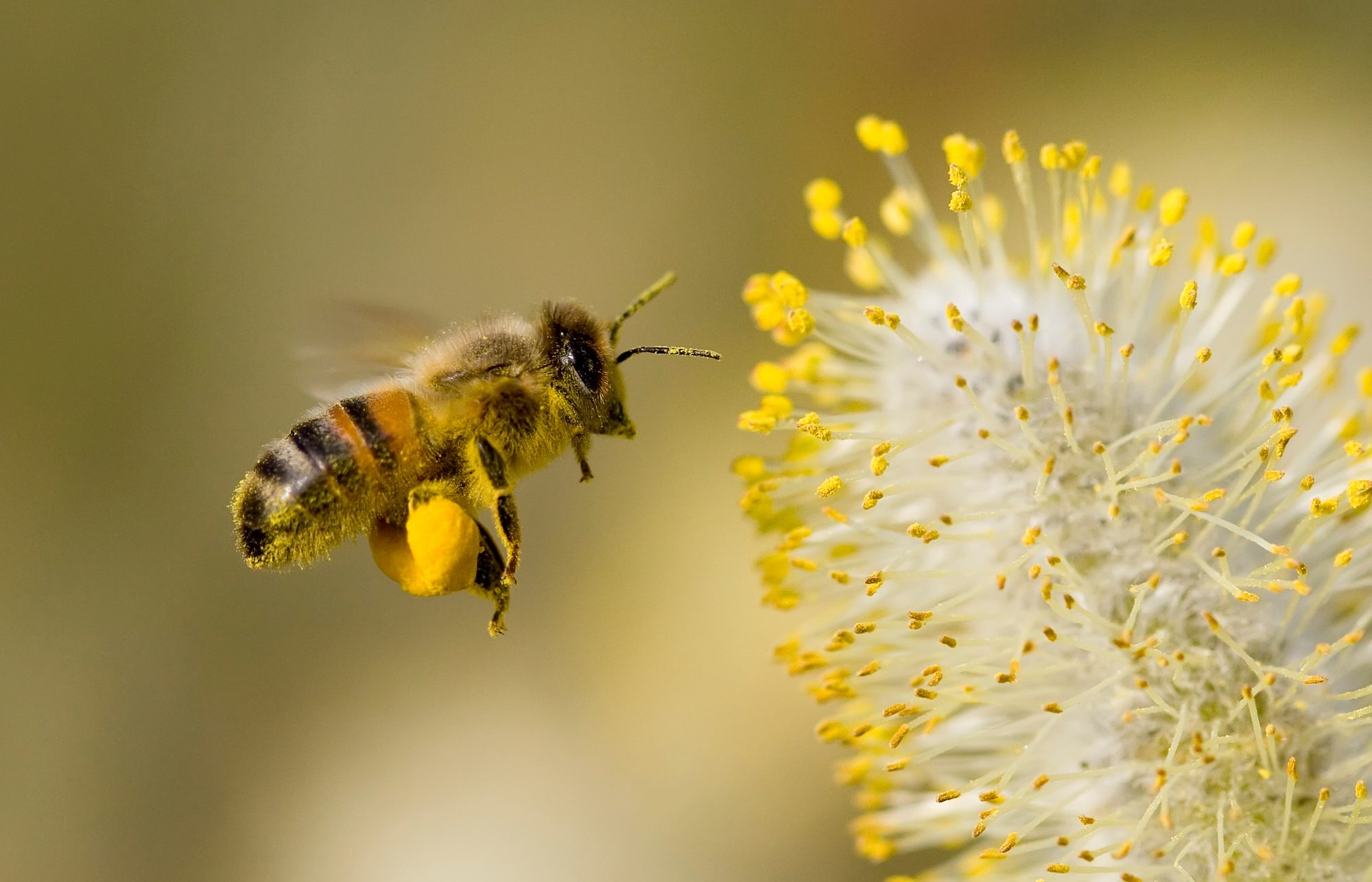
- PollenAcidic, and worse after rain or humid weather. Left to sit, it can etch the clear coat, and wiped off dry it leaves fine scratches.
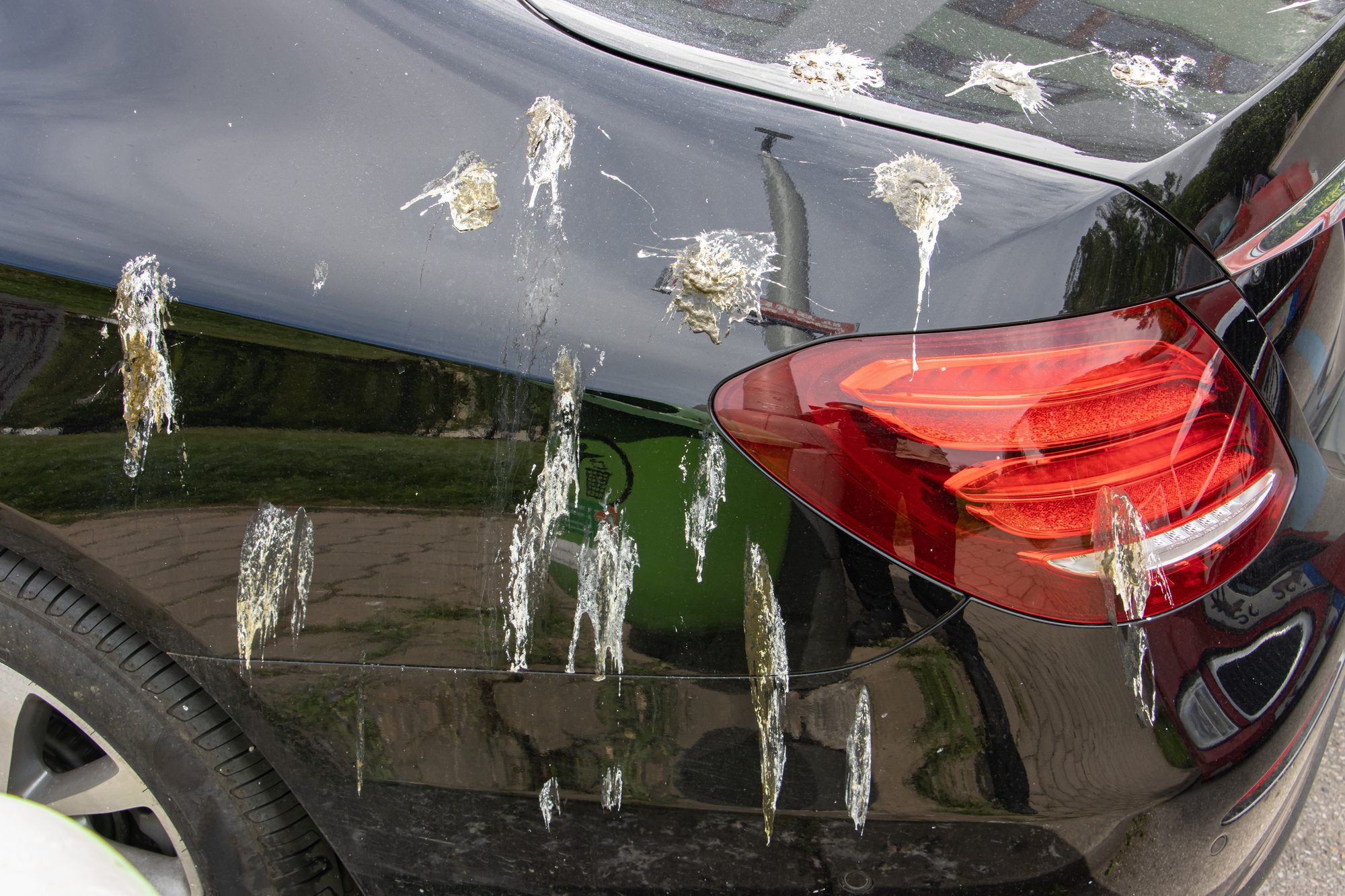
- Bird droppings & sapBoth are acidic. The sun's heat speeds up the damage droppings do, and once they dry they are hard to lift without scratching the paint.
- Iron depositsHot brake dust embeds in the clear coat, and rail dust and industrial fallout do the same near rail lines and industrial areas. Soap washes around it, not out of it.
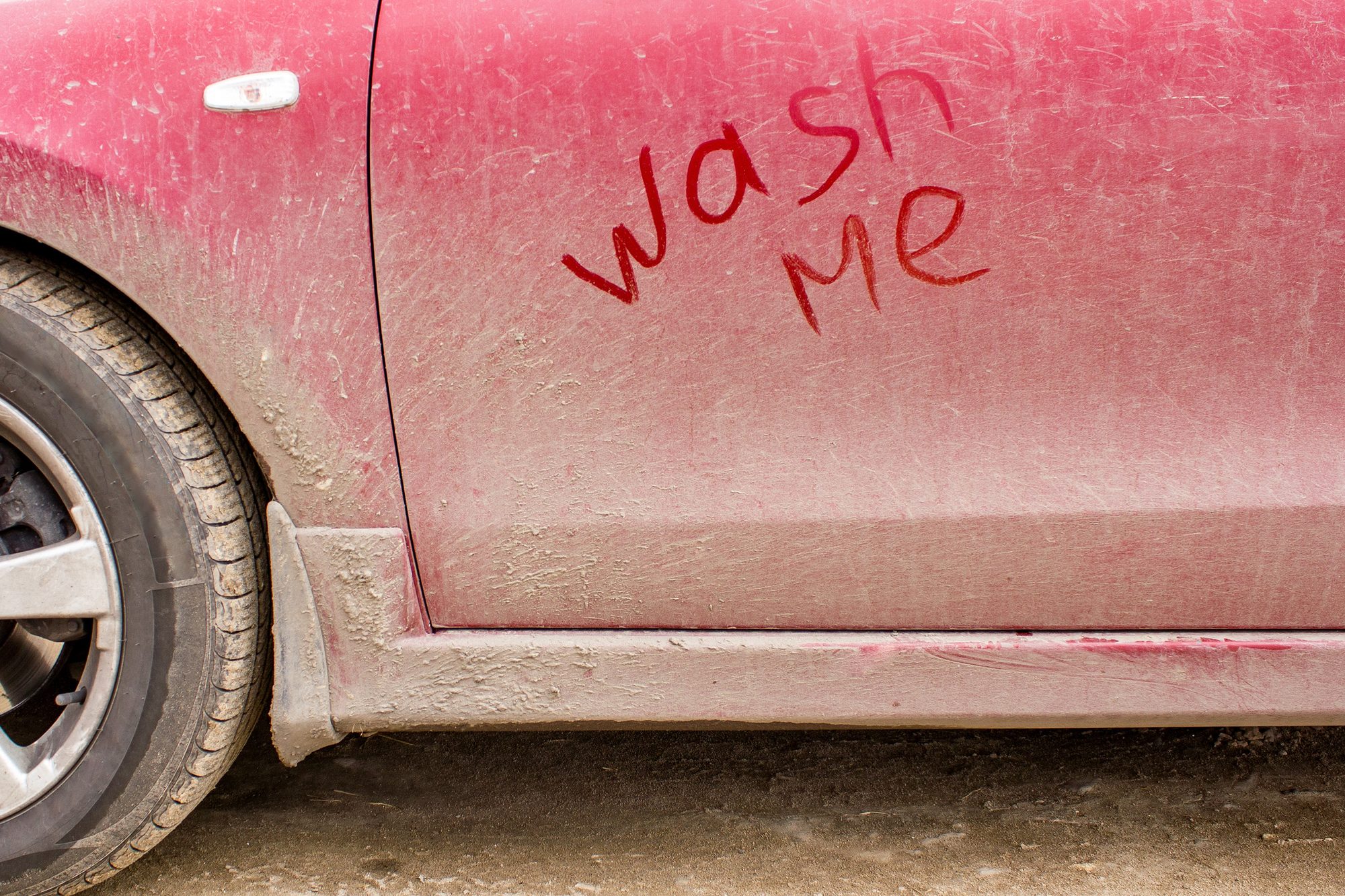
- Mud & rain grimeLeft to build up in layers, it dulls the finish, and the grit in it scratches the paint if it's wiped off dry.
Removal, in the right order
Each step undoes a specific kind of buildup. Skip the decon step and wax goes on over embedded grit instead of clean paint. Skip the undercarriage and the salt stays right where it does the most harm, long after the visible dirt is gone.
Rinse first, then wash with two buckets
Hose the whole car down before any soap touches it. A thorough rinse floats off loose pollen, dirt and grit that a wash mitt would otherwise drag across the clear coat.
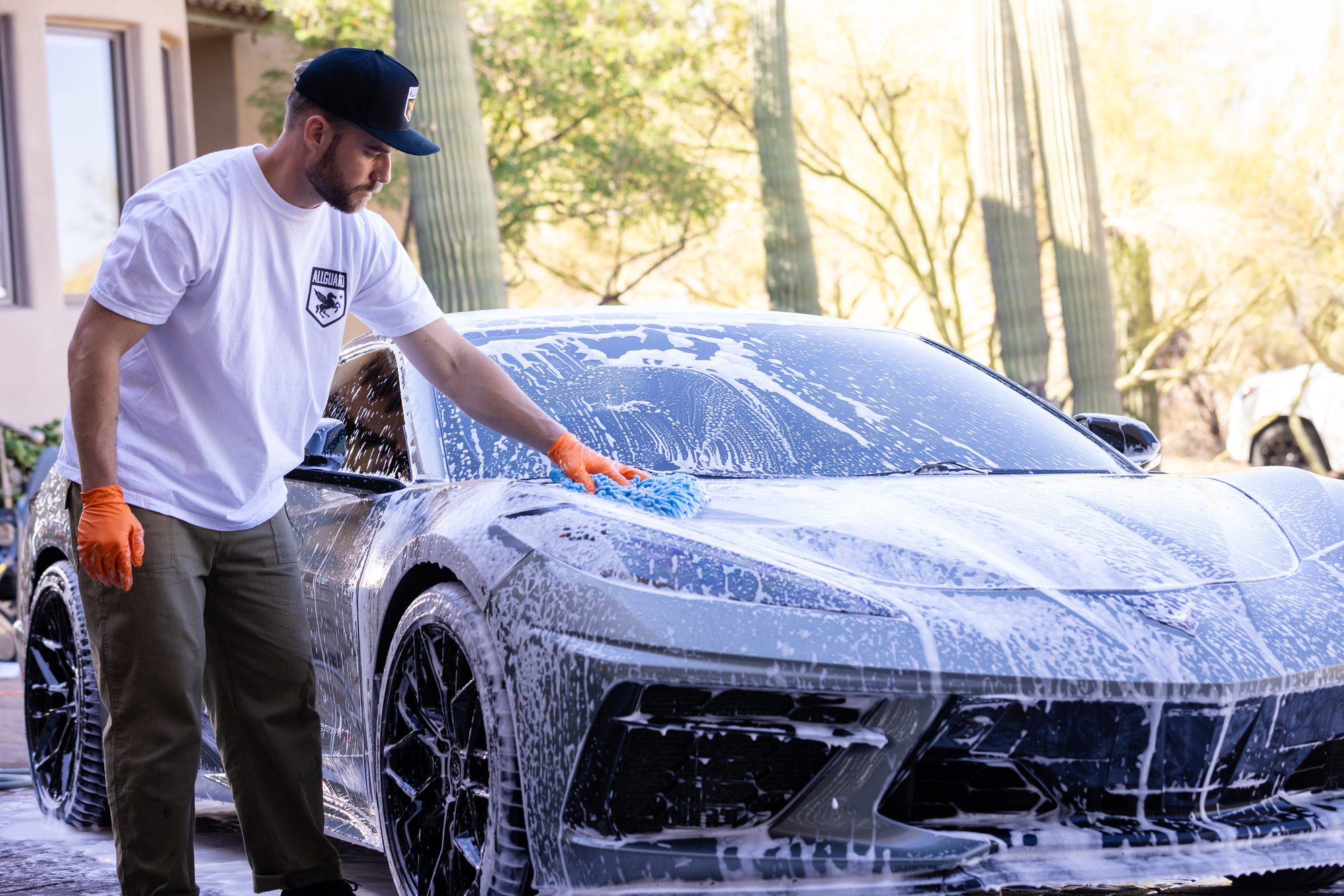
Wash panel by panel with two buckets, one for suds and one for rinsing the mitt, so the dirt you pick up doesn't end up back in the wash water.
TipDon't wash hot paint. Wait until the car has cooled after a drive or a spell in direct sun, or work in the shade.
Give the undercarriage its own pass
Road salt collects underneath all winter, and AAA warns it will keep rusting the underside if it's left there. That rust can weaken brake lines, suspension and structural parts, the kind of damage you won't see from above.
A regular hand wash barely reaches under the car. Angle a pressure washer wand underneath, or use a car wash with an underbody spray, which Consumer Reports calls a worthwhile upgrade for removing salt. At a self-serve bay, don't forget the wheel wells.
Strip the old layer with a decontamination wash
A decontamination soap, often sold as a strip wash, is stronger than a regular car shampoo. It takes off old wax, sealant and dressings, so the steps that follow work on bare clear coat and a clay bar doesn't clog with old wax. Expect it to remove whatever protection is on the paint now. That's the point, and it's why fresh wax goes on at the end.
Use an iron remover and clay on what the wash can't lift
Slip your hand into a clean plastic bag and run it over a clean, dry panel. Clean paint feels smooth as glass. If it feels rough or gritty, contamination is bonded to it, and no wash will lift it out.
An iron remover dissolves embedded iron chemically: spray it on cool, clean paint, give it the time its label calls for, and rinse. Then glide a clay bar over the paint with plenty of clay lubricant to lift what's left. Without lubricant, the clay drags and marks the finish it's meant to clean.
TipMost drivers only need this once or twice a year, according to Chemical Guys. A car parked outdoors in a high-fallout area may need it as often as every three months.
Wax or seal the clean paint
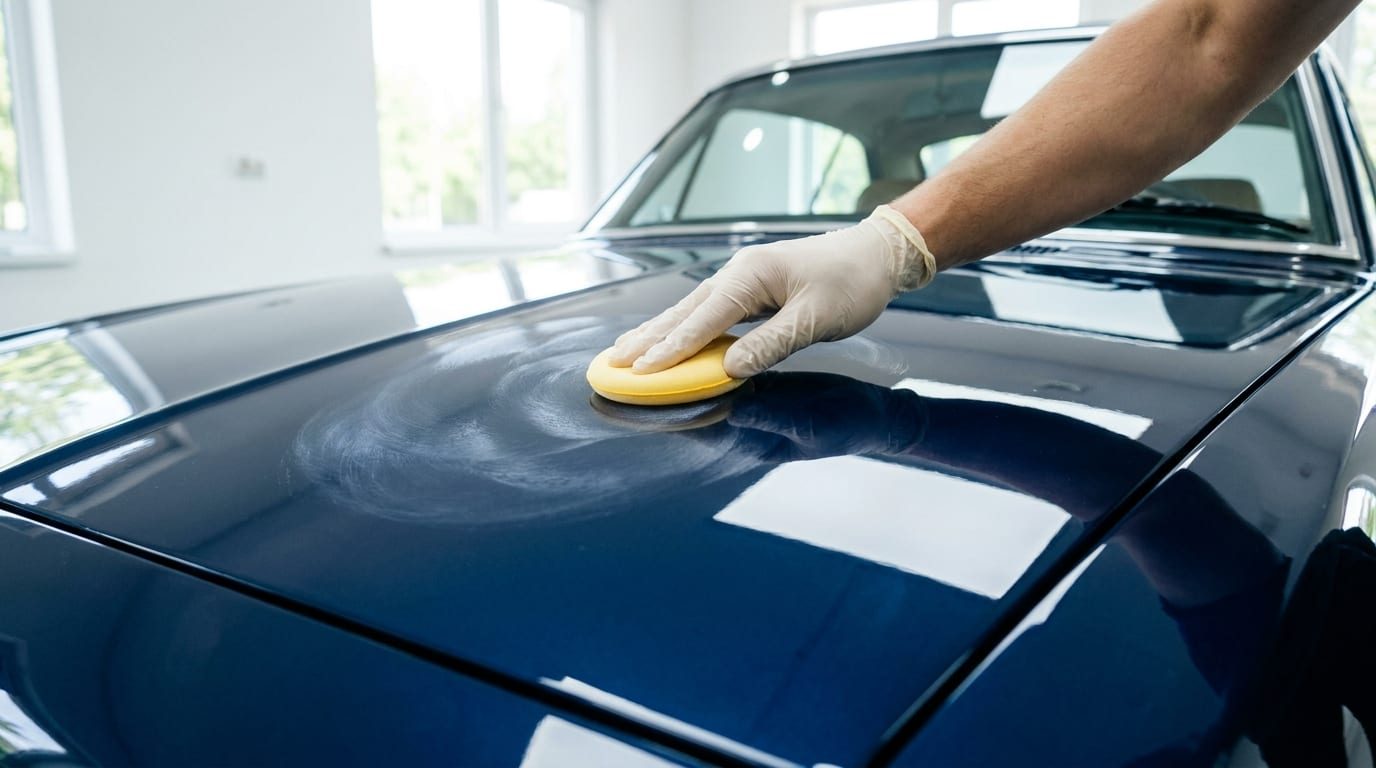
Protection goes on last, over clean, decontaminated, dry paint, following the product's directions. A fresh coat of wax or sealant leaves a slick surface that pollen and grime have a hard time clinging to, and it makes the next wash easier.
It doesn't last all season. Consumer Reports found most waxes it tested lost significant protection within about five weeks, and recommends waxing every two to three months.
Do the interior too
Spring sun gets stronger by the week, and it works on the inside of the car too. Vacuum out the sand, salt and mud tracked in over the winter, then wipe down the seats, floor mats and dash. Finish the plastic and vinyl with an interior protectant that has UV inhibitors. UV breaks down the polymers in dashboard plastic, leaving it dry, brittle and faded, and summer heat drives out the plasticizers until it cracks. A windshield sunshade cuts the exposure further.
The cover is the easy part
Once the paint is clean, decontaminated and protected, the easiest way to keep it that way is to keep the next wave of pollen, sap and grit off it while it's parked. That's the whole job of a cover: it takes the hit instead of the clear coat.
Questions owners ask
How often should I wash my car in spring?
Often enough that pollen, sap and droppings never get a chance to sit. AAA's rule of thumb through salt season is at least every two weeks, more after heavily salted roads. The deeper steps come far less often: most drivers only need a clay bar once or twice a year, and Consumer Reports recommends waxing every two to three months.
Can I skip the clay bar if I wash the car regularly?
Washing lifts loose dirt, but embedded iron from brake dust, rail dust and industrial fallout stays put, because soap only cleans around it. If the paint still feels gritty through a plastic bag after a wash, it's time for an iron remover and a clay bar.
Will a car cover keep pollen and bird droppings off the paint?
While it's on, yes: they land on the fabric instead of the clear coat. It can't help while the car is out on the road, and the cover itself needs an occasional shake-out or wash. Put it on over a clean, dry car.
Is a garden hose enough for the undercarriage?
It helps, but it's hard to reach far under the car with one. A pressure washer wand angled underneath does better, and Consumer Reports calls a car wash's underbody spray a worthwhile upgrade for removing salt. At a self-serve bay, spray the wheel wells and undercarriage too.
Can I wax over pollen or dried mud?
No. Wax goes on clean paint. Rubbing an applicator over pollen or grit drags it across the finish and scratches it. Wash first, and decontaminate if the paint still feels rough, so the new coat bonds to clean clear coat.
Wash it clean, then keep it that way under the right cover.
A cover matched to your exact car catches the next wave of pollen, sap and grit on the fabric while the car is parked. Satin Protect indoors, the Platinum Shield outdoors.
Sources (14)
- Bird droppings can mark the finish, especially after they sit through a day of hot sun; once dry they are hard to scrub off, and scrubbing can scratch the paint. xpel.com
- Soak bird droppings with car shampoo, waterless wash or quick detailer until they soften, then dab them off rather than dragging a cloth; droppings can etch surprisingly fast in sunlight. carwow.co.uk
- Pollen is acidic and worse after rain or humid weather; left to sit it can etch the clear coat, brushing it off carelessly leaves swirls and micro-scratches, never dry wipe it; fresh wax or sealant gives pollen a surface it has a hard time clinging to. chemicalguys.com
- Tree sap is acidic and puts paint at risk; salt left on the underside will cause it to rust if left unchecked. acg.aaa.com
- Fresh sap often comes off with car wash soap and a microfiber cloth; a bug and tar remover breaks down stubborn sap; spot-test it first and re-wax afterward to replace wax it removed. turtlewax.com
- Hot brake dust embeds in paint, and rail dust and industrial fallout do the same near railway lines and industrial areas; standard wash soap cleans around embedded iron rather than removing it; apply iron remover to cool, clean paint, rinse, then clay. chemicalguys.com
- Clay removes bonded contamination no wash can lift; the plastic-bag test (smooth as glass vs rough and gritty); clay needs lubricant or it mars the paint; once or twice a year for most drivers, quarterly for high-contamination or outdoor parking. chemicalguys.com
- A strip wash removes previously applied waxes, sealants and dressings; without it those layers clog a clay bar. adamspolishes.com
- Rust from road salt can weaken structural parts, brake lines and suspension; use car washes with underbody sprays; wash at least every two weeks, more after heavily salted roads. newsroom.acg.aaa.com
- A car wash underbody spray is a worthwhile upgrade to remove salt; salt-driven rust can damage braking, steering, suspension and fuel-system parts; at a self-serve wash, spray the wheel wells and undercarriage. consumerreports.org
- Rinse all surfaces first to remove loose dirt that could scratch; a separate bucket to rinse the sponge keeps dirt out of the wash water; don't wash when the body is hot after driving or sitting in direct sun. consumerreports.org
- Most waxes tested showed a significant loss of protection within about five weeks; wax every two or three months. consumerreports.org
- Road salt collects on the undercarriage; vacuum out sand, salt and mud tracked in over winter and wipe down the seats, floor mats and dashboard. acg.aaa.com
- UV rays degrade the polymers in dashboard plastic, leaving it stiff, brittle and discolored; heat drives out plasticizers until it cracks; protectants with UV inhibitors and a windshield cover limit exposure. turtlewax.com