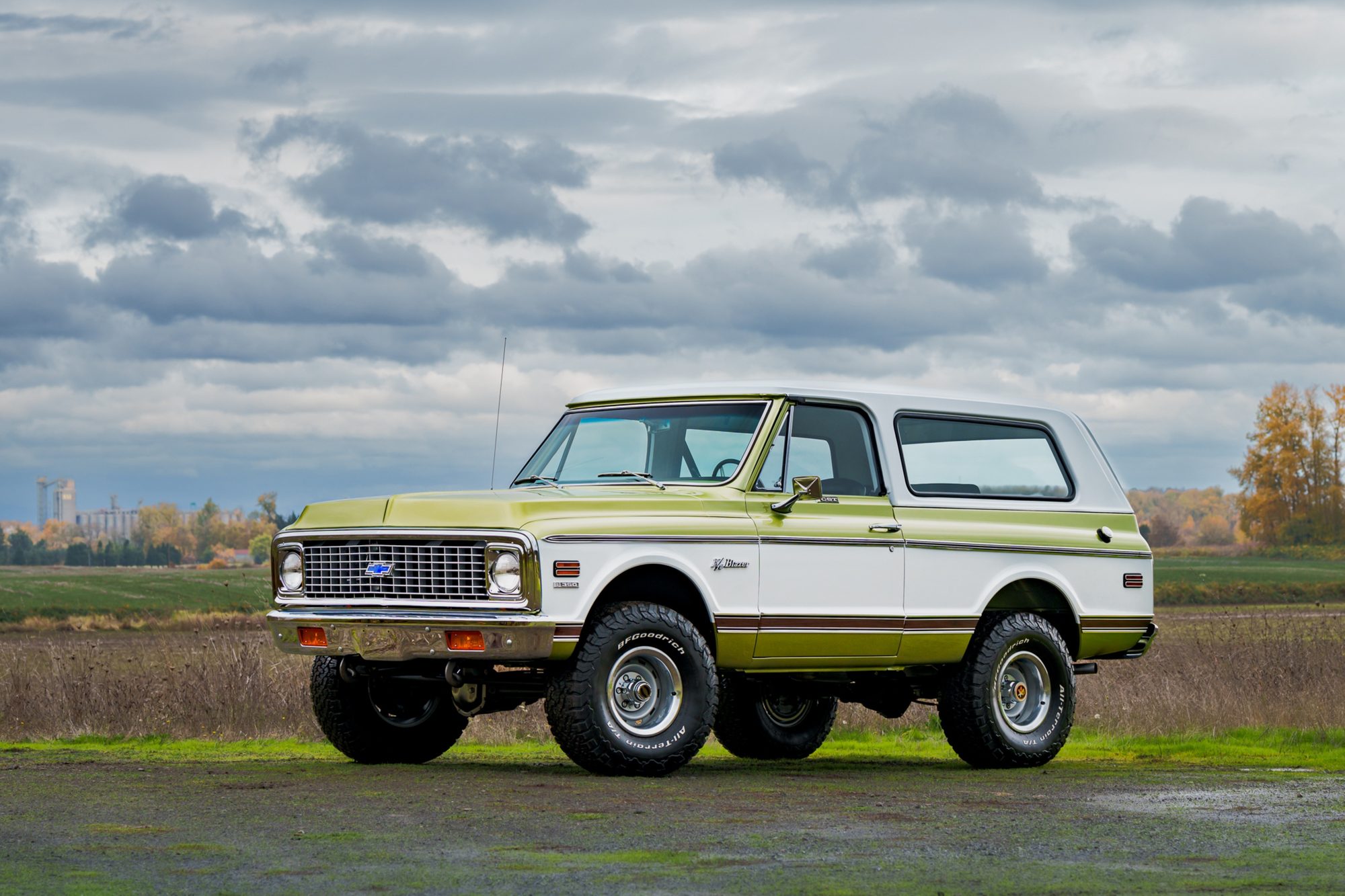
By 1969, International Harvester had been selling the compact Scout since 1960 and Ford had sold the Bronco since 1966, both built to take on Jeep's small CJ. Chevrolet's answer, the K5 Blazer, did not try to out-compact either one. It was built on a shortened version of the half-ton K10 pickup, which made it larger than both rivals, and for its first seven model years the entire roof could come off, turning a full-size 4x4 into an open truck.
- Chevy launched the K5 Blazer for 1969 against the Ford Bronco (on sale since 1966) and the International Harvester Scout (since 1960), but went full-size, building it on the half-ton K10 pickup with the wheelbase cut from 115 to 104 inches.
- Early Blazers could be ordered with a removable fiberglass hardtop or a soft convertible top. The fully removable roof outlasted the 1973 square-body redesign and ran through the 1975 model year.
- For 1976, a steel half-cab roof went over the front seats, with a lift-off fiberglass section over the rear. That layout lasted to the end of the K5 in 1991.
- Engines ran from 250 and 292 inline sixes to V8s of up to 400 cubic inches, plus a 6.2-liter Detroit Diesel from 1982. From 1987, throttle-body fuel injection gave the 350 V8 a rated 210 hp.
A full‑size answer to two smaller trucks
The Scout and the Bronco were both built to compete with Jeep's CJ. Chevrolet went a different direction. Rather than design a new small platform, its designers shortened the half-ton K10 pickup's 115-inch wheelbase to 104 inches and built the Blazer on it. The result was larger than both the Scout and the Bronco, with more cargo space and better on-road handling, helped by its wider-set wheels and longer wheelbase.
The roof was the other half of the pitch. On the first Blazers, the entire top came off: buyers could specify a removable fiberglass hardtop or a soft convertible top. Open 4x4s were not new, since the Bronco was also sold as an open-body roadster and the first Scout's hardtop lifted off too, but on the Blazer it turned a full-size truck into an open one.
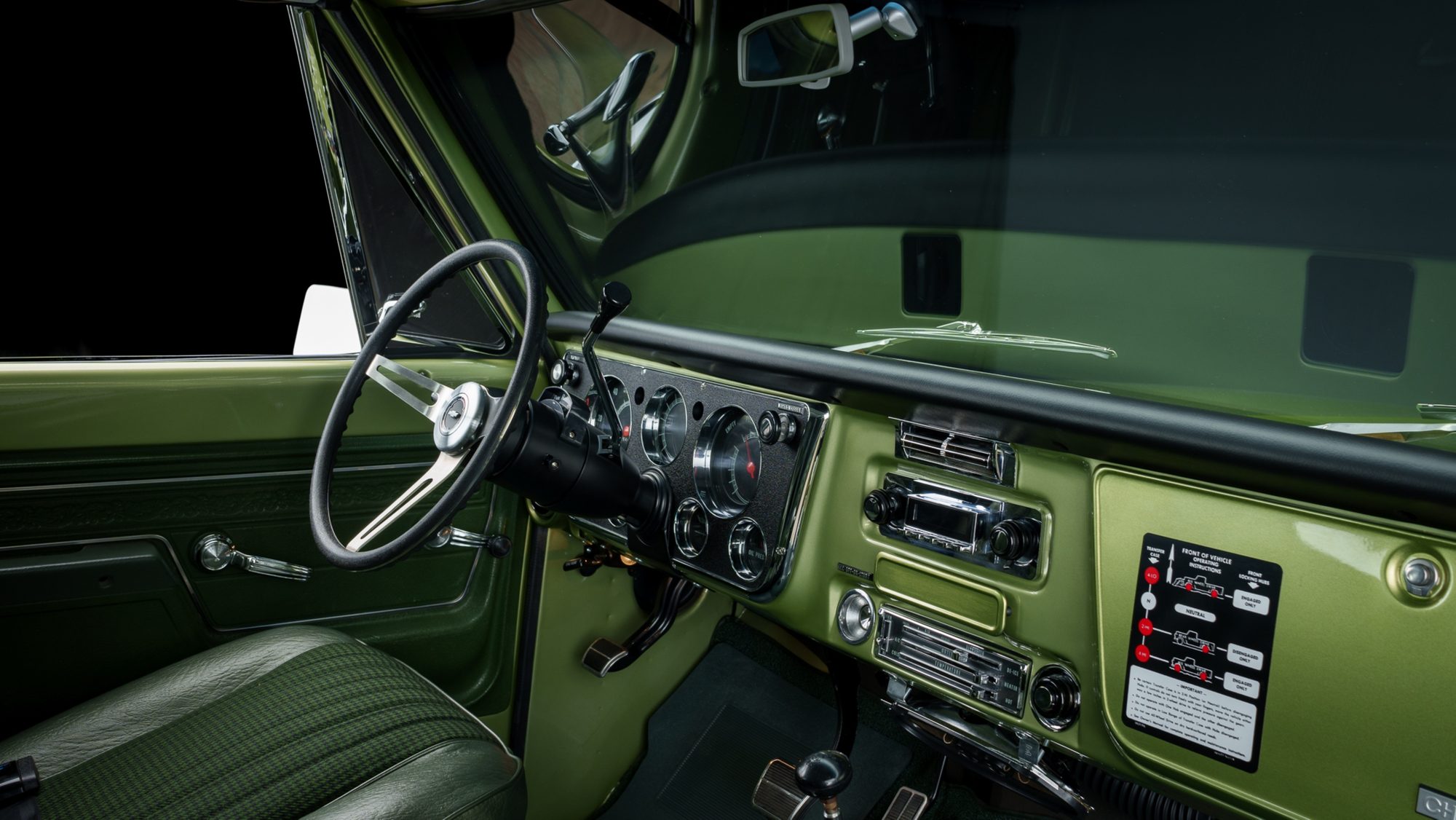 Cabin
Cabin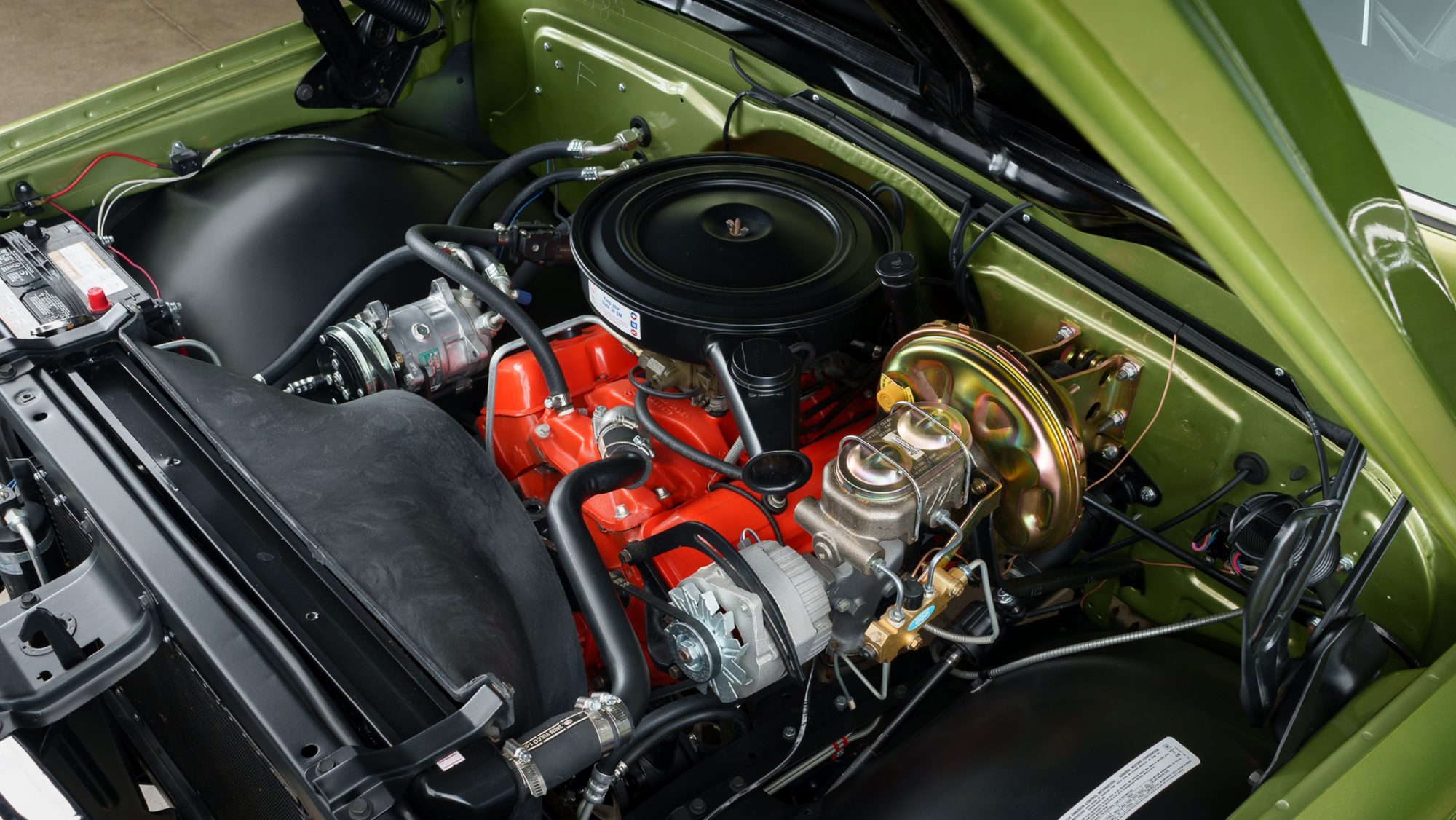 Engine bay
The engines, and the redesign that changed the roof
The first-generation Blazer, built from 1969 to 1972, shared its engine choices with the pickups of the day: 250 and 292-cubic-inch inline sixes, and 307 and 350 V8s. GM redesigned its full-size trucks for 1973, a generation it called the Rounded Line and enthusiasts call the square body. The Blazer moved to it that year and kept its fully removable top through 1975. For 1976, Chevy carried the pickup's steel cab roof over the front seats and made only the rear section lift off, the half-cab layout the K5 kept to the end.
The square-body years brought a wider spread of engines. The 250 six lasted through 1982, a 400-cubic-inch V8 was offered from 1975 to 1979, a 305 V8 was on the option list by 1977, and a 6.2-liter Detroit Diesel V8 joined the lineup in 1982. From 1987, throttle-body fuel injection gave the 350 V8 a rated 210 hp.
- 1969 to 1972
- 250 or 292 ci inline six; 307 or 350 ci V8
- 1973 to 1991
- 250 ci inline six (to 1982); 305, 307, 350 or 400 ci V8; 6.2L Detroit Diesel V8 (from 1982)
- 350 V8, 1987 to 1991
- 210 hp with throttle-body fuel injection
Not every engine was offered every year: the 307 only in 1973, the 400 from 1975 to 1979, the 305 from 1977.
What happened to the name
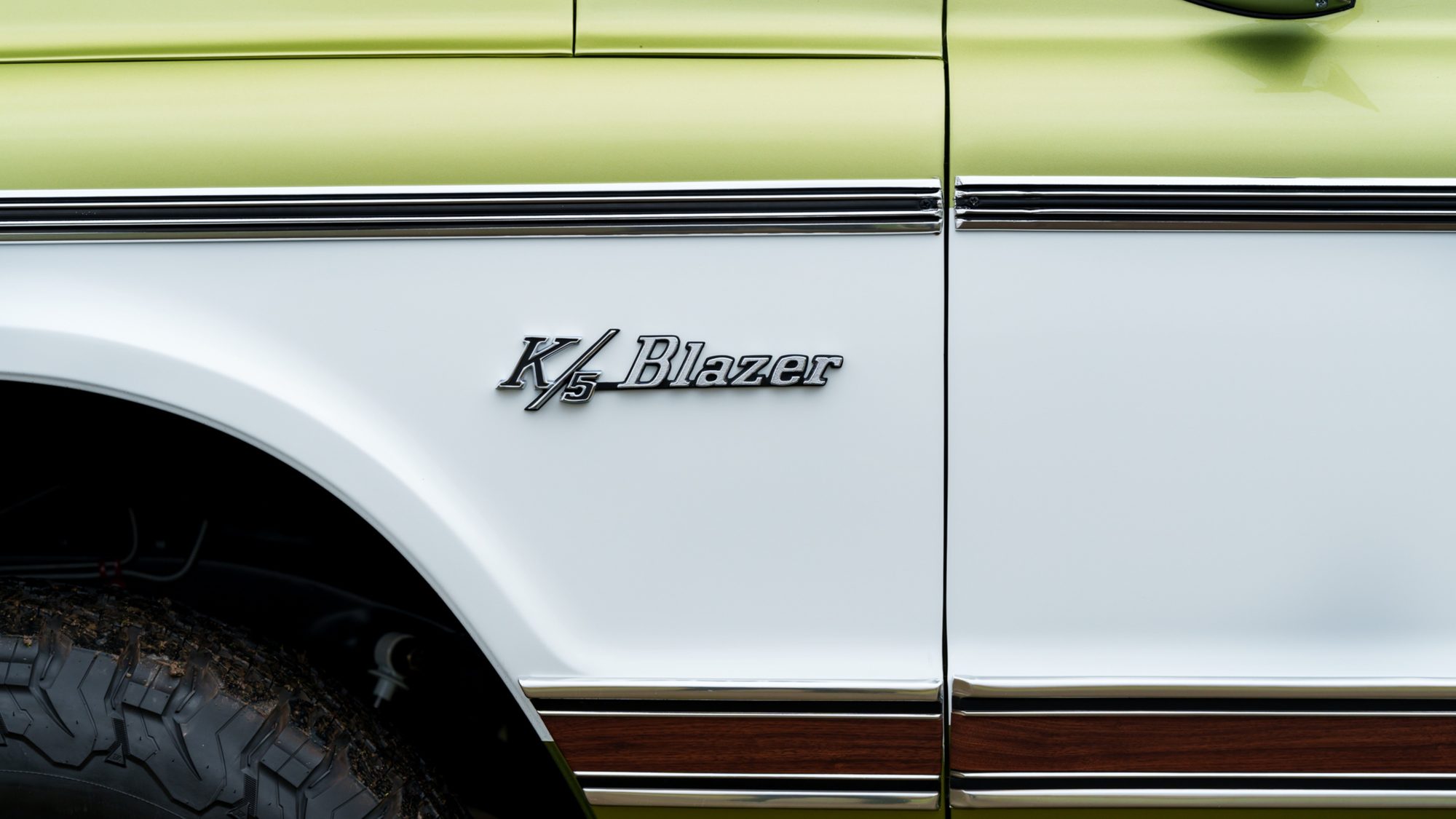
GM's new GMT400 pickups arrived as 1988 models, but the Blazer stayed on the square-body platform through 1991, alongside the Suburban and the crew-cab trucks. GM removed the K5 emblems in 1988. For 1992 the full-size Blazer moved to the GMT400 platform, and for 1995 it was renamed Tahoe. The square-body K5 ran for 19 model years, from 1973 to 1991, against four for the first generation.
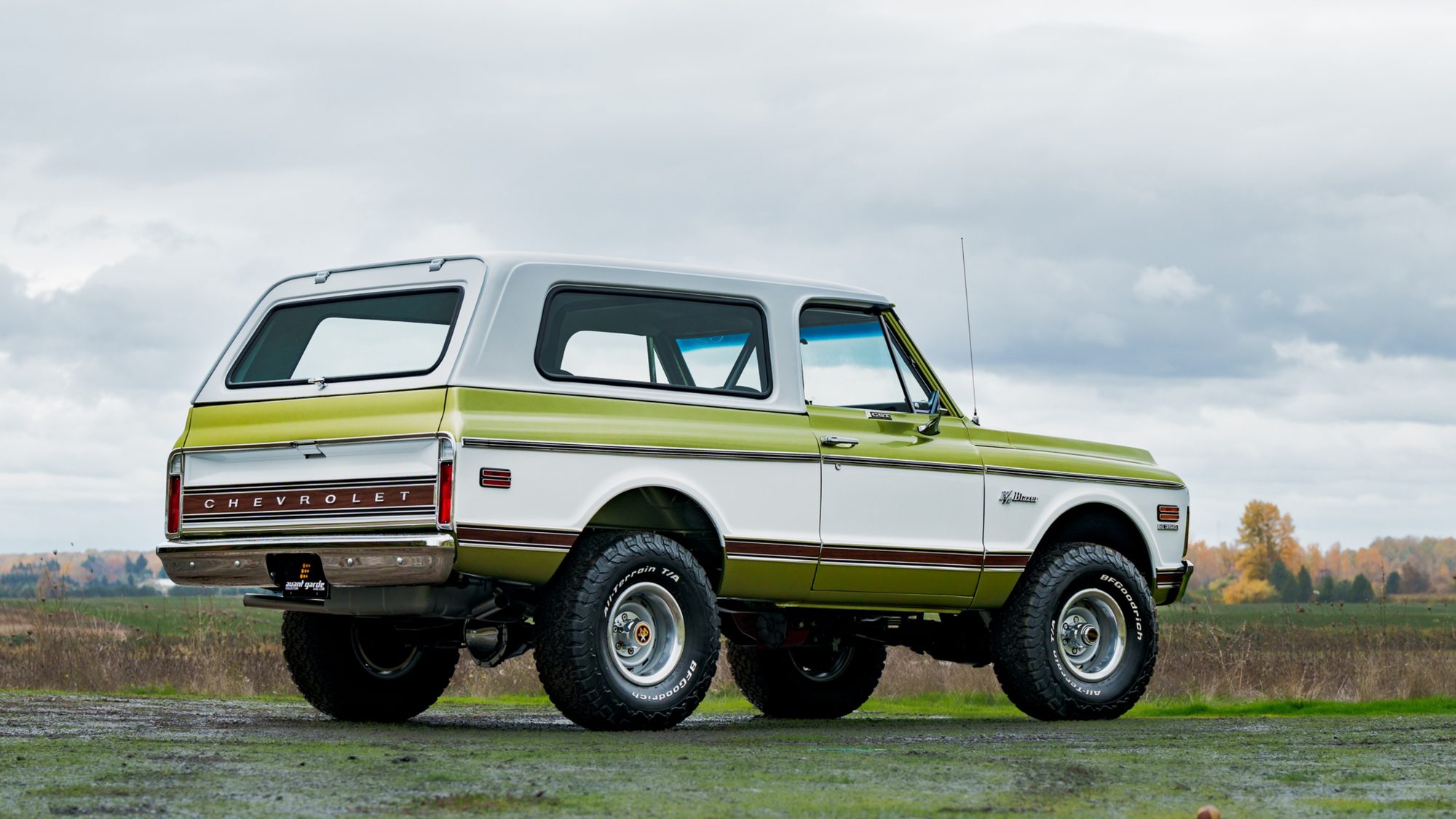
Collectors have noticed. In 2017, Hagerty gave the 1969 to 1972 Blazer a 94 on its 100-point rating of how fast values are rising, where 50 means keeping pace with the market. Those are the trucks whose whole roof came off, the feature Chevy used to make a full-size 4x4 an open one.
Keep it coveredCovers matched to your exact K5, whichever year you drive
Questions owners ask
Did the K5 Blazer really have a removable roof?
Yes. From 1969 through the 1975 model year, the whole top could come off; early buyers could specify a removable fiberglass hardtop or a soft convertible top. For 1976, Chevy put a steel half-cab roof over the front seats and kept a lift-off fiberglass section over the rear, the layout the K5 used through 1991.
What trucks was the K5 Blazer built to compete with?
The Ford Bronco, on sale since the 1966 model year, and the International Harvester Scout, introduced in 1960. Both were compact 4x4s built to take on Jeep's CJ; Chevy answered them with a larger truck built on its half-ton pickup.
What is a 'square body' Chevy truck?
The nickname for GM's third-generation C/K trucks, built from 1973 to 1991, a generation GM itself called the Rounded Line. The K5 Blazer moved to it in 1973 and stayed on it for the rest of its production run.
When did Chevy stop building the K5 Blazer?
The 1991 model year was the last for the K5. GM had removed the K5 emblems in 1988, and for 1992 the full-size Blazer moved to the GMT400 platform; it was renamed Tahoe for 1995.
Sources (10)
- Chevrolet developed the K5 Blazer to compete against the International Scout and the Ford Bronco. It was larger than both, with more cargo space and better on-road handling from its wider-set wheels and longer wheelbase; designers shortened the half-ton K10 pickup's wheelbase from 115 to 104 inches. A removable hardtop or a soft convertible top could be specified. First generation 1969 to 1972 with 250 and 292 I6 and 307 and 350 V8 engines. The 1973 to 1975 Blazers had a removable convertible top; a half-cab design was introduced in 1976 and used until 1991. Second-generation engine table: 250 I6 1973 to 1982, 305 V8 1977 to 1982 (2-barrel), 1981 to 1986 (Federal and California), 1987 (TBI), 307 V8 1973, 350 V8 1973 to 1991 (210 hp with TBI 1987 to 1991), 400 V8 1975 to 1979, 6.2L Detroit Diesel 1982 to 1991. GMT400 trucks arrived as 1988 models while the K5 Blazer, Suburban and crew cabs kept the earlier platform until 1991; GM eliminated the K5 emblems in 1988; the GMT400 Blazer was renamed Tahoe for 1995. en.wikipedia.org
- Chevrolet's 1977 Blazer brochure (Sept. 1976) lists the 305 V8 (2-barrel, not available in California) as an option on the K10 4-wheel-drive Blazer, alongside the 350 and 400 V8s. oldcarbrochures.org
- The 1978 Chevrolet Blazer brochure's K10 4-wheel-drive specifications table lists the 305 V8 as an available engine, confirming it was still offered the year after its 1977 introduction. oldcarbrochures.org
- 1975 was the last year for the one-piece removable hardtop; the 1976 model year brought a steel half top over the front seats and a removable rear cap over the rear seats and cargo area. journal.classiccars.com
- From 1973 to 1975 Chevrolet kept the Blazer's full-convertible removable fiberglass roof; after that it carried over the pickup's steel cab and moved the lift-off section to the rear. The 6.2L Detroit Diesel V8 was offered 1982 to 1991, and 1991 was the K5's final model year. drivingline.com
- GM's third-generation C/K trucks (1973 to 1991) were officially the 'Rounded Line' generation and are popularly called the square body; renamed R/V for 1987 and phased out through the 1991 model year. en.wikipedia.org
- The full-size Blazer, based on the C/K pickup chassis, was renamed Blazer in 1992 and renamed Tahoe in 1995. en.wikipedia.org
- The Bronco was sold from the 1966 model year as a compact SUV, offered as a two-door wagon, a half-cab pickup and an open-body roadster, and was intended to compete with the Jeep CJ-5 and the International Scout. en.wikipedia.org
- The International Scout 80 debuted in late 1960 as a 1961 model, a competitor for the two-door Jeep CJ, and came as a pickup with a removable hardtop. en.wikipedia.org
- Hagerty's 2017 rating gave the 1969 to 1972 K5 Blazer a 94 on its 100-point appreciation scale, where 50 represents market pace. gmauthority.com
Photos: Josh Bryan - stock.adobe.com