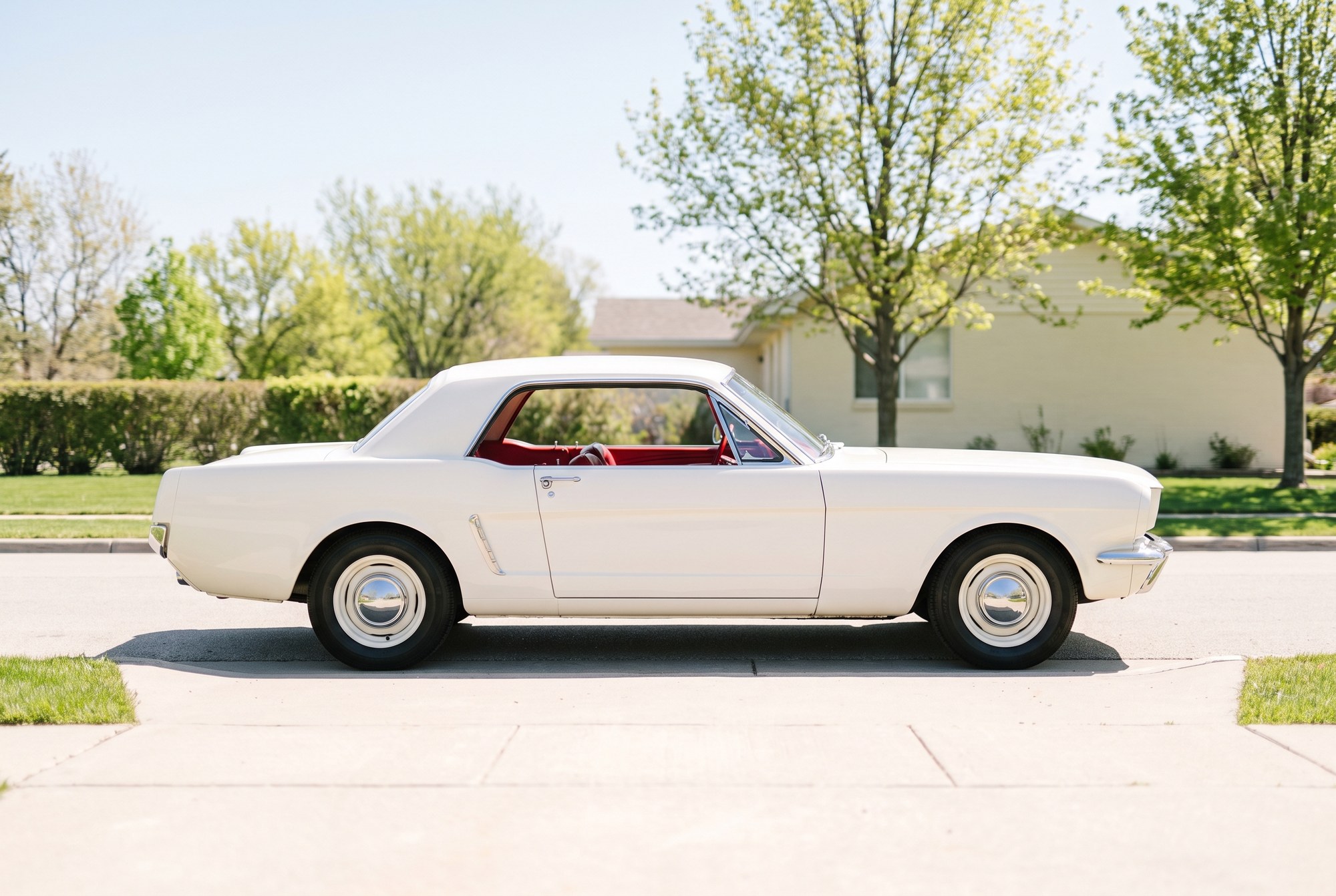
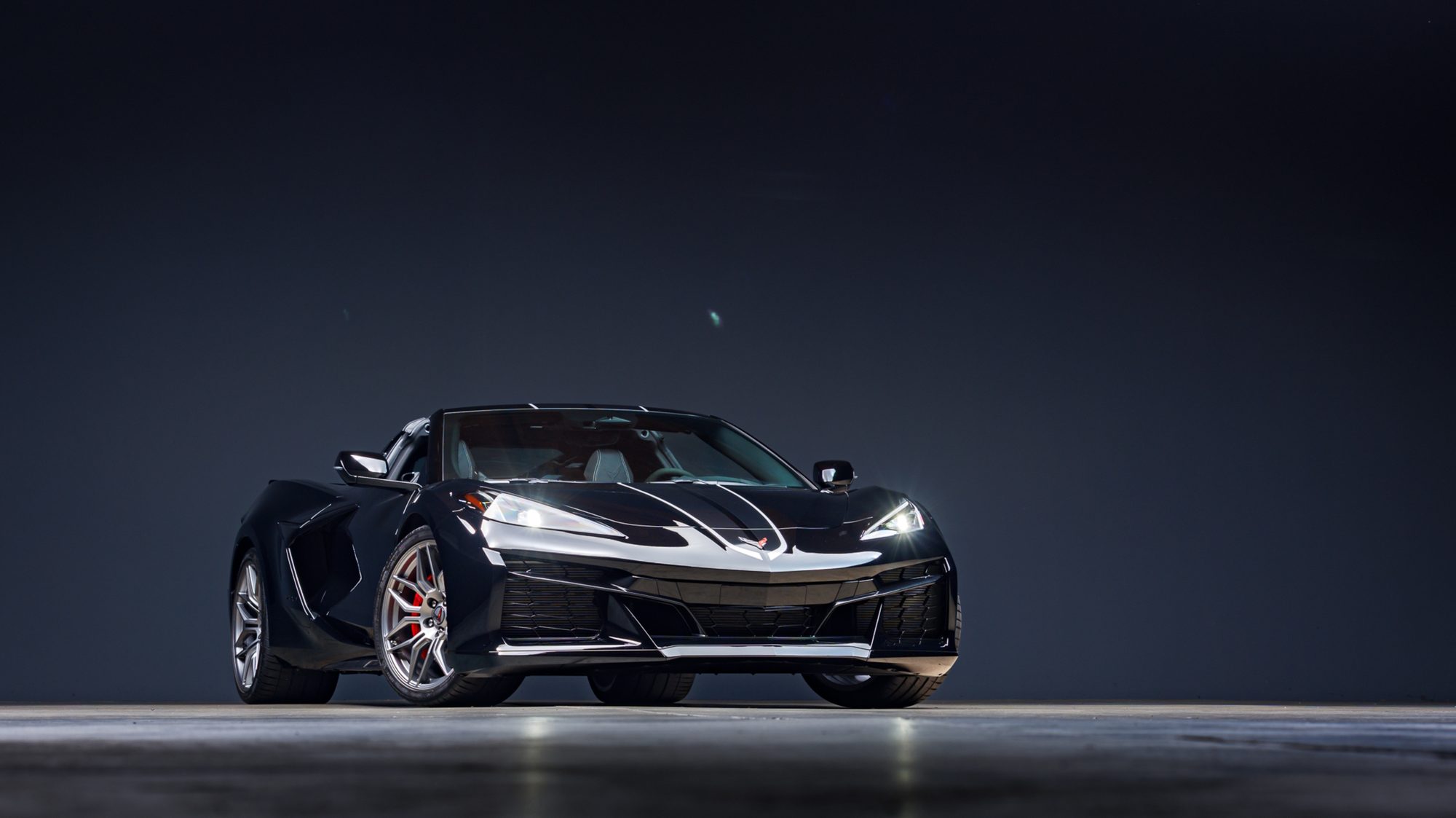
Ford introduced the Mustang on April 17, 1964, and by the time the doors closed that first day, dealers had already written almost 22,000 orders. Six decades and seven generations later, the platform underneath has changed completely more than once, but the idea has not: a sporty, affordable coupe built for a driver who wants some theater with the commute. Here is what actually happened, generation by generation, and where the 2024 Dark Horse fits into that run.
- Ford unveiled the Mustang on April 17, 1964, at the New York World's Fair, and sold more than 400,000 in its first year.
- The car did not just sell. It created a category: the pony car.
- Seven generations later, the pony car has run through five platforms and at least as many nicknames: Fox Body, SN95, S197, S550, S650.
- The top naturally aspirated S650, the Dark Horse, makes 500 hp from the most powerful naturally aspirated 5.0-liter production V8 Ford has offered.
How one car invented a category
When Henry Ford II unveiled the Mustang at the New York World's Fair, nothing on a Ford lot looked or drove like it: a long hood, a short deck, a low price built on the humble Falcon's mechanical parts, and an options sheet long enough that a commuter's daily car and a street racer's weekend toy could come off the same line. Rivals spent the rest of the decade chasing it, and the whole class of car they built got its name from the one that started it: the pony car.
Seven generations, one shape everyone still knows
Every Mustang since 1964 traces back to that first car's proportions, even on the generations where the platform underneath changed completely. Enthusiasts mostly talk about Mustangs by generation, and increasingly by Ford's internal codenames. Here is the full run.
- 1964 to 1973
First generation
Ford began selling the Mustang on April 17, 1964, badged as an early 1965 model, which is why the run gets listed as 1964 to 1973 in some places and 1965 to 1973 in others. Built on the compact Falcon's floor pan and running gear, it kept the price down while the long hood and short deck did the styling work.
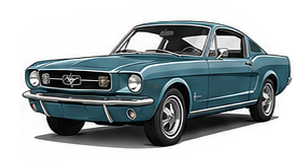
Illustration - 1974 to 1978
Second generation (Mustang II)
Ford began planning a smaller Mustang around 1970, on the subcompact Pinto platform, and launched it in September 1973, weeks before the oil embargo made its size look prescient. It remains the generation most owners argue about today, though it sold well: Ford moved nearly 386,000 in its first model year alone.
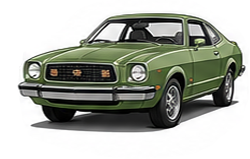
Illustration - 1979 to 1993
Third generation (Fox Body)
Built on the Fox platform Ford introduced with the 1978 Fairmont and later shared with the Granada, Thunderbird and more, the Fox Body is the longest-running Mustang generation, 15 model years. A major aerodynamic reskin arrived for 1987, and by the end of the run it had become the cheap, tunable V8 platform an entire generation of racers grew up on.
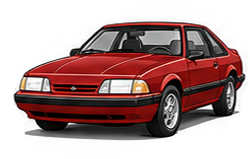
Illustration - 1994 to 2004
Fourth generation (SN95)
The first major Mustang redesign since 1979, code-named SN95 and riding on an updated version of the Fox platform. A mid-cycle "New Edge" restyle sharpened the creases for 1999, and 2003 to 2004 brought the naturally aspirated, shaker-hooded Mach 1 and the supercharged SVT Cobra Terminator back to the range.
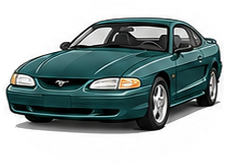
Illustration - 2005 to 2014
Fifth generation (S197)
A deliberate look back at the 1967 to 1970 cars, built on a platform, D2C, that Ford reserved for the Mustang alone for the first time and assembled at Flat Rock, Michigan. Until the 2008 Challenger arrived, it had the pony car field to itself; Chevrolet had paused Camaro production in 2002 and would not bring it back until the 2010 model year.
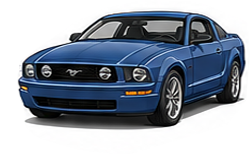
Illustration - 2015 to 2023
Sixth generation (S550)
The first Mustang Ford built at the factory in right-hand drive, opening the car to more than 25 additional markets including the UK and Australia, and the first with independent rear suspension standard on every trim rather than just the top ones.
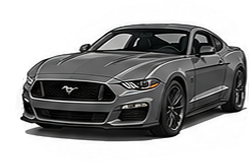
Illustration - 2024 to present
Seventh generation (S650)
Debuted in September 2022 and built from May 2023 for the 2024 model year, the S650 keeps the naturally aspirated V8 GT alive while its old rivals have gone turbocharged, electric or out of production. The Dark Horse trim, the top naturally aspirated S650, is next.
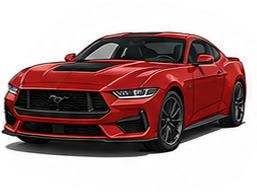
Illustration
The Dark Horse, the S650's naturally aspirated peak
The seventh-generation GT still runs the naturally aspirated 5.0-liter Coyote V8 that has powered Mustangs since 2011, but the Dark Horse, the top naturally aspirated S650, takes that same basic engine architecture further than Ford had before without adding forced induction.
- Engine
- 5.0-liter naturally aspirated Coyote V8
- Output
- 500 hp at 7,250 rpm, 418 lb-ft at 4,900 rpm
- Transmission
- 6-speed manual standard, 10-speed automatic optional
- Shares with the GT500
- Forged connecting rods, first used there
The Dark Horse is not the most powerful Mustang Ford has built, naturally aspirated or otherwise. That title belongs to the supercharged, 815-hp 2025 Mustang GTD; the 760-hp 2020 Shelby GT500 held it before that. Above it in today's lineup sits the supercharged, 795-hp 2026 Mustang Dark Horse SC, a track-focused Dark Horse that Ford calls the spiritual successor to the Shelby GT500. Even the Dark Horse's own 500 naturally aspirated horsepower trails the 2015 to 2020 Shelby GT350's 5.2-liter Voodoo V8, which made 526 hp with no forced induction at all. What the Dark Horse claims instead is Ford's own record: the most powerful naturally aspirated 5.0-liter production V8 the company has offered, using forged connecting rods first introduced in the GT500.
Still worth covering, whichever generation
A Fox Body posted up at a Saturday cruise-in needs the same basic thing a brand-new Dark Horse does: a barrier between it and the sun, the dust and the weather until the next drive. Both spend more time parked than moving, and both deserve the right cover for where they sleep.
Keep it coveredCovers matched to your exact Mustang, whichever generation you drive.
Questions owners ask
What is the difference between the S550 and S650 Mustang?
They share the same D2C platform underneath, but the S650, on sale since the 2024 model year, is a full redesign: a new interior with twin digital screens, a stiffer body, and the Dark Horse, a trim the S550 never had. The S550 covered model years 2015 to 2023.
Why is the second-generation Mustang called the Mustang II?
Ford badged it that way itself. Built on the smaller Pinto platform for the 1974 to 1978 model years, it was planned around 1970 as a smaller, more efficient Mustang and launched in September 1973, weeks before the oil embargo made its size look prescient.
Which years count as the Fox Body Mustang?
1979 to 1993, the third generation, built on the Fox platform Ford introduced with the 1978 Fairmont. At 15 model years, it is the longest-running Mustang generation.
Is the Dark Horse the most powerful Mustang ever built?
No. Ford's most powerful street-legal Mustang today is the supercharged, 815-hp 2025 Mustang GTD; the 760-hp 2020 Shelby GT500 held that title before it. Even among naturally aspirated Mustangs, the 2015 to 2020 Shelby GT350's Voodoo V8 made more power, 526 hp to the Dark Horse's 500. The Dark Horse's real record is narrower: the most powerful naturally aspirated 5.0-liter production V8 Ford has offered, with no turbo or supercharger.
Was the Mustang really the first pony car?
It defined the category and gave it its name. The Plymouth Barracuda actually reached showrooms two weeks earlier, on April 1, 1964, but the Mustang outsold it about five to one in 1964, and every pony car rival that followed, Camaro included, was chasing Ford.
Sources (22)
- Ford unveiled the Mustang on April 17, 1964, at the New York World's Fair. corporate.ford.com
- Henry Ford II unveiled the Mustang at the World's Fair; dealers had written almost 22,000 orders by the end of debut day; more than 400,000 sold in the first year; the millionth Mustang built by March 1966. history.com
- The Mustang's launch created the pony car category. en.wikipedia.org
- First generation ran 1964/1965 to 1973 on the Falcon-based platform. en.wikipedia.org
- Second generation, the Mustang II, ran 1974 to 1978 on the Pinto platform, planned around 1970 to 1971 and launched in September 1973, weeks before the oil embargo; nearly 386,000 sold in its first model year. en.wikipedia.org
- The Fox platform debuted on the 1978 Ford Fairmont; the Granada moved onto it by 1981; the Fox Body Mustang ran 1979 to 1993. en.wikipedia.org
- Fourth generation (SN95) ran 1994 to 2004; the New Edge restyle arrived for 1999. americanmuscle.com
- The 2003-2004 Mach 1 was naturally aspirated at 305 hp with a shaker hood; the SVT Cobra "Terminator" was supercharged to 390 hp. cjponyparts.com
- Fifth generation (S197) ran 2005 to 2014 on the D2C platform, built exclusively for the Mustang and assembled at Flat Rock, Michigan. en.wikipedia.org
- Chevrolet paused Camaro production from 2002 and did not resume until the 2010 model year; the Dodge Challenger returned in 2008. en.wikipedia.org
- Sixth generation (S550) ran 2015 to 2023 and was the first Mustang with independent rear suspension standard across every trim. en.wikipedia.org
- The S550 was the first factory-built right-hand-drive Mustang, opening sales to more than 25 additional markets including the UK and Australia. slashgear.com
- Seventh generation (S650) debuted September 2022, began production May 2023, and covers the 2024 model year onward. en.wikipedia.org
- Chevrolet ended Camaro production on December 14, 2023; Dodge replaced the Challenger with a new Charger offered as the battery-electric Daytona or the twin-turbo inline-six Sixpack. en.wikipedia.org
- The 2024 Dark Horse makes 500 hp at 7,250 rpm and 418 lb-ft at 4,900 rpm from a naturally aspirated 5.0-liter Coyote V8 with a uniquely balanced crankshaft and forged connecting rods first introduced in the Shelby GT500; 6-speed manual standard, 10-speed automatic optional. It is the most powerful naturally aspirated 5.0-liter production engine Ford has offered. motor1.com
- The 2020 Shelby GT500 is rated at 760 hp from a supercharged 5.2-liter V8. motor1.com
- The 2015 to 2020 Shelby GT350's naturally aspirated 5.2-liter Voodoo V8 made 526 hp and 429 lb-ft, more than the Dark Horse's 500 hp. wardsauto.com
- The 2025 Mustang GTD makes 815 hp and 664 lb-ft, the most of any street-legal Mustang ever built. fromtheroad.ford.com
- Ford unveiled the 2026 Mustang Dark Horse SC on January 15, 2026, with a supercharged 5.2-liter Predator V8 making 795 hp and 660 lb-ft; it is a track-focused variant of the Dark Horse and appears in Ford's 2026 Mustang lineup. caranddriver.com
- The Dark Horse's Coyote V8 uses connecting rods from the 760-hp Shelby GT500. hagerty.com
- The Plymouth Barracuda reached showrooms on April 1, 1964, two weeks before the Mustang's April 17 debut, but the Mustang outsold it about five to one in 1964. hagerty.com
- The Fox Body Mustang (1979 to 1993) is the longest-running Mustang generation, 15 model years. hagerty.com