The Dodge Viper was never trying to be reasonable. When it went on sale in January 1992, it carried an 8.0-liter aluminum-alloy V10 developed with help from Lamborghini, then owned by Chrysler, and it left out most of what made other cars easy to live with: no anti-lock brakes, no traction control, no airbags, not even a handle on the outside of the door. What it did have was 400 horsepower, a 163 mph top speed in Car and Driver's testing, and a base price of about $50,000. Over the next twenty-five years and five generations, with two gaps along the way, the V10 grew to 8.4 liters and 645 horsepower, and the coupe body that arrived in 1996 became the only way to buy the final generation. The formula held to the end: a huge naturally aspirated V10, a manual gearbox and two seats.
- The original 1992 RT/10 had an 8.0-liter, 400 hp V10 and very little else: no ABS, no traction control, no airbags, not even exterior door handles.
- The GTS coupe arrived in 1996 with more than 90 percent new parts versus the roadster, and it was the first Viper with airbags. Anti-lock brakes followed in 2001.
- Production paused twice, skipping the 2007 model year and sitting out 2011 and 2012, before a fifth generation arrived for 2013.
- By 2015 the V10 made 645 hp. Production ended in August 2017; the official reason was a new federal rule calling for side-curtain airbags, which the Viper's structure could not accommodate.
Five generations, one snake
The Viper went through five generations between 1992 and 2017. It skipped the 2007 model year while Dodge prepared the updated 2008 car, then sat out the 2011 and 2012 model years entirely. Each generation kept the same basic formula and pushed it further.
- 1992 to 1995
The original RT/10
The first Viper was a roadster only, with a canvas top and zip-up vinyl side windows; to get in, you unzipped the window and reached for the door release inside. The 8.0-liter V10 made 400 hp, and Dodge built 5,988 of this generation.
- 1996 to 2002
The GTS coupe joins
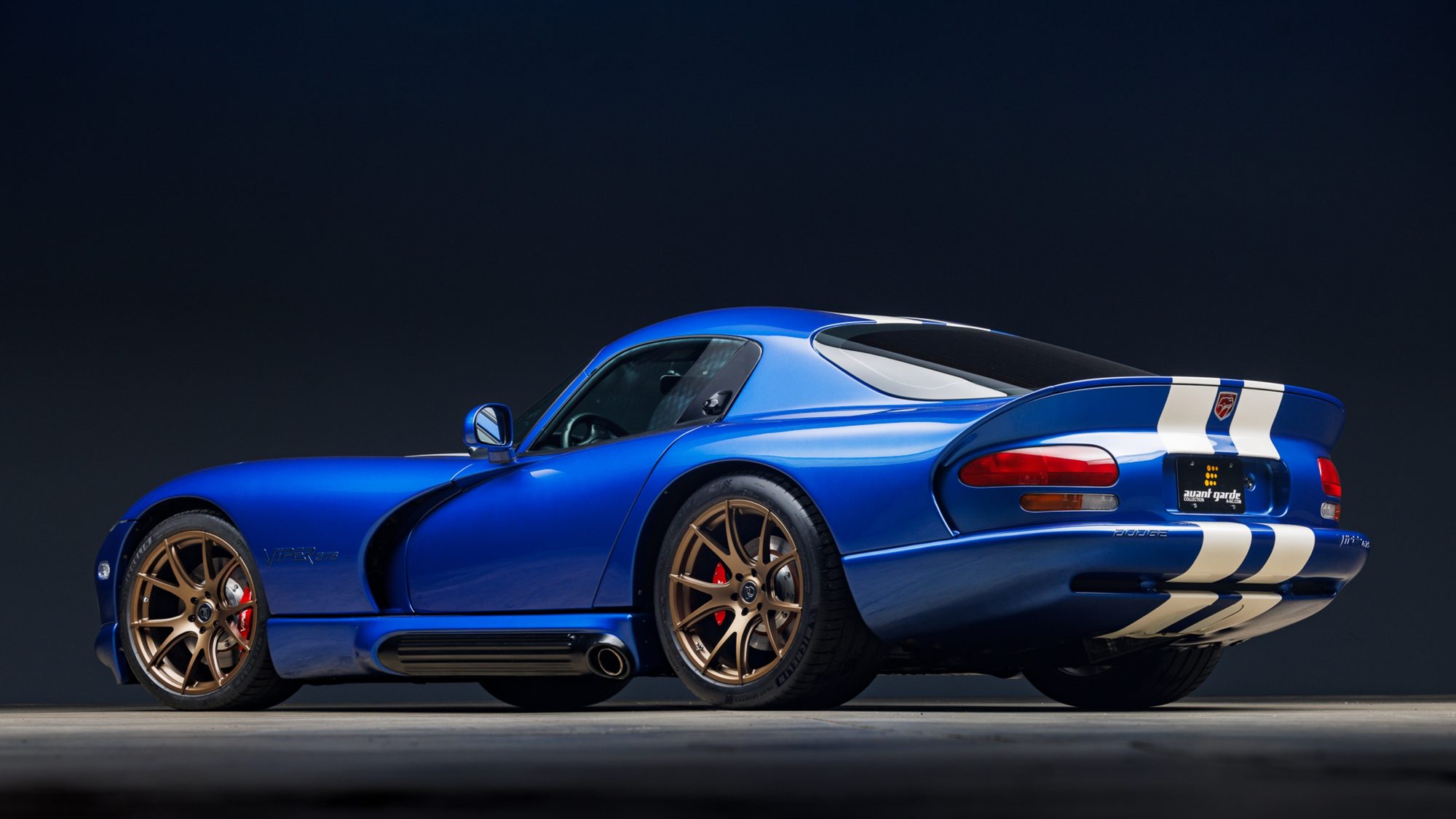
A fixed-roof GTS coupe arrived in 1996 with a "double bubble" roof, more than 90 percent new parts and 450 hp, and it was the first Viper with airbags. The RT/10 roadster matched 450 hp for 1998, and anti-lock brakes arrived in 2001.
- 2003 to 2006
Lighter, faster, bigger V10
The third generation grew the engine to 8.3 liters and cut weight from both the engine and the chassis. The convertible made 500 hp and ran 0 to 60 mph in 3.8 seconds; a coupe returned for 2006 with 510 hp.
- 2008 to 2010
600 horsepower, then a pause
A further-enlarged 8.4-liter V10 pushed output to 600 hp. Production ended on July 1, 2010, and there were no 2011 or 2012 Vipers.
- 2013 to 2017
SRT Viper, then Dodge Viper again
The car returned for 2013 as the SRT Viper, under Chrysler's short-lived SRT brand, as a coupe only, with 640 hp. SRT folded back into Dodge in May 2014, the car became the Dodge Viper again for 2015, and output rose 5 hp, to 645, for the rest of the run.
What made the original so raw
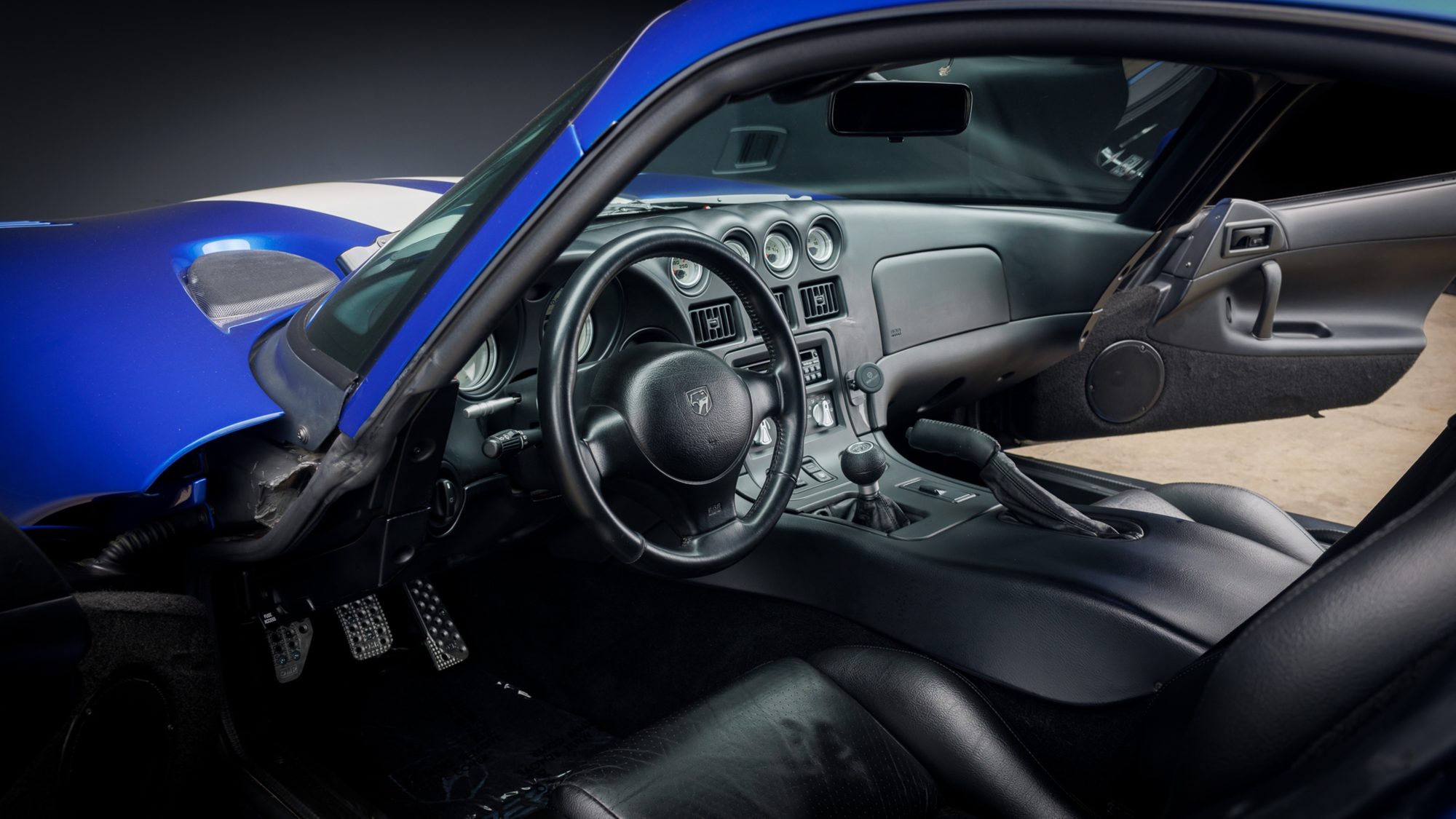
The 400 hp figure gets the headlines, but what the 1992 RT/10 left out says as much about the car. There was no anti-lock braking, no traction control and no airbags. Air conditioning did not become an option until later 1994 models, and the canvas top and zip-up vinyl side windows came with no exterior door handles or key locks: getting in meant unzipping the window and reaching for the release on the inside of the door.
- Engine
- 8.0-liter aluminum-alloy V10
- Output
- 400 hp at 4,600 rpm, 450 lb-ft at 3,600 rpm
- Transmission
- Six-speed manual
- 0 to 60 mph
- 4.4 seconds
- Top speed
- 163 mph
- Starting price
- About $50,000
Acceleration and top speed are Car and Driver's test figures.
That spare approach softened only slowly. The GTS coupe brought the first airbags in 1996 and anti-lock brakes arrived in 2001, but one thing never changed: every Viper, from the first RT/10 to the last 2017 car, came with a six-speed manual. Dodge never offered an automatic.
 Cockpit
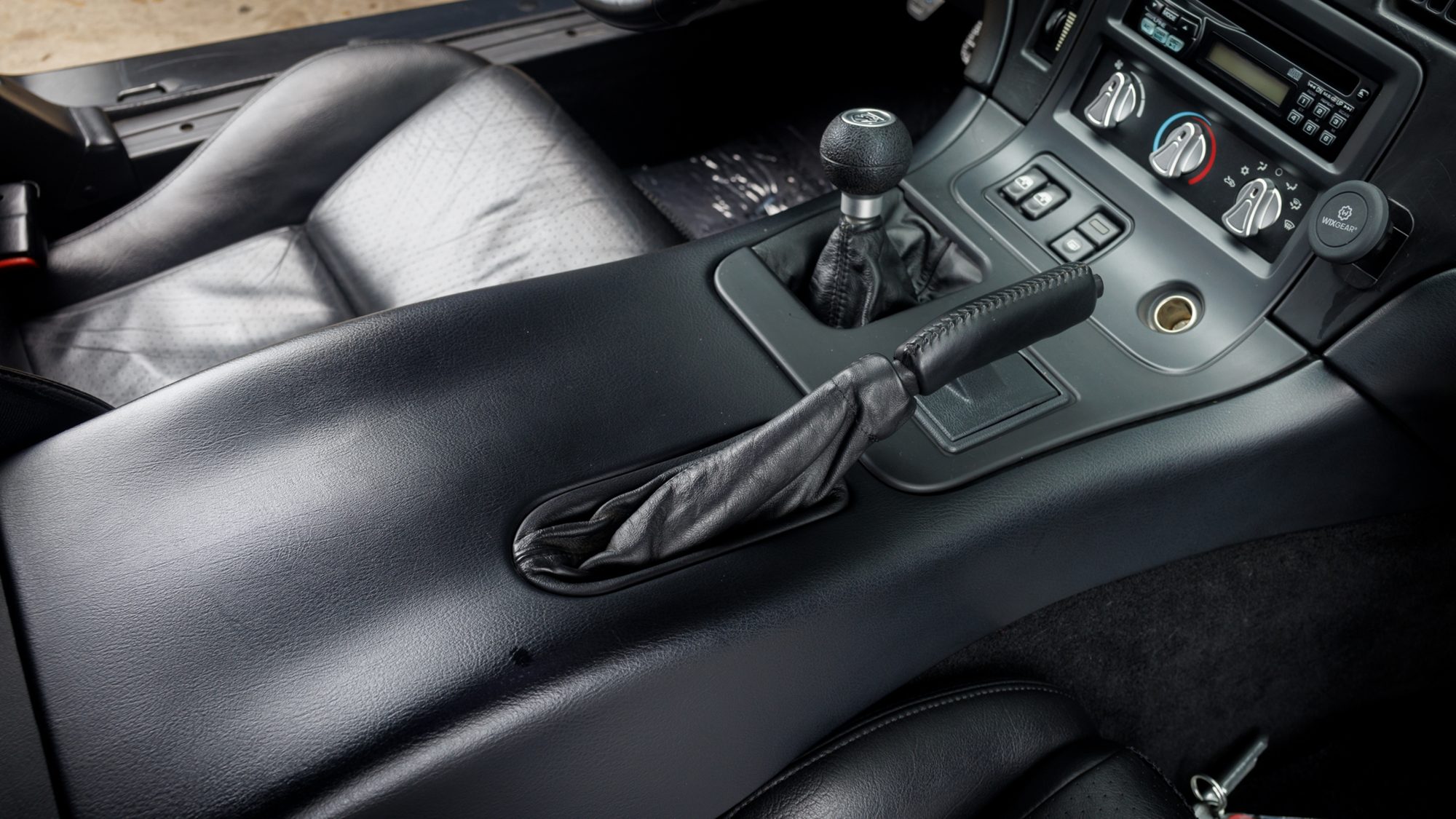 Shifter
The V10 that defined the car grew with it, from 8.0 liters to 8.3 for 2003 and 8.4 for 2008, and it stayed naturally aspirated to the end.
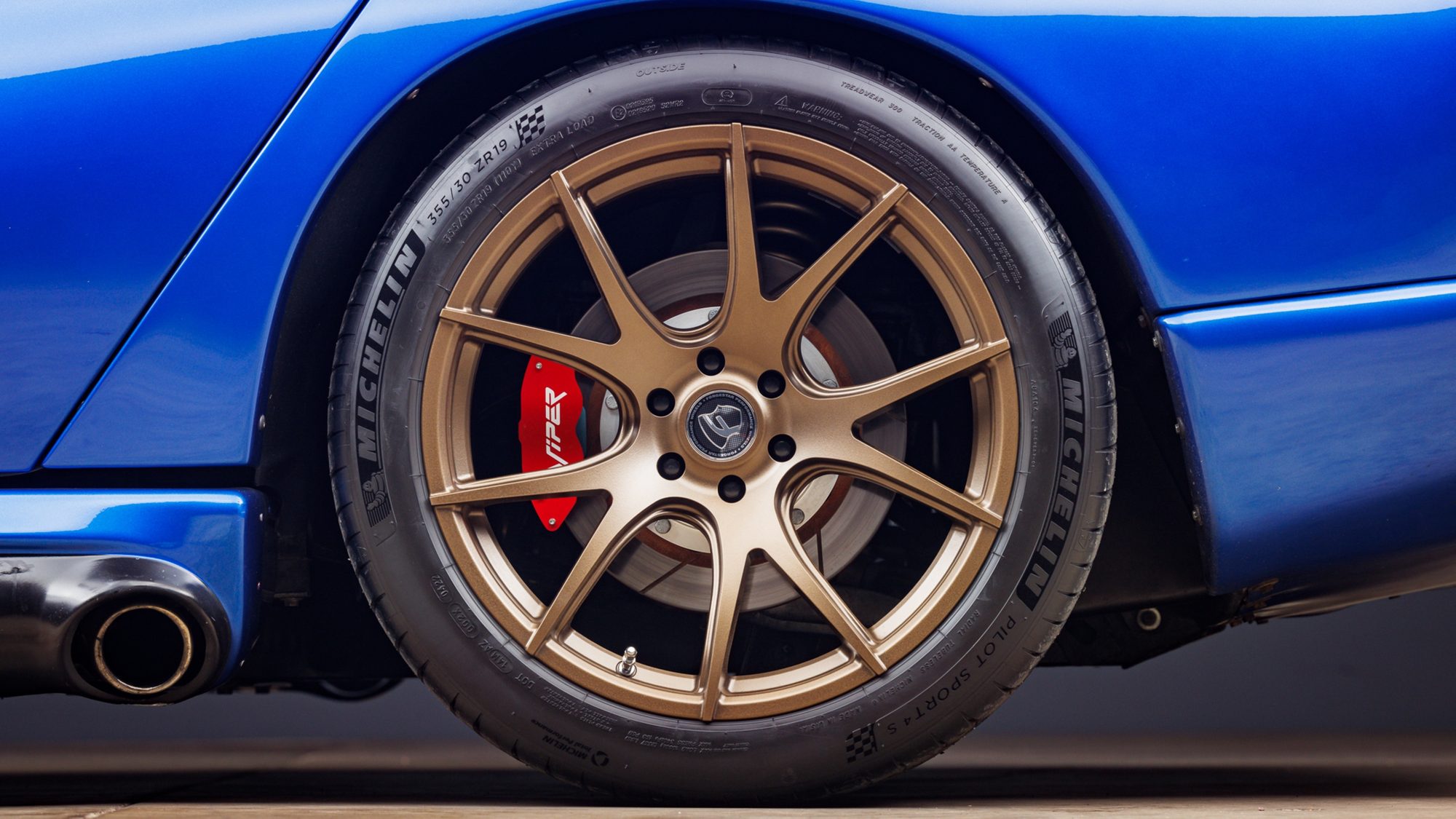 Brakes
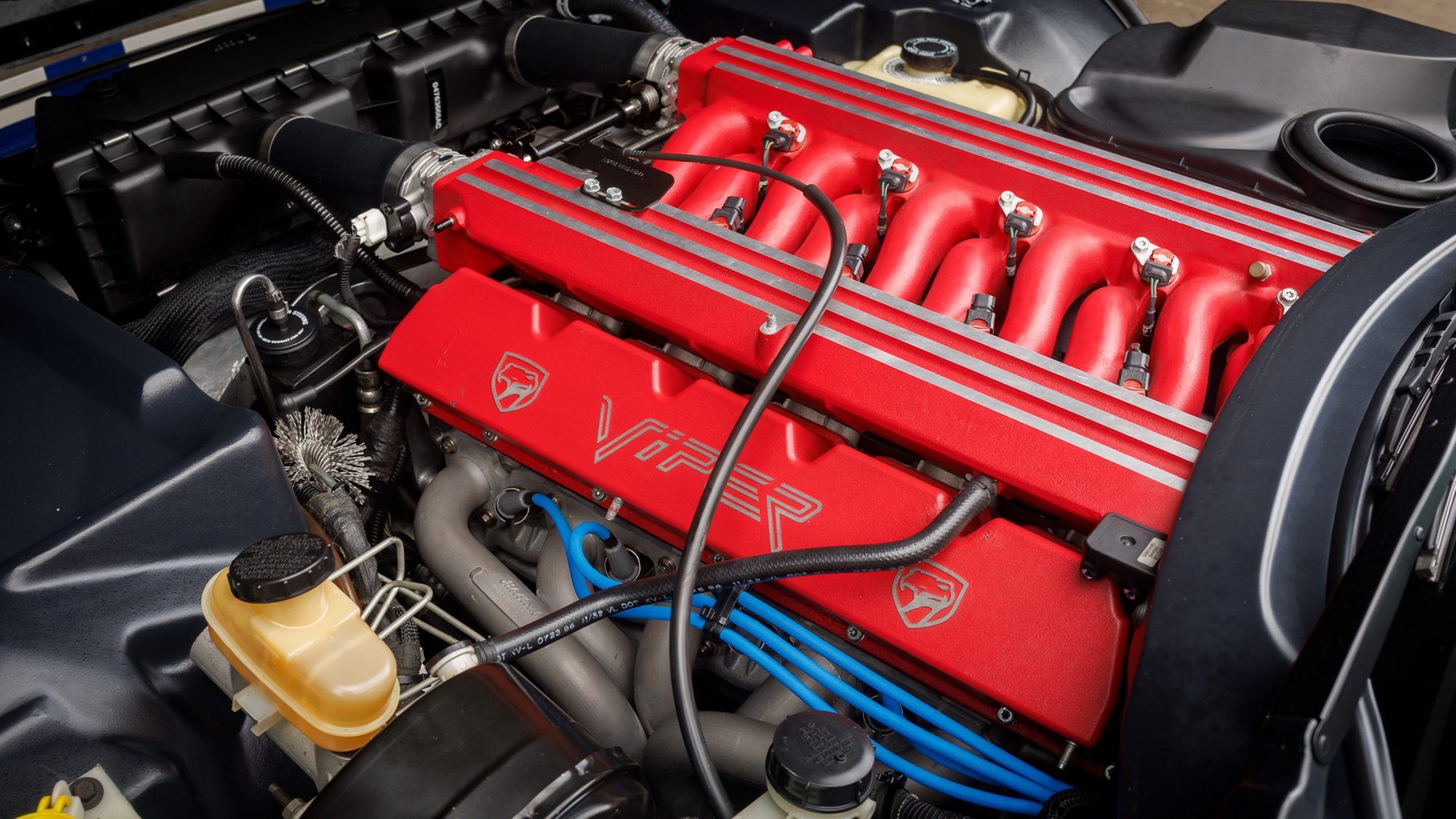 V10
V10645 horsepower, then done
The sharpest version of the final car was the 2016 ACR, which added Brembo carbon-ceramic brakes, double-adjustable Bilstein coil-over race shocks and a carbon-fiber aero kit to the same 645 hp V10. In October 2015, Fiat Chrysler's new contract with the UAW set Viper production to end in 2017. The official reason was a new federal ejection-mitigation rule that calls for side-curtain airbags, which the Viper's structure could not accommodate, and sales were small: 630 cars in the United States in 2016. The last one, a red GTS, rolled off the line at Detroit's Conner Avenue Assembly Plant on August 16, 2017, and the plant closed at the end of that month.
- Engine
- 8.4-liter V10, 645 hp and 600 lb-ft
- Brakes
- Brembo carbon-ceramic, 15.4-inch front rotors
- Suspension
- Double-adjustable Bilstein coil-overs
- Starting price
- About $118,000 before destination and the gas-guzzler tax
ACR-specific hardware. The standard 2015 to 2017 Viper made the same 645 hp without the ACR's suspension, brake and aero upgrades.
New Viper prices mostly followed the horsepower up, with one detour. The 1992 RT/10 started around $50,000. When demand slowed in the fifth generation, Dodge cut prices by up to $15,000 and set the base price at $84,995, which it said matched the original car's price adjusted for inflation. The 2016 ACR started at about $118,000, and the last 2017 Vipers started at $87,895 before destination. What a used Viper is worth today depends heavily on the generation, the mileage and the edition. What has not changed is what the car asks of an owner: something this loud and this uncompromising is not the kind of car you leave uncovered between drives.
Keep it coveredCovers for the Viper, matched to your exact car
Questions owners ask
Did the original Dodge Viper really have no airbags?
Yes. The 1992 to 1995 RT/10 had no airbags, no anti-lock brakes and no traction control, and no exterior door handles: you unzipped the vinyl side window and reached for the release on the inside of the door. The GTS coupe, which arrived in 1996, was the first Viper with airbags, and anti-lock brakes followed in 2001.
Why did Dodge stop making the Viper?
Fiat Chrysler ended Viper production in August 2017. The official reason was a new federal ejection-mitigation rule that calls for side-curtain airbags, which the Viper's structure could not accommodate. Sales were also small: 630 Vipers were sold in the United States in 2016.
Did the Viper ever come with an automatic transmission?
No. Every Viper, from the 1992 RT/10 to the final 2017 cars, used a six-speed manual.
What was the Viper ACR?
The 2016 ACR was the track-focused version of the final Viper. It kept the standard car's 645 hp V10 and added Brembo carbon-ceramic brakes, double-adjustable Bilstein coil-over race shocks and a carbon-fiber aero kit, starting at about $118,000 before destination and the gas-guzzler tax.
Sources (15)
- The Viper's first retail shipments began in January 1992; it ran five generations (1992 to 2006 and 2008 to 2017) with no 2007 model year and no 2011 or 2012 cars, always with a manual transmission; Chrysler's then-subsidiary Lamborghini cast the prototype aluminum block; and it was discontinued because it could not comply with FMVSS 226, which requires side-curtain airbags. en.wikipedia.org
- The 1992 to 1995 RT/10 went on sale in January 1992 with an 8.0-liter aluminum-alloy V10 (Lamborghini, then owned by Chrysler, assisted with the design) making 400 hp at 4,600 rpm and 450 lb-ft at 3,600 rpm and a six-speed BorgWarner T56 manual. Car and Driver recorded 0 to 60 mph in 4.4 seconds and a 163 mph top speed. It had no traction control, ABS or airbags, no exterior door handles or key locks (entry by unzipping a vinyl window to reach the interior door release), a canvas top, A/C only as an option on later 1994 models, and standard manually adjustable seats with lumbar support, an AM/FM cassette stereo, a clock and carpeting. 5,988 were built. en.wikipedia.org
- The 1992 Viper RT/10 had a base price of approximately $50,000 and made 400 hp at 4,600 rpm and 450 lb-ft at 3,600 rpm. conceptcarz.com
- The GTS coupe (1996) had a 'double bubble' roof, over 90 percent new parts versus the RT/10, 450 hp, and was the first Viper with airbags; the RT/10 gained 450 hp for 1998, and ABS arrived in 2001. en.wikipedia.org
- The 2003 to 2006 third generation used an 8.3-liter V10; the convertible made 500 hp and 525 lb-ft and ran 0 to 60 mph in 3.8 seconds; the engine and chassis both lost weight; the coupe launched three years after the SRT-10 with 510 hp and 535 lb-ft; Dodge stopped production for 2007 while preparing the updated 2008 car. en.wikipedia.org
- The fourth generation (2008 to 2010) used an 8.4-liter V10 making 600 hp and 560 lb-ft; production ended July 1, 2010. en.wikipedia.org
- The SRT Viper launched for 2013 with 640 hp as a coupe only; SRT was re-consolidated under Dodge in May 2014; the car was renamed Dodge Viper in 2015, when output rose 5 hp to 645; the 2016 ACR had a carbon-fiber aero kit, carbon-ceramic brakes and Bilstein suspension; 2,427 fifth-generation cars were built. en.wikipedia.org
- Approved language in the United Auto Workers' contract with Fiat Chrysler, reported in October 2015, set Viper production to end in 2017, with Conner Avenue Assembly completing the Viper without a future product. thetruthaboutcars.com
- The 2016 Viper ACR was priced from $117,895 excluding destination and the gas-guzzler tax, made 645 hp and 600 lb-ft, and used double-adjustable Bilstein coil-over race shocks and Brembo carbon-ceramic brakes with 15.4-inch front rotors. topspeed.com
- The 2017 Dodge Viper SRT's original MSRP was $87,895. cargurus.com
- The 2017 Dodge Viper SRT had an $87,895 MSRP, with a $2,495 destination charge listed separately. iseecars.com
- Carscoops lists the 2017 Dodge Viper's price as $90,495. carscoops.com
- With low demand leaving cars on dealer lots, FCA cut Viper prices by up to $15,000 to a $84,995 starting price, which it said matched the original Viper's launch price adjusted for inflation. The official reason for ending production was the packaging requirement for a new ejection-mitigation airbag; just 630 were sold in 2016; the final car, built in August 2017, was a red GTS. motorauthority.com
- A red 2017 Dodge Viper rolled off the line at FCA's Conner Avenue Assembly Plant on August 16, 2017; the Viper's structure could not fit or support the side airbags the new safety standard requires. torquenews.com
- Conner Avenue Assembly is in Detroit, Michigan; FCA announced on July 12, 2017 that it would shut the plant permanently on August 31, 2017. en.wikipedia.org
Photos: Josh Bryan/Adobe Stock