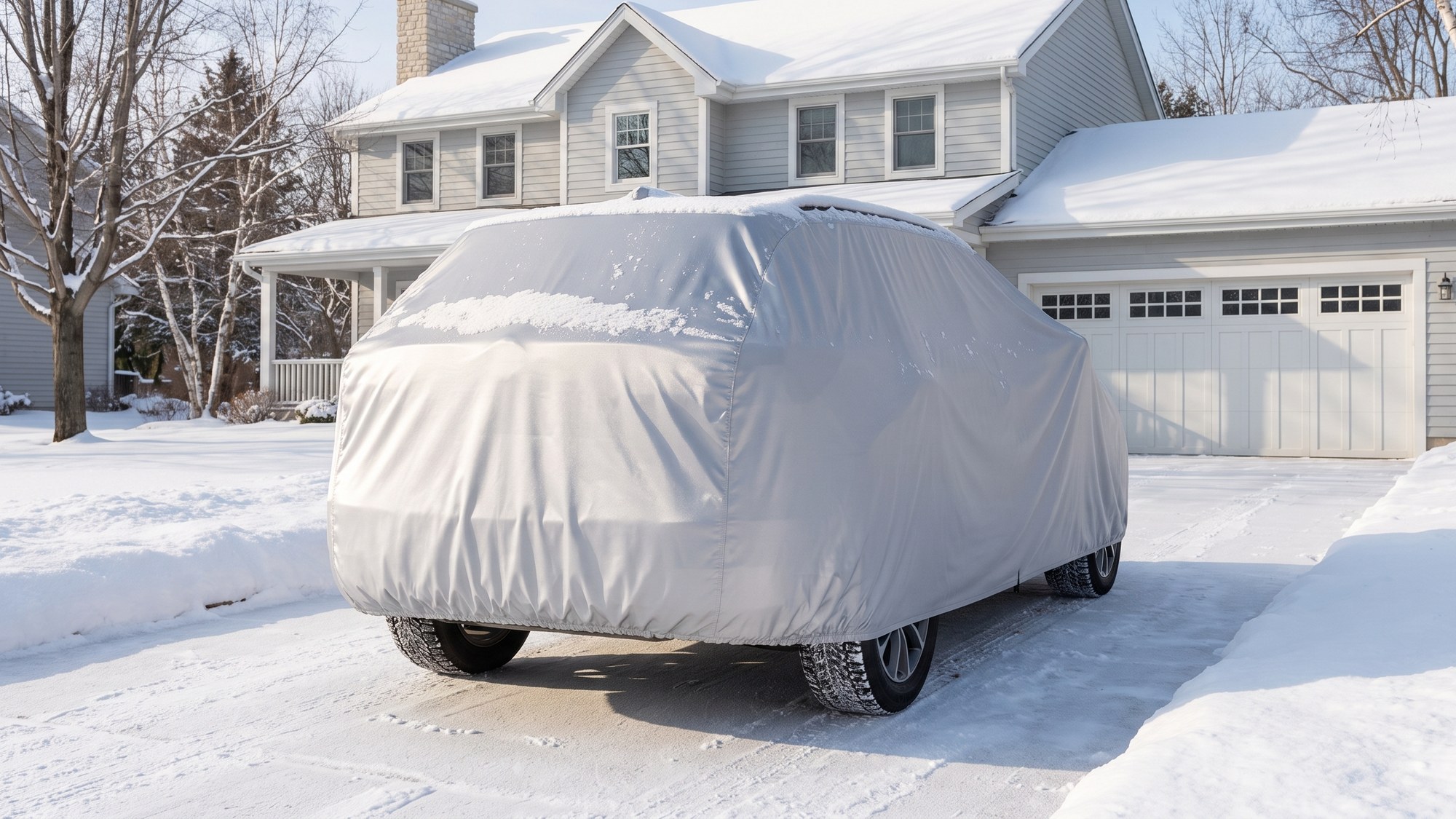
Snow on its own is mostly a nuisance. The damage rides in with it: road salt in the slush that speeds up rust, melt that turns into moisture trapped against the car, and an ice scraper dragged across the paint in a hurry. None of it is hard to guard against. It just has to happen before the first real storm, not during it.
- Wash, dry and wax the paint before the season's first storm. Wax makes it harder for salty slush to stick.
- Choose a cover built for winter: water-resistant outer fabric and a fleece liner, matched to your exact car, not a universal sheet.
- Get the fit snug, tie it down where it's windy, and let it breathe. A cover that can't breathe holds melt and condensation against the paint.
- After a storm, brush the snow off the cover before you pull it. Keep hot water off the glass and the ice scraper off the paint.
Prep the car, then cover it right
These steps cover a car that sits outside for the season, whether it's driven daily or parked most of the week. Most of them take minutes, and every one of them is easier before the first storm than during it.
Wash it, dry it, then wax it
Start the season with a clean, completely dry car, so you aren't covering up road grime and salt.
Then put on a coat of wax, or a paint sealant if you prefer, before the cold sets in. AAA notes that wax creates a barrier on painted surfaces that makes it harder for salty slush to stick. Through the winter, AAA suggests a wash about every two weeks, more often after heavy snow, with an undercarriage rinse to get salt off the metal you can't see.
Choose a cover built for winter, not just any cover
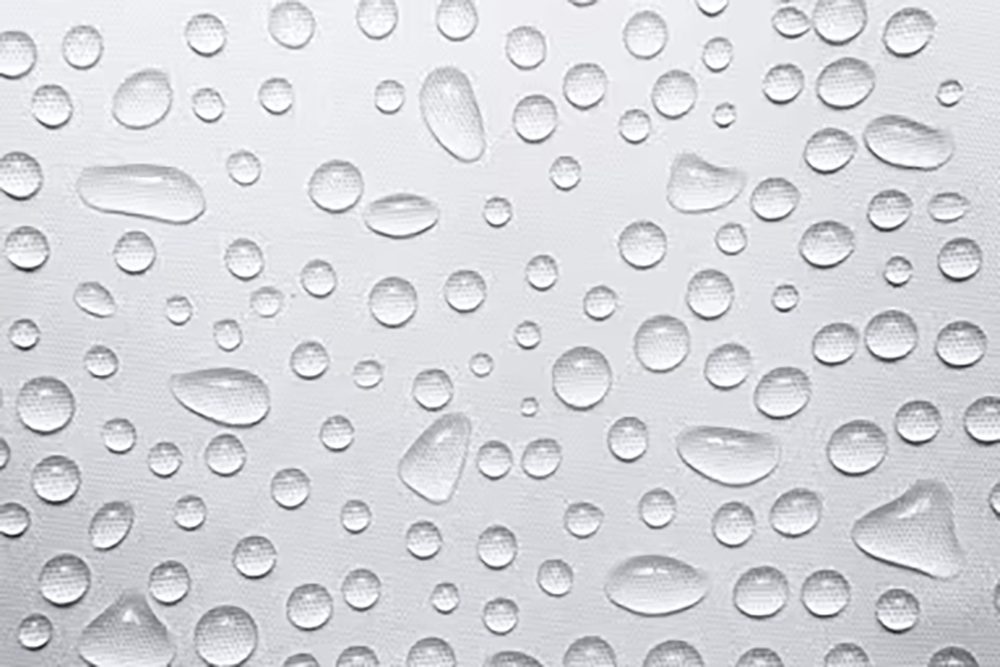
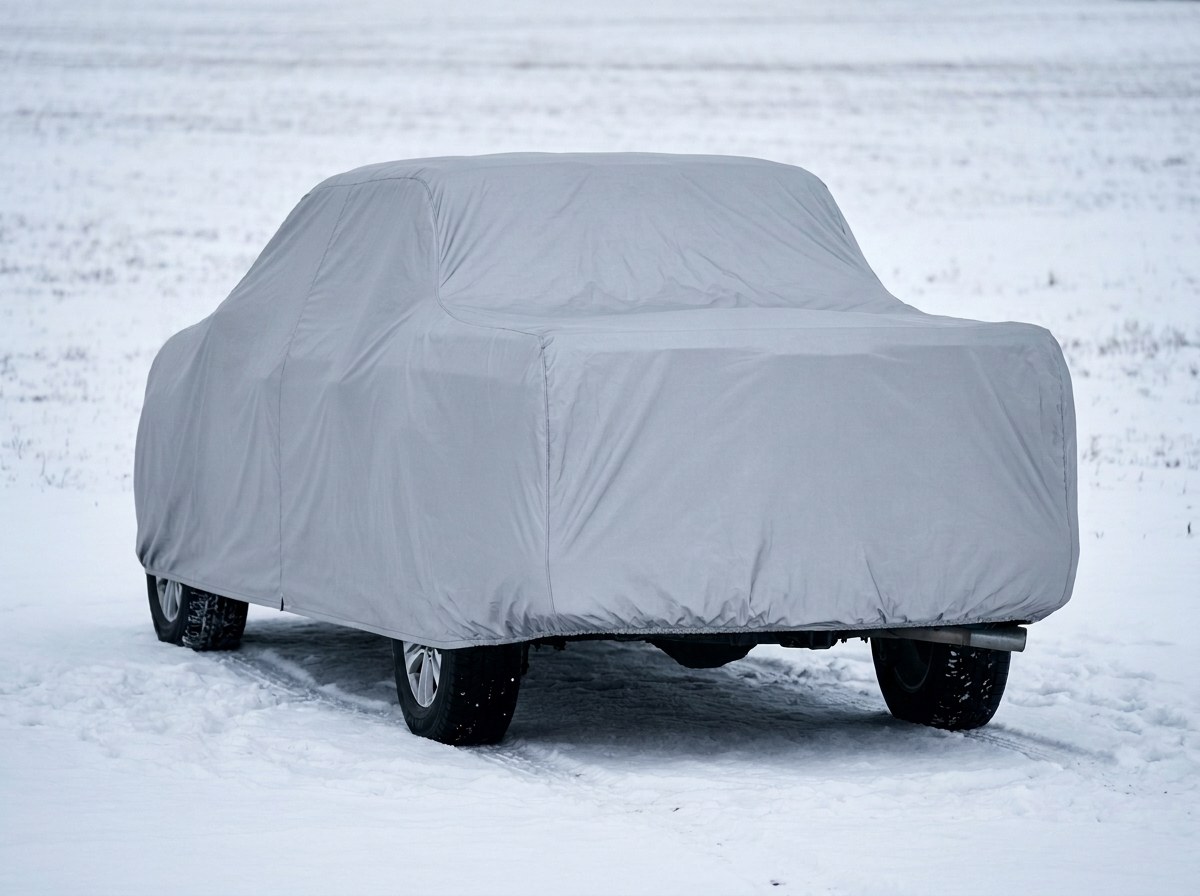
A cover made for summer dust is not the same as one built to sit under snow. The Platinum Shield's outer shell is a water-resistant silver 300D polyester with a polyurethane and UV treatment and it is breathable. Underneath, a fleece liner sits against the paint.
Fit matters as much as fabric. A cover sized wrong leaves gaps that let cold and wet in exactly where you want them kept out, so choose one matched to your exact car rather than a universal, one-size sheet.
Get the fit snug, then tie it down
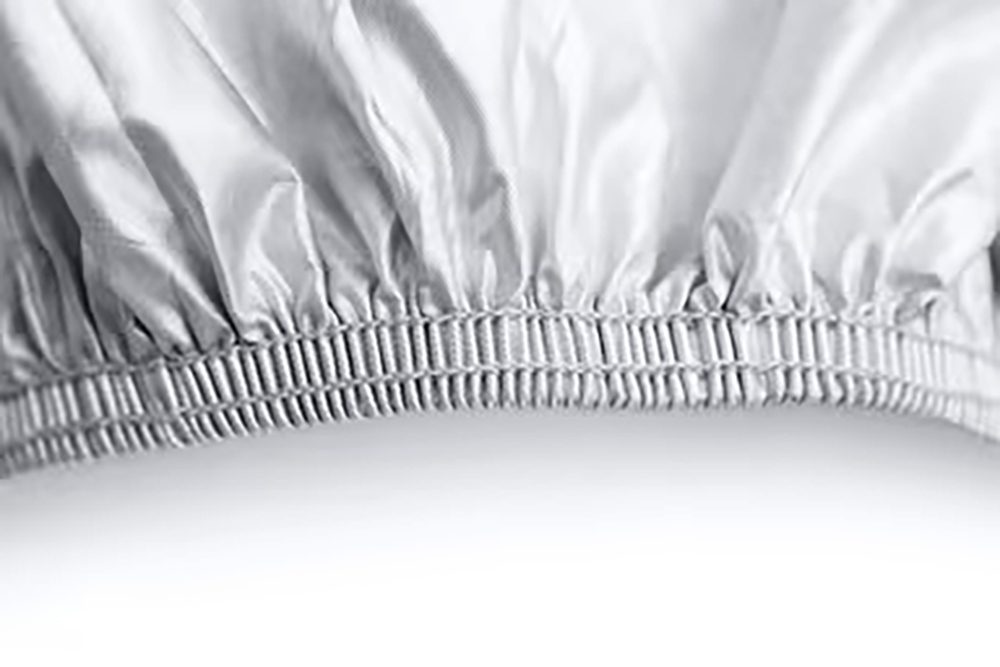
Put the cover on from the front: seat the front hem over the front bumper, pull the cover back over the roof, then stretch the rear hem over the back bumper. The elastic hems front and back draw it in snug.
If you park where the wind picks up, add a wind strap such as the Gust Strap. Its grip clips fasten to the lower edge of the cover and its bungee cords run underneath the car, pulling the open areas of the cover tight so a gust can't loosen it or carry it away.
TipWalk around the car after a windy night and re-seat any hem the wind has worked loose.
Let it breathe
A winter cover has two jobs that pull against each other: keep the weather out, and let moisture escape. Snow melts, warm and cold air meet under the fabric, and condensation forms. A cover that breathes lets that moisture dry out instead of holding it against the car, where it invites mold and mildew.
That's why a plastic tarp is a poor stand-in: a winter cover needs airflow to help dry up condensation, and plastic sheeting doesn't breathe.
Clear it safely once the storm passes
Brush or shake the snow off the top of the cover before you take it off, so you're not dumping it down the side of the car. If ice has frozen the cover in place, don't yank it. CarCovers' own directions are to pour cool water over the cover to thaw the ice, lift it gently, and repeat if it still sticks. Never use warm or hot water.
For any glass the cover didn't protect, start the engine and run the defroster on full heat rather than pouring hot water on it. AAA warns that the thermal shock can crack a cold windshield. A plastic ice scraper helps on the glass, but keep it off the body: scrapers are made for hard surfaces and can scratch the paint.
Watch the battery through a cold snap
Cold hits a battery twice over. AAA says a battery loses about 35 percent of its strength at 32°F and about 60 percent at 0°F, just as a cold engine may need up to twice the normal current to start. Have the battery tested before winter, especially if it's more than three years old or has been slow to start. If the car sits for days at a time, AAA suggests a drive of at least 30 minutes once or twice a week, which helps though it won't fully recharge the battery, or a trickle charger.
Check tire pressure more often
Air contracts as it cools, and AAA notes tire pressure can drop roughly 1 to 2 psi for every 10°F the temperature falls. The first cold morning of the season is often when the tire pressure warning light comes on. Check the pressure at least once a month against the number on the driver's door frame or in the owner's manual, not the figure molded into the tire's sidewall, and check it before you drive, while the tires are cold.
Matching the cover to your winter
Every outdoor grade is water-resistant, and both of these have a fleece liner against the paint. The Platinum Shield is the top of the range, built for the car that faces every season; the Weatherproof Max is the all-season step below it.
| AllGuard Platinum Shield | AllGuard Weatherproof Max | |
|---|---|---|
| Where it belongs | Driveway, carport or open lot, every season | Driveway or open lot, all season |
| Outer | Silver 300D polyester, polyurethane and UV treated, breathable | Non-woven polypropylene with a UV-treated microporous film |
| Against the paint | Fleece liner | Fleece liner |
| Rain and snow | Water-resistant | Water-resistant |
| Price | $199.99 | $169.99 |
Every cover includes the AllGuard Protection Warranty.
Questions owners ask
Can I leave a car cover on through a whole snowstorm?
Yes, an outdoor cover is made to stay on outside through the weather. Once the storm passes, brush the snow off the top and check that the hems are still seated. In a windy spot, a wind strap clipped to the lower edge of the cover keeps it from working loose.
Is a tarp good enough instead of a car cover?
Not for a car you care about. A plastic tarp doesn't breathe, so moisture from melting snow and condensation stays trapped against the car. A breathable cover lets it dry out instead.
Should I brush the snow off the cover before I take it off?
Yes. Brush or shake the top of the cover clear first, so you're not dumping a load of snow down the side of the car or onto yourself as you pull it off.
What if the cover or the windshield is frozen?
Don't reach for hot water. For a cover frozen in place, CarCovers' directions are to pour cool water over it, lift it gently, and repeat if needed, never warm or hot water. For the glass, AAA warns that hot water can crack a cold windshield through thermal shock: start the engine, run the defroster on full heat, and use a plastic scraper on the glass only, never on the paint.
Why does my battery seem weaker in the winter?
It is weaker. AAA says a car battery loses about 35 percent of its strength at 32°F and about 60 percent at 0°F, at the same time a cold engine can need up to twice the normal current to start. AAA suggests having the battery tested if it's more than three years old or has been slow to start in the cold.
Put the right cover between your car and the season.
The Platinum Shield is built for the car that faces every season. Matched to your exact car, water-resistant, and lined with fleece against the paint.
Sources (11)
- Applying a wax coating before the weather gets too cold places a seal between the finish and the ice, snow and salt; ice scrapers should only be used on the windows, since they can scratch and damage the finish; warm water can crack glass through abrupt temperature change and leaves water that can refreeze; melting snow can lead to moisture damage. carcovers.com
- Road salt accelerates rust and corrosion on metal underneath a car; wash every two weeks in winter and more often after heavy snowfall, with an undercarriage wash; wax creates a barrier on painted surfaces, making it harder for salty slush to stick. acg.aaa.com
- A bad fit can mean exposure to cold and wet weather that can compromise the finish; a cover should keep out moisture but still provide airflow to dry up condensation and prevent a 'microbial hotspot'; when warm and cold air mingle, condensation can lead to mold and mildew; fleece lining is non-abrasive. carcovers.com
- Install the cover at the front first, pull it over the top, then stretch the rear hem over the back bumper; covers have an elastic hem front and back and grommets on both sides; use the Gust Strap Wind Protector in high-wind areas; to remove a frozen cover, pour cool water over it and gently lift, repeating if needed, never warm or hot water. carcovers.com
- The Gust Strap's grip clips fasten to the lower edge of the cover, with bungee cords running underneath the car; this pulls the open areas of the cover tight, preventing the wind from loosening or moving it. carcovers.com
- Never use hot water to de-ice glass; thermal shock could cause cracks. Start the engine, set the heater to defrost on full heat with recirculated air, and use a plastic ice scraper. info.oregon.aaa.com
- At 32°F a car battery loses about 35 percent of its strength; at 0°F it loses about 60 percent of its power; a cold engine may need up to twice the normal current to start. info.oregon.aaa.com
- Have the battery and charging system tested if the battery is older than three years or has had difficulty starting in the cold; if you don't drive often, drive at least 30 minutes once or twice a week, which won't fully charge the battery but can help; a trickle charger is worthwhile for a car that sits idle for days. magazine.northeast.aaa.com
- Have your car battery tested before winter; the first cold morning of the year might cause the tire pressure warning light to come on. minneapolis.aaa.com
- For every 10°F change in temperature, tire pressure can go up or down by 1 to 2 psi. acg.aaa.com
- Do not use the pressure molded into the tire sidewall; use the owner's manual or the decal on the driver-side door frame; check at least once a month, before driving, when the tires are not hot. aaa.com