A dead battery on a ten-degree morning, or a slick patch where the tread had worn thin, rarely comes out of nowhere. A lot of winter trouble traces back to a maintenance step that got skipped weeks earlier, back when the weather still felt mild. None of the fixes take long: the right fluids, a few minutes with a tire gauge and a look at the tread, a battery test at a shop, a cover pulled over the car before the first hard freeze. The trick is doing them before the cold finds what you missed, not after.
- Check the fluids before the cold hits. Cold thickens engine oil, and a summer washer fluid is rated only down to 32°F.
- Look at the tires, not just the pressure light. Cold rubber grips less, and pressure drops as the air cools.
- Have the battery tested, not just eyeballed. Cold cuts a battery's power hard, and age alone is a reason to test it.
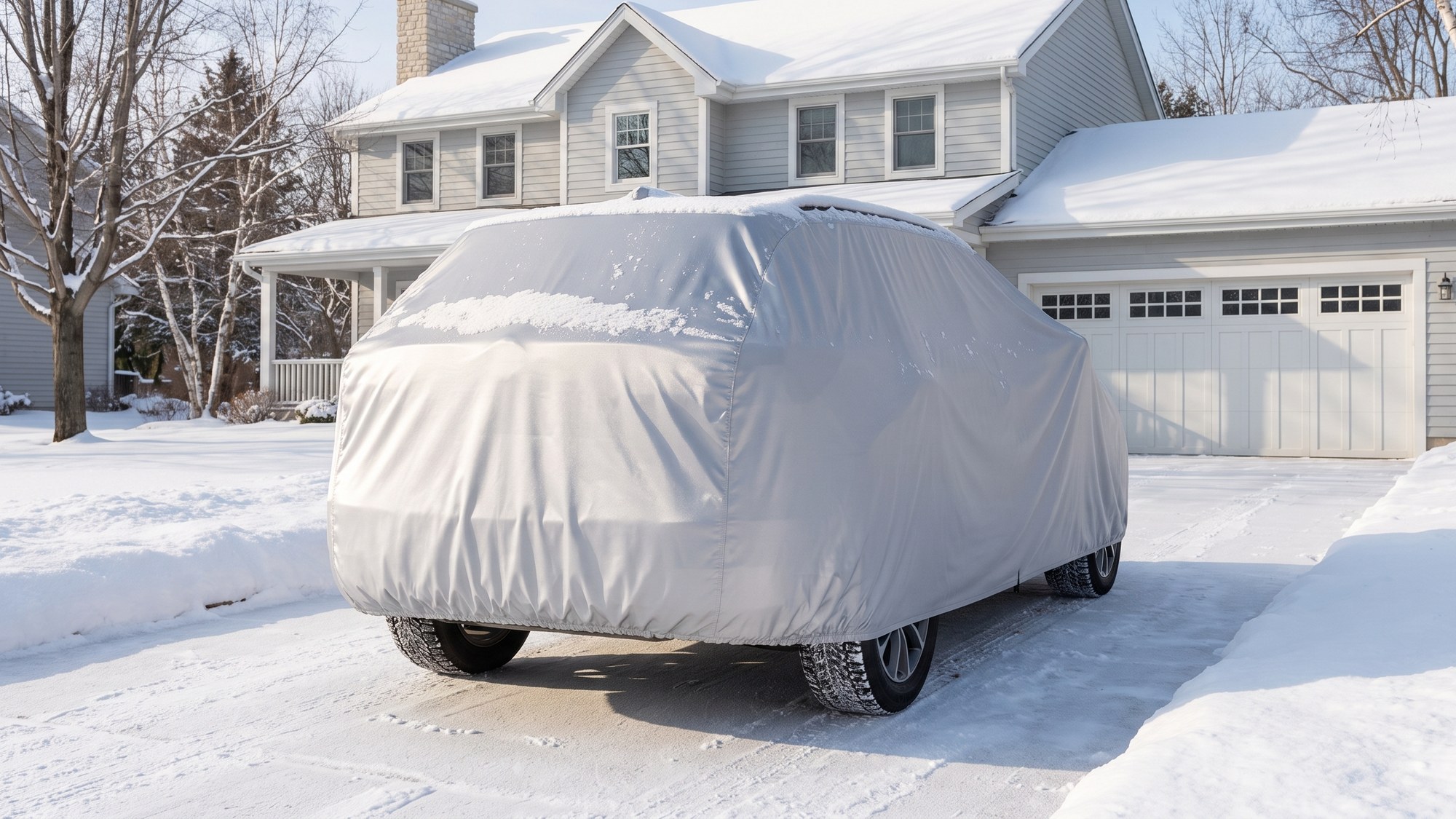
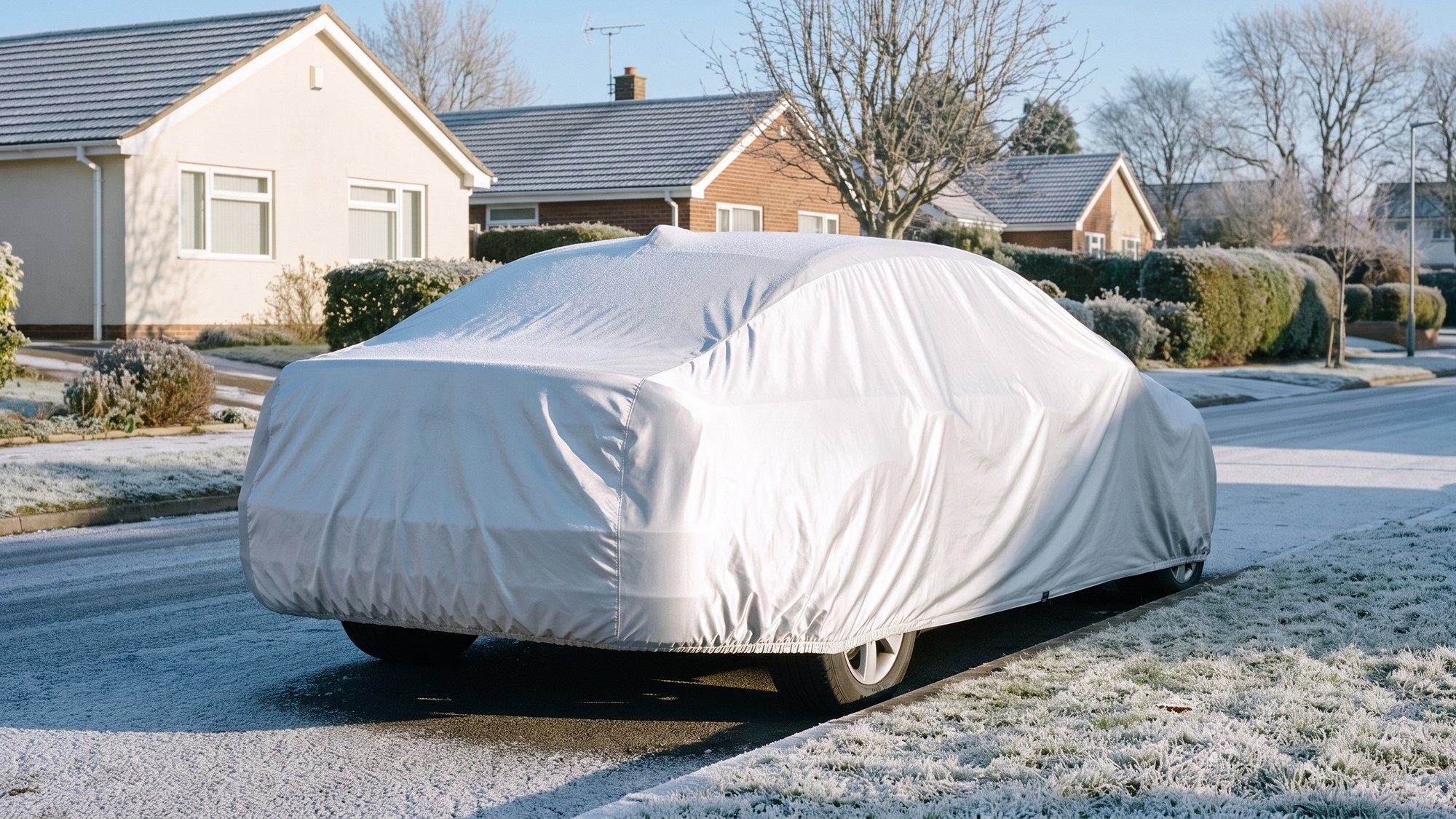
- Cover the car before the first freeze, not after the first storm. A cover keeps snow, ice and freezing rain off the paint and glass between drives.
The four mistakes worth fixing
Each one below takes a few minutes on its own. Together, they're the difference between a cold morning that starts on time and one that starts with a phone call.
Skipping the fluid check
Cold weather thickens engine oil, and an engine cranking cold has to work harder to push a heavier oil through it. The owner's manual almost always lists the oil grades your engine can take, often with a temperature range for each, so check it rather than guessing.
Windshield washer fluid is the other one to catch. A summer fluid is mostly water and is rated only down to 32°F, right where winter starts and right when you need it most. A winter fluid is rated well below freezing, so switch before the first freeze, not after the reservoir ices over.
TipCheck the coolant level too. A shop can test whether the mix is still strong enough for the season ahead.
Ignoring the tires
Tire pressure drops with the temperature, about 1 psi for every 10°F the air cools. A tire that read fine in September can be several psi low by the first real cold snap, which is why AAA suggests checking pressure at least monthly, and more often through the fall and winter swings.
The rubber matters too. All-season tire rubber starts to stiffen below about 45°F, which cuts into grip on cold, dry pavement before a single snowflake falls; winter tires use a compound built to stay flexible through the cold. Michelin's advice is to switch to winter tires once average daily temperatures fall below 45°F. And look at the tread while you're down there: worn tread grips a winter road worse.
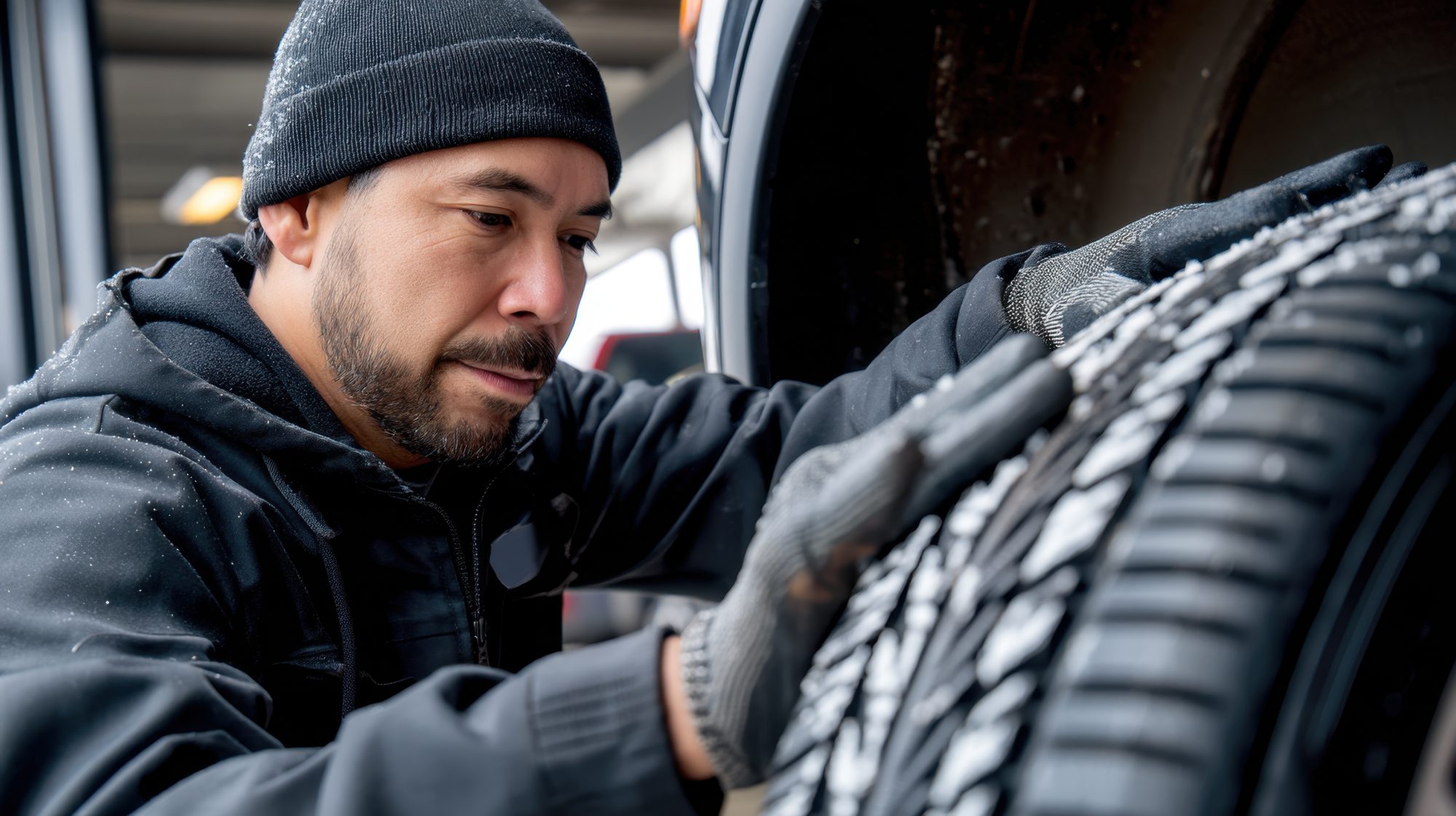
Illustration Skipping the battery test
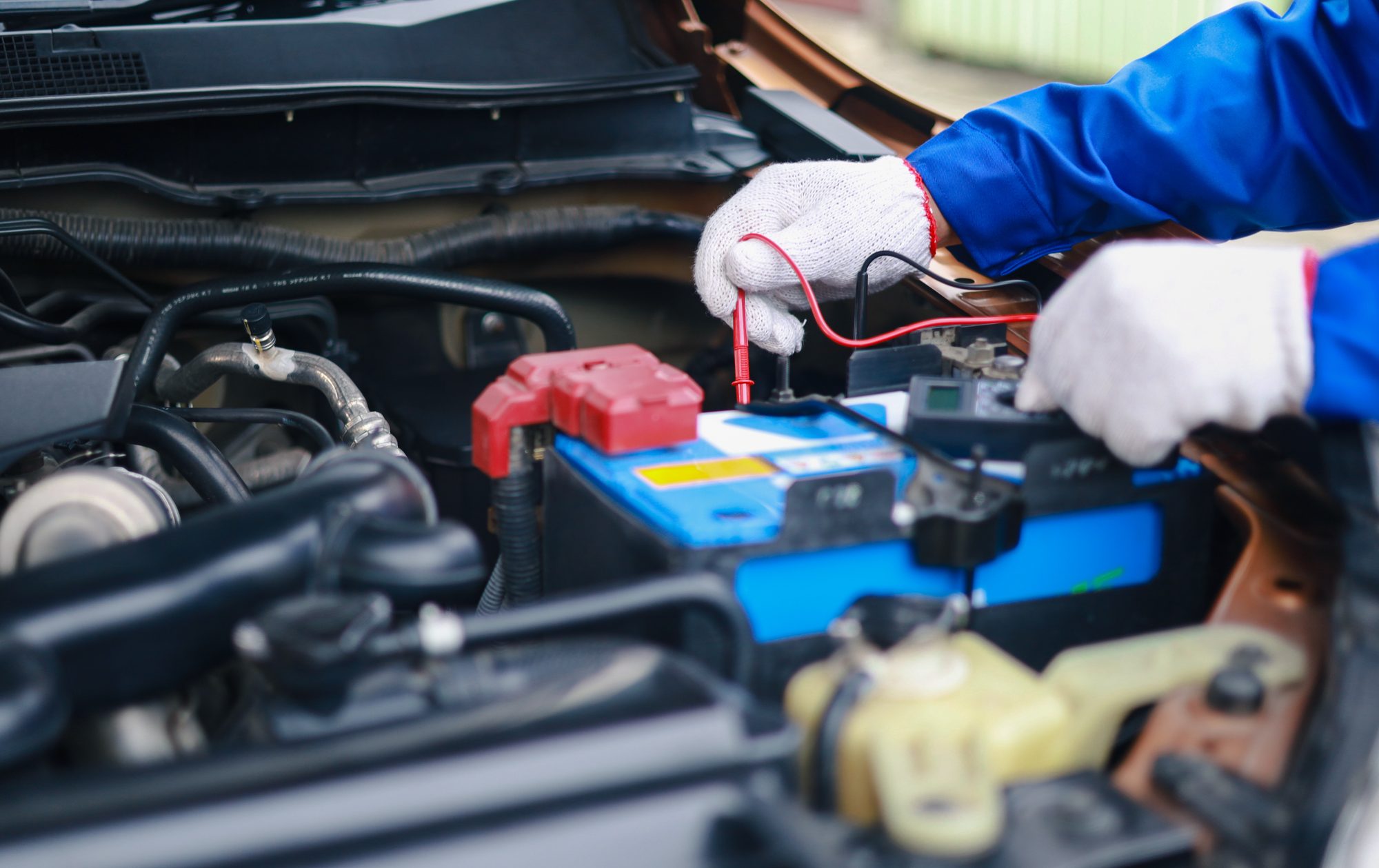
A battery that starts the car fine in October can fail in December. Cold weather doesn't just make an engine harder to turn over, it weakens the battery doing the turning: at 32°F a battery loses about 35% of its strength, and at 0°F, about 60% of its power. A weak battery that got through summer without a hint of trouble can be the one that leaves you stranded.
A car battery typically lasts three to five years, depending on driving habits and climate, so age alone is a reason to have it tested rather than assumed fine. AAA suggests a test every year once a battery is three years old. A shop or auto parts counter can test it in a few minutes and tell you whether it needs replacing now or will make it through the season.
Leaving it uncovered
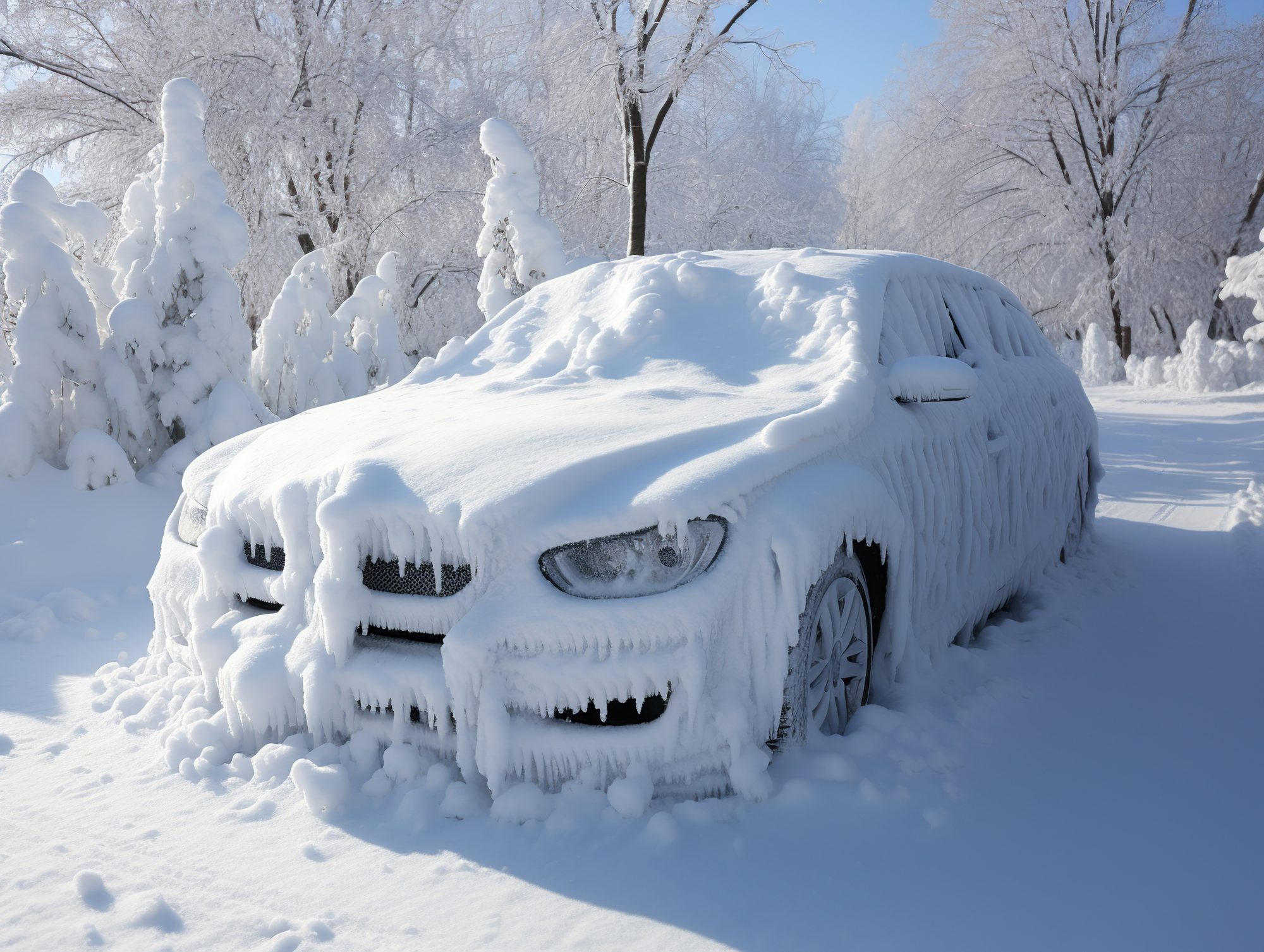
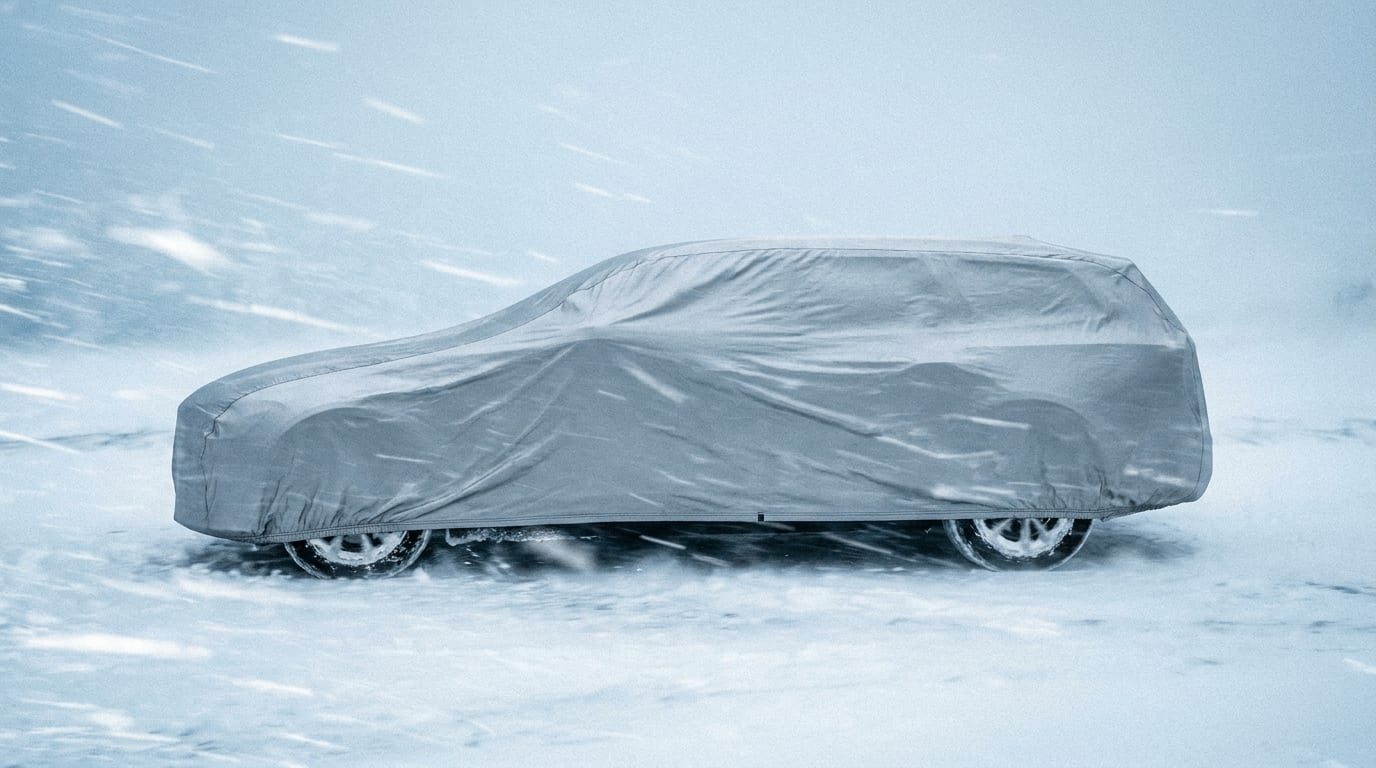
The fourth mistake is leaving the car out in the weather with nothing over it. An uncovered car wears every storm: snow and freezing rain on the paint and rubber seals, and a sheet of ice to scrape off the windshield before every drive.
A cover that breathes is the fix, not a tarp. A water-resistant outdoor cover sheds rain and keeps snow off the glass and paint, and one that breathes lets moisture underneath escape instead of holding it against the finish. It goes on over a clean, dry car, so rinse off road salt first.
Choosing the cover for the weather
Same question as storing a car for the season: does it sleep in a garage or take the weather head on? A car parked outside all winter needs a cover built for it; one that spends its nights in a garage has different problems to solve.
| AllGuard Platinum Shield | AllGuard Satin Protect | |
|---|---|---|
| Where it belongs | Driveway, carport or open lot | Garage, shop or showroom |
| Outer | Breathable silver 300D polyester, polyurethane and UV treated | Black stretch satin, 85% polyester and 15% spandex |
| Against the paint | Fleece liner | Sheared fleece interior |
| Snow and rain | Water-resistant | Not for outdoor use. Indoors only |
| Price | $199.99 | $189.99 |
Every cover includes the AllGuard Protection Warranty.
Before the first freeze
- OilCheck the owner's manual for the oil grade your engine calls for in the cold, and have it changed if it's due.
- Washer fluidSwitch to a winter fluid rated below your coldest expected night.
- CoolantCheck the level, and have the mix tested if you're not sure it's strong enough.
- TiresCheck pressure cold, at least monthly, and look at tread depth while you're down there.
- BatteryHave it tested before winter, and every year once it's three years old.
- CoverPull a breathable, water-resistant cover over a clean, dry car between drives.
- Emergency kitKeep an ice scraper, a blanket, jumper cables and a flashlight in the car.
None of these fixes take a weekend. A few minutes each, done before the first hard freeze instead of after, is the difference between an ordinary cold morning and a call for a tow.
Questions owners ask
Do I really need winter tires, or will all-season tires get me through?
It depends on how cold it gets where you live. All-season tire rubber starts to stiffen and lose grip below about 45°F, before any snow falls, while winter tires stay flexible through the cold. Michelin suggests switching once average daily temperatures fall below 45°F. If your winters are milder, keeping the tread and pressure right on your all-seasons may be enough.
How much does tire pressure actually drop in the cold?
About 1 psi for every 10°F the temperature falls, according to AAA. A tire set correctly in warm weather can be several psi low by the first hard freeze, so it's worth checking again once the weather turns, not just once in the fall.
How do I know if my battery will make it through winter?
Age is the first clue: a typical car battery lasts three to five years, and AAA suggests a yearly test once it's three years old. Cold makes any weakness worse, since a battery loses about 35% of its strength at 32°F and about 60% of its power at 0°F, so a battery that has struggled to start the car even once is worth testing before the real cold arrives.
Can I just use water instead of windshield washer fluid in winter?
No. Water freezes at 32°F, and a summer washer fluid is rated only down to about the same point, so either one can ice over in the reservoir and lines right when you need them. Switch to a winter fluid rated below your coldest nights.
Does a car cover really help in snow and ice?
Between drives, yes. The Platinum Shield is water-resistant: it sheds rain, keeps snow and ice off the glass and paint, and its breathable fabric lets moisture underneath escape, so there's less to scrape in the morning. Put it on over a clean, dry car.
Scrape less. Cover it instead.
The water-resistant Platinum Shield keeps snow and freezing rain off the glass and paint between drives, so there's less to scrape before you go. Matched to your exact car.
Sources (9)
- At 32°F a car battery loses about 35% of its strength; at 0°F it loses about 60% of its power. hudsonvalley.aaa.com
- A car battery typically lasts 3 to 5 years, depending on driving habits and climate; AAA suggests a yearly test once it is three years old. acg.aaa.com
- Tire pressure drops about 1 psi for every 10°F the temperature falls. cluballiance.aaa.com
- AAA recommends checking tire pressure at least monthly, and more often through the fall and winter swings; check it with the tires cold. cluballiance.aaa.com
- All-season tire rubber starts to stiffen below 45°F, reducing grip on cold, dry roads before any snow; winter tires stay flexible; switch when average daily temperatures fall below 45°F. michelinman.com
- Cold weather thickens motor oil; the owner's manual almost always lists the safe oil grades, often with temperature guidelines for each. knowhow.napaonline.com
- A summer washer fluid is rated only down to 32°F. rainx.com
- Winter washer fluid is rated well below freezing. slashgear.com
- Before winter: check coolant and other fluid levels, use a washer fluid with antifreeze, have the battery tested, check tread; carry blankets, an ice scraper, jumper cables and a flashlight. cluballiance.aaa.com